
Avata 2 for Coastline Work in Extreme Temperatures
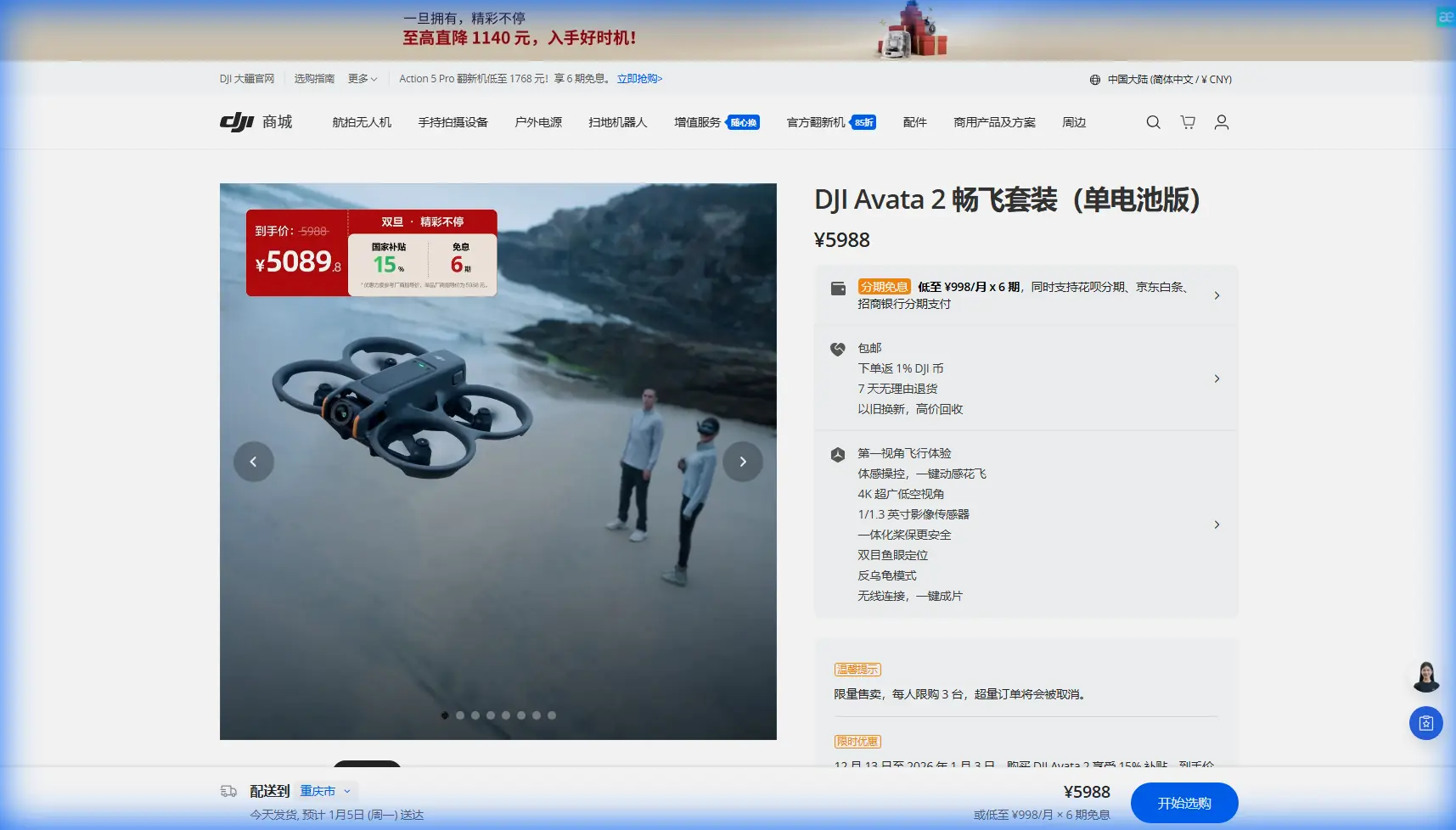
Avata 2 for Coastline Work in Extreme Temperatures: What Actually Matters in the Field
META: A field-driven look at using DJI Avata 2 for coastline capture in extreme temperatures, with practical insight on live monitoring, detail collection, route planning, and why close-range FPV matters for environmental and inspection work.
Coastlines are beautiful until you have to document them properly.
Salt spray, glare, wind shear off rock faces, shifting light, limited access roads, and temperature extremes turn a simple drone session into a logistics problem. Add a conservation brief, erosion survey, outfall inspection, or protected habitat monitoring task, and the challenge gets tighter: you need detail, speed, and a way to work without putting people in risky places.
That is where Avata 2 becomes more interesting than its lifestyle image suggests.
I’m writing this from the perspective of a photographer who also cares about operational reality. Pretty footage is easy to talk about. Reliable collection of usable visual information along a harsh coastline is a different standard. The most useful clue comes from how unmanned systems are already used in environmental response and ecological protection. In one reference case, drones are valued because they can get closer to the target, capture richer detail, and enter hazardous zones without exposing monitoring staff to unnecessary risk. That point sounds simple, but on a cold, exposed shoreline it changes everything.
The real problem with coastline capture
Most coastlines resist documentation in the same ways.
Access is often poor. Cliffs, tidal flats, restricted conservation areas, drinking water source protection zones, and broken roadside approaches all slow ground teams down. Environmental solution documents from the field describe this clearly: protected areas tend to be large, remote, and inconvenient to reach, making full and fine-grained ecological work difficult. That observation applies almost perfectly to coastlines in extreme weather.
When temperatures swing hard, the problem compounds. Battery behavior changes. Pilots fatigue faster. Touchscreen workflows become clumsy in gloves. Wind at launch may be manageable, but conditions at a cliff edge or over a surf line can be very different.
So the question is not just whether Avata 2 can fly near the sea. It’s whether it can solve the same operational problems that make environmental drone systems valuable: getting there quickly, seeing the site in three dimensions, streaming useful visual data, and doing so while reducing human exposure to danger.
Why close-range flying matters more than people admit
One of the most practical facts in the source material is that drones provide richer target detail because they can work close to the subject. For coastlines, this is not a minor image-quality note. It is an operational advantage.
If you’re documenting:
- rockfall zones below a cliff path,
- sea wall cracks,
- storm damage around a coastal structure,
- drainage outfalls,
- changes in dune vegetation,
- or erosion patterns near protected habitat,
the difference between “aerial overview” and “close visual reading” is enormous.
Avata 2’s appeal here is not simply that it captures video. It’s that its form factor and FPV-style control make close-proximity movement feel precise and intentional in spaces where a larger platform can feel hesitant. Around jagged coastal geometry, that matters. You’re often threading between terrain features, following the contour of a bluff, slipping below the lip of a headland to inspect wave-cut formations, or tracing infrastructure along a seawall where a broad, high-altitude pass misses the real story.
Competitors with stronger emphasis on wide, stable, distant framing can produce cleaner textbook survey-style footage. But Avata 2 excels when the assignment depends on spatial intimacy. It lets the operator move with the landscape rather than merely above it. For environmental visual assessment, that can reveal condition changes that would otherwise stay hidden in a generic top-down pass.
Extreme temperatures make speed and setup discipline more valuable
Another source detail deserves more attention: in environmental emergencies, drone systems are used to overcome poor transport access and dangerous conditions, reaching the affected airspace quickly so teams can understand the incident more completely and react faster.
That logic fits coastline work during temperature extremes almost perfectly.
Maybe there’s a storm event aftermath to document before the next tide cycle. Maybe a cold morning offers the clearest visibility window before haze and glare build. Maybe midday heat over dark rock creates turbulence and harsh contrast that weakens the value of later flights. In each case, fast deployment is not convenience. It is the difference between useful data and compromised material.
Avata 2 works best when treated as a rapid-response visual platform:
- arrive,
- assess launch safety,
- fly a quick reconnaissance line,
- identify the risk zones or visual priorities,
- then capture the tighter, more deliberate passes.
That sequence mirrors the environmental response idea in the source: first gain a fuller situational view, then support quicker coordination and more grounded decisions. On a coastline, your “decision” may be choosing which erosion face needs a second pass, which sea cave entrance is too turbulent to approach, or which exposed section of trail infrastructure deserves closer documentation.
Live visual feedback is the hidden advantage
The source material also highlights a very practical system design: a multirotor carrying image transmission equipment for real-time monitoring, with a ground monitoring center processing and analyzing incoming data as the incident develops.
You do not need a large institutional command setup to benefit from the same principle.
For coastline capture, especially in difficult temperatures, live image transmission changes the workflow from “pilot goes out and hopes the footage is enough” to “team evaluates conditions while the aircraft is in the air.” If you are working with an environmental consultant, site manager, restoration planner, or client representative, that live view is often more valuable than the final cinematic clip.
Operationally, this means:
- the observer can flag a discoloration plume near an outfall while the drone is overhead,
- a coastal engineer can request a second angle on a damaged revetment,
- a habitat specialist can confirm whether a nesting area should be avoided,
- a producer can judge glare and ask for a lower-angle rerun before the light shifts.
That is why Avata 2’s immersive live-view character matters. It compresses the gap between capture and interpretation. The source case explicitly points to real-time data transfer and real-time monitoring of incident progress as key drone advantages. Along the coast, replace “incident progress” with surf impact, overtopping, drainage flow, or shifting visibility conditions, and the same value holds.
Protected coastlines need repeatable capture, not just dramatic footage
There’s another excellent detail in the reference that many drone buyers ignore. In ecological protection work, fixed-wing flights were carried out using a Sony A7r to obtain high-resolution imagery of protected areas at the same time each year. Those images were then processed into orthomosaics, compared year to year, and used for vegetation analysis, including NDVI mapping.
Now, Avata 2 is not a fixed-wing mapping aircraft, and pretending otherwise would be nonsense. But the field lesson is crucial: serious environmental work depends on repeatability.
If you are using Avata 2 on coastlines, the most professional approach is not “fly whatever looks good today.” It is to build repeatable visual corridors.
Choose the same:
- launch point,
- tide band if possible,
- time window,
- flight direction,
- exposure profile,
- and key landmarks.
That makes footage from different months or seasons genuinely comparable. On a protected coastline, that can help track visible dune retreat, vegetation stress, drainage pattern changes, cliff instability, or the condition of access structures. Even without full orthomosaic processing, disciplined repeat flights create a visual record with far more value than one-off cinematic runs.
This is where D-Log becomes useful beyond aesthetics. In changing coastal light, a flatter profile preserves more flexibility for consistent grading across repeated sessions. If the goal is comparison rather than pure visual drama, consistency is king.
Obstacle avoidance and route planning are not optional near the sea
The environmental reference describes a first step that sounds almost old-fashioned: survey the terrain first, then plan the flight route.
That remains exactly right.
Coastal pilots can get seduced by spontaneity because the landscape invites improvisation. Avata 2 feels agile, so there is a temptation to chase the line of the cliff or fold into a cove on instinct. That is how flights become sloppy or unsafe.
Pre-planned route thinking matters because coastlines are layered hazards:
- vertical rock walls disrupt GNSS confidence and wind behavior,
- gulls and seabirds can appear with little warning,
- sea spray can cling to lenses and affect visibility,
- low sun over water destroys contrast,
- hidden cables near harbors or access structures complicate approach lines.
Obstacle avoidance helps, but it is not a substitute for route design. The better use of Avata 2 is to combine obstacle awareness with intentional passes: one reconnaissance line, one medium-altitude contour pass, one close-detail run, and one exit line with reserve battery margin.
Compared with some competitors that lean heavily on automated confidence-building features, Avata 2 shines when the operator is actively composing movement through terrain while still respecting those safety layers. It is less about passively relying on software, more about pairing agility with discipline.
What about ActiveTrack, QuickShots, and Hyperlapse?
These features can be useful, but only if they serve the assignment.
ActiveTrack or subject tracking makes sense when following a coastline user element in a civilian context, such as a kayak guide route, a shoreline inspection vehicle, or a walking survey team. It can create continuity in documentary work without requiring repeated manual reframing. Along rugged terrain, though, tracking should never override route safety or habitat sensitivity.
QuickShots are rarely the main event for environmental or inspection work, but they can help produce fast contextual sequences for reports and stakeholder briefings. A short reveal showing a damaged seawall in relation to the broader shoreline can communicate more clearly than a static frame.
Hyperlapse becomes valuable when the brief includes visible temporal change: tide movement around a structure, shifting surf impact, or cloud-shadow transitions that reveal terrain form. On a coastline, it can be both visually strong and practically informative.
The point is not to use these modes because they exist. The point is to use them when they compress field time and improve communication.
How Avata 2 fits the “high-risk area” brief
One of the strongest operational statements in the source is that drones can enter high-risk areas and effectively avoid exposing monitoring and sampling personnel to danger.
For civilian coastline work, that translates directly to:
- cliff bases after rockfall,
- slippery intertidal zones,
- unstable dunes,
- flood-damaged edges,
- contaminated runoff areas,
- and remote stretches with poor footing or access.
Avata 2 is especially compelling here because it can gather close visual detail without requiring a person to physically approach the hazard. That is the kind of capability people often associate with larger industrial systems only. In practice, a compact FPV drone can be the faster and more pragmatic first-look tool.
If your work involves repeated shoreline documentation, habitat observation, or visual condition assessment, it helps to think in tiers. Use a larger mapping or survey platform when broad-area geospatial precision is the goal. Use Avata 2 when the job demands immediate, close, spatially rich visual understanding.
That is not overlap. That is specialization.
A practical coastline workflow for Avata 2 in hard conditions
Here’s the field logic I recommend:
Start with a terrain read from the ground. Identify wind funnels, reflective water angles, bird activity, and safe emergency landing options.
Then do a short recon pass. This echoes the environmental response model: gain fast situational awareness first.
Next, capture your core route. Keep it repeatable if the location will be revisited.
After that, move in for detail. This is where Avata 2 earns its place. Stay close enough to reveal structure and texture, but not so close that sea spray, rotor wash interaction, or turbulence compromises control.
Send the live view to whoever needs to interpret the footage while you are still airborne. Real-time collaboration is one of the most underused strengths in field drone work. If you need a practical setup discussion for this kind of workflow, you can message me here: coastline flight workflow chat
Finally, log what changed. Temperature, wind direction, tide state, light angle, and route deviations all matter if you want future flights to be comparable.
The bottom line
Avata 2 is not the universal answer to every coastal task. It is something more specific and, for the right user, more valuable: a fast, close-range, terrain-sensitive visual platform that fits the real logic of environmental monitoring.
The reference material makes that logic plain. Drones matter when they can reach difficult places quickly, provide richer detail up close, stream information in real time, and reduce risk to personnel. It also shows that serious ecological work depends on route planning and repeatable image acquisition over time.
That is exactly how Avata 2 should be judged on the coast.
Not by whether it can make the sea look cinematic. Plenty of aircraft can do that.
Judge it by whether it helps you understand a hard place without stepping into it. On cold mornings, hot rock shelves, remote conservation zones, and unstable shoreline edges, that standard is the one that counts.
Ready for your own Avata 2? Contact our team for expert consultation.