
Avata 2 for Remote Field Work: A Smarter Way to Inspect
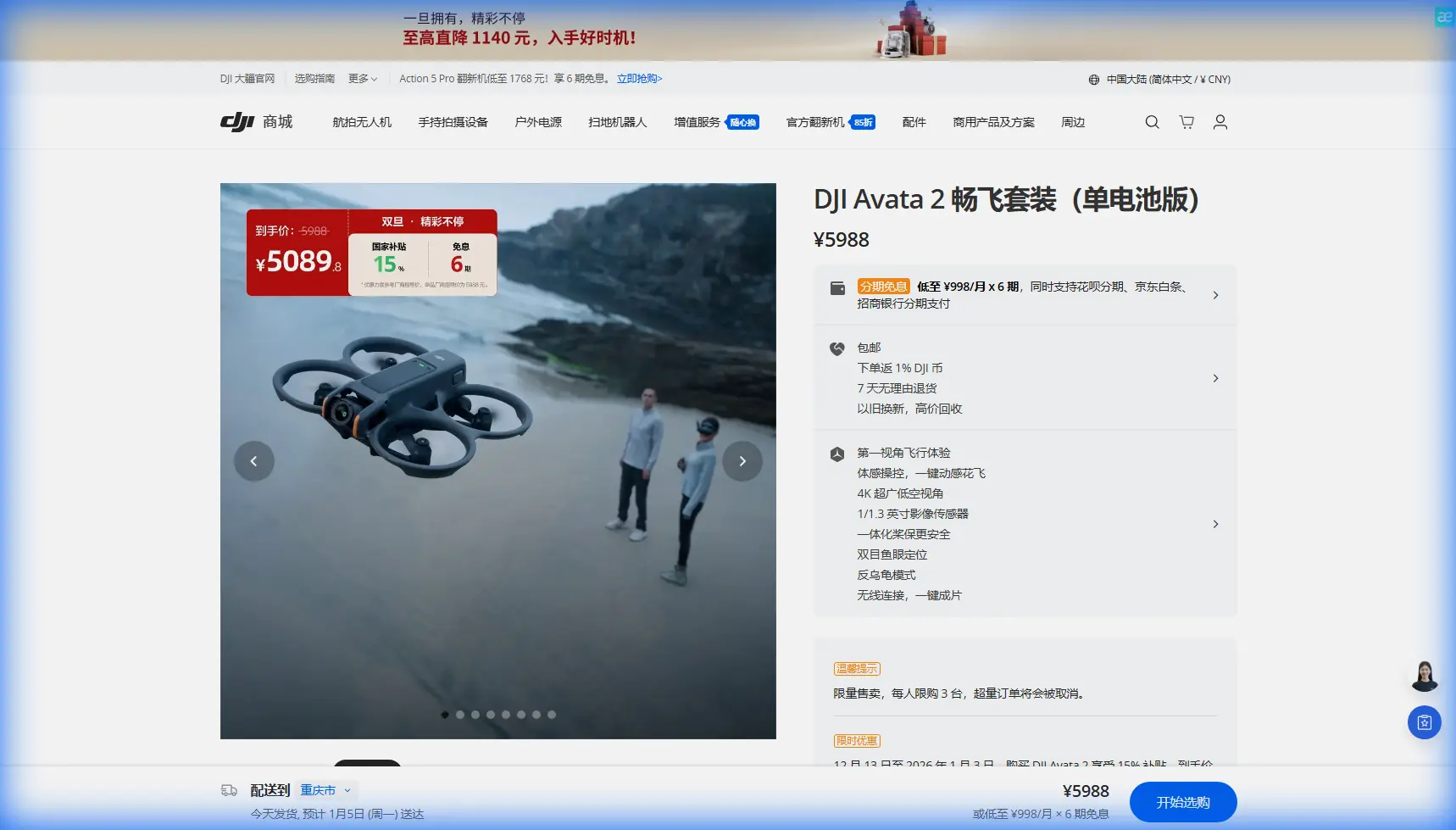
Avata 2 for Remote Field Work: A Smarter Way to Inspect Long Utility Corridors
META: Learn how Avata 2 can support remote field imaging, utility corridor checks, and faster visual assessment by combining close-range flight, flexible camera angles, and practical range planning.
Remote field capture sounds simple until the route stops being simple.
That is the real tension behind utility and infrastructure work in rural areas. Long corridor distances stretch crews thin. Walking inspections take time. Mountain sections raise safety risk. After snow, flooding, landslides, or earthquakes, access can disappear right when a line needs to be checked most. Traditional visual patrols also carry a basic limitation that never really goes away: a person on the ground sees only what their angle allows. Blind spots are built into the method.
Those problems are not abstract. They shape every decision about how to document poles, towers, conductors, fittings, and surrounding terrain in remote zones.
For an operator using the DJI Avata 2, especially someone tasked with capturing fields in hard-to-reach areas, the opportunity is not about treating an FPV drone like a generic camera platform. It is about using its strengths in a very specific way: low-altitude, close-perspective imaging where conventional patrol methods lose time, detail, or safety margin.
I approach this from the perspective of a field photographer, but the operational logic comes from utility inspection practice. The source material is blunt about the challenge. Traditional line patrol covers long distances, involves heavy workloads, slows down when done on foot, and becomes difficult or impossible during severe weather events. It also notes that manned aircraft operations around energized environments create significant risk for personnel. That single point matters more than most marketing claims ever will. If a task can be shifted toward unmanned capture in selected scenarios, the conversation changes from “How do we get eyes on it?” to “How fast can we collect usable evidence without exposing people unnecessarily?”
Why the inspection problem fits Avata 2 in selective field scenarios
Avata 2 is not a substitute for every industrial drone platform. It is not pretending to be a heavy payload thermal aircraft for enterprise grid fleets. But that is exactly why it becomes interesting in remote field work. In certain parts of a visual inspection workflow, a smaller and more agile drone can do something larger systems often do less gracefully: move close, thread perspective through constrained terrain, and capture rich visual context around structures and line components.
The reference document describes a UAV workflow based on pre-planned tower GPS coordinates and automated flight inspection. That detail is operationally significant because it shows what utilities actually need from aerial capture: repeatable observation points, not just pretty footage. A repeatable route tied to tower coordinates means teams can compare images over time, identify changes, and make maintenance decisions with confidence.
For Avata 2 users, the lesson is not that every mission must be fully automated. The lesson is that consistency matters. If you are documenting remote field assets, you should think in terms of fixed observation patterns:
- approach angle to the tower or structure
- distance from the asset
- height relative to conductors or hardware
- direction of sunlight and shadow
- repeatable passes for comparison on future missions
That mindset is far more valuable than simply flying wherever the view looks dramatic.
What visual inspection actually needs to see
The source material lists the kinds of defects a drone-based visible-light inspection can help identify: physical damage, broken conductor strands, loose fasteners, damaged or contaminated insulators, and abnormal vibration dampers. This is a useful reminder that “inspection footage” is not one thing. It is several kinds of evidence gathered in one flight.
Each target has different imaging demands.
A damaged insulator may need an angle that reveals cracks or contamination buildup against the sky. A loose fitting may need a closer side perspective than a ground observer can safely obtain. A conductor issue may require tracking along the line rather than hovering on the tower itself. Avata 2’s advantage here is not altitude. It is proximity and maneuverability.
That aligns directly with another source detail: compared with manual visual patrol, drones offer a larger working range, more flexible shooting angles, and closer standoff to the target, which produces richer detail. Operationally, that means fewer assumptions. Instead of telling a maintenance team that “something looks wrong from below,” you can often provide imagery that narrows the likely fault category before the crew mobilizes.
In remote regions, that distinction saves more than time. It can reduce unnecessary dispatches and help crews arrive with the right tools.
Close-range work changes how you should fly for utility capture
Avata 2 invites expressive flight. Utility documentation demands restraint.
If your job is remote field capture, fast cinematic passes are rarely the priority. What matters is control near structures, precise framing, and a clean visual record. Obstacle awareness becomes less about creative confidence and more about preserving stable operations in uneven terrain, near vegetation, and around nonuniform structures.
This is where pilots sometimes misunderstand “FPV advantage.” The best use of Avata 2 for infrastructure-adjacent visual work is not aggressive line chasing. It is measured movement in environments where camera angle flexibility matters. You are often trying to reveal the relationship between a component and its surroundings: hardware alignment, insulator condition, conductor routing, tree encroachment, access conditions, slope instability, or storm aftermath.
If you want repeatable field results, set up your capture routine around three layers:
1. Context pass
Start wider. Show the structure in relation to the field, access road, vegetation, drainage path, and terrain. This is especially useful after flood or landslide events, which the source document identifies as major constraints on traditional patrols.
2. Detail pass
Move closer to components that need assessment: fittings, insulators, clamps, joints, and attachment points. Keep movement smooth and avoid unnecessary yaw changes that complicate later review.
3. Route pass
Track the line direction briefly to reveal continuity, clearance concerns, and visible anomalies extending away from the structure.
That sequence gives engineers, maintenance planners, and field supervisors different types of information from the same mission.
Thermal matters, even when Avata 2 is your visible-light tool
The reference material gives strong weight to infrared inspection. It explains that thermal imaging can detect hidden fault points by comparing abnormal temperature changes, and specifically calls out hotspots at line joints, clamps, tension sleeves, connection tubes, and insulators. That matters because visible-light capture alone can miss defects that are electrically meaningful before they become visually obvious.
Now, Avata 2 is not the aircraft you reach for when the mission requires a dedicated thermal payload. But this does not make the thermal detail irrelevant. It changes how Avata 2 should be positioned in the workflow.
Think of Avata 2 as a complementary visual verification platform. A thermal-equipped drone may identify a suspicious heat signature at a connection point. Avata 2 can then be used to gather close visible-light context around that area, helping teams understand whether there is corrosion, contamination, hardware displacement, debris interaction, or physical wear near the hotspot location.
That pairing is practical. Thermal tells you where the energy anomaly is. Close visual capture helps explain what the structure looks like around it.
The source also notes a major emergency benefit: thermal-equipped UAVs improve night repair efficiency by locating fault points quickly and accurately, buying precious time for repair crews. Even if Avata 2 is not your night thermal platform, that operational principle still applies. In emergency response, every drone flight should reduce uncertainty for the next team arriving on site.
Remote field capture after a storm: where Avata 2 becomes especially useful
Bad weather creates a double problem. It raises the likelihood of infrastructure damage while making ground access harder. The document specifically mentions snow, flood, earthquake, and landslide conditions as scenarios where traditional patrol work may not be possible. This is exactly the kind of situation where a compact aircraft becomes more than a convenience.
After severe weather, the first question is often not “How do we inspect every component perfectly?” It is “What is reachable, what is damaged, and where should human crews go first?”
Avata 2 can support that first layer of intelligence gathering in remote agricultural or utility-adjacent landscapes. A fast deployment from a safe staging area can reveal blocked access roads, washout conditions, vegetation collapse, damaged poles or towers, and visible conductor issues. If the corridor runs through fields, terraces, ridgelines, or river edges, the value of low-altitude perspective increases. You are not just documenting the asset. You are documenting the route to the asset.
That is one reason smaller drones are often underrated in field operations. They can bridge the gap between broad situational awareness and detailed engineering inspection.
Antenna positioning advice for maximum range in open fields
Since the reader scenario here is capturing fields in remote areas, range discipline matters. Not because you should fly to the edge of possibility, but because a clean signal gives you smoother control and more reliable footage.
A few practical points:
- Keep the controller antennas oriented so their broadside faces the aircraft, not the antenna tips pointed directly at it.
- In open farmland, stand where your body, vehicle, or metal equipment will not block the signal path.
- Gain a little elevation if possible. Even a small rise can improve line-of-sight over crops, hedges, and irrigation structures.
- Avoid launching from the down-slope side of embankments or behind concrete farm buildings.
- When following linear assets across fields, reposition yourself in stages rather than insisting on one ultra-long leg.
If you need help planning a field setup for cleaner signal geometry, this Avata 2 range planning chat is a useful place to start.
The point is not raw distance. The point is signal quality under real terrain conditions. In utility and field capture, stable transmission is part of image quality because hesitation, breakup, or unnecessary recovery maneuvers can ruin the exact detail pass you needed.
What about ActiveTrack, QuickShots, Hyperlapse, and D-Log?
These features are often discussed in content-creation terms, but they have selective value in field documentation too.
D-Log is the easiest to justify. When you are filming against bright sky, reflective hardware, or mixed terrain shadow, extra grading latitude can help preserve detail that matters during review.
Hyperlapse can be useful for environmental context, especially if the goal is to show moving weather, changing light over a site, or the scale of terrain around a remote corridor. It is not usually the first inspection tool, but it can support reporting and stakeholder communication.
QuickShots are less central for technical inspection, though they can help create concise overview material for project documentation.
Subject tracking and ActiveTrack need the most caution. For people filming farm operations or land features near utility-adjacent spaces, tracking may help maintain framing. But around critical infrastructure, manual control is often the better choice because it ensures the camera prioritizes the actual defect or component under review, not merely the most trackable object in the scene.
This is the broader theme with Avata 2 in professional field work: consumer-facing features are useful only when they serve documentation discipline.
The real advantage is decision speed
The source text repeatedly points toward one outcome: faster, safer, more accurate decisions.
Not perfect omniscience. Better decisions.
A UAV based on preloaded GPS tower points can automate coverage. Visible-light inspection can reveal broken strands, loose fasteners, insulator damage, or abnormal fittings. Thermal inspection can expose hidden faults through temperature anomalies. Real-time transmission to a ground station lets personnel evaluate findings immediately and decide what action comes next.
That workflow matters because raw footage alone does not solve a field problem. Decision support does.
For an Avata 2 operator working in remote fields, the mission becomes much clearer when viewed through that lens. Your job is to produce usable visual evidence from places that are slow, risky, or awkward to inspect on foot. You are reducing blind spots. You are shortening the interval between observation and response. You are helping teams understand not just whether something is wrong, but where to look next.
Used that way, Avata 2 is not just a creative FPV drone brought into industrial scenery. It becomes a nimble visual assessment tool for corridor work, storm follow-up, terrain documentation, and close-angle field inspection where conventional methods lose efficiency or put people in harder positions than they need to be.
That is the story hidden inside the source material. The real promise of unmanned inspection is not novelty. It is practical access to better evidence when distance, terrain, and urgency all push in the wrong direction.
Ready for your own Avata 2? Contact our team for expert consultation.