
Avata 2 Case Study: Filming Dusty Venues Without Losing
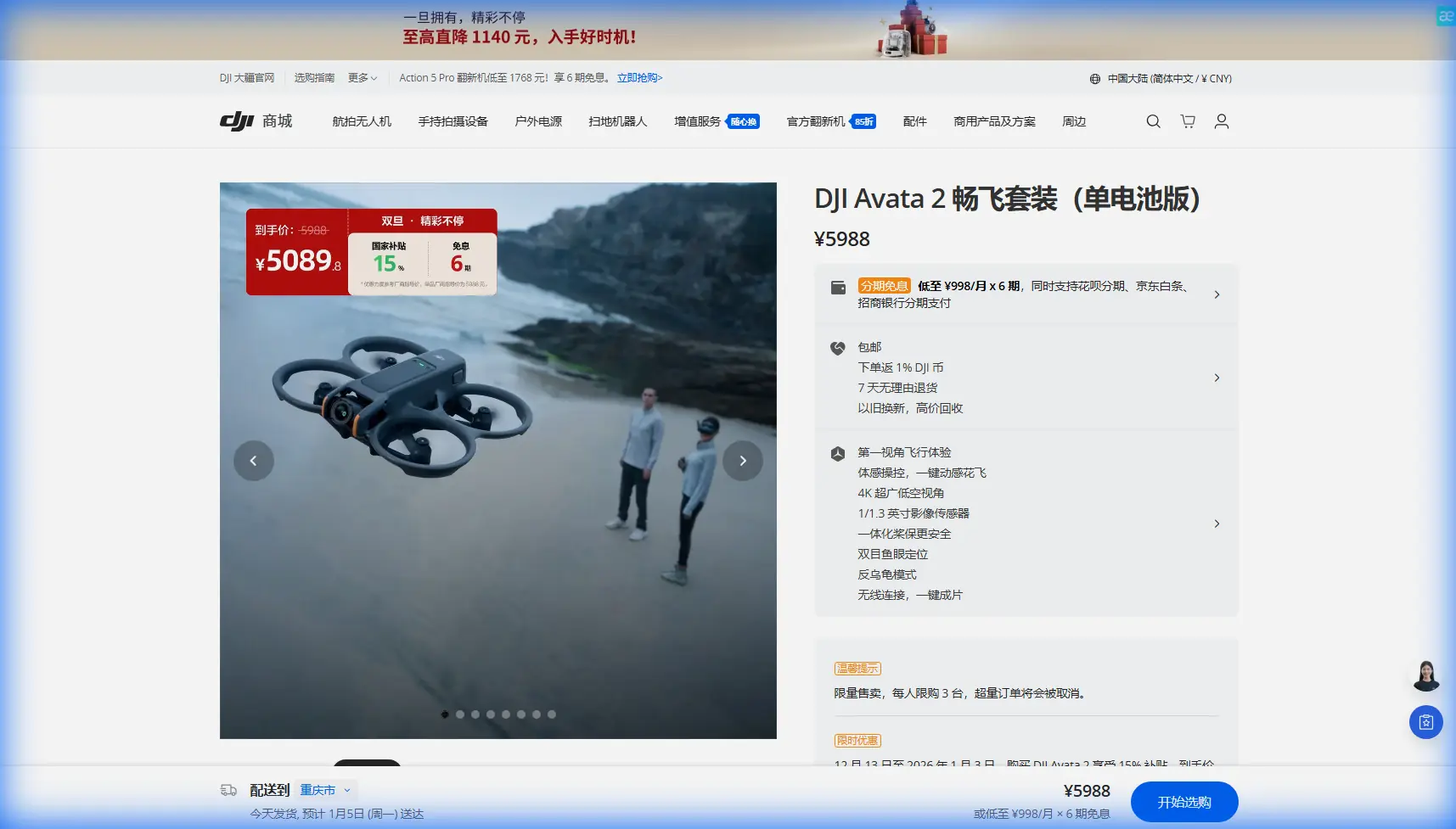
Avata 2 Case Study: Filming Dusty Venues Without Losing the Shot
META: A practical Avata 2 case study for capturing dusty venues, with flight altitude tips, camera settings, obstacle avoidance strategy, and workflow advice for photographers.
Dust changes everything.
Not in theory. In practice. A venue that looks cinematic from the ground can turn hostile the moment a drone drops too low, kicks up loose debris, and turns a clean establishing shot into a hazy mess. For photographers and venue teams working in dry outdoor locations, this is where the DJI Avata 2 earns its place. Not because it fixes bad planning, but because it gives a skilled operator more control in the exact moments where dust, tight spaces, and unpredictable obstacles usually break a shoot.
I’ve seen this firsthand while documenting rugged event spaces and outdoor hospitality venues where the brief sounds simple: show scale, show texture, make it feel immersive. The complication is that dusty environments punish aggressive flying. A standard orbit can become unusable if the aircraft is too low. A dramatic reveal can lose detail if airborne dust catches the light at the wrong angle. And if guests, decor structures, fencing, or temporary installations are involved, you need more than speed. You need precision.
That is the lens through which Avata 2 makes sense for venue work.
Why Avata 2 fits dusty venue shoots
Avata 2 sits in a very specific category. It is not just about getting from point A to point B. It is about controlled, close-quarters movement with a strong sense of immersion. For venue coverage, that matters because clients rarely want only top-down survey shots. They want motion through entrance corridors, between seating zones, over pathways, around stage structures, and across landscape features that define the space.
In dusty environments, that immersive style can backfire if the aircraft is hard to manage near the ground. This is where obstacle avoidance and stable low-speed handling become operationally significant. Obstacle sensing is not a license to fly carelessly, but it reduces the workload when you are threading through visual clutter such as pergolas, signage, poles, string lighting supports, and temporary build elements. At a venue, these obstacles are often irregular and not always easy to see in one pass, especially during sunrise or late afternoon when shadows stretch across the ground.
The second piece is motion language. Avata 2 is especially useful when the assignment calls for cinematic movement that feels personal rather than distant. That can mean entering from a parking arrival zone, dipping into a courtyard, climbing over a centerpiece feature, then pulling back to reveal the full venue footprint. For photographers expanding into motion deliverables, that kind of shot can replace several static clips with one coherent sequence.
The real altitude rule in dust
If you are capturing venues in dusty conditions, the most useful flight insight is simple: stop trying to skim the ground unless the surface can support it.
For most dusty venue passes, an altitude of roughly 3 to 6 meters above ground is the sweet spot for moving shots. That range is usually high enough to reduce rotor wash disturbing loose dust, while still preserving the intimate FPV-style perspective that makes Avata 2 footage feel alive. Drop much lower over fine dry soil, gravel, or powdery landscaping and you risk creating your own visibility problem. Go too high and the footage starts to lose the sense of presence that venue marketers actually want.
That 3 to 6 meter window is not a universal law. It changes with surface type, wind, and the direction of light. Hard-packed pathways may let you fly lower. Loose decomposed granite, dry dirt parking zones, or decorative sand areas usually require more separation. If the venue has layered visual elements, like tables, planters, entry arches, and seating pockets, I often start closer to 5 meters and only descend after checking whether the air stays clean behind the aircraft.
The key point is operational, not aesthetic. Altitude in dusty environments is not only about composition. It is about protecting image clarity. Once dust gets suspended in the shot, especially with backlight, contrast falls apart and post-production has little room to rescue it.
A field workflow that actually works
When I approach a dusty venue with Avata 2, I do not begin with the hero shot. I begin with the dust test.
That means one short pass over the most powder-prone surface on site, flown conservatively. Watch what the air does after the aircraft passes. Does dust rise immediately? Does it linger? Does it drift sideways into your intended flight path? This thirty-second check can save an entire session.
From there, I map the venue into three shot categories:
1. Clean reveal routes
These are approach lines over firmer surfaces or open paths where dust disturbance is low. They are ideal for first shots because they establish the venue without contamination in the frame.
2. Transitional interior-exterior paths
These are moves through gates, under entry structures, or between seating zones. Avata 2’s obstacle avoidance is useful here because venues are full of unexpected geometry. It helps maintain confidence when flying through designed spaces where visual storytelling depends on proximity.
3. High-risk texture passes
These are the shots over dry fields, decorative earth, or exposed service roads that look dramatic but can trigger dust plumes. I only attempt them after establishing a safe altitude and direction of travel.
This workflow sounds basic, but it solves a recurring problem in venue production: operators often burn the best light experimenting too close to the ground. By the time they learn where the dust lives, the scene has changed.
Why obstacle avoidance matters more at venues than open landscapes
Obstacle avoidance can seem like a bullet-point feature until you shoot a venue with temporary infrastructure. Outdoor venues are rarely clean geometric spaces. They are dynamic environments with floral installations, tent anchors, hanging decor, lighting trusses, wood beams, catering stations, and half-visible utility elements.
In this context, obstacle avoidance has real production value because it protects the continuity of a shot. A venue pass is often strongest when it feels uninterrupted. If you hesitate mid-flight because a support pole suddenly appears in your peripheral view, the footage loses confidence. The viewer feels that hesitation even if they cannot name it.
Avata 2’s obstacle awareness helps the pilot hold a line more naturally in these environments. That becomes especially useful during low-angle walkthrough-style sequences where the viewer is meant to feel as though they are arriving at the venue in person. When working for hospitality properties, wedding venues, desert retreats, outdoor dining spaces, or event operators, that feeling is often the entire point of the video.
Using ActiveTrack and subject tracking carefully
For venue coverage, subject tracking and ActiveTrack are most useful when people are part of the story but not the whole story. Think of a venue manager walking the main approach, a couple touring the grounds, or staff moving through a prepared event space. Tracking adds scale and intention. It helps the viewer understand how the environment works in real use.
But dusty venues create a catch. If a tracked subject is moving along a dry path, the instinct is to chase closely for energy. That is often the wrong move. The closer the aircraft flies to a dust-prone surface, the more likely it is to stir debris or drift into the same suspended particles the subject has already disturbed. The better method is to let the subject lead while the aircraft stays slightly higher and offset. You preserve context, reduce dust interference, and keep the shot usable.
This is one of the underappreciated advantages of combining tracking tools with disciplined altitude control. Technology helps maintain framing. Pilot judgment keeps the environment from degrading the image.
QuickShots and Hyperlapse are useful, but only after the site is understood
QuickShots can be effective for fast social deliverables when the venue needs a compact package of motion assets. A controlled reveal, pull-away, or orbit can give marketing teams a polished clip without spending half a day building every move manually. In dusty conditions, though, preplanned automated motion should never be the first thing you trust blindly. Dust changes the shot path in ways automation does not understand.
The same goes for Hyperlapse. It can work beautifully at a venue, especially to show cloud movement, changing guest flow, or the transition from setup to event-ready atmosphere. But in dusty environments, the stability and cleanliness of the air matter as much as camera movement. If fine particulate is drifting through the scene, a time-compressed sequence can exaggerate the mess rather than the mood.
My rule is straightforward: manual reconnaissance first, automated creativity second.
D-Log is where the venue texture survives
Dusty venues are often visually subtle. Their appeal comes from earth tones, layered materials, weathered timber, muted stone, fabric shadows, and the warm-to-cool shifts that happen across the day. This is exactly where D-Log matters.
When you shoot in a flatter profile like D-Log, you give yourself more room to preserve highlight detail and recover tonal nuance in post. That is operationally significant for dusty scenes because haze and airborne debris can flatten contrast very quickly. A standard baked-in look may clip highlights or crush shadow detail before you even start editing. With D-Log, you have more flexibility to shape the scene back into something that reflects what the venue actually felt like.
That does not mean every operator needs a heavy grading workflow. It means venue shooters should think beyond the immediate monitor image. Dust reduces clarity in small increments. Better capture latitude gives you a stronger safety margin.
A practical case study approach
Let’s say the venue is a dry outdoor event property with an entrance road, open courtyard, central structure, and a series of seating pockets bordered by landscaping. The assignment is to create a short film and a set of clips for web and social use.
The first move is not the entrance skim. It is a medium-height establishing run at about 5 meters above the access route. That height is often enough to keep rotor wash from pulling dust into the lens path while still giving the viewer the sensation of arrival.
Next comes a gentle rise over the entry feature, followed by a forward push into the courtyard. Here, obstacle avoidance earns its keep because decorative installations and structural beams tend to crowd the clean line through the middle. The goal is not to fly recklessly close. The goal is to keep movement believable and smooth while preserving clearance.
After that, I would capture one tracked human-scale shot, perhaps a manager or host walking toward the central venue zone. ActiveTrack can help maintain framing, but only if the aircraft stays slightly elevated and off-axis. That offset angle keeps the shot elegant and reduces the chance of dust wash polluting the frame.
Only after those clips are secured would I consider QuickShots or a Hyperlapse sequence. By then, I already know where the air stays clean and where the venue surface reacts badly.
If a client wants help planning a shot list for a similar site, I usually suggest sharing the layout and surface conditions first through a quick WhatsApp brief. Dust management is easier to solve before the batteries are in the air.
What photographers often get wrong when moving into FPV venue work
Photographers transitioning into Avata 2 work usually bring strong composition instincts. That part is not the issue. The issue is pacing.
A still image can isolate beauty from chaos in a fraction of a second. Drone video has to travel through the chaos to reach the beauty. At dusty venues, that means every meter of the route matters. You are not just composing frames. You are designing airflow interaction, obstacle margins, and background continuity.
The second common mistake is overcommitting to dramatic low passes because they look exciting on someone else’s reel. Venue clients do not need aggressive flying. They need usable footage that flatters the space. A clean pass at 4 meters often outperforms a more intense pass at 1.5 meters simply because the image remains clear, stable, and edit-friendly.
The third mistake is ignoring light direction. Dust becomes far more visible when backlit. If the sun is low and behind your route, your shot may reveal far more suspended particles than you saw with your eyes. In those situations, adjust the route, raise altitude, or delay the shot until the light angle improves.
The bigger takeaway
Avata 2 is strong for venue storytelling because it combines immersive movement with practical tools that reduce risk in visually dense spaces. Obstacle avoidance supports cleaner navigation through built environments. ActiveTrack and subject tracking help structure human-scale story moments. QuickShots and Hyperlapse can expand deliverables once the venue’s conditions are understood. D-Log gives dusty, low-contrast scenes a better chance of surviving post-production with their texture intact.
But none of those features matter if the aircraft is flown at the wrong altitude over the wrong surface.
For dusty venues, the smartest move is often less dramatic than people expect: fly a little higher, keep the air clean, and let the space do the talking. That is how you get footage that feels premium rather than forced. And that is where Avata 2 proves its value—not as a stunt machine, but as a disciplined visual tool for places that are harder to film well than they first appear.
Ready for your own Avata 2? Contact our team for expert consultation.