
Avata 2 in Coastal Forests: A Field Report on Range
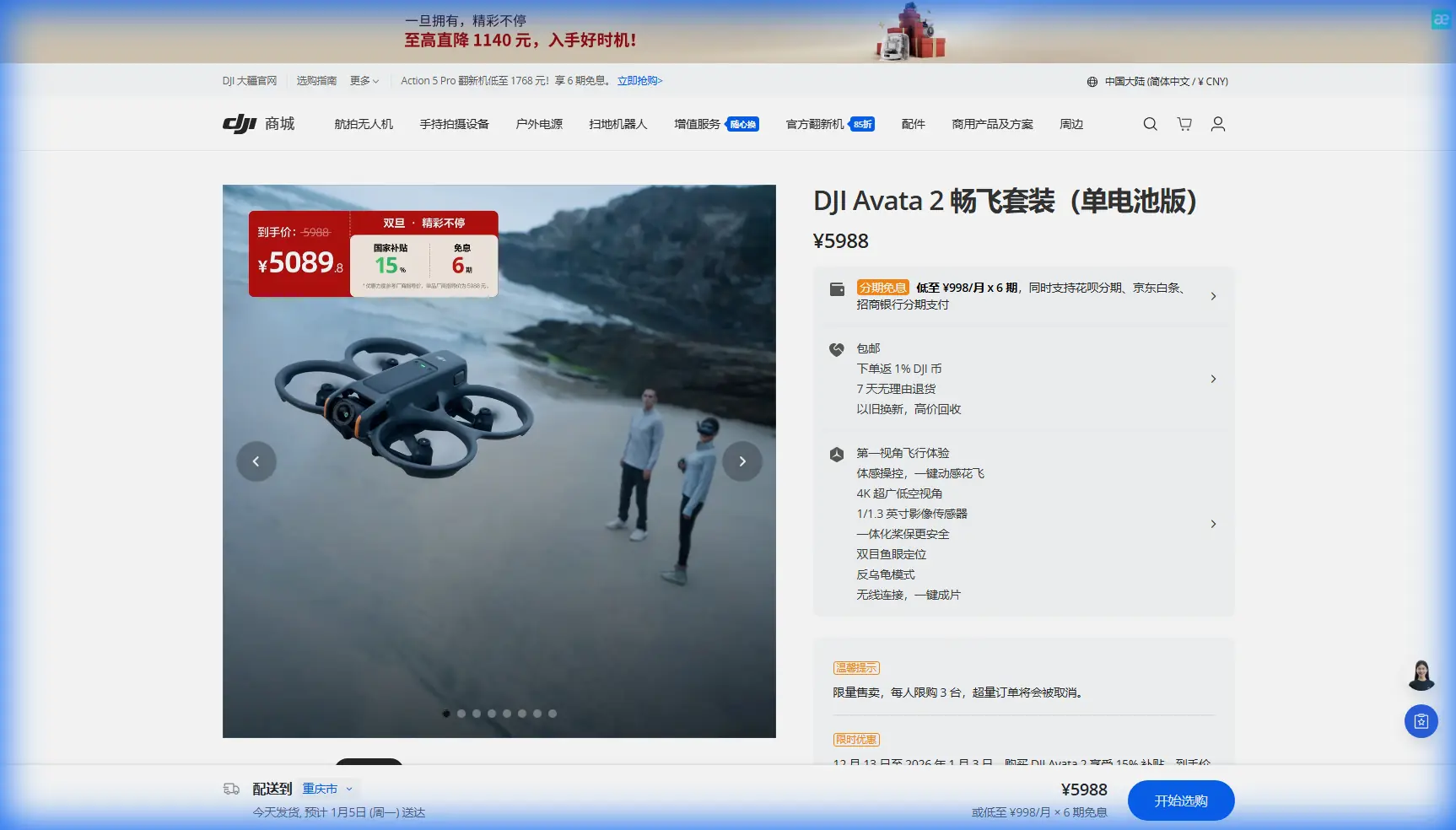
Avata 2 in Coastal Forests: A Field Report on Range, Signal Discipline, and Safer FPV Capture
META: A field report on using DJI Avata 2 in coastal forests, covering antenna positioning, obstacle avoidance limits, D-Log workflow, subject tracking realities, and practical setup choices for stronger signal and cleaner footage.
Coastal forests expose the truth about any drone fast.
On paper, a compact FPV platform can look forgiving: guarded props, immersive control, stable video, automated shooting modes, and enough obstacle sensing to suggest a wider safety margin than older FPV rigs ever offered. In the field, especially near dense tree cover and salt-heavy air, the weak link usually isn’t raw power. It’s signal management, route discipline, and pilot expectations.
That is where the Avata 2 gets interesting.
I’ve been looking at the Avata 2 less as a thrill machine and more as a practical capture tool for tight, low-altitude work in difficult environments. Coastal forests are one of the best places to judge its real value. They combine uneven light, narrow flight corridors, reflective water, moving branches, and the kind of line-of-sight interruptions that punish bad antenna orientation almost immediately. If your goal is to document trails, inspect access routes, create tourism footage, monitor site conditions, or train pilots for confined scenic flights, this aircraft can do strong work. But only if it is flown on its own terms.
Why coastal forests are hard on FPV systems
A beachside woodland looks open until you are under the canopy.
From above, there may be visible gaps. At drone height, those gaps collapse into layers: trunks, scrub, hanging branches, damp foliage, boardwalk rails, dune contours, and sudden changes in brightness that make spatial judgment harder in goggles than people expect. Add shoreline wind and the occasional reflective water channel, and you get a setting where link quality and visual awareness matter more than outright speed.
This matters for Avata 2 because FPV flight tempts pilots into fluid, committed lines. In an open field, that style feels natural. In a coastal forest, every committed line should be earned. The aircraft’s obstacle sensing helps, but it does not turn a tight wooded corridor into an automated route. Branches, thin twigs, reeds, and side intrusions can still create trouble, especially when you’re focused on framing rather than escape options.
That distinction is operationally significant. Obstacle avoidance is best treated as a buffer against simple misjudgment, not as permission to thread every visible opening. In wooded coastal work, the best pilots still fly with old-school discipline: preserve line of sight where possible, choose lanes with exits, and keep enough altitude or lateral room to break off cleanly.
The antenna mistake that kills range first
If there is one habit that improves real-world Avata 2 performance in forests, it is better antenna positioning.
Most range complaints in tree-heavy areas are not really “range” problems in the abstract. They are geometry problems. Pilots rotate their body, angle the controller poorly, let their torso block the link, or aim antennas as if they were trying to point directly at the aircraft. That sounds intuitive. It often isn’t correct.
For maximum range and consistency, the goal is usually to maintain the strongest possible orientation between the transmission system and the drone while minimizing blockage from your own body, nearby vehicles, guardrails, or tree trunks. In practical terms, that means standing where you have the cleanest corridor into the flight zone, not just the prettiest takeoff point. It also means being deliberate about how the controller and antennas are held relative to the aircraft’s path.
A simple field rule helps: don’t let your body become the obstacle between the drone and the controller. If the flight path bends down a trail or behind a dune ridge, pivot your entire stance early rather than waiting for signal quality to dip. In forests, a half-second of delayed repositioning can become a chain of problems: reduced bitrate, hesitation, overcorrection, and a rushed climb that puts the drone into branches.
If you regularly work in places where signal corridors are awkward, send your route sketch or site photos through this WhatsApp line for flight setup questions. Sometimes a small change in pilot position fixes more than any settings tweak.
What obstacle sensing really buys you here
The Avata 2’s obstacle sensing is one of the reasons it can be taken seriously by non-racing users. For training, light inspection passes, tourism footage, and scenic documentation, that extra layer changes the risk profile compared with older FPV platforms that were essentially manual all the time.
Still, wooded coastal environments expose the limits.
Obstacle systems perform best when the scene is readable and the closure rate is manageable. Forest edges with strong shadow transitions, irregular branches, and narrow side gaps are less forgiving. The practical significance is that you should use obstacle sensing to reduce basic errors, not to replace route planning. It can help when creeping forward through a broad opening or easing along a trail edge. It is less reliable as a substitute for judgment in cluttered, high-contrast corridors.
That also affects training. If you are teaching new operators on Avata 2, coastal forests are valuable precisely because they reveal overconfidence early. Students learn that “protected propeller design plus sensing” does not mean “carefree under-canopy flying.” They start to understand closure speed, braking distance, and the way visual compression in goggles can make a branch line look farther away than it really is.
For commercial operators, that lesson matters. Whether the mission is promotional footage for eco-tourism, route familiarization for field teams, or progress documentation around a coastal reserve, predictable and repeatable flights are more useful than dramatic but inconsistent lines.
Subject tracking and ActiveTrack: useful, but not magical in tree cover
People often ask whether subject tracking or ActiveTrack can simplify work in scenic forest areas.
The answer is yes, with qualifications.
In open stretches near the tree line, these tools can reduce workload and create smooth motion that would otherwise require a second take. They are especially helpful for following a cyclist on a broad path, a maintenance vehicle on an access road, or a kayaker moving near a mangrove edge where the route remains visually clear. But once the background gets busy and foreground branches begin crossing the frame, subject reliability can fall apart fast.
That has direct operational significance. Tracking modes should be started only where the subject is visually distinct and the intended path has room for recovery. In mixed forest and shoreline conditions, the best use is often hybrid: engage tracking during cleaner sections, then take back manual control before the route tightens. Treat automation as a workload reducer, not a commitment device.
This is also where good preflight observation beats menu exploration. Watch the path first. Look for canopy choke points, thin branch intrusions, sudden elevation changes, and light patches that might confuse framing. The Avata 2 can help produce elegant follow shots, but in forests, automation should follow the route plan, not define it.
QuickShots and Hyperlapse are better than they look for documentation work
QuickShots and Hyperlapse tend to be dismissed as creator features. In coastal forest operations, they can be more practical than that.
QuickShots can standardize repeated scenic captures from the same safe launch point. If you are documenting a coastal trail over time, monitoring vegetation recovery, or producing recurring media for a visitor site, repeatable motion matters. Automated shot patterns, used conservatively in open pockets, can generate consistent visual references without requiring every pilot to manually recreate the same move.
Hyperlapse has similar value when the objective is environmental storytelling rather than pure spectacle. A shoreline tree line under shifting weather can communicate erosion patterns, visitor flow, tidal context, or changing cloud cover in a concise format. The key is to choose launch sites with ample clearance and avoid forcing these modes into constrained areas where side obstacles or overhead branches turn a convenience feature into a liability.
Again, coastal forests punish sloppy assumptions. A tool that works beautifully over a clearing can become risky ten meters deeper into cover.
D-Log is where the Avata 2 stops looking like a toy
One of the more practical reasons to use the Avata 2 for serious civilian capture is D-Log.
Coastal forests present brutal contrast. You can have bright water or pale sky in one part of the frame and dark understory in another. Standard color can look pleasing quickly, but it also gives away dynamic range limits sooner. D-Log provides more room to shape the image in post, which matters when your deliverable needs to preserve cloud detail without crushing foliage texture into a dark mass.
That is not just an editor’s preference. It affects flight decisions. When you know you have more grading latitude, you can prioritize safer, more stable paths over desperate attempts to “get it perfect in camera” during a difficult pass. You spend less attention chasing a dramatic exposure balance and more attention preserving clean movement and signal quality.
For inspection-adjacent scenic work, tourism promotion, or training content, that workflow flexibility is a real advantage. The footage remains usable across mixed light, and the final result can look measured rather than overprocessed.
A practical field setup for stronger links in forests
If I were staging the Avata 2 for repeated flights in a coastal forest, I’d keep the setup philosophy simple.
Pick a pilot position with a genuine corridor into the route, even if it means walking away from the obvious scenic overlook. Avoid standing beside vehicles, metal railings, dense trunks, or embankments that limit your orientation options. Before takeoff, identify two or three points where the route could degrade signal and decide in advance whether you will climb, pause, or turn out at each one.
Then come the human factors.
Hold the controller consistently. Keep the antenna orientation deliberate. Rotate with the aircraft’s path so your body does not shield the link. If the drone is going to disappear behind heavy foliage or terrain, assume the signal will worsen before the video feed tells you so. Forest flying rewards pilots who move early.
The Avata 2 can be flown dynamically, but the highest-quality work in these environments usually comes from restraint. Short runs. Clean exits. Repeated passes instead of one heroic attempt. If you are mapping the visual character of a boardwalk, recording the condition of access roads, or capturing low-altitude travel sequences for a coastal site, those habits produce more usable footage and fewer recoveries.
Where Avata 2 genuinely fits
The Avata 2 is not the universal answer for wooded environments. If the mission demands long-distance mapping, heavy wind authority at altitude, or broad-area survey efficiency, there are better tools. But for immersive low-level capture, route familiarization, training in confined scenic airspace, and visual storytelling in places where conventional drones feel awkward or too detached, it earns its place.
Its guarded design lowers the intimidation factor for newer FPV operators. Obstacle sensing adds a meaningful safety layer. Tracking modes and automated shots can save time in the right pockets of open space. D-Log gives the footage enough post-production elasticity to handle the ugly contrast that coastal forests create.
Still, the core skill remains older than any feature list: know where your signal is going to fail before it actually does.
That is why antenna positioning advice is not a minor note here. In forest work, it can be the difference between a controlled scenic pass and a rushed correction into branches. The pilots who get the most from the Avata 2 are usually not the ones flying hardest. They are the ones who understand that radio path, route shape, and environmental clutter are part of the shot.
Coastal forests don’t reward swagger. They reward discipline.
And when the operator respects that, the Avata 2 becomes a surprisingly capable tool for civilian fieldwork and cinematic documentation in places that expose every weak habit a pilot has.
Ready for your own Avata 2? Contact our team for expert consultation.