
Delivering Highway Mapping Work With Avata 2
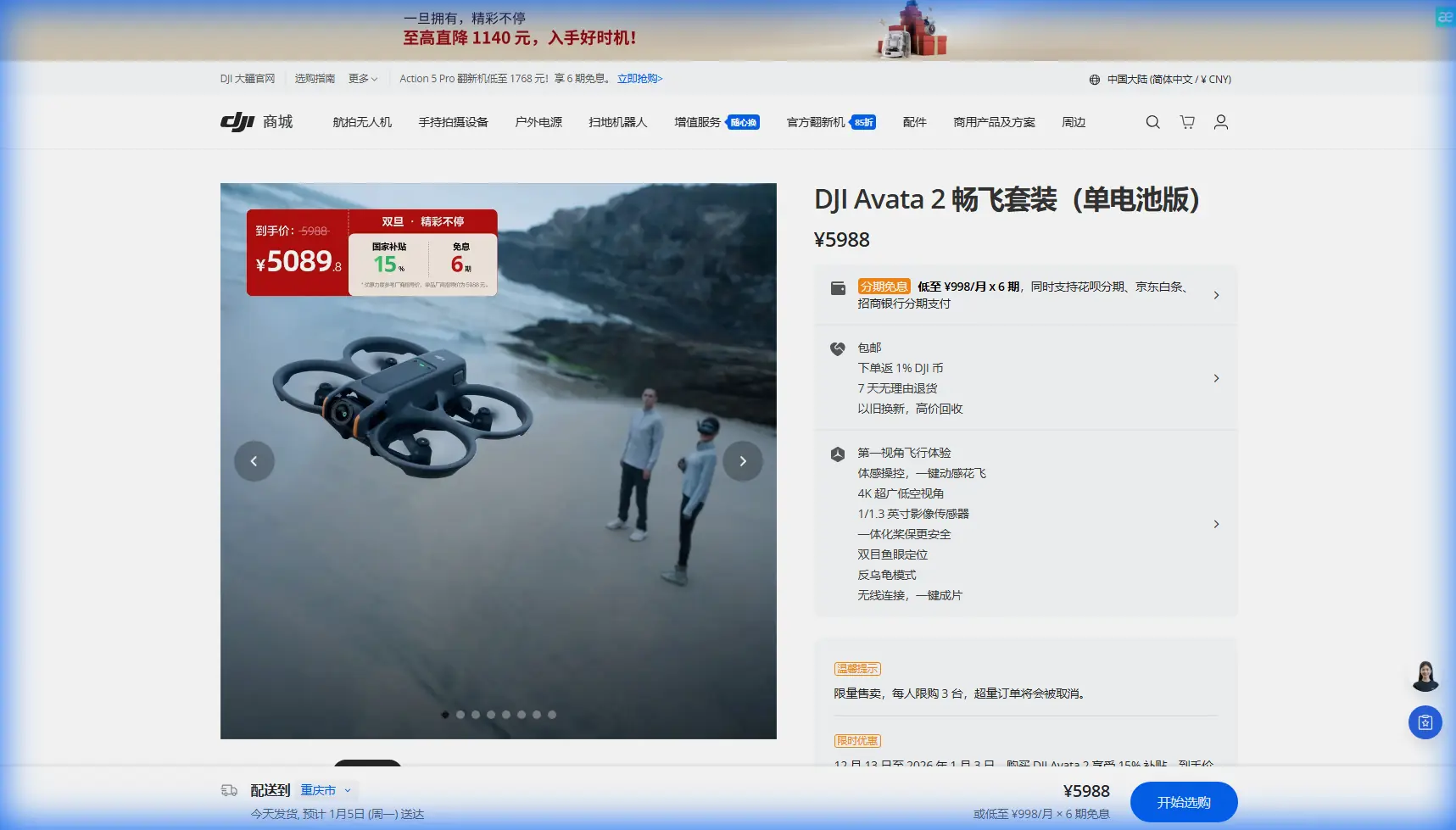
Delivering Highway Mapping Work With Avata 2: A Practical Field Workflow Built Around Survey Discipline
META: A field-tested Avata 2 tutorial for urban highway corridor work, connecting FPV flight advantages with CH/Z 3004—2010 survey control, photo point layout, inspection, and data handoff requirements.
Urban highway work punishes sloppy aerial habits.
That was the lesson on one of the more frustrating corridor jobs I remember: tight interchanges, reflective barriers, patchy GNSS conditions near overpasses, and a delivery deadline that left no room for a second field visit. The aircraft was not the real problem. The problem was the gap between cinematic flying and survey-grade field discipline. Once that gap shows up, every “good” flight starts creating expensive office work.
That is why Avata 2 is interesting for more than just immersive flying. In the right hands, it becomes useful for controlled visual collection in awkward spaces where larger mapping platforms can feel clumsy. But the real story is not the aircraft alone. It is how you build an urban highway workflow around recognized low-altitude photogrammetry principles.
A useful reference point here is CH/Z 3004—2010, the Chinese standard for low-altitude digital aerial photogrammetry field operations. It was written around the practical maturity of ultralight aerial camera systems and unmanned aircraft imaging systems, and it does something many pilots overlook: it defines fieldwork as a chain, not a flight. That chain includes basic control point measurement, photo control point layout and measurement, feature interpretation or field annotation, inspection and acceptance, and final result submission. If you are trying to deliver highway-related outputs in urban conditions, those pieces matter more than any flight mode menu.
Why Avata 2 makes sense in highway corridors
Avata 2 is not a traditional fixed-path mapping drone, and pretending otherwise misses its strengths. Its value in a city highway setting is precision access to awkward geometry: under elevated segments, around ramps, near sign gantries, along retaining walls, and beside noise barriers where line of sight changes constantly.
That is where features people usually treat as “creator tools” become operational tools.
Obstacle avoidance helps preserve continuity when the aircraft is threading along constrained infrastructure. Subject tracking and ActiveTrack are not replacements for survey control, but they can support repeatable visual runs along service vehicles or inspection targets when documenting corridor conditions. QuickShots and Hyperlapse are obviously not survey products by themselves, yet they can speed up contextual capture for stakeholder review, progress communication, and pre-field reconnaissance. D-Log matters too. On highways, contrast is brutal: bright concrete, dark underpasses, reflective metal, mixed cloud conditions. A flatter image profile can preserve visual detail that helps later interpretation of surface markings, barrier transitions, drainage features, or asset condition.
Still, none of that saves a job if the field process is weak.
The standard’s biggest lesson: flight data is only one layer
CH/Z 3004—2010 is narrow in a good way. It is not trying to romanticize UAV work. It defines what the field side must accomplish for low-altitude digital aerial photogrammetry, especially for 1:500, 1:1,000, and 1:2,000 mapping outputs. Those scales are not abstract numbers. In urban highway delivery, they imply a different level of care than casual imaging.
At 1:500, small errors become visible very quickly. Lane edges, curb lines, drainage structures, safety islands, retaining edges, utility covers, and slope breaks all demand disciplined control and interpretation. If you take Avata 2 into that environment as if it were just a nimble FPV platform, you risk collecting beautiful footage that cannot support reliable extraction or validation.
This is where the standard’s field requirements become operationally significant:
Basic control point measurement
You need a stable spatial framework before the interesting flying starts. In highway corridors, this matters because long linear projects magnify drift and inconsistency. One weak segment can contaminate the whole chain.Photo control point layout and measurement
Urban highways create repeated textures—lane markings, barriers, expansion joints, fencing. Those can fool visual alignment. Properly distributed control points keep the dataset anchored where visual similarity is highest.Field interpretation or annotation requirements
Some features do not explain themselves from imagery alone. Road furniture, temporary traffic changes, maintenance staging, hidden drainage inlets, or partially obscured boundaries may need field notes to avoid wrong office assumptions.Inspection, acceptance, and final submission requirements
This is where many fast-turn teams fall apart. If the field crew does not verify completeness before leaving, the office inherits uncertainty, and the client inherits delay.
That framework turns Avata 2 from a capture device into part of a repeatable delivery method.
A practical Avata 2 workflow for urban highway jobs
Below is the workflow I now prefer when using a compact FPV-style platform for highway-adjacent deliverables. It is not a substitute for project specifications, but it aligns with the discipline behind CH/Z 3004—2010 and fits the strengths of Avata 2.
1) Start with the map scale, not the drone
The standard explicitly centers work intended mainly for 1:500, 1:1,000, and 1:2,000 mapping. That should be your first filter.
Ask a blunt question: what is the output supposed to support?
- Asset inventory along a corridor
- Construction progress documentation
- Visual condition review
- Supplemental image capture for a broader survey package
- Detailed interpretation of hard-to-access structures
If the deliverable leans toward precise topographic compilation, Avata 2 may be a supporting aircraft rather than the primary mapping platform. If the task is to capture difficult structures, constrained spaces, or supplementary perspective data around urban highway features, it becomes much more compelling.
That distinction prevents overpromising.
2) Build control like a survey team, not a content crew
The standard’s emphasis on basic control point measurement and photo control point layout is not optional decoration. It is the backbone.
On a highway job, I break the corridor into operational segments based on geometry, obstruction, and line-of-sight complexity. Then I ensure each segment has enough control visibility from realistic Avata 2 flight paths, not idealized ones. Overpasses, signboards, and vegetation can hide control from low-angle capture. If you place points without thinking about actual FPV trajectories, you create blind spots.
Operational significance: in urban corridors, a low-altitude aircraft often sees the world laterally rather than from a clean nadir block. That changes which control points are visible and useful. The standard’s focus on control measurement and layout becomes even more relevant with Avata 2 because the platform excels in spaces where conventional geometry gets messy.
3) Use Avata 2 for what larger aircraft often miss
This is the part that changed my own field results.
On that earlier difficult job, the main drone captured the broad corridor adequately, but the office team kept flagging gaps around retaining walls, undersides of structures, transition zones near ramps, and shielded drainage entries. We ended up revisiting. Since then, I use Avata 2 as the close-access layer.
Useful capture targets include:
- Side faces of retaining walls
- Barrier transitions and terminal details
- Sign support context
- Ramp merge geometry
- Service road interfaces
- Bridge approach condition visuals
- Noise barrier edges and attachments
- Areas beneath elevated roadway sections
This is where obstacle avoidance earns its place. In constrained urban infrastructure, it reduces the odds of clipping a barrier edge or structural element while maintaining a smooth capture line. That is not just about protecting the aircraft. It preserves dataset continuity. A broken pass can mean inconsistent overlap or missing contextual views.
4) Treat D-Log as a field-readability tool
People often discuss D-Log in a grading context, but on highway work its value is simpler: preserving detail across harsh contrast.
Urban highway corridors regularly combine bright pavement, dark shadow under bridges, reflective guardrails, painted markings, and glass noise screens. Standard contrasty footage can bury useful information in highlights or shadows. D-Log gives the office more room to inspect and interpret image content accurately.
Operational significance: this connects directly to the standard’s requirement for fieldwork that supports later interpretation and acceptance. If image tonality hides a feature edge or structure detail, the field team may technically have flown the segment but still failed the practical mission.
5) Use tracking features carefully, and only where they add repeatability
ActiveTrack and subject tracking are not survey methods. They are control aids for certain visual tasks.
In highway environments, they can help when documenting a moving inspection path, following a maintenance vehicle at safe stand-off distance within approved conditions, or repeating a corridor visual line to maintain framing consistency. They are especially useful in training newer operators to hold stable perspective through bends and elevation changes.
But they should not replace planned control-based collection. Think of them as repeatability helpers, not accuracy guarantees.
6) Add QuickShots and Hyperlapse for communication, not measurement
Some teams dismiss these features because they are not “serious survey tools.” That is too simplistic.
QuickShots and Hyperlapse can produce compact visual summaries for project managers, highway stakeholders, and non-technical reviewers who need to understand site constraints fast. A one-minute corridor context sequence can save a dozen explanatory emails. It can also support field annotation by showing how individual problem areas relate to the broader alignment.
That ties back to the standard’s mention of field interpretation and submission requirements. Delivery is not just raw imagery. It is understandable, checkable project evidence.
Coordinate discipline still rules everything
One line in CH/Z 3004—2010 is easy to overlook but extremely important: the spatial reference system is to follow the requirements of GB/T 7931. This may sound dry, but in urban highway work it is foundational.
If your close-range Avata 2 imagery, control network, and final deliverables are not tied into the correct spatial framework, the dataset becomes awkward to integrate with topographic mapping, roadway design references, utility overlays, or construction records. You might still produce usable visuals, but you will lose downstream efficiency.
That matters most on corridor jobs because they rarely live alone. Highway deliverables are usually inserted into a larger project ecosystem. Coordinate inconsistency there is not a minor technical issue. It becomes a handoff problem across engineering, GIS, and survey teams.
The field check that prevents painful rework
The standard references GB/T 24356 for quality inspection and acceptance of surveying and mapping results, and that should shape how you end every Avata 2 session.
Before demobilizing, confirm:
- Required control points were actually visible in the collected imagery
- Critical structures were captured from enough angles for interpretation
- Shadow-heavy sections are readable
- Reflective surfaces did not destroy usable detail
- Segment coverage is continuous, especially near merges and structures
- File naming and annotation match the project design
This is where I see the biggest difference between average and expert drone teams. Average teams review battery count and flight logs. Expert teams review deliverable sufficiency.
A realistic role for Avata 2 in urban highway delivery
Avata 2 will not replace every corridor mapping aircraft, nor should it. But that is not the point.
Its real value appears when the project includes hard-to-access geometry, visual verification demands, supplemental capture around infrastructure complexity, or training scenarios where pilots need to understand how a corridor behaves from close range. In those cases, Avata 2 can reduce the revisit rate that often kills schedule efficiency.
The key is pairing its agility with the rigor reflected in CH/Z 3004—2010. That means respecting control, planning around intended map scale, documenting ambiguous features, checking acceptance before leaving site, and handing over material that fits a real survey workflow.
If your team is trying to refine an Avata 2 corridor workflow around urban infrastructure, you can message us here for field-method discussion. The conversation is usually less about the aircraft itself and more about matching capture style to deliverable standards.
That shift in mindset is what made my own highway jobs easier. Not magic. Not marketing. Just fewer assumptions, stronger control, and a drone that can reach the spots that used to force a return trip.
Ready for your own Avata 2? Contact our team for expert consultation.