
Avata 2 Around Dusty Power-Line Corridors
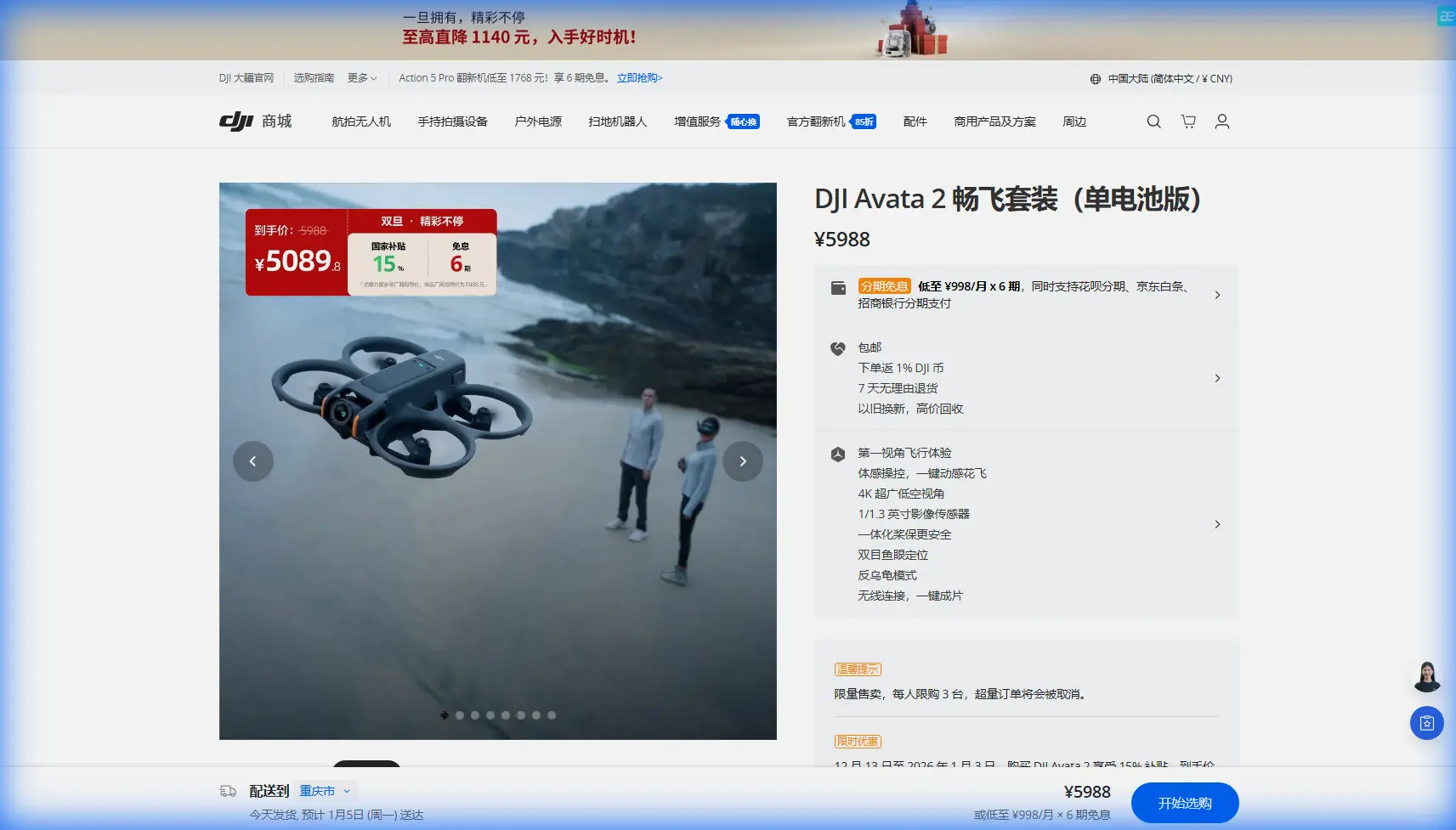
Avata 2 Around Dusty Power-Line Corridors: A Field Case Study in Flying Fast and Processing Smarter
META: A practical Avata 2 case study for dusty power-line work, covering flight capture strategy, obstacle avoidance limits, D-Log workflow, and how Pixel-Mosaic-style processing turns drone imagery into usable mapping outputs.
The most interesting part of using the Avata 2 near power-line routes is not the aircraft itself. It is what happens after the propellers stop.
That sounds backwards, especially for a drone known for immersive flying, tight maneuvering, and a camera system that tempts operators to focus on the flight experience first. But in dusty utility corridors, where visibility changes by the minute and route conditions can punish weak workflows, the real value comes from how well the footage and imagery can be turned into something usable. Inspection notes. Corridor context. Surface models. A navigable 3D scene for planning the next run.
That is where this case study becomes useful.
I have been looking at Avata 2 through a practical lens: not as a pure FPV toy, and not as a generic camera drone substitute, but as a compact aircraft that can support civilian infrastructure tasks when the mission is narrow, the environment is awkward, and the operator is disciplined about data handling. The reference material behind this discussion is not an Avata 2 brochure. It is a drone data post-processing solution from Zhongwei Kongjian Technology in Shenzhen, centered on its Pixel-Mosaic system and related tools. That matters because it shifts the conversation from “can the drone fly here?” to “can the collected data become operationally useful?”
For dusty power-line delivery and route support work, that second question is the one that decides whether the flight was worth doing.
The scenario: short-range corridor work in dust, wires, and visual clutter
Picture a utility support team moving materials along a power-line access corridor in dry conditions. Vehicles struggle on the ground. Dust hangs in the air. The route is lined with poles, vegetation, guy wires, service structures, and terrain changes that are easy to misread from eye level. The drone is not replacing crews or heavy equipment. It is being used to scout access, document route conditions, and create visual references that can reduce repeat site visits.
This is exactly the kind of environment where the Avata 2 can be surprisingly effective in a support role.
Its compact size helps in narrow spaces. The aircraft can move through corridor edges, around structures, and into low-altitude viewpoints that would be cumbersome for larger mapping platforms. Obstacle avoidance helps, but only within reason. Near thin wires, dusty air, and high-contrast sunlight, no pilot should treat automated sensing as a guarantee. The operational significance is simple: the Avata 2 can improve visibility for the team, but only if you fly conservatively and design the mission around what the sensors may miss.
That is also why a third-party accessory made a bigger difference than expected in this kind of work. In one setup, a simple high-efficiency ND filter set became more than a cinematic add-on. It stabilized shutter behavior in bright, dusty midday conditions and made D-Log footage easier to grade consistently across changing terrain. Cleaner tonal consistency is not just an aesthetic win. It improves frame readability when you later extract stills, compare segments of the corridor, or feed imagery into downstream processing.
Why post-processing is the real multiplier
The supplied reference data highlights a company focused on drone data post-processing, with more than ten years of technical accumulation and proprietary software. That background matters because utility corridor operations do not gain much from raw files sitting on an SD card.
One of the key products in the source is the Pixel-Mosaic aerial image processing system, described as supporting UAV survey data processing and rapidly generating outputs such as mosaics, aerial triangulation, dense point clouds, DOM/DSM products, and 3D models. Those are not abstract buzzwords. They are the bridge between a flight and a repeatable field workflow.
Here is the operational significance of two of those outputs:
- DOM/DSM products can help teams understand surface conditions and elevation context along access paths. In dusty power-line corridors, ground irregularities often matter as much as the structures overhead.
- 3D models and dense point clouds can provide a fuller spatial record of poles, access clearances, terrain edges, and nearby obstacles, which is valuable when planning repeat visits or coordinating with teams that were not on site.
Now, to be clear, the Avata 2 is not a conventional large-area mapping aircraft. It is not the first tool I would choose for broad-corridor survey production. But in short sections, localized problem areas, or rapid documentation tasks, it can collect visual material that becomes much more valuable when paired with a processing environment built for UAV imagery.
That is why the reference to Pixel-Mosaic is so relevant to an Avata 2 article. The drone’s usefulness rises sharply when the workflow expects deliverables, not just footage.
Flying the Avata 2 like a corridor tool, not a freestyle machine
Power-line environments punish improvisation. If you approach them with a freestyle mindset, you will either miss the data you need or create unnecessary risk.
The better approach is to treat the Avata 2 like a compact corridor documentation platform.
That means planning flights in segments. One pass for route overview. One slower pass for structural context. One lower-altitude pass where dust and obstructions allow. If conditions are bright and harsh, D-Log can preserve more flexibility for later grading, especially when dust haze washes contrast out of the scene. In a route lined with pale soil and reflective hardware, that extra latitude helps separate useful details from visual noise.
Features commonly associated with content creation can also be repurposed intelligently. Hyperlapse, for example, is not something I would use casually around power infrastructure, but time-compressed environmental footage from a safe offset can help teams visualize dust movement, traffic patterns, or changing light on a route. QuickShots are less relevant here, except perhaps for stakeholder presentations after the fact. ActiveTrack and subject tracking should be treated with restraint in complex utility environments. The operational issue is obvious: automated tracking works best when the subject is cleanly separated and the scene is predictable. Dust, wires, poles, and terrain transitions make that unreliable fast.
Obstacle avoidance deserves the same grounded view. It is helpful for margin, not magic. In dusty air, sensor confidence can degrade. Around wires and fine structures, even advanced systems can struggle. The pilot still owns the safety envelope.
Where a Pixel-Mosaic-style workflow fits after landing
Once the Avata 2 is back on the ground, the quality of the operation depends on what you do next.
The source document describes a single-machine version of Pixel-Mosaic for processing UAV data into stitched mosaics, aerial triangulation results, dense point clouds, DOM/DSM outputs, and 3D models. That list maps neatly onto real corridor support needs. If you flew repeated passes over a difficult section of route, a stitched visual product can reveal context that is hard to grasp from individual clips. If the terrain is uneven or access roads are degraded, elevation-linked products become more useful than standard video alone. If multiple stakeholders need to understand the route without revisiting the site, a 3D model can save time and reduce ambiguity.
The source also mentions a network version that supports parallel production, automatic networking, distributed modeling, and large-scale 3D model creation for massive datasets. Even if an Avata 2 mission is relatively small, this points to a wider truth: compact field capture can still feed into enterprise-scale processing pipelines. A utility contractor does not always need a huge aircraft on day one. Sometimes it needs fast collection at the edge, then scalable processing back at the office.
That distinction is easy to miss. It is also where many teams leave value on the table.
The overlooked role of video processing
Another product in the reference set, Video-Mosaic, is described as handling UAV video with real-time image stitching, automatic frame output, and image-content detection and recognition. I am deliberately leaving aside the more sensitive monitoring language from the source and focusing on the civilian workflow implication: video does not have to remain just video.
That is useful for Avata 2 users because this aircraft often captures fluid, route-following footage better than formal grid data. In dusty power-line corridors, there are many moments when a clean, continuous video run is easier to achieve than textbook mapping patterns. If a system can stitch, segment, and structure that footage into outputs teams can review systematically, the Avata 2 becomes more than a pilot’s-eye recorder.
This is one of the strongest arguments for using a post-processing-centered workflow with this aircraft.
The drone’s natural capture style is dynamic. Software like the one described in the source can help translate that dynamic material into stable deliverables.
Building a usable 3D corridor story
The source also references a 3D-Exhibition platform that combines remote-sensing imagery, digital elevation data, and 2D/3D datasets to build a realistic virtual 3D world for geospatial management and application. That may sound big compared with a small FPV-style aircraft, but the concept is highly relevant.
Infrastructure teams rarely make decisions from one clip or one still. They need context.
A realistic 3D environment, even if built from multiple sources and not only from Avata 2 capture, allows field observations to live inside a navigable spatial framework. That changes coordination. A pilot can point out a dusty choke point near an access bend. A planner can review terrain context. A maintenance lead can compare route obstacles before sending equipment. The significance is not just visualization. It is shared understanding.
For readers working with Avata 2 specifically, this means the aircraft can act as a fast collector of high-value local context inside a larger geospatial stack.
That is a far more serious role than most people assign to it.
What worked best in the dusty power-line case
A few patterns stood out.
First, shorter flights with specific capture goals were better than long exploratory runs. Dust and corridor clutter increase pilot workload. Breaking the mission into clean data objectives produced stronger material for later processing.
Second, D-Log was worth using when the light was harsh. The benefit showed up less in “cinematic look” and more in recoverable detail across washed-out terrain and darker utility structures.
Third, the third-party ND filters helped normalize exposure behavior enough that footage from multiple passes matched more closely. That made later review less messy and improved consistency for stitched or comparative outputs.
Fourth, obstacle avoidance remained a support layer, not a planning strategy. Around utility corridors, manual discipline still matters more.
Fifth, post-processing dictated whether the mission produced insight. Raw clips were useful for immediate review, but stitched visual products, 3D context, and terrain-linked outputs were what made the site data reusable.
If you want a practical discussion about setup tradeoffs for this kind of mission profile, you can send field notes through this Avata 2 workflow chat.
The bigger takeaway for Avata 2 operators
The reference material from Zhongwei Kongjian Technology is a reminder that the drone industry does not end at capture. The company describes itself as being focused on UAV data post-processing and application, backed by more than a decade of technical development and fully proprietary core technology. Whether or not a team uses that exact product stack, the lesson holds.
A compact aircraft like the Avata 2 earns its place in commercial work when it feeds a disciplined data pipeline.
In dusty power-line support scenarios, the aircraft can get into places larger drones handle less gracefully. It can collect route-level perspective quickly. It can document edge cases and terrain transitions. With the right accessory choices, especially exposure-control tools, it can bring back more consistent material than many people expect.
But none of that reaches full value on the day of the flight alone.
Once processed into mosaics, point-cloud-supported context, DOM/DSM layers, or 3D scenes, the capture becomes something other teams can use without guessing what the pilot saw. That is the difference between a cool flight and a useful operation.
For Avata 2 owners looking at utility corridors, dusty access routes, or infrastructure support tasks, that is the mindset shift worth making. Fly carefully. Capture intentionally. Process aggressively.
The aircraft is only half the system.
Ready for your own Avata 2? Contact our team for expert consultation.