
Avata 2: Delivering Solar Farms in Dusty Fields
Avata 2: Delivering Solar Farms in Dusty Fields
META: Learn how the DJI Avata 2 handles dusty solar farm deliverables with obstacle avoidance, D-Log color, and expert antenna tips for electromagnetic interference.
TL;DR
- The Avata 2's compact FPV design lets you fly between tight solar panel rows where larger drones simply cannot operate
- Obstacle avoidance sensors prevent costly crashes against metal racking systems and support structures in dusty, low-visibility environments
- D-Log color profile preserves critical shadow and highlight detail across highly reflective solar arrays
- Antenna positioning strategies solve the electromagnetic interference challenges unique to active solar installations
Why Solar Farm Documentation Demands an FPV Approach
Solar farm clients don't just want aerial overviews. They need immersive, close-proximity footage that documents panel conditions, wiring integrity, racking alignment, and terrain erosion—all across hundreds of acres of reflective glass baking under direct sunlight. Traditional camera drones hover at safe distances and deliver flat, disconnected perspectives that miss the story.
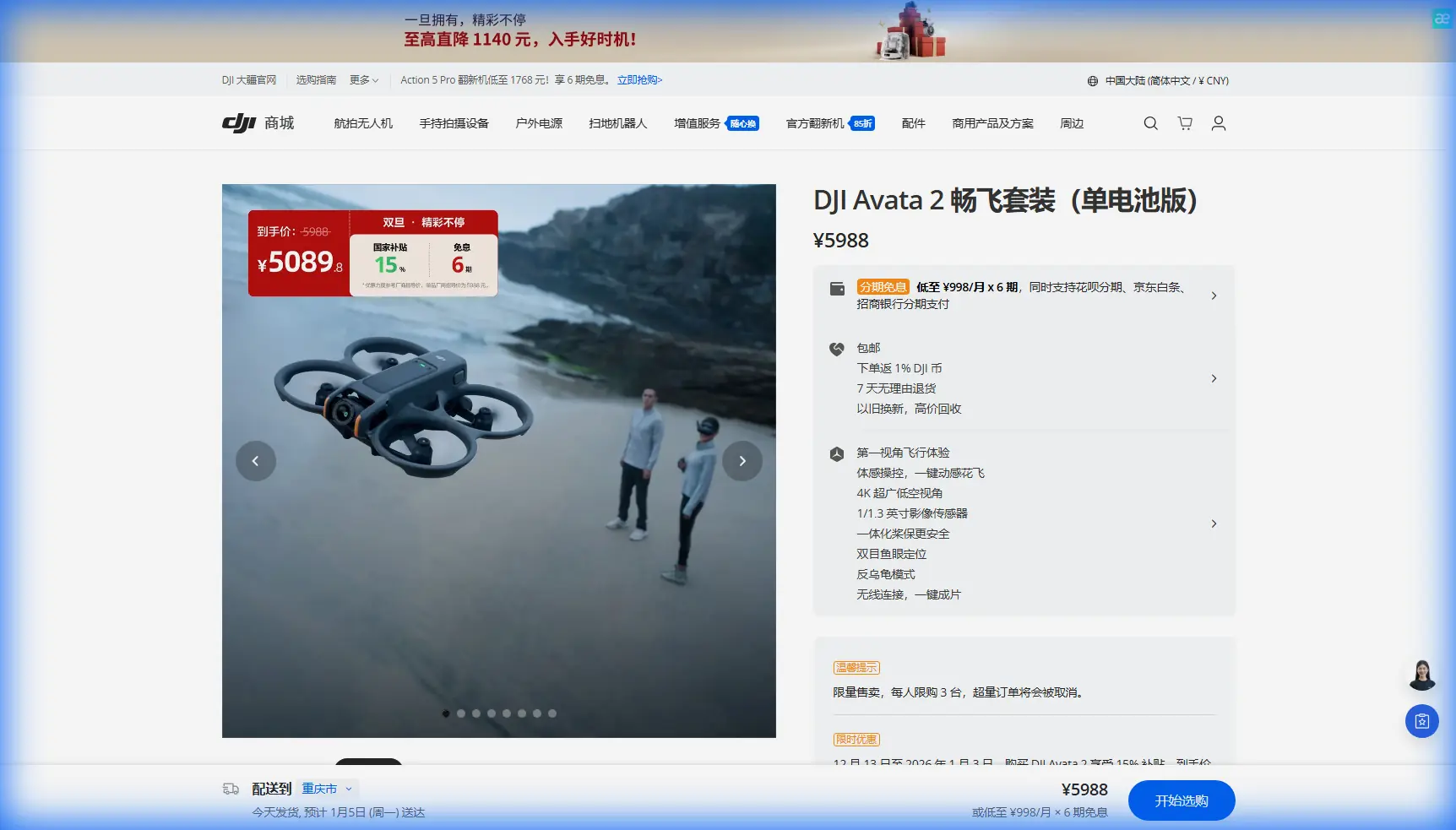
The DJI Avata 2 changes this equation entirely. Its compact 180mm wheelbase and ducted propeller design allow you to weave between panel rows at speeds conventional inspection drones can't match. I've spent the last eight months using the Avata 2 exclusively for solar farm documentation across the American Southwest, and this guide breaks down every technique, setting, and workflow adjustment I've refined through trial and brutal error.
Understanding the Solar Farm Environment
Dust: Your Constant Adversary
Desert and arid-region solar installations generate relentless particulate matter. Wind sweeps across bare ground between panel rows, kicking up fine silica dust that coats lenses, infiltrates motor bearings, and reduces visibility to dangerous levels within minutes.
Before each flight, I apply a hydrophobic lens coating and carry at least three microfiber cloths. The Avata 2's ducted propeller design actually provides a significant advantage here—the shrouds prevent larger debris from contacting the prop blades directly, reducing the micro-abrasions that degrade thrust efficiency over time.
Heat and Its Impact on Flight Performance
Solar farms are, by definition, designed to absorb and convert sunlight. Ground temperatures regularly exceed 140°F (60°C) at active installations. The Avata 2's battery performance drops approximately 12-15% in these conditions, reducing your effective flight time from the rated 23 minutes to roughly 19-20 minutes of usable capture time.
Pro Tip: Store batteries in an insulated cooler at 72°F (22°C) until immediately before flight. This single habit consistently recovers 2-3 minutes of flight time per battery in extreme heat conditions.
Electromagnetic Interference: The Hidden Problem
This is where most drone operators get blindsided on their first solar farm job. Active solar arrays generate significant electromagnetic fields across their DC wiring runs, inverters, and transformer stations. The Avata 2's O4 transmission system operates on 2.4GHz and 5.8GHz bands, both of which can experience interference near high-current electrical infrastructure.
During my first project at a 150MW facility outside Phoenix, I lost video feed three times within 200 meters of the central inverter station. The solution wasn't moving farther away—it was adjusting my antenna orientation on the DJI Goggles 3.
Here's the technique that solved it: position the goggles' antennas at a 45-degree outward angle rather than the default vertical orientation. This changes the radiation pattern enough to reduce null zones caused by multipath reflection off metal racking structures. Additionally, I keep the DJI RC Motion 3 controller antenna pointed directly at the drone during passes near inverter stations, maintaining a strong control link even when video momentarily degrades.
Step-by-Step: Capturing Professional Solar Farm Deliverables
Step 1: Pre-Flight Planning and Site Assessment
Walk the site before you fly. Identify these critical elements:
- Inverter station locations (your primary EMI risk zones)
- Guy wires, lightning rods, and weather stations (invisible at speed)
- Panel row spacing (the Avata 2 needs a minimum 4-foot clearance for safe passes)
- Wind patterns relative to dust generation
- Shade structures or operations buildings for pilot staging
Step 2: Configure Camera Settings for Reflective Surfaces
Solar panels create extreme dynamic range challenges. Direct specular reflections blow out highlights while the gaps between rows fall into deep shadow. Here's my proven settings configuration:
- Resolution: 4K at 60fps (allows speed ramping in post)
- Color Profile: D-Log — this is non-negotiable for solar work. The flat profile preserves 2-3 additional stops of highlight detail compared to Normal mode
- ISO: Lock at 100 to minimize noise in shadow recovery
- Shutter Speed: Follow the 180-degree rule relative to your frame rate
- White Balance: Manual at 5600K for consistent desert daylight matching
- EV Compensation: -0.7 to protect specular highlights on glass surfaces
Expert Insight: Never use Auto exposure on solar farms. The constant shift between reflective panels and dark ground confuses the metering system, creating unusable exposure pumping throughout your footage. Manual exposure with D-Log gives you complete control in post-production.
Step 3: Master the Flight Patterns
The Avata 2 offers three control modes, and solar farm work demands strategic use of each:
Normal Mode for overview establishing shots—wide orbits around the full array at 100-150 feet AGL, showcasing scale and layout for client presentations.
Sport Mode for dynamic row flyovers. Set your altitude at panel height plus 6 feet and execute smooth, linear passes down each row. The Avata 2's obstacle avoidance sensors provide a critical safety net here, automatically detecting racking uprights and end-of-row structures.
Manual Mode for advanced cinematic movements around specific areas of interest—damaged panels, erosion zones, or wiring anomalies. This mode disables obstacle avoidance, so only use it when you have clear sightlines and low wind conditions.
Step 4: Leverage QuickShots and ActiveTrack Strategically
While primarily designed for consumer content creation, QuickShots modes serve legitimate documentation purposes on solar farms:
- Dronie — pulls back from a specific point of interest (damaged panel, ground fault location) while maintaining frame center, providing both detail and spatial context in a single clip
- Rocket — vertical ascent over a problem area reveals surrounding panel conditions for comparison
- Circle — orbits inverter stations and transformer pads for 360-degree visual documentation
ActiveTrack and Subject tracking become valuable when following maintenance vehicles or personnel through the array. Lock onto a service truck and the Avata 2 autonomously maintains framing while you focus on flight path safety.
Hyperlapse mode, while less commonly used, creates compelling time-based content showing shadow movement across arrays—useful for marketing deliverables that demonstrate a farm's sun exposure throughout the day.
Step 5: Post-Production Workflow for D-Log Footage
D-Log footage looks flat and desaturated straight out of the camera. Apply a Rec.709 conversion LUT as your starting point, then fine-tune:
- Lift shadows by 15-20% to reveal under-panel detail
- Roll off highlights gently to manage panel reflections
- Add 10-15% saturation to restore desert landscape color
- Apply a mild orange-teal split tone that complements the natural palette of desert solar environments
Technical Comparison: Avata 2 vs. Common Alternatives for Solar Farm Work
| Feature | DJI Avata 2 | DJI Mini 4 Pro | DJI Air 3 |
|---|---|---|---|
| Wheelbase | 180mm | 251mm diagonal | 258mm diagonal |
| Weight | 377g | 249g | 720g |
| Obstacle Avoidance | Downward binocular vision | Omnidirectional | Omnidirectional |
| Max Flight Time | 23 min | 34 min | 46 min |
| D-Log Support | Yes | Yes (D-Log M) | Yes (D-Log M) |
| FPV Immersive View | Native goggles support | Phone/tablet only | Phone/tablet only |
| Tight Space Maneuverability | Excellent (ducted props) | Good | Moderate |
| Wind Resistance | Level 5 (38 kph) | Level 5 (38 kph) | Level 5 (38 kph) |
| Sensor Size | 1/1.3-inch | 1/1.3-inch | 1/1.3-inch |
| Best Use Case | Close-proximity immersive passes | General aerial overview | Mid-range versatile |
The Avata 2 trades raw flight time for unmatched close-quarters agility. For solar farm work requiring both immersive FPV perspectives and traditional aerial documentation, I carry both the Avata 2 and a longer-endurance platform.
Common Mistakes to Avoid
Flying without an ND filter: Solar farms are brutally bright environments. Without ND filters, you'll either blow your exposure or be forced into unnaturally fast shutter speeds that create jittery, uncinematic footage. Carry an ND8, ND16, and ND32 filter set at minimum.
Ignoring EMI zones: Assuming your control link is stable everywhere on-site is how you lose a drone inside an active electrical installation. Map your inverter stations and establish 50-meter buffer zones for your first flights until you understand your specific site's interference signature.
Launching from hot surfaces: Placing the Avata 2 directly on sun-baked ground or metal surfaces before launch pre-heats the battery and electronics. Always launch from a portable shade pad or reflective launch mat.
Skipping the lens check between flights: Dust accumulates on the lens within minutes. A single fingerprint-sized dust smear renders an entire flight's footage unusable for professional deliverables. Clean the lens before every single takeoff.
Overcommitting to battery reserves: The standard rule is to land at 30% battery. On solar farms in extreme heat, raise that floor to 35-40% to account for thermal performance degradation and the potential need for evasive maneuvering around unexpected obstacles.
Frequently Asked Questions
Can the Avata 2 handle sustained flights in dusty conditions without damage?
The Avata 2 is not IP-rated for dust or water resistance. Sustained exposure to fine particulate matter will eventually degrade motor bearings and gimbal mechanisms. Mitigate this by limiting flights to lower-wind periods, cleaning the drone thoroughly after each session with compressed air, and scheduling motor replacements every 80-100 flight hours in dusty environments. The ducted prop design does offer better inherent protection than open-prop alternatives.
Is D-Log really necessary for solar farm footage, or can I shoot in Normal mode?
D-Log is essential for professional solar farm deliverables. The dynamic range difference between reflective glass panels in direct sunlight and shadowed ground beneath the arrays can exceed 12 stops. Normal mode clips highlights and crushes shadows in these conditions, destroying recoverable detail. D-Log preserves that latitude, giving you the flexibility to deliver usable imagery for both marketing and technical inspection purposes from a single flight.
How do I maintain a reliable video feed near inverter stations and transformers?
Three strategies work in combination. First, angle your DJI Goggles 3 antennas at 45 degrees outward to reduce multipath interference from metal structures. Second, maintain direct line-of-sight between the RC Motion 3 controller and the drone, keeping the controller antenna pointed at the aircraft. Third, switch the O4 transmission system to manual channel selection on the 5.8GHz band, which typically experiences less interference from solar inverter switching frequencies than the 2.4GHz band. Test your specific site's interference profile during a low-altitude hover before committing to aggressive flight paths.
Ready for your own Avata 2? Contact our team for expert consultation.