
Filming Mountain Fields with Avata 2: A Practical Workflow
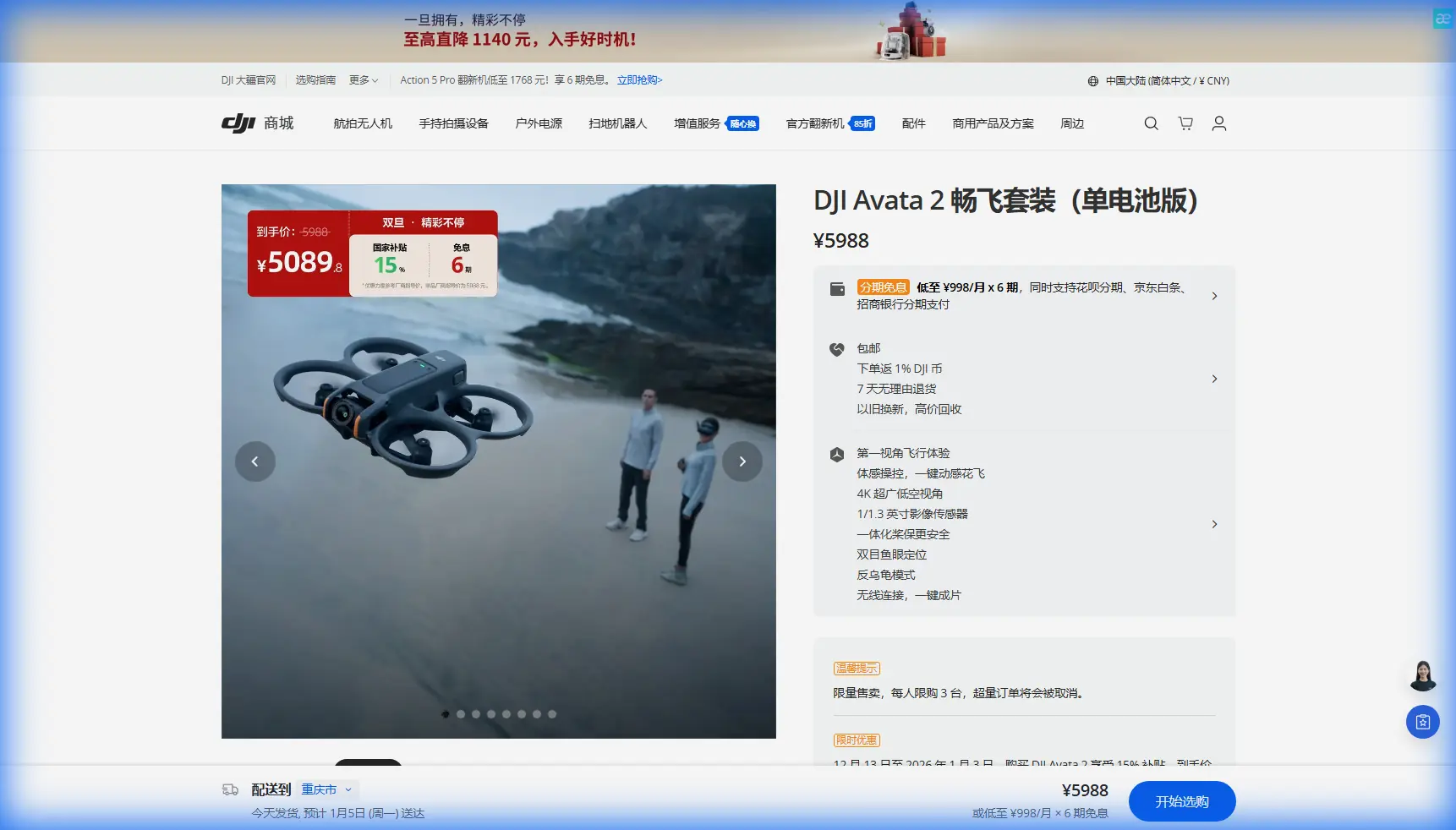
Filming Mountain Fields with Avata 2: A Practical Workflow for Clearer Coverage and Smarter Mapping Support
META: Learn how to use DJI Avata 2 for filming fields in mountain terrain, with practical tips on obstacle avoidance, D-Log capture, route planning, and fast field-to-command visual workflows inspired by emergency mapping systems.
Mountain farmland looks simple from the road. Once you fly it, the complexity shows up fast. Terraces break sightlines. Ridge shadows shift exposure every few seconds. Trees and utility lines appear where the slope folds inward. And if the purpose of the flight is more than pretty footage—say, crop documentation, land condition review, or visual support for a remote decision-maker—the job changes again.
That is where Avata 2 becomes interesting.
A lot of drones can produce attractive clips over rural scenery. Avata 2 stands out when the terrain is tight, uneven, and visually busy. It is not just about speed or immersion. It is about keeping usable footage flowing in places where conventional flight paths often become awkward. For anyone filming fields in the mountains, especially with a need to share results quickly, the real value comes from how Avata 2 fits into a broader visual workflow.
I approach this as a photographer first, but the reference system behind this article points to something bigger than creative flying. It describes a vehicle-based emergency mapping setup where one aircraft gathers imagery for later processing into a digital orthophoto map, or DOM, while another stream supplies live video to a command center. That distinction matters. One feed supports interpretation in the moment. The other supports accuracy after landing. If you understand that split, you can use Avata 2 much more effectively in mountainous agricultural filming.
Start by separating two goals: live awareness and post-flight clarity
One of the smartest ideas in the reference material is operational, not cinematic: different aerial outputs serve different decisions.
In that system, mapping drone imagery is processed after landing into a DOM and then sent onward by a vehicle-mounted communication chain. At the same time, monitoring video is transmitted live from the air to a ground vehicle and then relayed to a command center. Those are two very different products. Real-time video tells people what is happening now. Orthographic image products tell them what the ground actually looks like in measurable form.
For mountain field work with Avata 2, you should borrow that logic.
If your client, farm manager, landowner, or project partner needs immediate visibility, your first task is stable, readable video. Not stylized dives. Not aggressive proximity runs. Clear visual confirmation. Where is the irrigation break? Which terrace has runoff damage? Is access road erosion isolated or spreading downslope?
Then, once the aircraft is down, your footage and stills can support the second task: reviewing the site in detail, extracting key frames, and creating a more structured record of field conditions. Avata 2 is not a dedicated survey platform, so it should not be presented as a replacement for a mapping aircraft built around orthomosaic production. But in mountain environments, it can capture the terrain context that fixed-path survey flights sometimes miss, especially around steep contours, field edges, tree lines, and narrow access cuts.
That makes it a strong complement rather than a substitute.
Why Avata 2 works well in mountain fields
The obvious reason is agility. The less obvious reason is confidence.
In open flat farmland, almost any modern camera drone can cruise and collect. In mountain agriculture, the pilot is constantly balancing line-of-sight constraints, slope-driven wind shifts, and rapidly changing obstacle density. This is where obstacle awareness and the more contained FPV-style movement of Avata 2 can give it an edge over larger, more exposed aircraft.
You are often flying along the face of the land rather than above it. That difference is huge. Instead of one broad overhead composition, you may need to slide laterally across terraces, dip below a ridgeline to inspect a field boundary, or hold a lower angle to reveal drainage paths and elevation transitions. Avata 2 is unusually good at this kind of terrain-following visual work because it feels comfortable in spaces where many camera drones encourage you to back off.
That does not mean reckless close-quarters flying. It means more options.
Competitor models that prioritize straight-line stability in open air can be excellent for classic aerials, but they often become less natural once the shot requires moving through a layered environment. Avata 2 excels when the terrain itself becomes part of the route. For mountain fields, that is not a niche scenario. That is the job.
Build a field workflow around a mobile ground station mindset
The reference material describes a vehicle-based mobile station with integrated processing and transmission hardware. One particularly useful detail is the idea of a “fast channel” created by integrating the processing system with transmission equipment inside the vehicle. Another is that the satellite antenna can be deployed and aligned in less than 2 minutes. Even if your setup is far simpler, those details point to the same lesson: mountain operations improve dramatically when your ground workflow is organized for speed.
For Avata 2 shoots in remote farm terrain, think in terms of a light mobile station:
- aircraft and batteries staged for short, deliberate flights
- a tablet or monitor for immediate playback review
- card offload plan inside the vehicle
- a naming structure for clips by field section or slope orientation
- a simple communication chain for sending key visuals to off-site stakeholders
You probably are not relaying via a rooftop antenna into an internal network server at a surveying bureau, as described in the source. But the principle still applies. The faster you can move from capture to interpretation, the more useful your footage becomes.
This matters in mountain agriculture because field conditions change quickly. Fog lifts. Light collapses behind a ridge. Workers move livestock or machinery. Water release schedules alter the look of terraces. A slow media workflow can make excellent footage operationally stale.
If you need help building a practical field-ready setup around Avata 2, including accessories and workflow planning, you can message a drone specialist here.
How I plan an Avata 2 mountain field flight
1. Walk the terrain before launch
I do not trust the first aerial impression in mountain farmland. I walk enough of the route to understand three things:
- where trees or poles interrupt lateral movement
- how the wind behaves near slope breaks
- which field segments actually matter to the story
The temptation with Avata 2 is to launch quickly because it is so inviting to fly. Resist that. Good mountain footage begins on foot.
2. Define a “live video pass”
Remember the monitoring drone logic from the reference. Your first pass should be designed as if someone off-site needs immediate understanding. That means:
- moderate speed
- readable horizon
- no abrupt yawing
- strong foreground-background separation
- clear progression from access road to field section to terrain edge
This is where ActiveTrack or subject tracking can help, but use it carefully. In mountain fields, the subject is often not a person or vehicle. It may be an irrigation path, a contour line, or a terrace sequence. Automated tracking works best when the visual subject is distinct and movement is predictable. Otherwise, manual control usually produces cleaner results.
3. Then fly the “analysis pass”
Once you have the usable overview, fly for detail. This is where Avata 2 earns its place.
Move lower along embankments. Skim the edge of retaining walls with safe spacing. Reveal the relation between cropped sections and slope drainage. If there is weathering, erosion, or fragmented access, use oblique angles rather than only top-down views. In mountainous terrain, oblique footage often explains land condition better than overhead footage because it preserves depth.
If you are comparing Avata 2 with more traditional aerial platforms, this is exactly the moment where it usually pulls ahead. The aircraft’s handling encourages expressive but controlled route design through broken terrain, not just over it.
Camera settings that hold up in steep, contrast-heavy landscapes
Mountain fields punish lazy exposure. Bright sky over a dark terrace can break footage quickly.
For mixed-light scenes, I prefer a flatter capture approach such as D-Log when the project will go through color work later. The point is not to make the footage look “cinematic” for its own sake. The point is retaining enough highlight and shadow information to show texture in both the field surface and the surrounding slopes.
That operational detail matters. If your footage is being used to assess crop uniformity, water presence, access damage, or edge vegetation, clipped highlights and blocked shadows are not just aesthetic flaws. They remove information.
A few habits help:
- expose conservatively when the ridge line is bright
- avoid whipping from shadow to full sky unless the shot requires it
- shoot repeat passes if a terrace line is visually critical
- use slower, more deliberate reveals when documenting land condition
QuickShots and Hyperlapse can still be useful here, but they are supporting tools, not the backbone of the mission. QuickShots can establish the overall field context nicely when the terrain opens up. Hyperlapse is better for showing weather movement or the scale relationship between valley floor and terraces, especially for land presentation pieces. Neither should replace your core documentation passes.
Obstacle avoidance in mountain farmland: useful, but not magical
Obstacle avoidance is one of those features people either overtrust or underuse.
In mountain fields, it should be treated as a buffer, not a substitute for route discipline. Terraces, wires, bamboo stakes, orchard branches, and irregular fencing can all create visual situations that are harder than they first appear. Avata 2 gives you a more protected feeling in close environments than many alternatives, and that is one reason it suits this work so well. But your flight path still needs margins.
I recommend building every low pass with an exit option. Before entering a narrow corridor between field edge and tree line, know where you will climb, slow, or reverse if the visual line collapses. This is especially important when the landscape bends out of view.
What to send first when someone is waiting remotely
The source document describes a central station receiving remote sensing imagery, live video, and even voice data from the mobile station. For mountain field projects, that multi-stream concept translates into a simple but powerful rule: do not wait to send everything.
Send the essentials first.
A useful remote package often includes:
- one short establishing clip
- one detail clip of the issue area
- three to five still frames with labeled locations
- a voice note explaining slope direction, access, and visible conditions
That sequence mirrors the source logic surprisingly well. Live or near-live video gives immediate awareness. Structured imagery supports later interpretation. Your Avata 2 footage becomes more valuable when it is delivered in layers rather than as a large, unfiltered dump.
Where Avata 2 fits best—and where it does not
Avata 2 is at its best when the field environment is spatially complicated and visually close. Mountain terraces, hillside access paths, orchard edges, contour-following irrigation lines—this is its territory. It is especially strong when the pilot needs to communicate terrain relationships clearly, not just record a pretty overhead.
It is less ideal as a pure mapping replacement if the job requires rigorous orthophoto production across broad acreage. The reference material makes that distinction clear by describing a dedicated mapping flow that generates DOM after landing. That is a reminder to use the right tool for the right result. Avata 2 can support situational coverage and visual interpretation brilliantly, but if your deliverable is formal geospatial output, pair it with the appropriate survey workflow.
That combination is often the real professional answer: nimble FPV-style terrain capture plus structured mapping tools where needed.
My closing advice for filming fields in the mountains
Treat Avata 2 as a field intelligence camera, not only a creative drone.
That mindset changes everything. You stop chasing random dramatic lines and start building useful visual sequences. You plan a live-awareness pass before your beauty shots. You use D-Log because the shadows under the terrace wall matter. You appreciate obstacle handling not because it feels exciting, but because it lets you safely show how one field shelf connects to the next.
And you learn from systems bigger than a single drone. The reference setup matters because it shows how professionals separate live video, processed imagery, and transmission infrastructure into a working chain. Even on a much smaller scale, that is the model worth borrowing. Capture fast. Review fast. Share the right visuals first. Let the terrain tell the story.
Ready for your own Avata 2? Contact our team for expert consultation.