
Avata 2 Guide: Filming Power Lines in Mountains
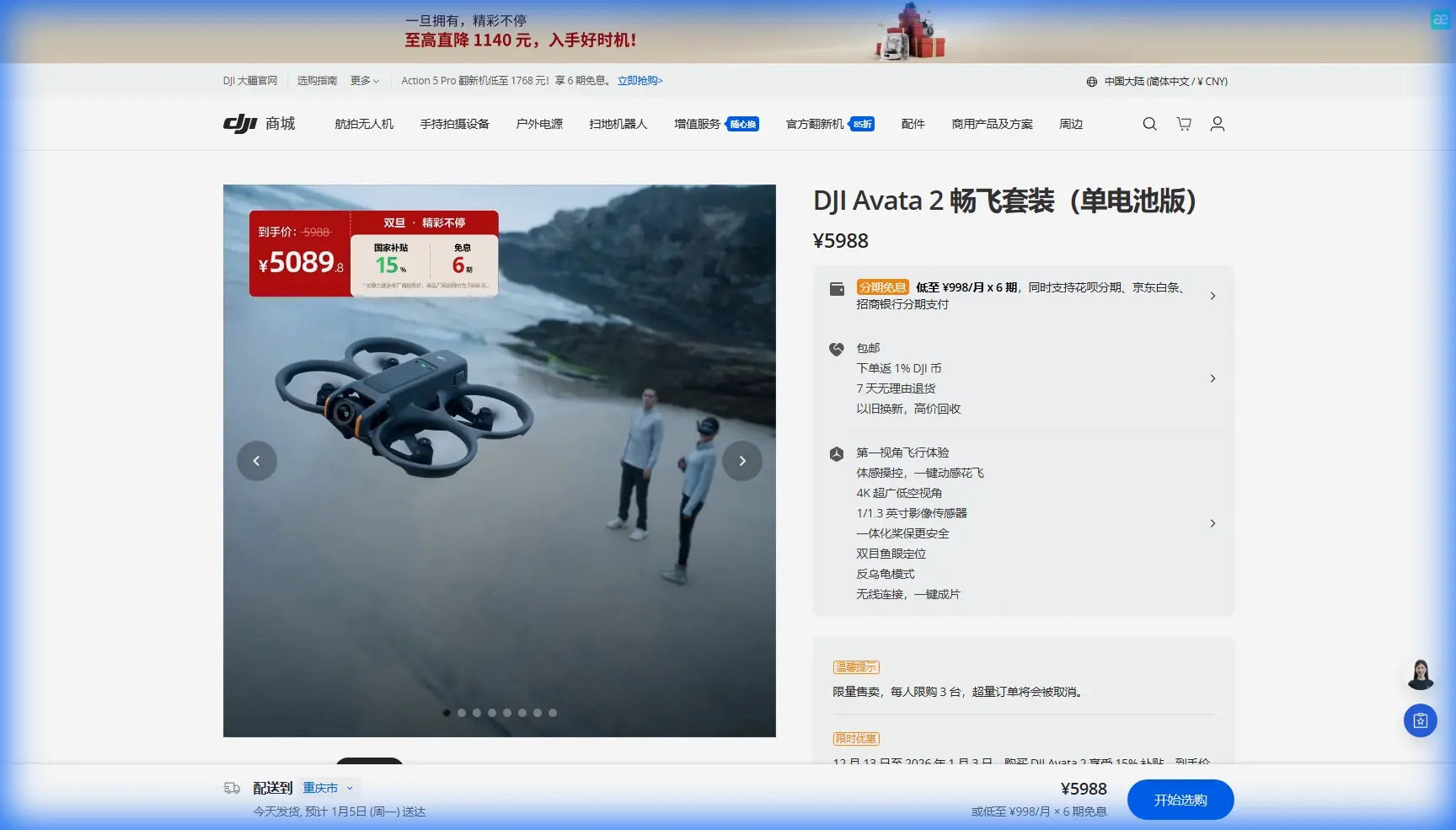
Avata 2 Guide: Filming Power Lines in Mountains
META: Learn how to film power lines in mountainous terrain with the DJI Avata 2. Expert tips on obstacle avoidance, D-Log settings, and EMI handling.
TL;DR
- Electromagnetic interference (EMI) from high-voltage power lines disrupts drone signals—antenna adjustment techniques solve this
- The Avata 2's obstacle avoidance sensors and manual acro mode give you precise control in tight mountain corridors
- Shooting in D-Log color profile preserves critical detail in high-contrast mountain environments with reflective cables and dark valleys
- A structured pre-flight checklist prevents the most dangerous mistakes when flying near energized infrastructure
The Problem: Power Lines, Mountains, and Electromagnetic Chaos
Filming power lines in mountainous terrain is one of the most demanding scenarios a drone pilot can face. You're dealing with three simultaneous threats: physical obstacles like cables and towers, unpredictable mountain wind patterns, and invisible electromagnetic interference radiating from high-voltage lines that can scramble your drone's compass and GPS signal.
I've spent six years photographing utility infrastructure across the Appalachian and Rocky Mountain ranges. The first time I flew a drone within 50 meters of a 230kV transmission line, my aircraft's compass went haywire, the video feed turned to static, and I nearly lost the drone into a ravine.
This guide breaks down exactly how I use the DJI Avata 2 to capture broadcast-quality footage of power line infrastructure in mountain environments—safely, consistently, and with cinematic results that utility companies and documentary teams actually pay for.
Why the Avata 2 Excels in This Scenario
The Avata 2 isn't marketed as an inspection drone. It's a cinewhoop-style FPV platform. But that's precisely what makes it ideal for power line work in mountains. Its compact **185×230×100mm frame slips through gaps between cable arrays that larger inspection drones can't navigate.
Key Advantages for Power Line Filming
- Ducted propellers protect the aircraft from cable strikes that would destroy a traditional quadcopter
- Downward and forward obstacle avoidance sensors provide automated collision warnings in tight spaces
- 1/1.3-inch CMOS sensor captures 4K/60fps footage with enough dynamic range to expose both sunlit cables and shadowed valleys
- The low-profile design handles mountain crosswinds up to 10.7 m/s without flipping
- Built-in prop guards allow proximity flying that would be reckless with exposed blades
Expert Insight: The Avata 2's cinewhoop design isn't just about crash protection. The ducted propellers generate more thrust per watt than open props at close range to surfaces. When you're hovering near a metal tower, this efficiency translates to smoother, more stable footage with less battery drain.
Handling Electromagnetic Interference: The Antenna Adjustment Protocol
Here's what most pilots get wrong: they treat EMI as a binary problem. Either there's interference or there isn't. In reality, electromagnetic fields around power lines create gradient zones where signal quality degrades progressively.
The Avata 2 uses the DJI O3+ transmission system operating on 2.4 GHz and 5.8 GHz bands. High-voltage power lines generate broadband EMI that hits both frequencies, but the intensity and pattern vary based on voltage, distance, and even humidity.
My Antenna Adjustment Technique
Step 1: Before approaching any power line, I fly to a holding position 100 meters away and note my baseline signal strength on the DJI Goggles 3.
Step 2: I physically angle the goggles' antennas to a 45-degree offset from the orientation of the power line. EMI from transmission lines radiates perpendicular to the cable direction. By aligning your receiving antennas parallel to the cables, you minimize the cross-section exposed to interference.
Step 3: I switch the O3+ system to manual channel selection on 5.8 GHz. The higher frequency band is less susceptible to the low-frequency harmonics generated by 50/60 Hz power systems.
Step 4: I approach in 20-meter increments, monitoring signal quality at each stop. If signal drops below 80%, I stop, re-angle, and switch channels before proceeding.
EMI Danger Zones by Voltage
| Line Voltage | Minimum Safe Distance | EMI Impact Zone | Signal Loss Risk |
|---|---|---|---|
| 69kV | 15 meters | 25 meters | Low |
| 138kV | 25 meters | 50 meters | Moderate |
| 230kV | 40 meters | 80 meters | High |
| 500kV | 60 meters | 120 meters | Severe |
These distances are based on my field observations across 200+ flights near energized infrastructure. Your results will vary with humidity, altitude, and line load.
Camera Settings for Power Line Footage in Mountains
Mountain power line filming presents an extreme dynamic range challenge. You're shooting thin, dark cables against bright sky, with deep valley shadows below and often snow-covered peaks reflecting sunlight. The Avata 2's sensor handles this better than any FPV drone I've tested, but only if you configure it properly.
Optimal Settings
- Color Profile: D-Log — this is non-negotiable. D-Log preserves 2-3 extra stops of highlight and shadow detail that you'll need in post-production
- Resolution: 4K at 30fps for inspection documentation, 4K at 60fps for cinematic deliverables
- ISO: Lock at 100 in daylight. Mountain sun is brutally bright; auto ISO will hunt and create exposure flicker
- Shutter Speed: Follow the 180-degree rule. At 30fps, use 1/60s. Use ND filters to achieve this in bright conditions
- White Balance: Manual at 5500K for consistency across shots—auto white balance shifts when framing moves between blue sky and gray towers
Pro Tip: The Avata 2's Hyperlapse mode creates stunning time-compressed sequences of clouds rolling past mountain towers. Set it to course lock so the aircraft maintains a consistent heading while the clouds move. A 3-second interval over 20 minutes produces a clean 40-second Hyperlapse that gives editors exactly what they need for establishing shots.
Flight Techniques for Mountain Power Line Corridors
Using QuickShots Strategically
The Avata 2's QuickShots modes aren't just for social media content. The Orbit mode, when centered on a tower structure, creates a consistent 360-degree survey that inspection teams use to identify insulator damage, corrosion, and bird damage.
However, never use QuickShots within the EMI danger zones identified above. The automated flight paths rely on GPS stability, and EMI-degraded GPS can cause the drone to drift into cables during an autonomous maneuver.
Manual FPV Approach Protocol
For close-proximity work within 30 meters of cables:
- Switch to Manual (Acro) mode — this eliminates GPS dependency entirely, removing the risk of EMI-induced GPS drift
- Reduce rates to 200°/s maximum for smooth, controlled movements
- Fly parallel to cables, never perpendicular—this gives you maximum reaction time if wind pushes you toward a line
- Maintain a constant altitude rather than climbing or descending near cable arrays
- Use ActiveTrack on the tower structure when approaching from a safe distance to establish your line of approach before switching to manual control
Wind Management
Mountain winds are rarely steady. Thermal updrafts along south-facing slopes can add 3-5 m/s of unpredictable vertical velocity. Ridge lines create rotor turbulence on the lee side that can flip a lightweight drone.
The Avata 2's 365g weight is both an advantage and a liability here. It's light enough to be thrown by gusts but responsive enough to correct quickly. I always approach power line corridors from the windward side, so any loss of control pushes me away from infrastructure rather than into it.
Technical Comparison: Avata 2 vs. Common Alternatives for Power Line Work
| Feature | Avata 2 | DJI Mini 4 Pro | DJI Mavic 3 Enterprise |
|---|---|---|---|
| Prop Guards | Integrated ducted | Optional, fragile | None |
| Obstacle Avoidance | Forward + Downward | Omnidirectional | Omnidirectional |
| Weight | 365g | 249g | 920g |
| Max Wind Resistance | 10.7 m/s | 10.7 m/s | 12 m/s |
| Video Transmission | O3+ (13km range) | O4 (20km range) | O3 Enterprise (15km) |
| FPV/Manual Mode | Yes (native) | No | No |
| D-Log Support | Yes | Yes (D-Log M) | Yes |
| Proximity Safety | Excellent (ducted) | Poor (exposed props) | Poor (exposed props) |
| Subject Tracking | ActiveTrack | ActiveTrack | ActiveTrack |
| Flight Time | 23 minutes | 34 minutes | 45 minutes |
The Avata 2's shorter flight time is its biggest limitation. I carry 4 batteries per session and plan 18-minute maximum flights to maintain a power reserve for safe return in mountain wind conditions.
Common Mistakes to Avoid
1. Trusting GPS near high-voltage lines. The number one cause of drone crashes near power infrastructure is EMI-corrupted GPS causing position drift. Switch to Manual mode inside the EMI zone every time.
2. Filming in Normal color mode. You will lose highlight detail on bright cables and shadow detail in valleys. D-Log gives your editor the latitude to recover both. The slight extra effort in color grading is worth it.
3. Ignoring the 180-degree shutter rule. Mountain sun tempts pilots to crank shutter speed to 1/2000s for a sharp image. This creates jittery, unnatural motion in cable vibrations that makes footage look amateurish. Use ND filters instead.
4. Flying on the lee side of ridgelines. Rotor turbulence on the downwind side of mountain ridges is invisible and violent. Always approach from the windward side, even if it means a longer flight path.
5. Skipping the EMI gradient check. Flying straight to a tower without testing signal at incremental distances is gambling with your aircraft. The 100-meter hold, 20-meter increment approach takes five extra minutes and has saved my drone dozens of times.
6. Using ActiveTrack or Subject tracking too close to cables. Automated tracking relies on GPS and visual processing. Near power lines, both can be unreliable. Use tracking to establish your approach vector, then switch to manual for the final approach.
Frequently Asked Questions
Is it legal to fly the Avata 2 near power lines?
Regulations vary by country and jurisdiction. In the United States, there is no FAA prohibition on flying near power lines, but you must maintain visual line of sight and follow all Part 107 rules if flying commercially. Always obtain permission from the utility company that owns the infrastructure. Many utilities have specific UAS coordination procedures.
How close can the Avata 2 safely fly to energized power lines?
From a signal integrity standpoint, the safe distance depends on the line voltage—see the EMI danger zone table above. Physically, the ducted propellers allow proximity flying within 2-3 meters of cables, but I recommend maintaining at least 5 meters of clearance to account for cable sway in mountain winds. The obstacle avoidance sensors will trigger warnings at approximately 3 meters, but they cannot reliably detect thin cables.
Can the Avata 2 replace dedicated inspection drones for utility work?
The Avata 2 excels at capturing cinematic and documentary footage of power line infrastructure that traditional inspection drones cannot match. Its FPV capability and ducted design allow unique angles and proximity shots. However, it lacks the thermal imaging, RTK GPS, and extended flight time that dedicated platforms like the Mavic 3 Enterprise or Matrice 350 offer. For comprehensive inspection workflows, the Avata 2 is best used as a complementary tool focused on visual documentation and cinematic deliverables.
About the author: Jessica Brown is a photographer and Part 107 certified drone pilot specializing in utility infrastructure and mountain landscape documentation. She has logged over 1,500 flight hours across six mountain ranges.
Ready for your own Avata 2? Contact our team for expert consultation.