
Filming Dusty Power Line Corridors with Avata 2
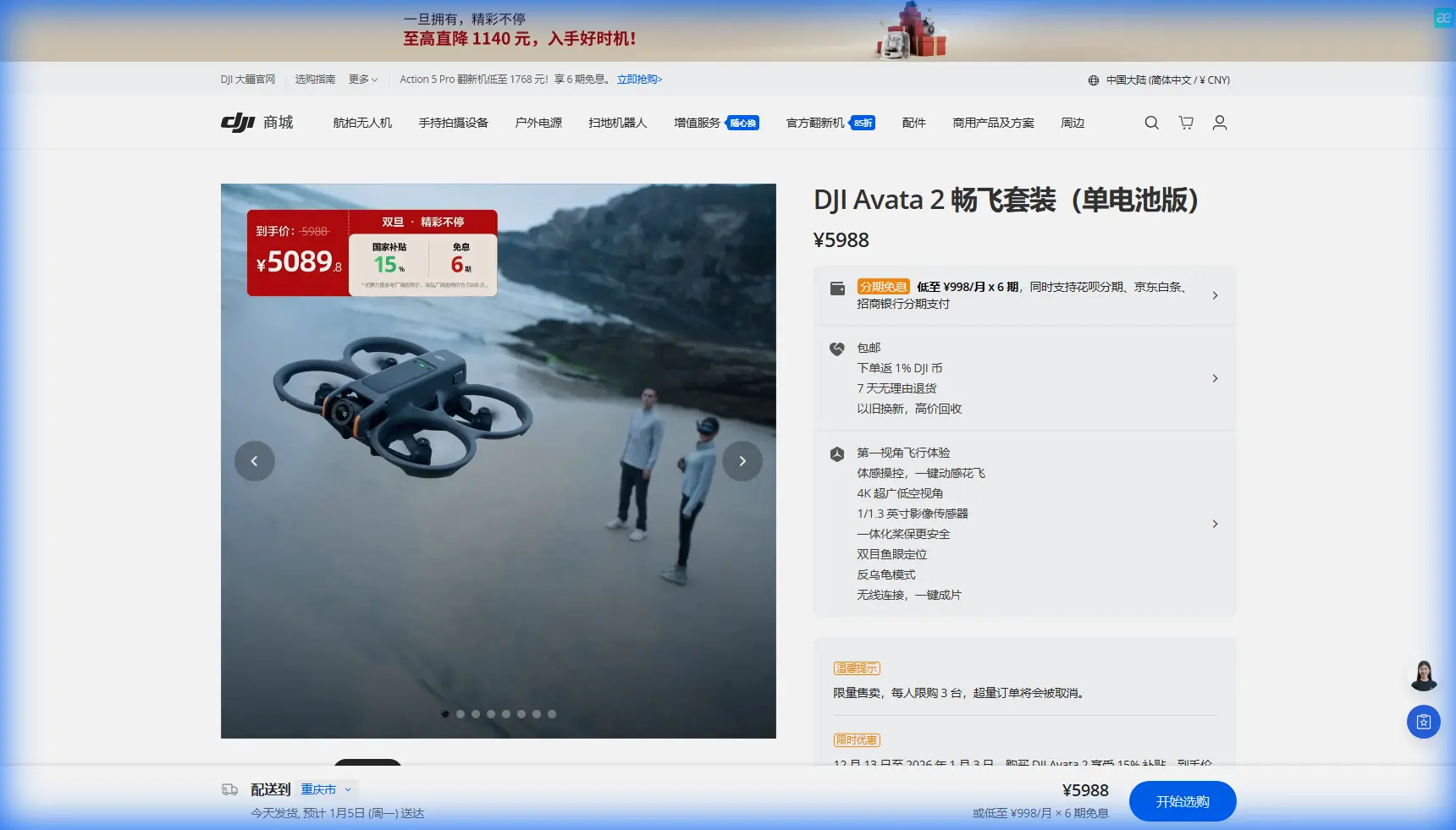
Filming Dusty Power Line Corridors with Avata 2: What Battery Recovery Teaches You About Real-World Reliability
META: A technical review of using Avata 2 for dusty power line filming, with practical insight on battery risk, low-voltage recovery, sensor behavior, D-Log workflow, and safe field operations.
Power line filming is where drone marketing claims stop being interesting and operational discipline starts mattering.
The Avata 2 is often discussed as a nimble FPV-style camera platform, usually in the context of immersive flying, quick cinematic passes, and compact workflow. That misses a more demanding use case: flying along utility corridors in dusty conditions, where visibility changes by the second, the air carries abrasive particles, and battery judgment can make the difference between a completed sortie and a grounded aircraft.
I’ve been looking at Avata 2 through that lens as a photographer working around infrastructure, not as a hobbyist chasing spectacle. And one of the most revealing reference points isn’t a glossy spec sheet. It’s a blunt field note on lithium battery over-discharge recovery: expose the positive and negative leads, verify polarity with a multimeter, apply matching polarity from a power adapter, charge for roughly 10 minutes, and once the pack reaches 10.8V, return it to a normal charger. For 6S packs, the note calls for a 24V adapter. It also carries the warning that reversing polarity can cause an explosion.
That rough, direct advice says something bigger about operating drones like the Avata 2 in harsh environments. Not that you should improvise battery revival in the field. You should not. The significance is operational: once lithium packs are pushed too low, you’re no longer in the realm of smooth workflow. You’re in damage control.
For anyone filming power lines in dusty areas with Avata 2, that matters more than most feature lists.
Why dusty power line work exposes weak habits
Dust changes everything. It reduces visual clarity, settles on exposed surfaces, and often appears in the same kinds of open corridors where pilots are tempted to stretch battery margins for “just one more pass.” Power lines add their own complexity. The geometry is repetitive. Depth cues can become deceptive. Wind can shear differently above and below the line. If you are framing towers, insulators, and corridor vegetation at speed, you need a drone setup that is predictable before you need it to be dramatic.
That’s where Avata 2 can make sense.
Its enclosed-prop style form factor and compact footprint suit close visual work better than many larger camera drones when the goal is controlled movement through constrained spaces. Obstacle awareness is not a substitute for pilot judgment around utility infrastructure, but the practical value of obstacle sensing in this context is obvious: it gives you another layer of environmental interpretation when dust, glare, and repeating line structures all compete for your attention.
I saw this firsthand during a wildlife interruption on a corridor survey shoot. A hawk lifted from a pole crossarm and cut across our projected path just as the aircraft was transitioning from a tower reveal into a lateral tracking move. That was the sort of moment where human reflex alone is often late. The Avata 2’s sensing behavior didn’t turn the scene into magic, but it did help prevent a bad closing decision while I broke the shot and repositioned. That operational significance is real. Near infrastructure, sensor support is not about convenience. It buys time.
The battery lesson hidden in that 10.8V number
The most valuable detail in the source material is not the DIY tone. It’s the threshold: 10.8V as the point at which an over-discharged lithium pack can be considered “activated” enough to hand back to a standard charger.
That figure matters because it illustrates a truth experienced pilots already know: voltage is not abstract. It is a planning variable.
When you’re filming power lines in dusty conditions, you often work far from ideal launch surfaces. You may be launching from dry soil, gravel shoulders, or service tracks where dust ingestion and turnaround pressure both increase. That leads some crews to keep flying until the battery is nearly spent, especially when the light is changing fast and the corridor stretch looks tempting.
Bad habit.
The reference note describes forcing a charge for around 10 minutes to wake a battery that has fallen too low, with polarity checked by a multimeter first. Whether or not that process applies to a given pack chemistry or smart battery system is beside the point here. For Avata 2 operators, the lesson is prevention. If your workflow regularly takes batteries into critically low territory, your planning is already failing.
The operational significance of the 10.8V detail is simple: once a battery falls below normal recoverable behavior, your day becomes about salvage, not flying. For civilian utility filming, that means missed inspections, delayed reshoots, and potentially unsafe decision-making when crews feel pressure to keep going.
A healthy Avata 2 workflow should be built around conservative return thresholds, not heroic battery stretching.
Why polarity discipline translates directly to drone field discipline
The second source detail that deserves attention is the warning about polarity. Red to positive, black to negative. Check with a multimeter. Reverse it, and the author warns, it could explode.
Again, don’t read this as an endorsement of homebrew battery intervention for Avata 2 intelligent packs. Read it as a sharp reminder that electricity does not forgive carelessness.
In infrastructure filming, pilots often talk a lot about camera settings and not enough about energy handling. Yet battery management is one of the few areas where a tiny procedural mistake can create immediate physical risk. The polarity warning underscores the broader operating culture you need around Avata 2: verify before you connect, verify before you fly, verify before you launch the next pack.
That same mindset extends to preflight checks in dusty power line environments:
- confirm battery seating and status before takeoff
- inspect contacts for contamination
- avoid hasty swaps in blowing dust
- monitor voltage behavior, not just remaining percentage
- stop using any pack that behaves abnormally under load
This is not glamorous advice, but it is what separates reliable field output from story-worthy failure.
Avata 2 as a technical filming tool, not just an FPV toy
A lot of readers searching for Avata 2 coverage want to know whether it can do polished utility-corridor footage without turning the job into a wrestling match. My answer is yes, with caveats.
The aircraft is well suited to dynamic route visualization along lines, access roads, poles, and tower approaches. It is especially useful when you want footage that communicates spacing, terrain relationship, and route continuity rather than static top-down inspection framing. For that kind of storytelling, Avata 2’s style of movement feels more natural than a heavier platform trying to imitate FPV motion.
This is where tools like D-Log become more than a spec-sheet bullet. Dusty scenes are notorious for flattening contrast while still producing harsh highlights on metal hardware and bright sky edges. Shooting in D-Log gives you more room to shape those extremes in post without the image falling apart. It helps preserve subtle tonal separation in the corridor itself, which is often where the useful visual information lives.
QuickShots and Hyperlapse can also have a place, though not in the gimmicky sense. A carefully planned Hyperlapse of a line corridor can communicate terrain progression and maintenance context in a way that static imagery cannot. Quick automated camera moves may help capture repeatable establishing shots at safer standoff distances. The key is restraint. Infrastructure audiences care about clarity more than flair.
As for ActiveTrack or subject tracking, their value around power lines is limited by the environment and should never override manual control judgment near complex structures. But in adjacent scenarios—following a maintenance vehicle along an access road, for example—they can support cleaner visual continuity while the pilot keeps broader situational awareness.
Obstacle avoidance is useful, but not a permission slip
The LSI conversation around obstacle avoidance often drifts into false confidence. Around power lines, especially in dusty air, the right mindset is defensive. Avata 2’s sensing systems can help you manage surprise, like that hawk crossing the route, or assist when corridor edges and vegetation create rapidly changing foreground relationships. But utility infrastructure presents thin, repetitive, and sometimes visually difficult elements.
That means obstacle avoidance should be treated as a supporting layer, not your primary protection strategy.
Operationally, the best use of these systems is to widen your margin for error while you fly conservative lines. Give yourself escape routes. Avoid shooting directly into dust glare when possible. Build lateral separation first, then tighten only if the visual purpose truly requires it. If the line can be filmed clearly from a safer offset, take the cleaner option.
Dust workflow: what matters more than people admit
Dust isn’t only a cleanliness issue. It is a workflow tax.
It affects launch choice, lens maintenance, turnaround time, pack handling, and confidence in repeated sorties. With Avata 2, the smart move is to structure your filming day so the aircraft spends less idle time exposed on the ground. Pre-stage your shots. Know which passes need D-Log, which can be captured quickly, and which are not worth attempting if the air is deteriorating.
I also recommend building a battery log for corridor work, even on smaller productions. Track pack order, ambient conditions, and any unusual sag behavior. If a battery ever approaches problematic low-voltage behavior, retire it from mission-critical work rather than relying on recovery folklore. The source material’s mention of forced charging and voltage revival is useful as a cautionary framework, not as a best practice for modern field operations.
If you need a second opinion on configuring an Avata 2 setup for corridor filming and dusty conditions, this is a practical place to ask for it: message an Avata 2 field workflow specialist.
A photographer’s take on image value
As a photographer, what I like most about Avata 2 in this setting is not simply that it moves fast. It’s that it can move with intent.
Power line filming tends to look generic when the drone is either too static or too reckless. Static footage says little about the route. Reckless footage distracts from the subject. Avata 2 sits in a useful middle zone. It can skim the landscape enough to reveal how the corridor sits inside terrain, then slow down for a precise tower approach or structure orbit, all while keeping the visual language immersive.
That versatility becomes more valuable when the environment is ugly. Dust, flat midday light, and repetitive steelwork can make footage feel dead on arrival. D-Log helps preserve edit latitude. Stable assisted flight modes help maintain repeatability. And obstacle awareness, even with all its limits, adds a layer of resilience when the unexpected appears—whether that’s wildlife, brush encroachment, or a misleading depth cue in blowing dust.
The real takeaway
The most honest way to evaluate Avata 2 for dusty power line filming is to stop thinking like a consumer and start thinking like an operator.
The reference material about lithium over-discharge recovery may seem far removed from a modern drone review, but it cuts straight to the real issue: field reliability depends on respecting electrical limits before you are forced into recovery behavior. The fact that the source describes roughly 10 minutes of forced charging and a recovery threshold above 10.8V is not a trick to memorize for routine use. It is a warning about what happens when battery discipline slips.
Pair that with the polarity warning—red positive, black negative, verify with a multimeter, reverse it and serious failure becomes possible—and you get the broader lesson for Avata 2 operators in utility environments: precision is not optional.
Avata 2 is a capable platform for this kind of work. It offers the kind of agile camera movement that makes infrastructure footage legible and engaging. Its sensing systems can help when the environment becomes dynamic. D-Log is genuinely useful in dusty contrast-challenged scenes. Subject tracking and automated shot tools have selective value when applied thoughtfully.
But the aircraft shines only when the workflow around it is disciplined. Battery conservatism. Clean launches. Sensible standoff. Sensor-aware flying without overtrust. And enough humility to abort a pass when the air, wildlife, or visibility changes faster than the shot is worth.
That is how Avata 2 earns its place on a real power line filming job.
Ready for your own Avata 2? Contact our team for expert consultation.