
Avata 2 Filming Tips for Solar Farms: A Practical Recovery
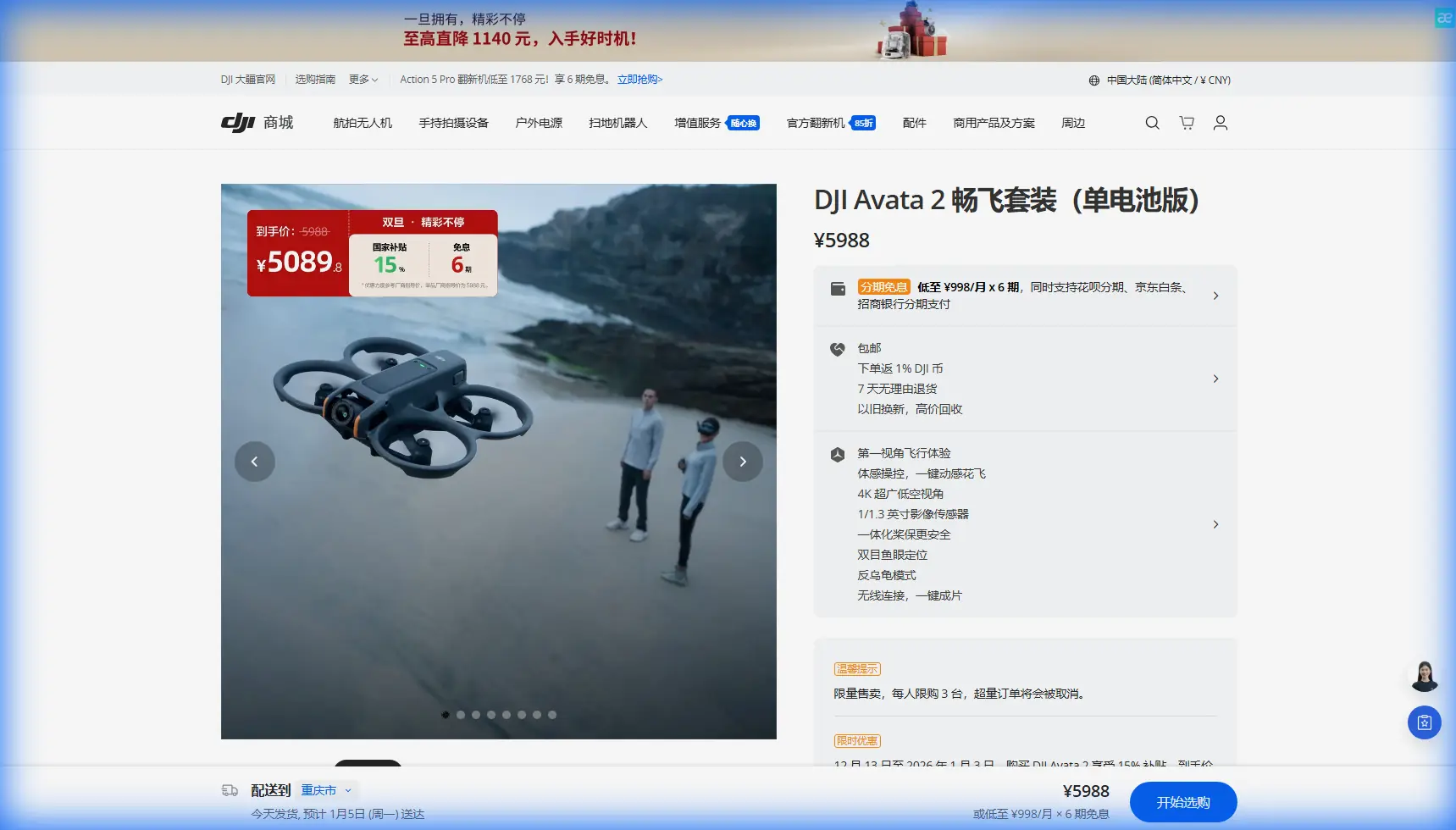
Avata 2 Filming Tips for Solar Farms: A Practical Recovery Mindset for Dusty FPV Work
META: Learn how to use DJI Avata 2 more safely and efficiently when filming solar farms in dusty conditions, with field-tested crash prevention, battery handling, and recovery habits grounded in real UAV operating principles.
Solar farms look clean from a distance. On site, they are not.
You are usually dealing with glare, heat shimmer, repetitive geometry, loose dust, service roads, metal structures, and long rows that can distort depth judgment when you are flying low and fast. That matters with Avata 2. This aircraft is built to create immersive footage, but in a solar installation environment, cinematic flying only works if the pilot has a disciplined recovery process before, during, and after every flight.
That is the part many pilots skip.
A useful old technical lesson from multirotor operations draws a sharp line between two kinds of bad outcomes. One is a hard landing or abnormal drop where the aircraft survives and can still fly. The other is a destructive crash that damages structure or leaves the drone unflyable. That distinction may sound basic, but operationally it changes how you prepare for Avata 2 work on utility-scale sites. The goal is not simply “avoid crashing.” The real goal is to keep a controllable incident from becoming a total loss.
For solar farm crews, that mindset is worth more than any flashy flight mode.
Why Avata 2 Needs a Different Discipline on Solar Farms
Avata 2 invites confident flying. The aircraft’s FPV character makes it ideal for weaving along panel rows, revealing cable routes, following maintenance vehicles at safe distance, and building dramatic progress footage for developers, EPC firms, and O&M teams. Features like obstacle sensing support and stabilized video help, but a dusty industrial site can still trick the pilot.
Two things happen often in these environments.
First, pilots misread aircraft behavior. Wind funneling between rows, reflected sunlight, and low-contrast terrain can make a normal aircraft response look like drift or control loss. Second, when something genuinely goes wrong, beginners often do the worst possible thing: they panic, reduce throttle abruptly, or keep making random stick inputs. The old multirotor operating guidance behind emergency “save the aircraft” procedures warned about exactly this pattern. In plain terms, dropping altitude in a panic rarely prevents a destructive crash, and uncontrolled stick corrections usually make the last seconds worse.
For Avata 2 operators filming solar assets, this is not just about preserving hardware. A falling aircraft around panels, combiner boxes, fencing, parked vehicles, or technicians creates avoidable risk and expensive downtime.
The First Recovery Step Most Pilots Miss
One of the most operationally useful details from that technical reference is surprisingly simple: when the drone seems out of control, first confirm whether it is actually out of control.
The guidance recommends making a deliberate, larger directional input and checking aircraft response through observation and the live view. That matters because many incidents are misdiagnosed. Wind, altitude perspective, and environmental cues can make the aircraft appear to be drifting on its own when it is still responding normally.
This is extremely relevant for Avata 2 over solar farms.
Rows of nearly identical panels flatten your sense of motion. Dust can reduce contrast. Sun angle can wash out visual references. A pilot flying a low reveal shot may think the aircraft is being “pulled” sideways when what is really happening is a combination of crosswind and visual illusion. If you react emotionally instead of diagnostically, you can turn a manageable situation into impact with a panel edge or support post.
So the first rule is this: verify before you escalate.
On Avata 2, that means pausing your cinematic plan, checking the live feed, making one clear control input, and evaluating the response. If the aircraft obeys, the problem may be environmental rather than technical. That single habit can save flights.
GPS Confidence Can Become a Trap
Another detail from the source material stands out: many loss-of-control events were observed in GPS-assisted flight conditions. The operational significance is broader than the original context. Positioning systems are valuable, but they can also give newer pilots a false sense of certainty. When the aircraft behaves unexpectedly, they are less prepared to transition mentally from assisted flying to active flying.
Solar farms are not hostile RF battlefields, but they do create complicated operating surfaces. Metal framing, repetitive layout, and open land exposure can all contribute to a situation where a pilot overtrusts stabilization and underdevelops manual correction instincts. With Avata 2, that risk is amplified because the aircraft encourages dynamic movement near structures for dramatic footage.
The lesson is not to avoid assisted modes. The lesson is to avoid dependency.
Before any shoot, practice a recovery flow in a clean open area. Not the hero shots. Not the inspection pass. Just recovery: level out, climb safely, reorient, and return to a stable hover path or exit line. If your hands have never rehearsed that sequence, you are relying on luck once the shot goes wrong.
What “Stay Calm” Actually Means in the Field
“Stay calm” is easy to say and useless if it is not operationalized.
In practical Avata 2 work at a dusty solar site, calm means you already decided three things before takeoff:
- Your safe climb direction
- Your clean abort corridor
- Your no-fly proximity around people, vehicles, and fragile infrastructure
That same technical rescue framework emphasized that once control degrades, preserving separation from people and objects becomes the immediate priority. That applies directly here. Solar farms may feel open, but they are filled with things you should not strike: panel glass, monitoring equipment, cabling access points, perimeter fencing, and maintenance crews.
If your aircraft starts behaving strangely, your cinematic objective is over. Your next objective is space.
For Avata 2, I recommend defining an “escape lane” along the service road or open perimeter edge before every low run. If the aircraft response becomes questionable, use that lane to get clear rather than trying to salvage the shot between the rows.
A Battery Tip That Matters More in Dust Than on Paper
Here is the field habit I wish more Avata 2 pilots adopted when filming solar farms: do not judge battery readiness only by percentage. Judge it by temperature, recent discharge behavior, and how much punch you still need for the hardest part of the flight.
Dusty sites often mean heat. Heat changes everything about flight timing. Batteries that looked fine in the bag can behave differently after sitting in a vehicle, on a folding table in direct sun, or after a fast previous sortie with little cooling time. On Avata 2, that shows up where it hurts most: during low-altitude acceleration, recovery climbs, or repeated repositioning passes at the end of a flight.
My rule for solar work is simple. If the final planned shot requires aggressive movement, I do not save it for the end of a warm battery cycle. I front-load it.
The best footage is often the first or second run, not because the pilot is fresh, but because the aircraft has stronger energy reserves and thermal margin. Later in the session, use easier passes for slower reveals, high establishing arcs, QuickShots where site conditions allow, or controlled Hyperlapse segments from cleaner air away from the dust plume.
Also, after landing, let the battery cool before swapping it into a high-demand second sortie. That is a field decision, not a spec-sheet decision. On solar projects, pacing your batteries usually improves footage consistency because the aircraft response stays more predictable.
Obstacle Avoidance Helps, But Row Geometry Still Wins
Avata 2’s protective design and obstacle-aware systems are useful, especially for pilots transitioning into FPV-style industrial filming. But solar rows create a nasty visual trap: everything looks parallel until it suddenly does not.
A slight yaw error at speed can drift the aircraft closer to a panel corner or support member than the goggles suggest. Dust haze makes that worse. Reflection can hide depth cues. If you are filming an operations team walking an aisle or tracking a utility cart at safe offset, give yourself lateral margin even if the route looks generous.
This is where subject tracking and automated cinematic features should be treated carefully. ActiveTrack-style convenience is attractive for ground movement, but in a dense repetitive environment, you still need to supervise the aircraft’s path like a pilot, not like a passenger. The same goes for QuickShots. On a solar site, “automatic” should never mean “unobserved.”
My preference is to use assisted features only after I have manually flown the line once and confirmed there are no surprise poles, guy wires, temporary materials, or maintenance obstructions.
D-Log in Harsh Light: Great Tool, Wrong Priority During a Bad Flight
Avata 2 operators filming solar assets often care about D-Log because these sites are brutal for dynamic range. Bright panel reflections and dark equipment shadows can live in the same frame. Shooting in a flatter profile can absolutely help preserve grading flexibility.
But when a flight starts going sideways, image settings stop mattering.
That sounds obvious, yet pilots still hesitate because they are mentally anchored to the shot. They try to save the composition, preserve the movement, or complete the planned orbit. That delay is costly. The rescue logic from classic multirotor practice is blunt: once abnormal behavior is confirmed, your task is to regain control and reduce risk, not complete the mission profile.
So yes, use D-Log for difficult midday contrast. Just remember the hierarchy: aircraft control first, separation second, footage third.
The best grading workflow in the world cannot fix broken carbon, shattered guards, or a damaged panel row.
After Any Incident, Data Beats Guesswork
One of the strongest operational details from the source is what happens after an accident: get to the site immediately, secure the remains, and export flight data for analysis or for technical review.
That advice holds up perfectly for Avata 2.
If you have an unplanned contact, a sudden drop, a dust-induced disorientation event, or a control anomaly, do not reduce it to “pilot error” or “we got unlucky.” Pull the logs. Review the video. Note the wind direction, battery state, site temperature, and flight phase. If you work with a team, standardize this process.
This is how better procedures are built.
On one solar campaign, a crew may discover that late-afternoon low runs on the east side create harder glare transitions than identical runs on the west perimeter. Another team may realize that dust kicked up by service vehicles lingers long enough to affect the next sortie if they launch from the same road shoulder. These are not dramatic lessons, but they are the ones that prevent repeat incidents.
If you need a second set of eyes on an Avata 2 setup or flight workflow for industrial filming, you can message a drone specialist here.
A Simple Avata 2 How-To Flow for Solar Farm Shoots
Here is the practical version I use for crews filming in dusty utility environments:
1. Walk the route before powering up
Identify reflective hotspots, loose dust zones, crew positions, and your clean abort direction.
2. Fly the recovery line first
Before the cinematic pass, rehearse the safe climb-out and exit route in open space.
3. Confirm response before assuming failure
If the aircraft feels wrong, make one clear input and verify whether it is actually unresponsive.
4. Stop chasing the shot
The moment behavior is abnormal, abandon the creative objective and move toward your preplanned safe corridor.
5. Keep margin near rows
Obstacle avoidance is support, not permission to fly with zero buffer near panel edges and support structures.
6. Use your strongest battery window early
Do the highest-demand passes while the battery is still cool and robust.
7. Review every incident with data
Export logs, inspect footage, and record environmental conditions. Small anomalies often reveal repeatable patterns.
The Real Skill Behind Better Avata 2 Solar Footage
The most impressive Avata 2 solar farm pilots are not the ones who fly the closest or fastest. They are the ones who recognize the difference between apparent instability and true control loss, manage energy before it becomes a problem, and know exactly how to abort without drama.
That old multirotor rescue logic still applies because the physics have not changed. A pilot who panics and chops power is still likely to lose the aircraft. A pilot who keeps making frantic inputs is still making the outcome worse. And a pilot who studies logs after an incident is still the one most likely to improve.
For dusty solar farm work, that is the edge.
Not style. Not bravado. Judgment.
Ready for your own Avata 2? Contact our team for expert consultation.