
Avata 2 at Solar Farms: A Technical Field Review for Dust
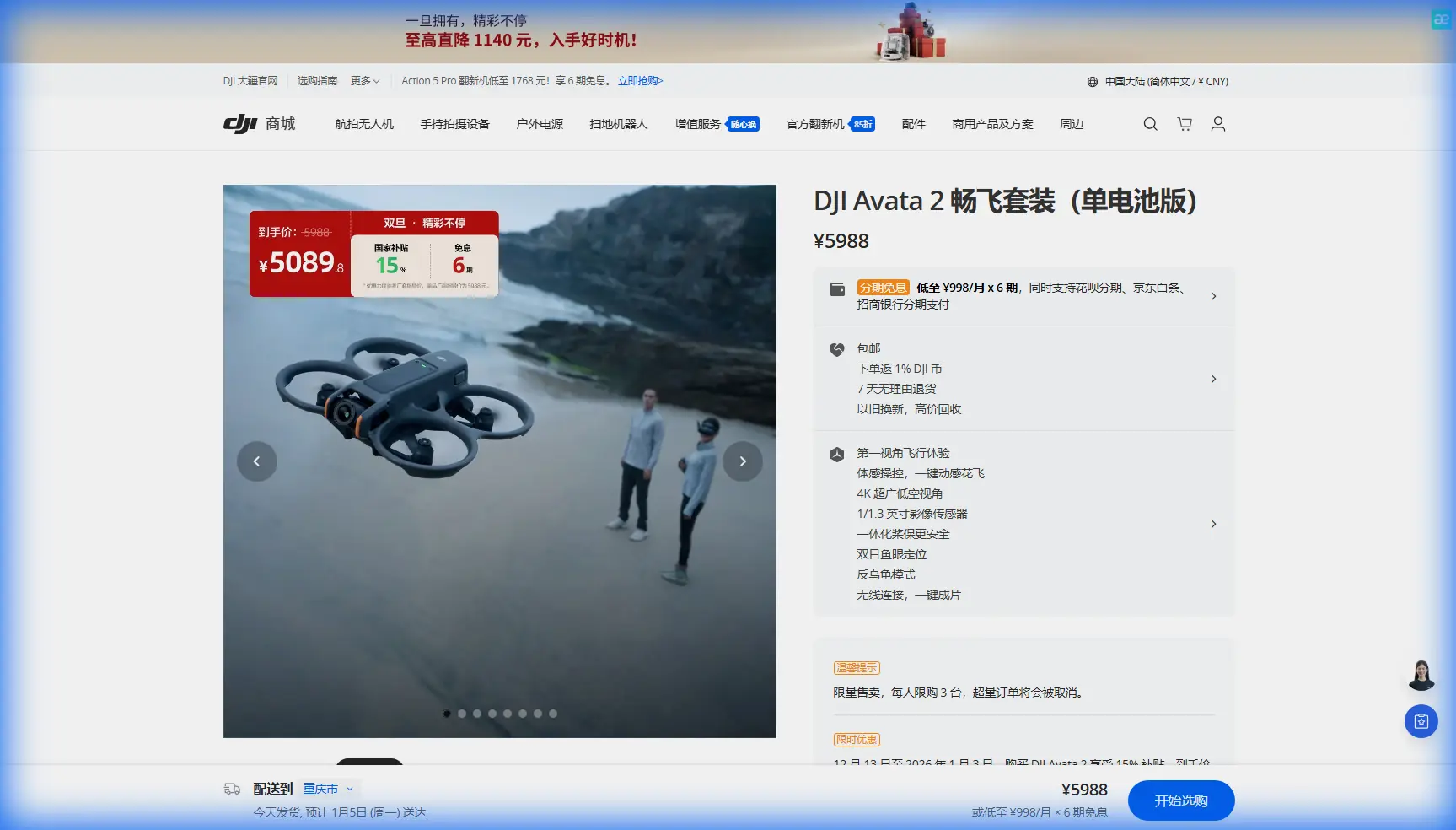
Avata 2 at Solar Farms: A Technical Field Review for Dust, Interference, and Mapping-Grade Discipline
META: A technical review of using DJI Avata 2 around dusty solar farms, with practical guidance on flight consistency, EMI handling, route discipline, and why photogrammetry principles still matter.
If you film solar farms long enough, you stop thinking about drones as camera platforms and start thinking about them as systems under pressure. Dust hangs in the air. Heat shimmers off panel rows. Reflective surfaces confuse your eye before they confuse the aircraft. And if the site includes inverters, combiner boxes, perimeter fencing, and long electrical runs, electromagnetic interference becomes more than a theoretical concern.
That is where the Avata 2 gets interesting.
Most people approach it as an FPV creative tool. That is fair, but incomplete. In a solar farm environment, especially a dusty one, the real question is not whether Avata 2 can produce dramatic footage. It can. The harder question is whether it can do that while maintaining repeatable route quality, stable signal behavior, and footage discipline that supports inspection, documentation, and training use cases rather than just visual flair.
The answer depends less on marketing features and more on how you fly it.
Why solar farms expose weak operating habits
Solar sites look simple from above. Long geometric lines. Predictable spacing. Open terrain. In reality, they punish inconsistency.
The visual repetition makes it easy to drift off a clean track without noticing it. Dust can soften contrast near the ground. Panel glare may distort depth perception. Add localized electromagnetic noise from site infrastructure, and even a capable aircraft can seem erratic if the pilot is casual about antenna alignment, route planning, or recovery margins.
This is why old photogrammetry logic still matters even when you are flying a compact FPV platform like the Avata 2.
One of the most useful concepts from aerial survey practice is route straightness. The reference material describes “flight line bending” as the condition where the line connecting the principal points of successive images forms a crooked polyline instead of a straight path. That sounds academic until you try to capture a clean pass over multiple panel rows. Then it becomes operationally obvious.
According to the cited engineering photogrammetry standard, that bending should not exceed 3%. Even if you are not building a formal topographic product, the discipline behind that number matters. A wandering line creates ugly reveals, inconsistent inspection angles, uneven panel coverage, and footage that is harder to compare over time. On a solar farm, where viewers often need to read condition changes row by row, a tidy line is not aesthetics alone. It is data hygiene.
Avata 2 is more useful here than many pilots expect
The Avata 2 is not a mapping drone. That should be said clearly. But that does not mean it is irrelevant to technical site work.
Its value on solar projects sits in a middle ground: close-in visual documentation, cinematic overviews for asset owners, training footage for maintenance teams, and selective inspection support where maneuverability matters more than survey-grade output. If you are threading between structures, dropping to low altitude for panel-edge reveals, or building a narrative around access roads, inverter pads, and array geometry, the Avata 2 brings a level of movement that larger survey aircraft do not.
Still, that freedom creates its own trap. FPV-style flying can tempt pilots into irregular arcs and impulsive corrections. On a solar farm, those habits show up immediately in the footage. Every row is a ruler. Every bend is visible.
So when I evaluate Avata 2 for this environment, I look at it through two lenses at once: creative movement and survey discipline. The sweet spot is where those overlap.
Dust changes more than image quality
Dust is not just a cleanliness issue. It changes operational timing, sensor confidence, and your margin for error near the ground.
At low altitude, especially during hot afternoons, dust and heat can flatten the scene. That makes obstacle judgment harder around fencing, cable trays, and maintenance vehicles. If you are relying on obstacle avoidance as a mental safety net, remember that solar farms are visually tricky environments. Repeating rows, narrow gaps, and reflective surfaces can make any automated assistance less definitive than the pilot expects.
That is why I prefer to treat obstacle avoidance as support, not authority.
The Avata 2’s handling advantage in these conditions comes from being small and responsive. You can stay lower, move slower, and shape your path with more precision than a bulkier platform. But in dusty sites, precision starts before takeoff. Lens checks, airflow awareness at launch, and conservative descent planning matter. Landing into a dusty patch after a clean shoot is a frustrating way to compromise the final minutes of your day.
A practical adjustment that pays off: choose launch and recovery points slightly offset from the most powdery service tracks, even if it means a longer walk. That one habit reduces dust ingestion risk and keeps your optics cleaner through repeated sorties.
EMI at solar farms: what actually helps
Solar farms are not automatically signal nightmares, but they can create pockets of interference around energized equipment and long conductive structures. Pilots often describe this as vague instability when the real issue is directional signal management.
The simple fix is often the one people skip: adjust the antenna orientation before assuming the site is unusable.
When I encounter interference-like behavior around inverters or dense electrical infrastructure, I first change my body position and controller antenna relationship to the aircraft. Not dramatically. Just enough to restore a cleaner geometry between pilot, controller, and drone. Small directional corrections can matter more than people expect, particularly when rows of panels and metallic site hardware are reflecting or partially blocking signal paths.
This is not glamorous advice, but it is the kind that saves flights. If you need a deeper discussion on field setup, signal behavior, and practical Avata 2 workflows around electrically noisy sites, here is a useful direct line for operators comparing notes: message the team here.
The bigger lesson is that EMI management is not only about electronics. It is also about route design. If one segment consistently produces degraded behavior, avoid building your hero shot around that segment. Shift the line, raise altitude modestly, or reverse the pass to improve link geometry. The Avata 2 gives you enough agility to redesign the shot around the environment instead of fighting it.
Why “same-day quick stitching” thinking belongs in Avata 2 workflows
The reference text includes another field habit that deserves more attention: crews often perform a same-day quick mosaic check after flying. If coverage is incomplete, they re-fly or supplement immediately. That practice comes from photogrammetry, but it translates extremely well to solar farm filming.
Do not leave the site assuming you “probably got it.”
At a solar asset, a missing pass is not always obvious in the moment. Repetitive geometry tricks memory. One inverter pad starts looking like the next. A beautiful low run over row groups can still fail the project if the footage skips a critical maintenance corridor or omits a damaged zone the client cares about.
For Avata 2 operations, the equivalent of field quick-stitching is an immediate structured review:
- Verify each planned corridor was captured.
- Check whether the line stayed acceptably straight.
- Confirm no key row section was obscured by dust or glare.
- Review transitions near infrastructure where interference may have affected smoothness.
- Decide on re-flight while batteries, lighting, and site access are still workable.
This matters because the reference also notes that if a route has a local defect and it does not affect downstream processing or model connection, additional capture may not be necessary. That mindset is useful. Not every small visual imperfection demands a full redo. But if the missing or flawed section breaks continuity, you should re-fly the entire route rather than patching together inconsistent fragments. On a solar farm, continuity is everything. The eye catches discontinuity fast.
Avata 2 footage is not a map, and that distinction matters
One of the strongest points in the source material is easy to overlook: aerial photos are rich, but they are not maps.
That sounds obvious until you work with infrastructure clients. Raw imagery contains irrelevant elements such as moving vehicles and people, while also failing to reveal every feature a map or engineering record may require. The source specifically notes that some important items may not appear clearly in imagery, including small utilities and concealed features, and that post-capture field investigation is needed to fill the gap.
Applied to Avata 2 at solar farms, this means your footage should not be oversold internally as a complete site record. It is a visual layer, not the whole truth.
A pass down an array can show surface dust accumulation, frame alignment issues, vegetation encroachment, access conditions, and general maintenance context. It may not reliably document every buried service point, minor marker, or hidden defect. If a site team needs a dependable operational record, the footage has to be paired with ground verification and structured annotation.
That is where D-Log becomes more than a colorist’s preference. When you capture in a flatter profile, you preserve more flexibility for pulling detail from high-contrast scenes common at solar farms: bright panel edges, dark gaps below arrays, white equipment housings, and sun-struck gravel. For engineering communication, the goal is not dramatic grading. It is legibility. A cleaner tonal balance helps reviewers actually see what matters.
Subject tracking and QuickShots: useful, but with limits
LSI terms like ActiveTrack, subject tracking, QuickShots, and Hyperlapse are often discussed in a lifestyle context. Around solar farms, they can still be useful, but only if you assign them adult jobs.
Subject tracking can help when following a maintenance cart or technician walking an inspection lane, especially for training content or site orientation videos. But solar environments are repetitive, and repetitive environments are exactly where blind trust in automation becomes risky. Treat tracking as a convenience feature for controlled segments, not as the backbone of your technical shoot.
QuickShots have a place when you need a clean opener that establishes site scale. An orbit around a central inverter station or a reveal rising above aligned rows can do that efficiently. Hyperlapse is more niche but effective for showing changing light across large installations or visualizing maintenance activity over time.
The point is not whether these features exist. The point is whether they support the communication objective. On solar projects, spectacle should stay subordinate to clarity.
Flight height discipline is underrated
The source also emphasizes flight height checking, including procedures when no fixed exposure recording device is available. The deeper operational principle is consistency. Height variation changes scale, angle, and interpretability.
With Avata 2, pilots often vary height intuitively to keep motion interesting. Fine for pure cinema. Less fine for comparative documentation. If one row pass is significantly higher than the next, panel spacing, soiling patterns, and object proportions become harder to evaluate side by side.
So set target bands for each shot type:
- low narrative runs for texture and immersion
- medium-height corridor passes for repeatable visual inspection context
- elevated reveals for layout and access-road relationships
Then stick to them. Controlled height is one of the easiest ways to make Avata 2 footage look more professional and function more usefully.
The real best practice: borrow survey discipline without pretending Avata 2 is a survey drone
That is the core takeaway.
The source material is rooted in aerial photogrammetry, where route bending, flight-height compliance, same-day checking, and field interpretation all exist for a reason. Those ideas transfer surprisingly well to Avata 2 work at dusty solar farms, even though the aircraft serves a different role.
Two details stand out as especially valuable:
First, the 3% limit on flight line bending is a strong benchmark for route discipline. You may never calculate it formally for a creative shoot, but the concept gives you a concrete standard for how straight your passes should feel and look.
Second, the reminder that imagery alone is incomplete keeps teams honest. Drone footage can enrich maintenance, inspection, and stakeholder reporting, but it does not replace field notes, site verification, or selective supplemental observation.
Used that way, the Avata 2 becomes more than a flashy camera. It becomes a nimble visual instrument for infrastructure storytelling and practical site documentation, provided the pilot brings structure to the mission.
At a dusty solar farm, that structure shows up in small decisions: launch away from loose grit, review footage before leaving, hold consistent height, correct antenna orientation when interference appears, and resist the urge to improvise every line. Fly with the precision of a survey crew when it counts, then add motion where motion actually improves understanding.
That is how Avata 2 earns its place on technical jobs.
Ready for your own Avata 2? Contact our team for expert consultation.