
Avata 2 in the Vineyard: A Practical Case Study for Safer
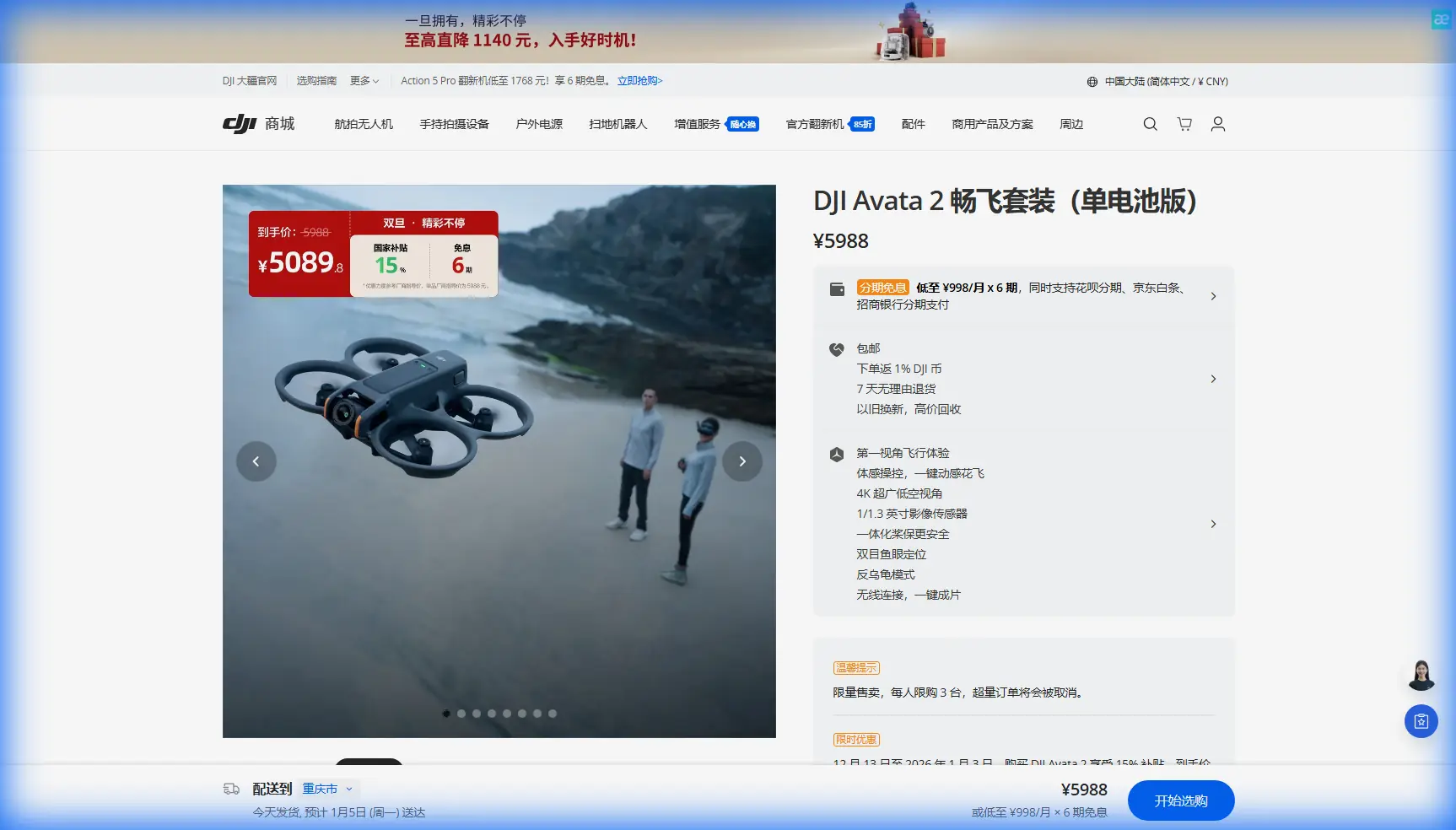
Avata 2 in the Vineyard: A Practical Case Study for Safer Flying in Tight Terrain
META: A field-tested Avata 2 filming guide for vineyards, focused on obstacle awareness, antenna positioning, signal reliability, and cinematic capture in complex terrain.
I’ve filmed vineyards long enough to know that the landscape lies to you.
From a distance, rows of vines look orderly and forgiving. Once you put a drone in the air, the truth shows up fast: uneven ground, narrow corridors, trellis wires, utility poles, shifting light, and ridgelines that can quietly interfere with your signal plan. If you’re flying an Avata 2 in this kind of environment, the challenge is not simply getting beautiful footage. It’s getting repeatable footage without building risk into every pass.
That’s why I keep coming back to a lesson that the industrial side of drone operations figured out years ago. In DJI’s power inspection solution for the Matrice 210 RTK platform, two details stand out: RTK was used to reduce the effect of electromagnetic interference around infrastructure, and the aircraft relied on forward vision plus multi-direction sensing to protect the operation near obstacles. Those are not vineyard features in a literal sense, of course. But the operating logic matters enormously for Avata 2 pilots. When you’re filming among terrain, wires, metal supports, and changing elevations, reliable positioning and disciplined obstacle management become part of the shot design, not an afterthought.
This article is built around that idea.
What vineyard terrain teaches you about Avata 2
The Avata 2 is often discussed as a creative FPV aircraft. That’s true, but in vineyards it behaves more like a precision tool. Your best footage usually comes from threading clean lines through spaces that are visually open yet operationally restrictive. A vine row can look wide on camera while still punishing small errors in height, yaw, or lateral drift.
That’s where obstacle awareness stops being a checklist item and starts shaping how you fly.
The inspection reference material describes a platform with three-direction sensing and forward obstacle support for safer work near poles and lines. Avata 2 pilots should apply the same mindset in vineyard corridors. Don’t treat obstacle avoidance as a guarantee. Treat it as a layer. A useful one, but still only a layer. In practice, that means planning shots that give the aircraft enough room to react, especially when flying across changing elevations or entering rows where end posts, irrigation hardware, or service roads suddenly compress your options.
I also think many pilots underestimate how much visual complexity matters. Vineyards are not forests, but they create similar perception traps. Repeating patterns make it harder to judge speed. Sloping terrain hides closure rate. Morning shadows can flatten depth cues. If you’re using subject tracking or ActiveTrack for a ground vehicle moving between rows, those factors become even more important. Tracking modes can help produce stable, immersive movement, but they work best when you’ve already chosen a route that respects the aircraft’s sensing limits and the layout of the field.
Why an industrial inspection document is relevant to an Avata 2 shoot
At first glance, a powerline inspection platform and a compact FPV camera drone live in different worlds. The connection is operational discipline.
The reference document highlights several performance ideas that matter far beyond utility inspection:
- RTK used to avoid or reduce electromagnetic interference issues around infrastructure
- forward FPV visibility and obstacle protection to improve safety
- the ability to work in harsh conditions, including low temperatures
- long image transmission capability, listed up to 7 km in FCC conditions, with 720p live view at 30 fps and about 220 ms latency on that system
Now, Avata 2 is not an M210 RTK. It does not become an industrial inspection aircraft because we borrow a few lessons from one. But the principles transfer cleanly.
In vineyards, you may not be flying beside high-voltage towers, yet electromagnetic clutter is still worth thinking about. Pump stations, nearby service buildings, buried infrastructure, metal trellis systems, and ridge-based relay equipment can all affect how predictable a site feels. That is one reason I advise pilots not to evaluate signal strength only from takeoff. Move through the route mentally. Ask where the aircraft will be partially masked by terrain, where rows create a tunnel effect, and where your body position may unintentionally shield the controller antennas.
That last point is the one most people ignore.
Antenna positioning advice that actually improves range
If you want the cleanest link possible with Avata 2 in hilly vineyards, antenna orientation is not a minor detail. It often determines whether the shot feels routine or fragile.
The industrial document references a transmission system designed for long-distance live view, with 720p feed quality and dual-frequency operation. The takeaway for Avata 2 users is simple: range is never just a spec sheet issue. It is a geometry issue.
Here is the advice I give on location:
Stand where the aircraft will have the longest line of sight for the middle of the shot, not just for takeoff. Pilots often launch from the prettiest spot, then lose link quality the moment the drone drops behind a contour or a dense row transition. A better launch point might be slightly higher, less cinematic, and operationally superior.
Keep the front of your body oriented toward the expected flight path. Don’t twist casually while watching action off to the side. Your own body can degrade signal behavior.
Angle the controller antennas so the broadside of the antenna pattern faces the aircraft’s route rather than pointing the antenna tips directly at the drone. In plain terms, don’t “aim” them like a laser. Think of them as creating a field. You want the drone moving through the strongest part of that field.
If your shot transitions downslope, consider moving yourself upslope before takeoff even if it adds a bit of walking. That one choice often produces a cleaner link than any menu setting.
And if the route passes near a service road, utility shed, or metallic staging area, test a short segment first. I’ve seen “safe-looking” ground positions create weaker real-world transmission than an exposed knoll 20 meters away.
If you need help evaluating a particular vineyard layout, I sometimes suggest sharing a site sketch and planned route first through this WhatsApp line for flight setup questions. It saves time when the terrain is more complicated than it looks on satellite view.
A vineyard case study: building one shot the smart way
Let’s say the assignment is a sunrise sequence over terraced vines, finishing with a low run behind a small utility cart carrying harvest bins.
This is where Avata 2 shines, but only if you resist the urge to improvise the whole thing in one pass.
I’d split the sequence into three operational segments.
1. Establishing pass over the contour
Start with a higher, cleaner line to read the terrain and light. This is where D-Log becomes valuable. Vineyards at sunrise often contain brutal contrast: bright sky above the ridge, dark rows below, reflective moisture on leaves, and pale soil that clips faster than expected. D-Log gives you more flexibility when balancing the highlight roll-off against the darker structure of the field later in post.
The industrial reference emphasizes image quality for target recognition, citing a 4/3 sensor and 20.8 MP visible payload on the inspection side. The point for Avata 2 users isn’t to compare hardware directly. It’s to remember that image clarity has operational value. In a vineyard, high-detail capture helps separate vines, posts, roads, and workers when reviewing footage for continuity and safety. Better image data makes better editorial decisions.
2. Row entry with obstacle discipline
Before entering the vine corridor, I want a straight segment with enough room to stabilize speed and heading. This is where obstacle avoidance earns its place. Not as permission to squeeze through anything, but as insurance against tiny misreads caused by repetitive patterns and sloping ground.
If there’s any crosswind, this is the moment to feel it. The power inspection material mentions operation in winds up to 10 m/s on its own platform. Again, Avata 2 is a different aircraft, but the lesson is universal: environmental tolerance on paper means less than route-specific wind behavior in real terrain. Vine rows can create pockets of calm followed by abrupt lateral pushes at row ends or open access lanes.
I’ll often do one rehearsal pass at a slightly higher altitude than the hero shot. Not exciting. Very useful.
3. Tracking the cart
ActiveTrack or subject tracking can add polish here, especially if the cart path is consistent and the background separation is good. But vineyards create visual repetition that can confuse any automated system. A white cart among pale posts in hard light is not the same as a runner on an open beach.
So I build margin into the track. Slightly more height. Slightly wider framing. Less dependence on the most aggressive line. If I want the intense, low, immersive look, I’ll capture a safer tracked version first and then decide whether to manually refine it.
QuickShots and Hyperlapse also have a place in vineyard storytelling, though not as filler. A Hyperlapse works well from a hillside vantage where the rows reveal geometry across changing light. QuickShots can help create a clean transition piece between a broad estate view and the intimacy of the row-level FPV sequence. Used carefully, they turn a single-location film into something with editorial rhythm rather than just speed.
Cold mornings, bright screens, and why visibility still matters
One of the more practical details in the reference material is easy to overlook: battery self-heating for low-temperature work, along with a display built for very bright viewing conditions. That comes from an industrial solution, but the operating truth carries over perfectly to vineyard filming.
A lot of vineyard work starts early. Cold dawn air affects batteries, and low-angle sun can make screens difficult to trust. If you’ve ever tried to judge exposure or route confidence while your display is washed by sunrise glare, you know how quickly simple decisions become less simple.
This is why I recommend treating the first battery as a reconnaissance battery on cold mornings. Check response. Check your own visual comfort. Confirm whether the dew, light, and terrain are combining to hide hazards in the rows. The “hero” flight often goes better on the second pack once you’ve measured the morning instead of guessing it.
The quiet role of transport and setup speed
The inspection document also notes something very practical: a foldable form suited to vehicle transport and single-operator carry. That matters in agricultural filming more than people admit.
Vineyard locations are rarely one perfect launch spot. You may move between terraces, roads, tasting areas, and upper blocks in a single morning. Fast relocation affects output. A compact system that one person can carry and redeploy efficiently creates more filming opportunity during narrow windows of light.
This is one reason the Avata 2 fits vineyard assignments so well. Not because it replaces every camera drone. It doesn’t. But because it rewards mobile decision-making. You can respond to a passing tractor, a break in fog, or the moment the light finally skims across the rows at the right angle.
What matters most for Avata 2 in vineyards
If I had to reduce all of this to one principle, it would be this: fly the terrain, not the idea of the terrain.
The reference material from the inspection world is useful because it is built around consequences. Signal reliability matters because interference is real. Sensing matters because obstacles don’t forgive assumption. Weather tolerance matters because field conditions are not theoretical. In one system, those ideas support utility inspection. In another, they help an Avata 2 pilot come home with footage that looks effortless because the planning wasn’t.
For vineyard work, that means:
- choose your launch point for line of sight, not scenery
- orient antennas for route geometry, not guesswork
- use obstacle support as backup, not bravado
- give tracking modes clean conditions to succeed
- use D-Log when the light range will outgrow standard profiles
- rehearse row entries before committing to the final low pass
Beautiful vineyard footage has a strange quality when it’s done right. It feels smooth, natural, almost inevitable. Yet the best sequences are usually built on careful micro-decisions: where you stood, how you held the controller, when you chose to climb two meters, when you decided not to cut between those end posts.
That’s the difference between flying an Avata 2 as a toy and using it as a camera system.
Ready for your own Avata 2? Contact our team for expert consultation.