
Avata 2 for Coastal Field Inspection: Why Control Logic
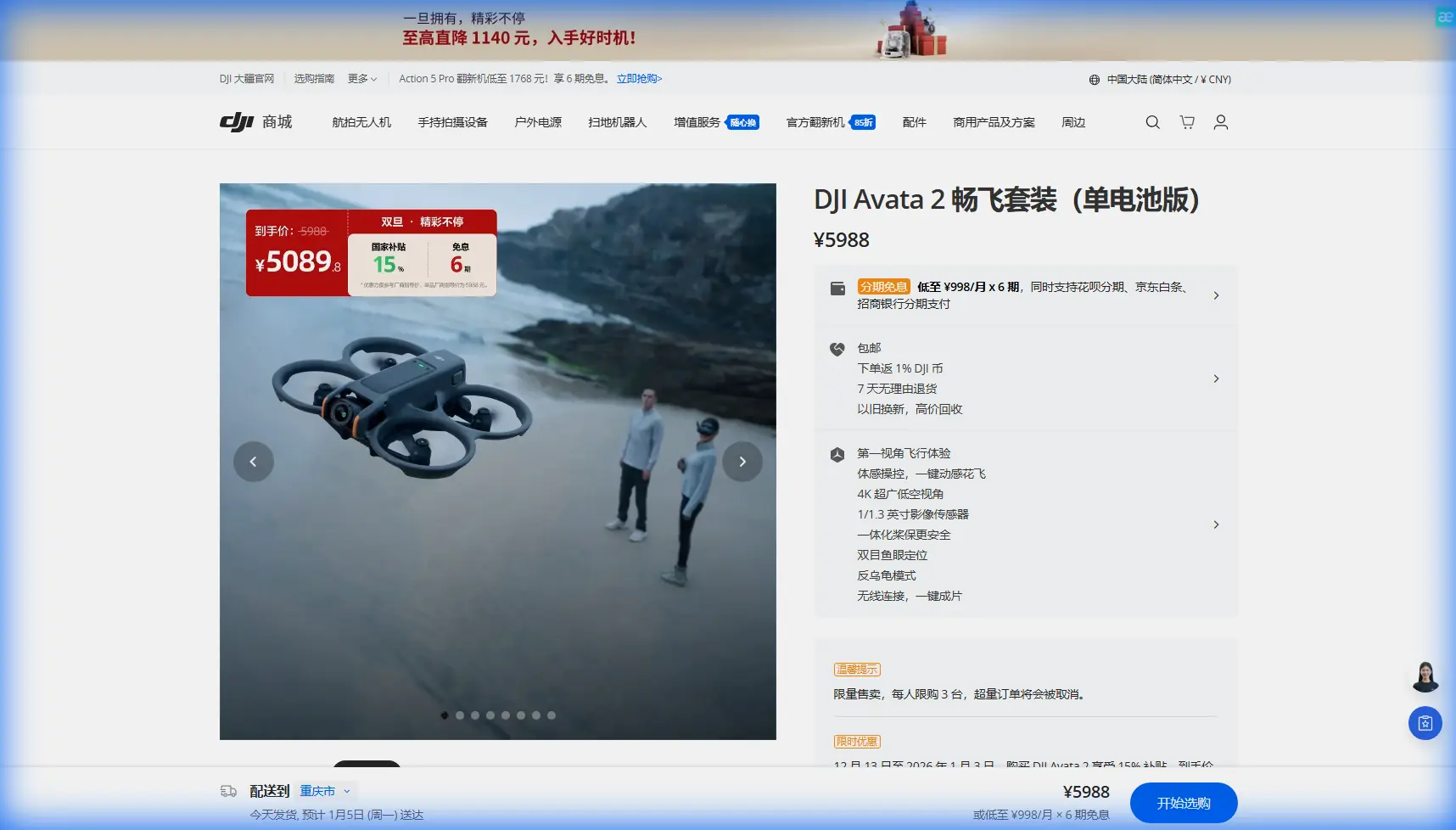
Avata 2 for Coastal Field Inspection: Why Control Logic Matters More Than Spec Sheets
META: A field-tested look at how Avata 2 fits coastal agricultural inspection, with practical insight on altitude stability, optical positioning, obstacle avoidance, and smooth low-level flight.
A lot of drone articles about the Avata 2 stay on the surface. They talk about immersion, speed, camera quality, maybe a feature list with ActiveTrack, QuickShots, or D-Log thrown in for good measure. That misses the real question serious operators ask when they are inspecting coastal fields:
Can this aircraft hold itself together where wind, uneven terrain, reflective water, and repetitive crop patterns make small control errors turn into wasted flights?
That question brings me back to an earlier headache. A few seasons ago, I was working around coastal plots where the edge of the field gave way to drainage channels, wet soil, low brush, and intermittent gusts rolling in from the shoreline. On paper, the mission sounded simple: fly low, check plant consistency, inspect access lanes, and capture review footage for the farm team. In practice, the aircraft had to deal with changing surface textures, air disturbances, and constant altitude corrections. What mattered wasn’t how exciting the drone looked in a product video. What mattered was whether it could maintain stable height and predictable positioning while moving through a messy environment.
That is where a control-systems perspective helps make sense of the Avata 2.
Why coastal field inspection is harder than it looks
Coastal agricultural inspection puts pressure on the exact parts of flight control many buyers never think about. The challenge is not only navigation. It is damping, sensor confidence, and loop tuning in the background.
A useful reference point comes from a Harbin Institute of Technology hexacopter design study that breaks drone control into three linked layers: attitude control, altitude control, and position control. That structure sounds academic, but for real field work it explains almost everything.
The study describes altitude control as a two-loop system. The inner loop manages climb rate, while the outer loop manages height. More specifically, the outer height loop uses PID control, and the inner climb-speed loop uses P control. The operational significance is not abstract. The authors explain that rotorcraft are short on natural damping in the vertical axis, so without a speed inner loop, altitude corrections tend to overshoot and robustness suffers. Add the speed loop, and the aircraft gains more system damping, better stability, and stronger disturbance rejection.
For a coastal inspection pilot, that translates into something very practical: fewer ugly altitude bobbles when the drone transitions from dry rows to damp edges, or when wind pushes under the airframe during a low pass.
The same document also shows a fusion result between barometer and accelerometer data over a 0 to 100 second time scale, comparing raw barometric height with fused height. Again, the academic language hides a very field-relevant truth. Raw altitude data drifts and jitters. Sensor fusion makes the height estimate more usable. If you are inspecting crop edges near ditches or running low over planting lines, a cleaner height estimate means your footage is more consistent and your aircraft behavior is more predictable.
That matters a lot for Avata 2 users, even if they never open a control diagram.
What this means for Avata 2 in the field
The Avata 2 is not a hexacopter and it does not copy that university design one-to-one. Still, the underlying lesson holds: stable low-altitude inspection depends on the quality of the aircraft’s sensor interpretation and how well its control loops suppress unwanted motion.
For coastal field work, Avata 2 makes the job easier because it combines agile close-range flight with features that reduce pilot workload in exactly the situations where control precision counts. Obstacle avoidance helps when you are weaving around treelines, utility poles, irrigation hardware, and uneven boundary vegetation. That is obvious. Less obvious is why this works so well in a field inspection workflow: obstacle awareness gives the pilot more mental bandwidth to watch crop condition, rutting, drainage behavior, and access issues rather than spending the entire flight on collision anxiety.
This is also where low-level visual inspection differs from a broad mapping mission. Sometimes you are not trying to create a high-altitude orthomosaic. You are trying to see whether salt exposure is stressing one side of a field, whether standing water is blocking root development, or whether vehicle access has compacted the margin rows. For those tasks, close and controlled flight is often more valuable than simple top-down coverage.
The quiet importance of position control
The Harbin reference also outlines position control using GPS or optical flow as feedback, with position and velocity information feeding into PID-based loops. The sequence matters: position control generates the speed target, the speed loop then feeds the attitude target, and attitude quality ultimately determines positional precision. The paper makes this explicit and even gives a tuning priority: improve the attitude loop first, then tune the speed loop, and only after that adjust the position loop.
This is one of the smartest lessons any Avata 2 operator can borrow.
When pilots struggle in field inspection, they often blame GPS quality or wind first. Sometimes the real problem is simpler: the aircraft is being flown in a way that constantly destabilizes the lower-level control tasks. Jerky stick inputs, abrupt changes in speed, and aggressive low-altitude turns all force the drone to spend more effort on attitude correction before it can settle back into precise positioning.
With Avata 2, that means smoother inputs usually produce better inspection output than aggressive cinematic flying. If your goal is to inspect fields in coastal conditions, treat the drone less like a stunt platform and more like a close-in observation tool. Let the aircraft settle. Use deliberate lines. Give the system time to maintain clean altitude and heading behavior. You will usually get more usable footage and better visual evidence of crop or terrain issues.
Where Avata 2’s feature set actually helps
A few features often treated as lifestyle extras become more useful in professional inspection than people expect.
Obstacle avoidance
In field-edge work, this is not just a safety convenience. It can prevent interrupted passes when moving near windbreaks, pump sheds, fence lines, or isolated trees. Coastal properties are rarely uniform rectangles. They have clutter. Obstacle avoidance reduces the workload of threading those irregular edges.
ActiveTrack and subject tracking
For agriculture, “subject” does not have to mean a person or vehicle in a dramatic chase shot. It can mean following a quad bike along a boundary lane, tracking a tractor route during access assessment, or documenting repeated movement patterns near irrigation lines. Used carefully, tracking can help standardize review footage.
D-Log
If you are documenting field conditions across changing coastal light, D-Log can be more than a colorist’s toy. It preserves more flexibility when you need to compare highlights on wet surfaces, shaded crop rows, and bright sky in one sequence. Inspection teams that review footage later often benefit from image files that tolerate correction without falling apart.
QuickShots and Hyperlapse
These are not the first tools I would reach for during issue detection, but they can be useful for communication. A Hyperlapse showing tidal fog movement near a field edge or a QuickShot establishing the relation between field blocks and drainage channels can help non-pilots understand site context quickly. For farm managers, agronomists, or landlords reviewing conditions remotely, context is often half the battle.
A better way to use Avata 2 in coastal agriculture
The mistake I see most often is assuming that one flight style covers the whole mission. It does not. Coastal field inspection works better when broken into layers.
Start high enough to understand the site structure. Identify the field edges, drainage paths, access lanes, and any vegetation barriers. Then move into lower passes where Avata 2 can do what many larger aircraft do less gracefully: inspect near-ground conditions with strong visual immediacy.
This is where the logic from the reference document becomes practical again. Altitude control is not just about “staying in the air.” In a field inspection context, it is about preserving a consistent relationship between the camera and the crop. Position control is not just about reaching a waypoint. It is about holding a line well enough that your footage can be compared from one pass to the next. And attitude control is not a separate engineering topic. It is the foundation underneath both.
That hierarchy matters. If the aircraft is rolling and pitching more than necessary, your position precision degrades. If your position wanders, your visual inspection quality drops. If your altitude oscillates, it becomes harder to judge crop height consistency, standing water boundaries, or row-to-row differences.
The Harbin design notes this chain clearly: attitude precision directly affects position-control precision. For Avata 2 operators, that means good results begin with disciplined handling and a setup that respects the aircraft’s control architecture rather than fighting it.
The real advantage over older field workflows
Before aircraft like Avata 2 became viable for this kind of close inspection, many teams had to choose between two compromises.
One option was a conventional wider-frame drone that covered area efficiently but felt less natural around tight obstacles and field-edge detail. The other was ground inspection, which gave excellent local detail but took too long and often missed broader spatial patterns.
Avata 2 sits in an interesting middle ground. It is especially useful when the mission is not pure mapping and not pure walking inspection either. It excels when you need dynamic visual review of awkward spaces: drainage cuts, wind-affected margins, low structures, access tracks, and crop transitions that are easiest to understand from a moving low-altitude perspective.
That does not mean it replaces every other aircraft. It means it solves a very specific problem well.
And for coastal fields, that problem is common.
A practical mindset for better inspection output
If I were setting up an Avata 2 coastal field workflow today, I would focus on consistency more than drama.
- Fly repeatable lines at similar altitude where comparison matters.
- Use obstacle avoidance as a buffer, not an excuse for reckless proximity.
- Capture a mix of broad context and low-detail passes.
- Use D-Log when lighting contrast is harsh and post-review matters.
- Reserve automated cinematic modes for briefing and reporting support, not primary evidence collection.
- Treat stable motion as a diagnostic tool.
That last point is easy to underestimate. Stable motion helps you see the field honestly. Unstable motion hides patterns, exaggerates some issues, and makes others harder to verify.
If you are trying to build or refine this kind of workflow, it helps to talk with someone who understands both aircraft behavior and operational use. I usually suggest starting with a practical mission discussion rather than a feature debate, and if you want to compare setups for your own site, you can message a drone specialist here.
Why this model feels easier in the real world
The reason Avata 2 feels easier than older close-range workflows is not magic. It is the accumulation of small control and sensing advantages that reduce friction in difficult environments.
Think about the reference data one more time. A two-loop altitude controller improves damping and reduces overshoot. Sensor fusion makes height information cleaner than raw barometric data alone. Position control depends on GPS or optical sensing and ultimately rests on accurate attitude control. These are not trivia points from a thesis. They describe the hidden mechanics behind whether a field inspection flight feels calm and useful or twitchy and frustrating.
When a drone behaves well in height, speed, and attitude, the pilot can pay attention to agronomic reality instead of constantly rescuing the aircraft from instability.
That is the real story with Avata 2 for coastal fields. Not hype. Not just a feature list. A better fit for a type of inspection where smooth low-altitude control, environmental awareness, and dependable visual capture matter more than headline specs.
Ready for your own Avata 2? Contact our team for expert consultation.