
Avata 2 for Windy Venue Inspections: Field Methods That
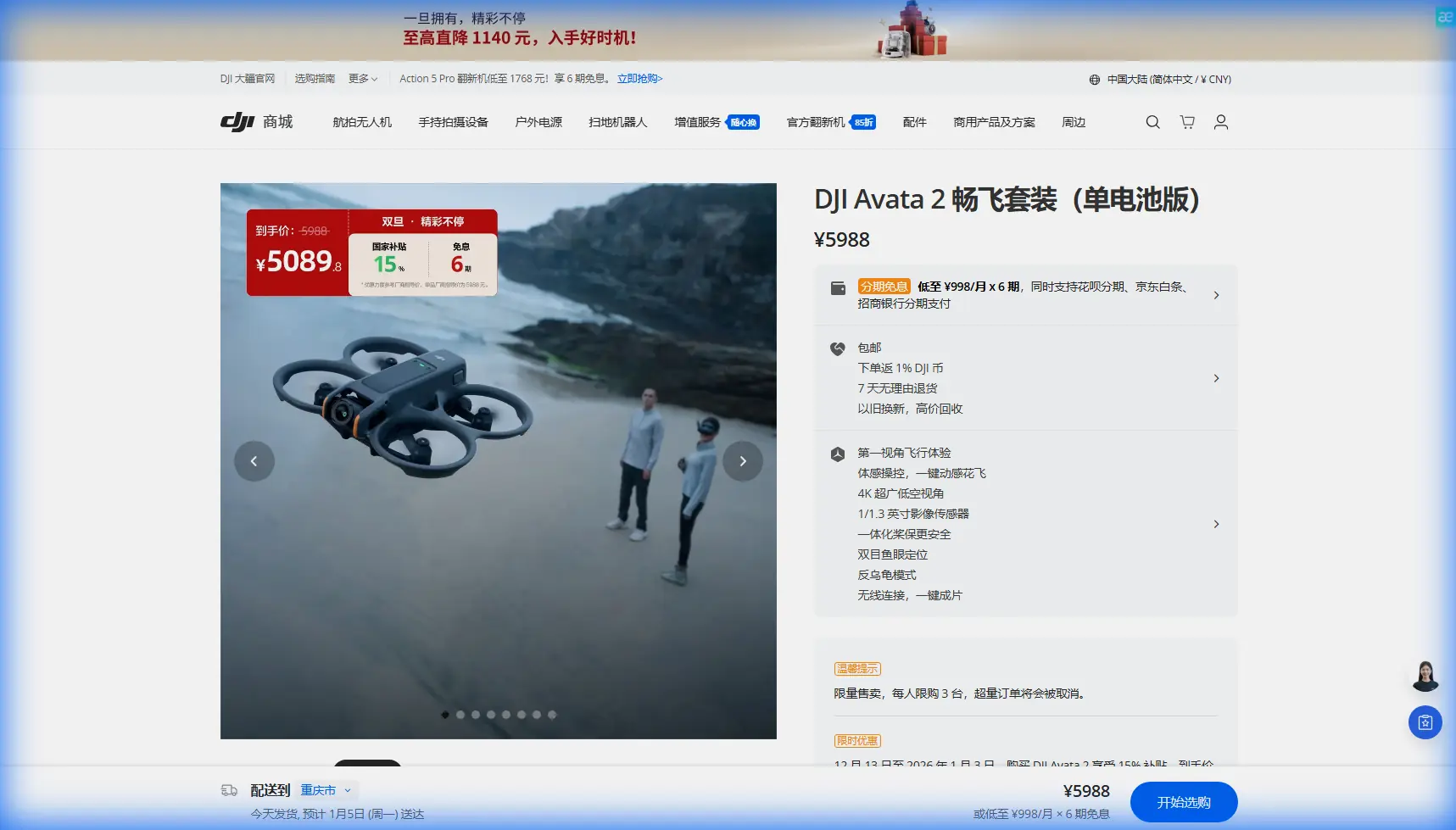
Avata 2 for Windy Venue Inspections: Field Methods That Protect Accuracy
META: A practical Avata 2 inspection guide for windy venues, covering flight planning, control-point visibility, RTK-aware workflows, image capture angles, and safer data collection habits.
Wind changes the character of a venue inspection.
A stadium concourse, open-air event ground, exhibition complex, rural fair site, or waterfront performance space can look straightforward on a map and turn difficult the minute gusts start pushing the aircraft off line. I learned that the hard way on a venue job where the main challenge wasn’t reaching the site. It was keeping the visual record consistent enough to support follow-up measurement, maintenance notes, and stakeholder review without wasting half the day reshooting.
That is where the Avata 2 becomes interesting. Not because it turns a complex survey task into a one-button exercise, but because it can simplify close-range inspection passes in places where conventional flight patterns feel stiff and vulnerable to drift. For venue work in wind, that matters. You often need to move near facades, over seating zones, around entry structures, under roof edges, and along service corridors while still coming back with footage and stills that make positional sense.
The real trick is not just flying the Avata 2 well. It is using it inside a disciplined capture method borrowed from formal aerial mapping practice.
A technical land cadastral mapping design document offers a few rules that transfer surprisingly well to venue inspection. Those rules were written for control-point placement, RTK checks, and field photography, but the operational logic applies directly when you are trying to document a windy site without creating confusion later in the office. If you use the Avata 2 as an inspection platform with that mindset, you get cleaner evidence, faster revisits, and fewer “where exactly was this?” conversations.
Why mapping discipline matters for Avata 2 inspections
Most venue inspections are not pure cinematic flights. They are evidence flights.
You are checking roof edges, drainage paths, gate structures, temporary rigging zones, crowd-routing barriers, lighting mounts, signage positions, service lane access, and surface wear. The footage may later support engineering comments, event planning, contractor scope reviews, or maintenance scheduling. If the material looks dramatic but lacks positional clarity, it loses value.
One detail from the reference material stands out: when documenting control points in the field, crews are instructed to capture the full image for overall location and then produce a 3x enlarged crop centered on the point for precise identification. That is a simple but powerful idea for Avata 2 inspections. In practice, every key defect or asset should be recorded twice:
- a wider context view that shows where it sits in the venue
- a tighter view that removes ambiguity
With wind, pilots often rush the close shot and skip the establishing frame because they want to get out of a turbulent pocket quickly. Later, the team has a sharp image of a loose panel, cracked curb, or corroded bracket but no confidence about which section it belongs to. The mapping workflow solves that problem before it starts.
A better windy-venue workflow for the Avata 2
Here is the method I now use.
1. Start with the site edges, not the center
The reference document specifies that control points around a survey area should be placed outside the boundary when possible so the whole area can be controlled effectively. For venue inspection, the equivalent is to begin your visual documentation from the perimeter and work inward.
Why this helps in wind:
- the perimeter usually reveals prevailing wind direction first
- edge structures show where turbulence rolls off walls and stands
- you establish geographic orientation before collecting detail shots
- later notes become easier because every interior issue can be referenced back to a known edge sequence
With the Avata 2, I like to make one cautious perimeter pass at moderate speed and conservative altitude, using obstacle awareness and stable line choice rather than aggressive maneuvers. If the venue has tall grandstands, stage roofs, or temporary towers, the first pass is where you learn which corners are producing rotor-like air.
2. Build your flight lines around overlap, not just visibility
The source text states that image control points should be selected near the centerline of side overlap, and when side overlap is too small for adjacent flight lines to share points, separate points should be arranged. That sounds like a surveyor’s note, but it directly maps to venue inspection coverage.
For Avata 2 operators, this means your passes should overlap enough that you can visually cross-reference one inspection segment against the next. If wind forces you to widen spacing between passes, assume you will need extra reference captures rather than trusting continuity.
Operationally, this avoids a common failure in windy inspections: you inspect section A, drift through section B, and resume a clean pass in section C. On-screen, it feels manageable. In post, section B becomes the blind zone where no one is fully sure whether a defect sits on the east rail, the south access ramp, or the transition between them.
A little intentional overlap fixes that. If overlap degrades, add a dedicated linking pass.
The camera angles that save your report later
One of the most useful field-photo instructions in the reference data is not about drones at all. It says long-range and mid-range photos should clearly show the relationship between the point and surrounding features, and the images should ideally be shot in a vertical relationship. It also warns against shooting along linear features and recommends an angle of about 45° to them.
That advice is gold for venue inspection.
When operators follow a fence line, drainage trench, handrail, cable route, barrier row, or roof seam directly along its length, perspective compression hides defects and makes distance judgment harder. In wind, this gets worse because lateral drift exaggerates the tunnel effect. Shooting at roughly 45 degrees to the line solves several problems at once:
- defects stand out from the background
- the object’s relation to nearby structures becomes obvious
- repeated inspection frames are easier to match on future visits
- the viewer can judge depth and offset better
I now treat this as a rule with the Avata 2: if the subject is linear, don’t just chase it head-on. Cross it obliquely. Let the venue geometry work for you.
Three distance bands every Avata 2 venue inspection should include
The reference document requires field teams to shoot far, mid, and near images for each control point, with specific distance guidance:
- far view generally not less than 20 meters
- mid view generally not less than 10 meters
- near view around 2 to 3 meters
For a windy venue inspection, that framework is excellent.
You do not need to copy it mechanically for every object, but you should think in those three bands:
Far band: 20 meters or more
Use this to establish where the issue sits in the venue. In the Avata 2 workflow, this is your orientation frame. Show the stand section, gate, canopy edge, utility run, or façade bay around the target.
Mid band: 10 meters or more
This is often the most useful inspection distance. You still have enough environmental context, but details become readable. In gusty conditions, the Avata 2 can often hold a safer, more stable visual line here than in very tight proximity.
Near band: 2 to 3 meters
Reserve this for confirmation. The close shot should validate the issue, not carry the entire burden of identification. In wind, forcing too many ultra-close passes raises the risk of drift near structures and can reduce inspection consistency.
This three-band logic also complements D-Log workflows. If you plan to color-balance footage for later reporting, the wider and mid frames preserve scene context while the near frames isolate material condition. Together they form a stronger record than any single dramatic close-up.
Where RTK discipline still matters, even if the Avata 2 is not your survey platform
The source material includes an RTK verification rule that deserves attention: after starting work or resetting a base station, the crew should check at least one known point, with horizontal error no more than 5 cm and elevation error no more than 10 cm.
Most Avata 2 venue inspections are not full RTK survey missions. Still, the principle matters.
Any time your inspection workflow depends on tying visual findings back to known site coordinates, previous mapping, or contractor setout, you need a verification habit. Maybe that means:
- confirming your launch and orientation against a known map feature
- matching a visible defect location with existing site control or CAD references
- checking that your flight annotations align with the real-world section numbering
- validating any hybrid workflow where an RTK-equipped platform gathered base data and the Avata 2 captured close-range detail
The Avata 2 shines in confined visual inspection. It should not tempt you into pretending positional certainty exists where it has not been checked.
If you are integrating Avata 2 footage into a larger venue documentation package and want to compare notes on practical field setups, you can message our drone team here.
Avoiding the worst signal environments
Another useful detail from the technical reference: points should not be chosen within 50 meters of high-voltage transmission lines or microwave radio transmission channels when using GPS measurement, and nearby reflective surfaces can worsen multipath effects.
For venue inspections, this matters more than many pilots admit.
Modern venues are full of signal and reflection hazards:
- metallic roofs
- large display structures
- rigging trusses
- LED walls
- broadcast equipment
- perimeter fencing
- utility cabinets
- water features
Even if you are not running a formal GNSS-RTK measurement task with the Avata 2, these surroundings can still affect situational confidence, visual interpretation, and workflow reliability. A reflective façade beside a windy corner is not just a flying challenge. It is a data-quality trap. The aircraft may be fine, but the clip can become hard to interpret because motion, reflections, and changing orientation combine into visual noise.
The solution is field awareness, not bravado. Mark those zones before launch. Plan shorter passes. Gather extra context frames. If a corner mixes gusts, metal, and shadow, give yourself more margin.
Obstacle avoidance and tracking: useful, but not a substitute for line design
Readers often ask whether obstacle avoidance, subject tracking, QuickShots, Hyperlapse, or ActiveTrack make windy inspections easier on the Avata 2.
Some do, with limits.
Obstacle awareness can reduce stress in tighter venue geometry, especially when you are inspecting under overhangs or along structures with irregular edges. But in gusty conditions, your route still needs to be designed around likely drift corridors. Sensors help with proximity. They do not design a clean documentation sequence.
ActiveTrack and subject tracking can help on moving maintenance assets or walkthrough demonstrations, but static venue inspection is usually better served by repeatable, manually planned passes. You want frames that can be recreated later, not just followed in the moment.
QuickShots and Hyperlapse have their place for stakeholder overviews, time-based setup monitoring, or showing circulation patterns, but they should sit on top of the inspection workflow, not replace it.
For evidence-grade venue records, the foundation is still:
- repeatable pathing
- deliberate overlap
- multiple distance bands
- oblique angles on linear features
- clear site-edge orientation
- positional checks when integrating with mapped data
A practical field sequence for a windy venue day
If I were sending an Avata 2 crew to inspect a venue in windy conditions tomorrow, this is the sequence I would hand them:
Pre-flight
Review site geometry, prevailing wind direction, metallic structures, water features, and broadcast or utility zones. Identify edges that may create turbulent spill.
Pass 1: Perimeter orientation
Fly the boundary first. Keep the route conservative and learn the wind. Log the problem corners.
Pass 2: Structural overview
Capture broad contextual frames of stands, roofs, facades, access lanes, and service areas.
Pass 3: Overlap-linked sector passes
Break the venue into sectors and maintain enough overlap that adjacent segments can be cross-referenced later.
Pass 4: Mid-distance inspection
Use roughly 10-meter-plus spacing where possible for the most stable, readable detail collection.
Pass 5: Close confirmation
Move in to 2 to 3 meters only for critical confirmation shots and only where the airflow is predictable.
Photo logic
For each issue, capture:
- one wide contextual frame
- one mid frame
- one close frame
- one oblique frame if the feature is linear
Positional confidence check
If findings must tie back to mapped references or known site coordinates, validate against at least one known control feature before relying on the location labels.
This is not glamorous. It works.
The real advantage of the Avata 2 here
For windy venue inspections, the Avata 2 is most valuable when you stop expecting it to behave like a broad-acre mapping aircraft and start using it as a nimble close-range documentation tool inside a survey-minded process.
That distinction matters.
The aircraft can help you move through awkward spaces and collect stable visual evidence where a larger platform would feel cumbersome. But the quality of the final inspection still depends on how you organize sightlines, overlap, angles, and reference logic. The old mapping rules from cadastral fieldwork may seem far removed from a modern venue inspection, yet they solve exactly the problems that cause expensive confusion later: missing context, weak repeatability, uncertain location, and poor visual relationships.
My own turning point came when I stopped chasing “the shot” and started building shot sets that could survive review by someone who wasn’t there. Once you do that, the Avata 2 becomes much more than a flying camera. It becomes a reliable inspection recorder, even on days when the wind tries to turn the whole site into guesswork.
Ready for your own Avata 2? Contact our team for expert consultation.