
Avata 2 Field Report: Inspecting Windy Vineyards When
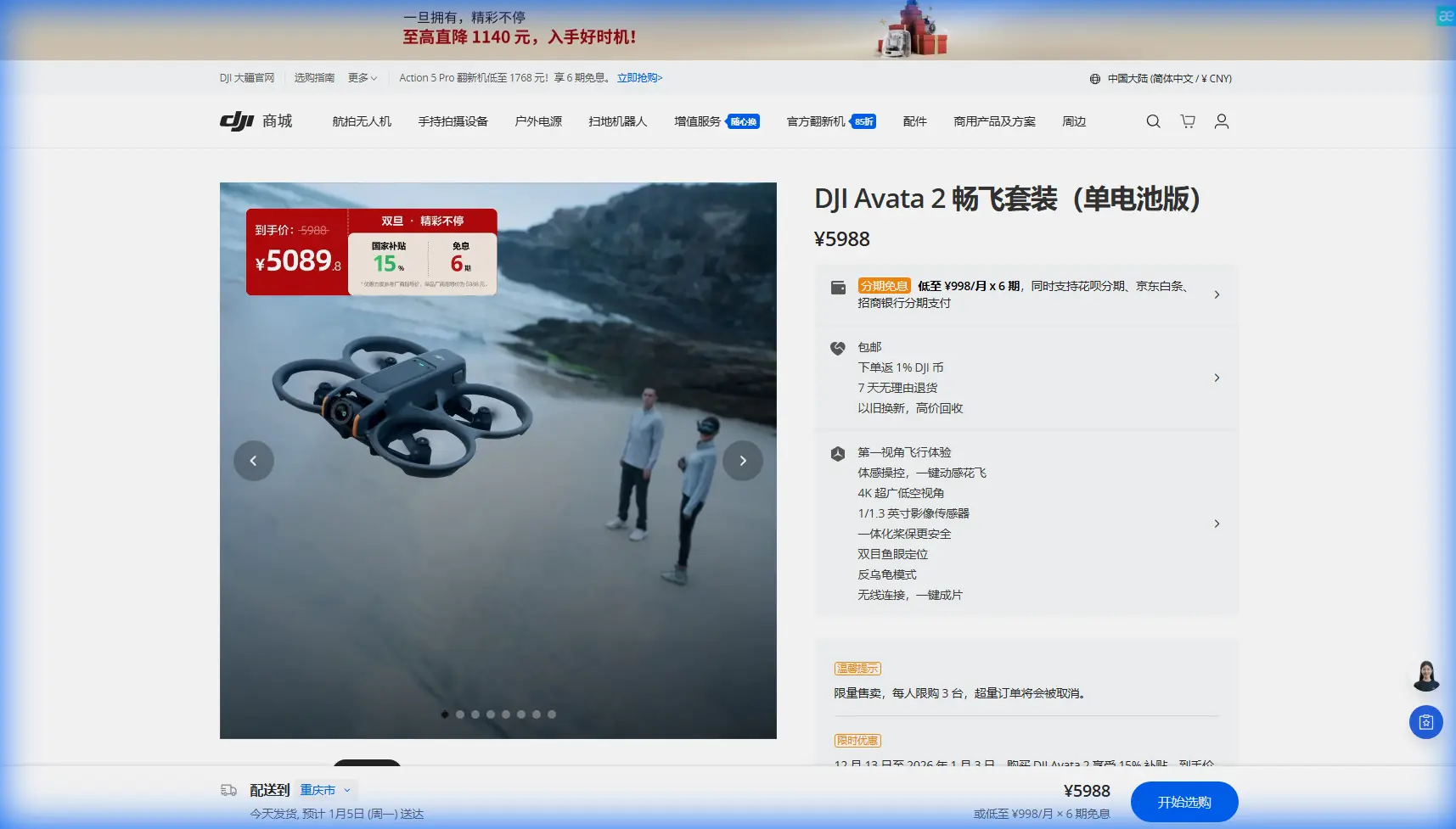
Avata 2 Field Report: Inspecting Windy Vineyards When the Weather Turns
META: A field-tested look at using DJI Avata 2 for vineyard inspection in wind, with practical notes on obstacle avoidance, D-Log capture, terrain awareness, and where LiDAR data still matters.
I took the Avata 2 into a vineyard on a day that looked manageable from the road and less friendly once I got above the first row. That distinction matters. Vineyards often sit in terrain that channels airflow in unpredictable ways—ridges, breaks in elevation, open access tracks, shelterbelts, and trellis corridors all shape the flight environment. For inspection work, especially when the goal is to review vine vigor, row condition, access paths, poles, wires, and edge vegetation, the aircraft has to do more than just stay in the air. It has to keep producing usable footage while conditions change.
This report is about that kind of day.
It is also about a bigger truth that people in drone operations sometimes gloss over: not every inspection problem is a camera problem. Some are sensing problems. Some are access problems. Some are workflow problems. And if you understand where Avata 2 excels—and where LiDAR-based survey systems still hold the line—you make better decisions in the field.
Why Avata 2 makes sense in vineyards
Avata 2 is not the obvious first pick if your only frame of reference is broad-acre mapping. A vineyard is different. The work often happens low, close, and in constrained spaces. You are not always trying to generate a classic overhead map. Quite often, you are trying to move along rows, inspect trellis alignment, check for damage after wind, review drainage paths, confirm vehicle access between blocks, and capture visual evidence that a ground team can use the same day.
That is where Avata 2 becomes unusually practical.
Its protected design and immersive handling style let you work in tighter agricultural environments than a conventional camera drone would encourage. Rows feel narrower once you are actually in them. End posts, anti-hail structures, netting, isolated branches, and service wires turn a simple pass into a precision task. Obstacle awareness is not just a spec-sheet talking point here. It changes pilot behavior. You can fly with more confidence around row transitions and edge clutter, especially when gusts nudge the aircraft off the line you intended.
For vineyard operators, that confidence translates into better inspection consistency. You are less likely to abort useful low-altitude passes. You are more likely to gather footage that shows real operating conditions instead of staying high and safe and coming home with vague visuals.
The flight started calm enough
The first block was straightforward. Light movement in the canopy. Predictable drift across the higher edge of the slope. I flew a set of row-following passes to document canopy uniformity and spot visible stress patterns near the western boundary. This is the sort of work where subject-focused tools and preplanned creative modes can still serve a practical purpose.
QuickShots and Hyperlapse are usually discussed as content features, but in an inspection setting they can help show progression and context. A short, stabilized reveal from the boundary road into the vine rows can show how wind exposure changes from edge to center. A Hyperlapse over access lanes can document trafficability and standing water patterns after weather. Those outputs are not substitutes for hard survey deliverables, but they are useful operational records for managers, agronomists, and maintenance crews.
I also captured D-Log footage because vineyards are rarely lit evenly. Strong contrast between bright soil, reflective leaves, shadowed under-canopy areas, and sky can make standard profiles less forgiving. D-Log gives more grading latitude later, which matters if you are trying to pull detail from shaded row interiors without blowing out the tops of the canopy. For inspection, that can mean the difference between “looks fine” and “there’s the damaged section.”
Then the wind shifted.
Not dramatically at first. Just enough to show up in the vine tops before it reached the aircraft. A few minutes later, the airflow strengthened from the open side of the property, then began rolling through the rows in pulses. This is where a vineyard teaches you quickly: wind in open air and wind inside row structures are not the same thing. Gusts can funnel, stall, and rebound.
What changed mid-flight
The Avata 2 handled the transition better than many people would expect from a compact FPV-style platform, but the key was not brute force. It was adapting the mission.
I shortened each pass.
I lowered speed on the more exposed legs.
I stopped trying to hold long, pretty lines and focused on clear visual objectives per row section: post integrity, canopy disruption, wire sag, and ground access.
Obstacle avoidance became more than insurance. In gusty vineyard work, minor lateral drift can turn into a branch or trellis proximity event fast. Having sensing support in those moments reduces workload, especially when you are transitioning from one row to the next and the aircraft briefly moves from open space into a tighter corridor. That is operational significance, not marketing language. Reduced pilot workload means better decision quality under changing conditions.
ActiveTrack-style thinking also matters here, even if you are not formally tracking a person or vehicle. The principle is continuity. When inspecting moving work crews, tractors, or a utility cart carrying repair equipment, reliable tracking behavior lets you document real field operations without constantly re-centering manually in a gusty environment. In agriculture, that saves time and reduces re-flying.
The weather did what weather often does in vine country: it changed faster than the forecast suggested. A cloud bank cut the light, then a brighter gap reopened the scene from one side. Wind and contrast both shifted within minutes. D-Log helped preserve footage across that change. Had I been locked into a narrower tonal range, reviewing leaf texture and subtle structural damage later would have been less dependable.
Where camera inspection stops and LiDAR starts
This is where the reference material behind this piece becomes useful.
The source data points to a real challenge in difficult survey zones such as wetlands, canyons, tidal flats, and gobi-like barren terrain: traditional instruments may be impractical, and standard drone photogrammetry can struggle when imagery is too uniform to extract enough reliable feature points. Vineyards can produce a milder version of that same problem. Repetitive row geometry, similar texture across large blocks, and variable wind movement in leaves can all degrade purely image-based reconstruction.
That does not mean Avata 2 is the wrong tool. It means you should know what job you are asking it to do.
If your vineyard task is visual inspection, low-altitude condition review, row-level documentation, edge hazard checks, or crew coordination footage, Avata 2 is excellent. If your task is high-precision asset inventory across extensive roads, drainage systems, or terrain models that need stronger geometric reliability, LiDAR enters the conversation for good reasons.
One of the systems in the reference deck, the SZT-R1000 light long-range mobile mapping platform, is listed at 5 cm accuracy at 100 m, with a range of 920 m or 1350 m and a maximum effective measurement rate of 550,000 or 750,000 points per second. Those numbers are not abstract. They explain why LiDAR remains valuable when you need dense spatial capture in places where image matching becomes unreliable. For large agricultural estates with complex service roads, embankments, stormwater channels, or hard-to-access perimeter zones, point-cloud density and ranging capability can reveal structure that a visual pass alone cannot quantify well.
Another reference system, the SZT-V100, is even lighter at 1.5 kg, with relative accuracy of 5 cm and absolute accuracy of 10 cm, plus a 360-degree horizontal field of view and 30-degree vertical coverage. Operationally, that suggests a different class of deployment: a lighter payload suitable for UAV-based close-range data capture where maneuverability still matters. In a vineyard context, systems like that would be relevant if the mission expands beyond inspection footage into measurable 3D documentation of access routes, erosion features, or infrastructure around the blocks.
The reference also highlights road asset inventory as a use case because regular inspection has to be completed quickly and traditional methods consume heavy labor and resources. That logic maps cleanly onto agricultural property management. Vineyards have assets too: roads, drains, fences, gates, tanks, pump stations, and service corridors. Avata 2 can document them efficiently at the visual level. LiDAR-based mobile mapping can quantify them when precision and completeness become non-negotiable.
What Avata 2 did well on the day
Three things stood out.
1. It stayed useful after conditions became less ideal
Many flights only look efficient if the weather holds. This one did not. The value of Avata 2 was not that it ignored the wind. It was that it remained controllable enough to keep collecting relevant inspection material after the environment changed. That is a meaningful distinction for real farm work, where return trips are expensive in time even if they are not dramatic on paper.
2. It let me work close without feeling reckless
Vineyards reward proximity. You need to see the details that matter: displaced wires, broken ties, leaning posts, branch intrusion at row ends, tire damage in access lanes. Avata 2’s form factor and obstacle-conscious operation make those close inspections more realistic. You still need discipline. But the platform encourages useful flight paths instead of forcing everything into a conservative high-level orbit.
3. It produced footage that can actually be reviewed by non-pilots
This is underrated. Managers do not want a cinematic abstraction of the property. They want clear, readable evidence. D-Log helps with post-work. Stable row runs help with interpretation. Even a short Hyperlapse, used correctly, can show progression through blocks in a way that a ground team immediately understands.
Best practices I would use again
When inspecting vineyards in wind with Avata 2, I would repeat this approach:
- Fly the exposed perimeter first, before the wind has more time to build.
- Use shorter row segments instead of committing to full-length runs when gusting starts.
- Treat obstacle avoidance as workload reduction, not as permission to fly carelessly.
- Capture one contextual sequence high enough to show terrain influence, then drop lower for task-specific passes.
- Record in D-Log if the light is variable or the inspection may require careful review later.
- If you need measurable terrain or infrastructure outputs rather than visual inspection alone, plan a separate LiDAR or higher-precision mapping workflow rather than forcing a camera-only solution.
That last point is where many operations lose efficiency. They ask one aircraft to solve every data problem. The source material makes clear that in difficult or repetitive environments, LiDAR earns its place because traditional visual collection can miss accuracy targets or fail to produce complete data. The right answer is often a layered workflow: Avata 2 for responsive visual inspection, another platform or payload for precision spatial capture.
A note for operators building a vineyard workflow
If you are assembling a repeatable inspection routine, think in terms of outputs, not drone fandom. What must the viticulture team see? What does the maintenance team need to measure? What can be reviewed from video, and what requires coordinates or 3D structure?
That discipline prevents over-collection and under-delivery.
On this flight, once the wind strengthened, I stopped chasing “nice footage” and started building a report in the air: edge exposure, row disturbance, access condition, and infrastructure checks. That shift made the mission productive. The Avata 2 was not acting as a general-purpose survey machine. It was acting as a fast, low-altitude visual inspection platform that could keep working in a dynamic agricultural environment.
And that is exactly where it shines.
If you are comparing methods for a property with steep terrain, repetitive rows, or hard-to-reach sections, it helps to talk through the mission before choosing the workflow. If you want to discuss that in practical terms, you can message our field team here.
The short version from this field day is simple. Avata 2 is highly effective for vineyard inspection when the goal is close visual assessment in changing wind and constrained spaces. It becomes even more valuable when used by someone who understands its boundary line: visual intelligence first, precision spatial measurement only when the mission truly calls for LiDAR-grade capture.
Ready for your own Avata 2? Contact our team for expert consultation.