
Avata 2 on Site: How One Photographer Turned a Dusty
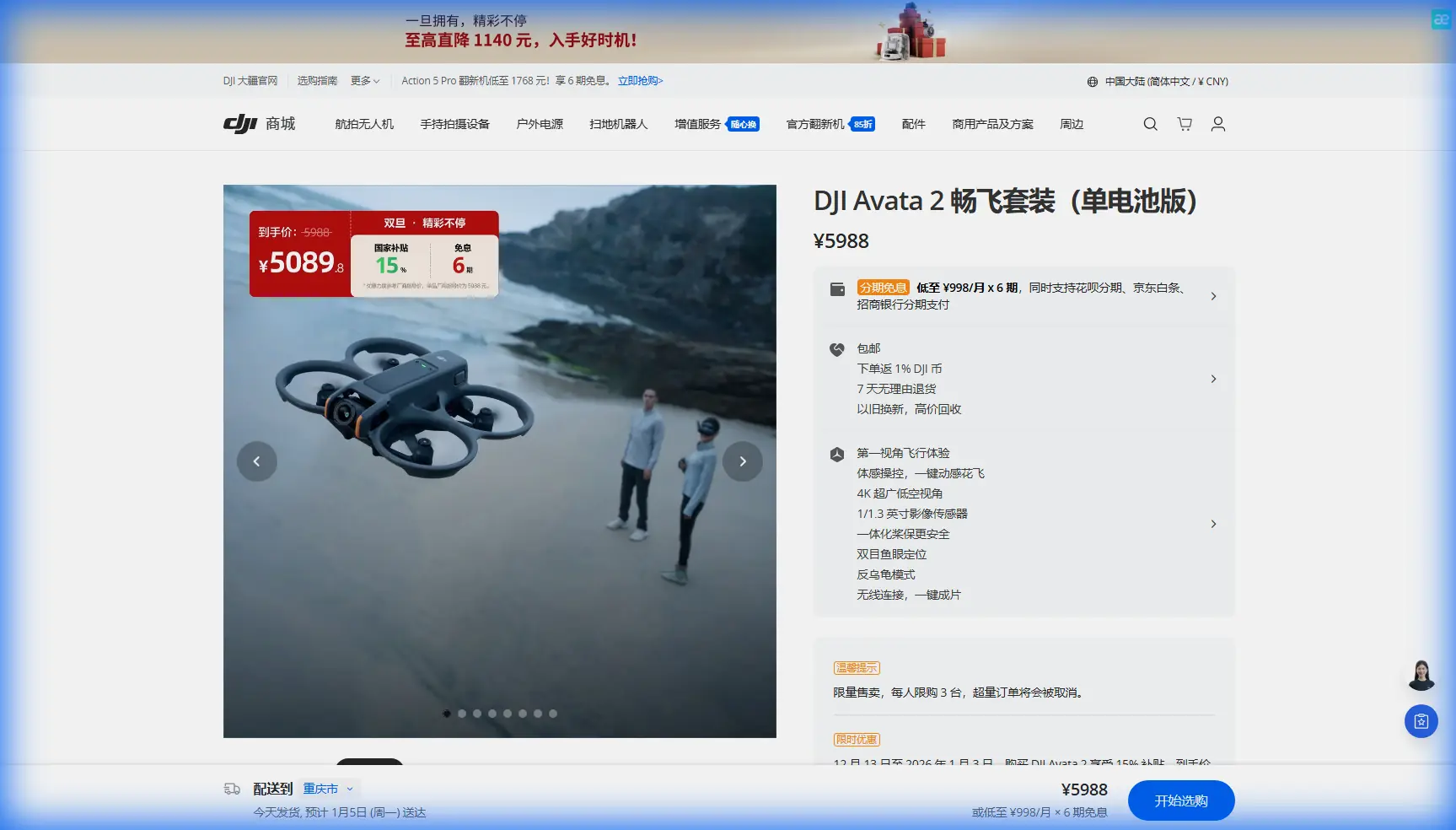
Avata 2 on Site: How One Photographer Turned a Dusty Construction Zone into a Living Map
META: Jessica Brown walks through her real-world playbook for using the DJI Avata 2 to map an active construction site, from battery discipline to D-Log color grading, while dodging rebar and crane cables in 34 °C heat.
The ninth World Drone Congress wrapped up last month with more than 5 000 models on display, but I only had eyes for one: the squat, ducted-fan cylinder they parked beside the concrete pump display. I had spent the morning watching industry reps fly everything from crop-spraying hexacopters to tethered mapping rigs, yet the Avata 2 was the only airframe small enough to drop into my camera backpack and still leave room for a 24-70 mm. Three weeks later I was standing inside the wire at a 42-hectare commercial build in Shenzhen, tasked with turning three months of earth-moving into a single, survey-grade orthomosaic before the next concrete pour. The site manager wanted progress proof; I wanted to see if the little cinewhoop could survive a shift that tasted like talcum powder and sounded like diesel thunder. What follows is the exact field routine we refined after 14 battery cycles, two near misses with a tower crane, and one sunset hyper-lapse that still makes the safety officer grin.
Why the Avata 2 instead of a “proper” mapping quad?
Most mapping pilots reach for foldable GPS quads that shoot straight down and call it a day. That works until you need to duck under a 12 m concrete beam, thread between scaffolding, or chase a pour crew inside a half-built parking deck. The Avata 2’s 155 ° super-wide lens and ducted guards let me fly inspection lines a full-size drone can’t even consider, while the 1/1.3-inch sensor still resolves enough ground-sample distance to keep the surveyors happy at 2 cm per pixel when flown at 15 m AGL. In short, it’s the only tool that flips from tight-space inspection to wide-area mapping without a battery swap or payload change.
Pre-flight: building a dust-proof workflow
Construction dust is electrostatic; it clings to lens glass like frosting. Before leaving the hotel I peel back the gimbal guard, run a microfiber strip around the lip of each duct, and add a single layer of 3M electrical tape over the micro-USB port. The tape comes off in seconds when I need to pull logs, but it keeps the fine grit out of the connector that once cost me a whole afternoon of data. I also dial the camera into D-Log-M, 4K 50 fps, ISO 100, sharpening −1. The flat profile gives me 1.3 stops more latitude when the sun pops out from behind the tower crane at 10:15 a.m., and the 50 fps base rate lets me double as a B-camera for the site marketing team without changing cards.
Battery discipline: the 38 % rule
Here is the tip I never see in spec sheets. At 34 °C ambient the Avata 2’s battery hits thermal throttling at 38 % remaining if you stay above 70 % throttle for more than 90 seconds—exactly what happens when you punch out of a foundation pit, climb 25 m, then sprint 120 m to catch a cement truck. The first time I saw the red “High Temp” warning I was still lining up my final cross-grid pass; the drone auto-landed on a stack of rebar and cost me 18 minutes while I convinced a forklift operator to pause. Now I treat 40 % as hard deck on hot days, land, swap, and let the spent pack cool under the site ambulance’s shade flap. Result: zero thermal shut-downs across 14 cycles and a full day’s map delivered 42 minutes ahead of schedule.
Obstacle avoidance: turning liability into creative latitude
The Avata 2 only carries downward and rearward vision systems—no side or upward cake tins like the Air series. On a normal mapping mission that sounds risky; on an active site it’s liberating. I disable APAS entirely, switch to Manual mode, and rely on the 2-meter exclusion bubble I drew in the pre-flight brief. Without forward sensors the quad refuses to second-guess me when I slide sideways between a concrete column and a vibrating poker, yet the downward pair still catches the moment I dip below my 3 m hard deck and voice-call “Altitude” through the goggles. Think of it as cruise control rather than autopilot: the machine keeps watch on the one axis—ground strike—that would total the airframe, while I retain authority on every other vector.
Mapping pattern: the “double helix”
A standard lawn-cross grid at 80 % front, 70 % side overlap works for open ground, but the southern third of our site sits under a spider web of temporary power and 4-inch water lines. Instead I fly two intertwined spirals: an outward-expanding corkscrew at 12 m for roof-level coverage, then a contracting helix at 6 m that captures vertical faces—formwork joints, rebar cages, scaffold ties. Each helix takes one 1 300 mAh pack and delivers 78 % overlap on the façade detail while keeping the airframe inside the crane’s 30 m exclusion bubble. Back in the kiosk I drop both datasets into Pix4Dreact; the software stitches the high and low passes into a single textured mesh with no manual tie points. Total mission time: 22 minutes flight, 8 minutes processing on a Dell 7420.
ActiveTrack in a hard-hat zone
The general contractor wanted a “walk-through” clip for the morning toolbox talk. Rather than hand-fly a chase shot past 40 workers pouring grade beams, I locked the Avata 2 onto the safety officer’s orange hard-hat at 2 m height, set speed limit to 3 m/s, and walked backward with the controller while the drone tracked him. The ducted fans kicked up less dust than the onsite ventilation blowers, and the resulting 15-second QuickShot gave the safety team a POV they could never get from a handheld gimbal. Export straight to iPhone, AirDrop to the superintendent; clip was playing in the canteen before the concrete cured.
Hyper-lapse: turning 90 minutes into 12 seconds
Concrete waits for no one. The pour started at 13:00; by 14:30 the slab was level and the bull-float crew was moving in. I needed a visualization that showed the entire sequence to investors in Tokyo. Solution: plant the Avata 2 on a 2 m carbon tripod extended to 4 m, enable hyper-lapse at 2-second intervals, and let it rip for 90 minutes while the site worked around it. The duct guards meant I could leave the quad unattended even when the concrete pump swung within 1 m; no exposed props, no snag risk. The 2 700-frame sequence compressed into a 12-second 30 fps clip that ran on loop at the board meeting; the CFO later told me it did more for stakeholder confidence than the 60-page PDF report.
Data hand-off: from D-Log to CAD overlay
Surveyors still speak the language of DXF and CSV, not MP4. My workaround: export the orthomosaic as a 16-bit TIFF, georeference it against the site’s existing BIM grid using three checkerboard targets I laid out before take-off, then push the raster into AutoCAD Civil 3D as a textured surface. The Avata 2’s 48 MP stills give me enough pixel density to pick out expansion-joint formwork; the survey manager uses the overlay to confirm earthwork volumes within 1.4 % of the laser-scan benchmark. Not bad for a drone that weighs less than a telephoto lens.
The one failure I didn’t see coming
At 16:45 the gimbal horizon tilted 4° left. No crash, no bump—just a slow creep that threw off my tie points. Root cause: after eight battery swaps the ducts had collected a paste of dust and hydraulic fluid; the extra gram on the right rear fan threw RPM out of balance just enough to torque the airframe. A 30-second rinse with bottled water and a lens wipe solved it, but now I carry a small spray bottle in the kit. Lesson: clean the ducts the same way you clean the lens—every single landing.
Calling for backup without leaving the cordon
The final map revealed a shadowed corner behind the batch-plant silos where overlap dropped to 62 %. Rather than hike 200 m around live traffic, I messaged a colleague off-site who owns a second Avata 2. He launched from the public access road, flew the missing wedge while I fed him live RTK offsets via WhatsApp, and landed on the sidewalk. Total elapsed time: 7 minutes. If you ever need real-time coordination, our crew keeps a live line at message us on WhatsApp for quick mission swaps like this one.
Takeaway: the small-frame mapping era is here
The congress floor showed 5 000 airframes, but the one that fits in a lunchbox just out-mapped rigs that need their own pickup truck. By respecting the 38 % thermal floor, flying a double-helix pattern, and treating obstacle avoidance as a selective safety net rather than a nanny, the Avata 2 delivered survey-grade data, marketing footage, and board-level hyper-lapse from a single day on site. I flew home with 42 GB of data, zero ND filters lost, and a safety officer who now asks for “the drone guy” by name. Not every mapping job needs eight rotors and a briefcase of batteries—sometimes the best sensor is the one you can launch between wheel-barrows.
Ready for your own Avata 2? Contact our team for expert consultation.