
Mapping Coastal Fields With DJI Avata 2: A Real
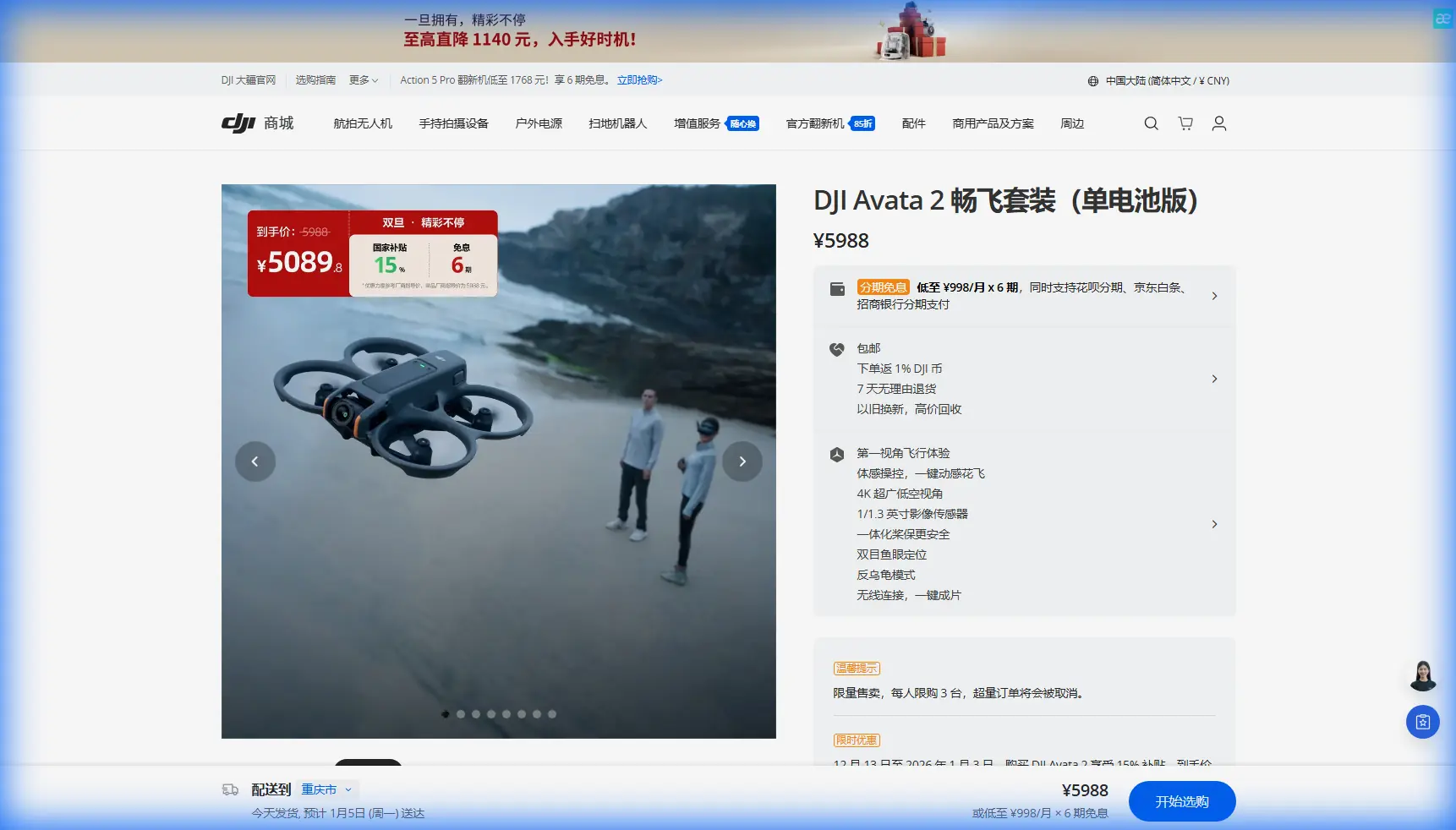
Mapping Coastal Fields With DJI Avata 2: A Real-World Case Study From the Edge of Wind and Salt
META: A detailed Avata 2 coastal field mapping case study covering flight planning, obstacle avoidance, D-Log, Hyperlapse, QuickShots, ActiveTrack limits, and practical workflow tips.
When people talk about the DJI Avata 2, they usually jump straight to immersion, acro-style flight, and cinematic FPV. That misses a big part of the story. In the right hands, the Avata 2 is also a highly practical aircraft for documenting hard-to-reach land at low altitude, especially in coastal farming zones where wind, reflective water, drainage cuts, and irregular field edges make conventional capture messy.
I spent time evaluating how the Avata 2 fits a very specific job: mapping fields in a coastal environment where paddocks border tidal creeks, levees, access tracks, and shelterbelts. This is not a textbook survey mission in the strict engineering sense. It is a documentation workflow built for growers, land managers, and visual operators who need fast, repeatable low-level field intelligence while keeping a close eye on safety and image quality.
That distinction matters. The Avata 2 is not trying to replace a dedicated enterprise mapping platform. What it does offer is something different: controlled, close-proximity capture with strong situational awareness, compact deployment, and an image pipeline that can produce far more useful results than many people expect when the mission is designed around the aircraft’s strengths.
Why Avata 2 Makes Sense at the Coast
Coastal field work punishes sloppy flight planning. Wind direction changes around tree lines. Salt haze softens contrast. Narrow drainage channels split up otherwise clean runs. In some blocks, fencing, netting, and utility lines can appear with almost no warning if you are focused only on the ground pattern.
This is where the Avata 2’s obstacle avoidance earns its keep. On paper, people tend to think of obstacle sensing as a cinematic confidence feature. In coastal field documentation, it becomes an operational buffer. When flying low along a field margin, especially near reed lines or windbreak trees, that extra layer of awareness can help preserve spacing and reduce the chance of a rushed correction. It does not remove pilot responsibility, and it absolutely does not make wires disappear. But it changes the quality of the workflow. You spend less mental bandwidth on fighting the aircraft and more on maintaining clean, consistent path geometry over the area you want to document.
That consistency is the difference between attractive footage and usable field intelligence.
The second reason Avata 2 works here is its ability to capture detail from low and interesting angles without needing a bulky launch setup. In coastal areas, access is often the hidden constraint. You may be operating from a narrow track, a gate opening, or a dry patch beside a drainage berm. A compact FPV platform that can be airborne quickly is often more valuable than a theoretically superior system that is awkward to deploy in changing ground conditions.
The Mission Profile: Not Survey-Grade, But Highly Actionable
For this case study, the goal was simple: create a visual map of field boundaries, drainage behavior, crop variability, and access conditions after a period of coastal moisture and onshore wind. The farmer did not need a legal-grade orthomosaic. He needed to see where water sat, how vehicle paths were holding up, and whether edge rows near the tidal side were showing stress patterns different from the interior.
The Avata 2 is well suited to this kind of layered observation. Instead of chasing pure top-down coverage, I broke the work into three passes.
First came a higher orientation loop to establish the shape of the block, the proximity of water, and the arrangement of access lanes. Then I flew low perimeter runs to inspect edges, drains, and transitions between planted and saturated ground. Finally, I used controlled cinematic passes over the most problematic zones to create footage that was easier for the landowner to interpret than still frames alone.
That last point gets overlooked. Many field clients are not image analysts. They understand movement, texture, and relative depth far better when shown a smooth directional pass than when handed a flat image with no context. The Avata 2 is particularly strong at capturing those readable movement sequences.
Where D-Log Actually Helps in Field Documentation
D-Log is often discussed as a filmmaker feature, but in coastal field work it has a practical side. The coast produces difficult tonal scenes: bright sky, dark windbreaks, reflective wet soil, pale sand, and water glare can all land in the same frame. Shooting in D-Log gives more room to preserve subtle differences in these high-contrast conditions.
That extra latitude matters when you are trying to interpret field edges or moisture transitions. A standard look can clip highlights on wet ground and flatten shadow detail near vegetation. With D-Log, there is more flexibility in post to separate those tonal regions so the final output is not just prettier, but more legible.
I would not use D-Log for every single flight. If a client needs immediate same-day review with no grading, a more direct profile may be faster. But when the mission includes comparative analysis across different parts of the property, D-Log is worth the added post-processing step because it preserves information that can get lost in a more contrast-heavy rendering.
ActiveTrack and Subject Tracking: Useful, But Only in Narrow Roles
The popular keywords around Avata 2 include ActiveTrack and subject tracking, and they deserve a careful reality check in this context. For coastal field mapping, these features are not the center of the operation. Fields are not athletes. Drains do not move. The core task is route discipline.
Still, subject tracking can be helpful in one specific situation: following a utility vehicle or quad bike along a farm track to document access quality or show how route conditions change across the block. That creates a moving reference point, which can be useful when a grower wants to assess whether a track remains reliable after wet weather.
Even then, I treat tracking as a support tool, not an autopilot substitute. Coastal environments are visually busy. Reed movement, water reflections, and shifting wind can all complicate scene interpretation. If you use ActiveTrack at all, it should be in open stretches with plenty of separation from trees, poles, and wire hazards. The operational significance is straightforward: it can reduce pilot workload during a controlled follow sequence, but it is not a smart choice for tight-margin inspection near infrastructure.
QuickShots and Hyperlapse: More Than Social Features
QuickShots and Hyperlapse sound like lightweight creative modes until you put them in a documentation workflow.
QuickShots can help create repeatable overview clips of a field entrance, drainage junction, or pump area. That repeatability has value. When you revisit the same site later, matching a similar automated move can make changes easier to spot. Used carefully, it creates a visual baseline.
Hyperlapse is even more interesting for coastal land. If you want to show cloud movement, tidal influence, or the way wind pushes through field edges over time, a Hyperlapse sequence can reveal environmental behavior that a static capture misses entirely. In one location beside a levee edge, a timed sequence made it obvious how quickly surface reflections changed as cloud cover moved through. That helped explain why one area had been misread from ground level earlier in the day.
So no, these modes are not just decorative. They become analytical when you use them with a question in mind.
The Accessory That Changed the Workflow
One third-party addition made a bigger difference than expected: a high-efficiency landing pad with weighted corners designed for rough outdoor deployment. It sounds minor. It is not.
Coastal launch points are rarely clean. Sand, loose grit, dry grass, and salt-laden debris all create problems during takeoff and landing. A stable third-party pad reduced prop wash contamination, kept the aircraft clear of abrasive surface particles, and made repeated battery swaps faster. On one windy block edge, it also gave me a consistent launch reference beside an uneven farm track where hand placement would have been less comfortable.
That kind of accessory does not make headlines, but it improves the reliability of every sortie. In practical drone work, boring improvements are often the most valuable ones.
I also recommend a quality third-party anti-glare tablet hood if you are using a support display during planning or review in full coastal sun. Light management is a real issue near reflective water, and anything that reduces screen washout helps decision-making before the next flight.
What the Avata 2 Does Better Than Expected
The strongest surprise was not speed or agility. It was interpretability. The Avata 2’s low-altitude perspective makes surface conditions easier to read than many operators assume. Subtle rutting, washout along track edges, uneven crop growth near saline influence, and blocked drainage lines often show up more clearly during a smooth low pass than from a higher, flatter overhead route.
That is especially true near the coast, where slight elevation changes can control how water behaves. A few centimeters in the wrong place can alter drainage performance across a section of field. The Avata 2 gives you a visual sense of terrain relationship that pure top-down imagery often struggles to communicate to non-specialist stakeholders.
Another benefit is pilot confidence in confined edge zones. Again, obstacle avoidance is not magic. But when working near shelterbelts and field margins, the extra awareness layer supports tighter, more deliberate framing. That results in cleaner passes and fewer abandoned runs.
Limits You Need to Respect
This is not a perfect aircraft for every mapping task. If you need broad-acre orthomosaic production, absolute geospatial precision, or standardized repeatable survey outputs across very large areas, you should be looking at a different platform and a different workflow.
Battery planning also becomes more important at the coast because wind steals time. A route that looks easy on the map can become expensive in the air if the return leg pushes into a stronger-than-expected headwind. The Avata 2 can absolutely handle demanding environments, but smart reserve management matters more here than in sheltered inland operations.
Then there is visibility. Coastal light is deceptive. Water glare and pale soil can flatten the scene and hide small hazards. Never assume the aircraft sees everything for you. Wires, especially, remain a serious threat.
A Simple Field Workflow That Worked
My most effective routine with the Avata 2 in coastal fields ended up being simple:
Start with a broad reconnaissance loop at safer height. Identify wind behavior, glare direction, bird activity, and access constraints. Then fly one clean perimeter circuit to understand edge condition. After that, drop into lower, slower inspection passes only where the first two stages show something worth closer review.
That sequence keeps the aircraft from becoming a distraction. You use it as a structured observation tool.
If the client needs a fast discussion afterward, I export a short overview set: one orientation clip, one edge-condition sequence, one drainage or access sequence, and one graded D-Log highlight reel for areas requiring attention. That package is usually more persuasive than a folder full of disconnected clips.
For operators who want to compare notes on setups for exposed farm locations, I’ve shared a short field checklist here: message me directly on WhatsApp.
Final Take
The Avata 2 is not an enterprise survey drone wearing FPV clothing. It is something more specific and, for certain jobs, more useful. In coastal field mapping, its value comes from low-level readability, fast deployment, obstacle-aware flight near irregular margins, and image capture modes that support interpretation rather than just aesthetics.
The key is to stop asking it to be a broad-acre measurement machine and start using it as a close-range field intelligence tool.
That is where it shines. D-Log helps preserve contrast in wet, reflective coastal scenes. Obstacle avoidance supports steadier work near trees and field boundaries. Hyperlapse and QuickShots can document environmental change and repeatable site views. A simple third-party landing pad can materially improve launch reliability on sandy or debris-strewn ground. Put together, those details change the Avata 2 from a fun FPV aircraft into a genuinely useful platform for coastal agricultural documentation.
For photographers, growers, and drone operators working where land meets salt and wind, that is not a small shift. It is the difference between dramatic footage and decisions you can actually make from the air.
Ready for your own Avata 2? Contact our team for expert consultation.