
Avata 2 in High-Altitude Field Mapping: A Field Report
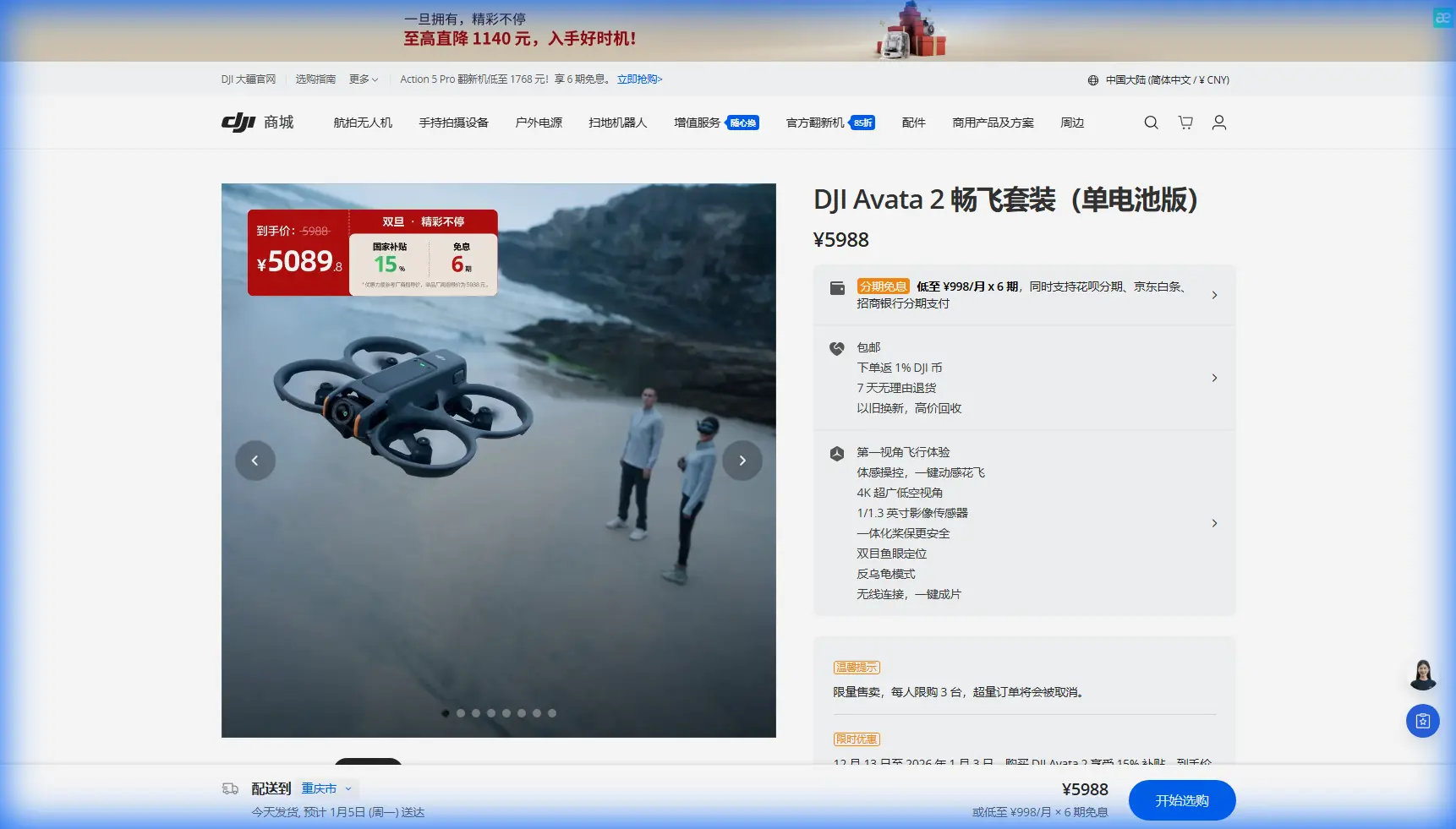
Avata 2 in High-Altitude Field Mapping: A Field Report from Reclamation Terrain
META: A practical field report on using DJI Avata 2 for high-altitude field mapping, terrain assessment, and reclamation-style land review, with lessons drawn from real mine restoration outcomes.
I don’t usually reach for an FPV platform first when someone says “mapping.” Fixed-wing systems, multirotors with mechanical shutters, and orthodox survey payloads have earned that reflex. But field reality has a way of reshuffling neat categories.
The assignment in front of me was not a textbook corridor survey. It was a high-altitude agricultural and reclamation-style site with uneven ground, exposed rock, wind shifts, and transitional terrain where flat, usable plots met remnants of steeper disturbed land. That kind of environment changes what matters. Pure coverage efficiency is only one variable. Terrain readability, low-level route control, and the ability to inspect edge conditions safely start to matter just as much.
That is where Avata 2 became more interesting than its label suggests.
Why this kind of site changes the drone conversation
The reference case that stayed in my mind while planning this mission came from a bauxite mine reclamation project. In that project, low-altitude UAV remote sensing produced core mapping outputs such as digital orthophotos, digital elevation models, and digital linework. Those aren’t abstract deliverables. They are the base layers that let land managers decide where earthmoving worked, where slope reduction is adequate, and where future cultivation is realistic.
The operational result was even more telling. Cultivated land in the mining area reportedly increased from 38 km² before mining to 41.8 km² after reclamation, a 10% increase. Another detail matters just as much: land that had previously been sloped was turned into flatter ground with better farming suitability. That means the mapping wasn’t just documenting a landscape. It was helping convert difficult terrain into usable agricultural surface.
If you work in high-altitude field mapping, especially around reclaimed or transitional land, that is the point. You are not flying for pretty imagery. You are trying to read terrain well enough to support decisions about usability, drainage, access, slope, and future crop performance.
Avata 2 is not a replacement for formal photogrammetry fleets. It is a tool for seeing terrain behavior up close, quickly, and with unusual spatial intuition.
The site: thin air, mixed terrain, and changing light
This particular field day began with clear visibility and deceptively calm air. The site sat at elevation, where weather can turn from cooperative to argumentative in very little time. The fields themselves were not uniform. Some sections had workable flat ground. Others showed the telltale geometry of prior grading: benches, cut transitions, rough edges, and subtle slope breaks that are hard to appreciate from a road or a single overhead pass.
That’s where the first strength of Avata 2 showed itself. Flying low and deliberately over terrain transitions gave me a much better sense of land form continuity than a conventional top-down orbit alone. When you need to understand how one reclaimed strip ties into another, or whether a former slope has truly been reworked into practical cultivation ground, perspective matters.
The source material on the aluminum ore reclamation case emphasized three concrete outcomes: more cultivated land, stronger land suitability, and improved soil productivity. Those outcomes are interconnected. A field that is technically larger but still awkwardly sloped or difficult to work has limited value. A mapping workflow that reveals flattening success, access paths, and residual roughness helps bridge the gap between engineering claims and field reality.
Where Avata 2 fits in a mapping workflow
Let’s be precise. Avata 2 is most useful in this scenario as a terrain-intelligence and inspection layer rather than as the sole survey platform. I used it to do four jobs particularly well:
1. Low-level terrain interpretation
Steep-to-flat transitions are easier to read when you can thread a stable line just above the contour and visually compare grade change in motion. This is especially useful in reclaimed land where the difference between “looks flat from above” and “is practical for cultivation” can be substantial.
2. Edge-condition inspection
Drainage cuts, berm edges, exposed stone, terrace lips, and access tracks all deserve closer inspection. A low, agile FPV drone can move through these spaces with much more confidence than a larger, less maneuverable survey aircraft.
3. Fast post-weather reassessment
When conditions change mid-flight, you often don’t have time to rebuild a whole mission architecture. You need a platform that can launch quickly again and revisit problem sections. Avata 2 is excellent for that.
4. Visual communication
Orthomosaics and elevation products are essential, but stakeholders also need intuitive visuals. A well-flown low-altitude pass can show a landowner, agronomist, or site engineer exactly how a reclaimed slope now behaves as workable ground.
That last point is underrated. The reclamation study referenced digital orthophoto maps, DEMs, and line maps as core outputs guiding the process. Those products are foundational. But in practice, decision-making often accelerates when technical layers are paired with readable motion imagery that exposes micro-topography and site access constraints.
Mid-flight, the weather turned
About a third into the session, the light flattened and the wind shifted hard across the upper field boundary. This is the kind of change that matters more at altitude than many pilots admit. Surface cues become less distinct. Gusts slide over terraces unpredictably. Exposed ground reflects differently as clouds close in.
That was the real test of the day.
Avata 2 handled the transition better than I expected, not because weather stops being weather, but because the aircraft gives the pilot a lot of control over line choice and repositioning in tight spaces. I shortened passes, kept lower over sheltered sections, and used more conservative approach angles where the wind crossed exposed embankments. Obstacle awareness also became more relevant once the visual contrast dropped around isolated vegetation and site structures.
This is where “obstacle avoidance” stops being a spec-sheet phrase and becomes operationally meaningful. In a reclaimed field environment, the hazard is not only a dramatic cliff or building. It can be a cable near a service route, a sudden rise at the edge of a graded platform, or scrub growth emerging along a boundary. In changing weather, those details are easier to misread. Having a drone that helps preserve margin while you work close to terrain is not a luxury.
The same goes for stabilization of subject-oriented review runs. I am careful with terms like ActiveTrack and subject tracking in technical fieldwork because the “subject” is often not a moving person or vehicle but a terrain line, access route, or machine corridor you are trying to examine consistently. Even then, the broader value is clear: features that help maintain framing reduce pilot workload, and reduced workload tends to improve inspection quality.
A note on imagery: D-Log matters more than many field crews think
Most people associate D-Log with cinematic flexibility. In field documentation, I value it for a different reason: preserving interpretive headroom when light gets ugly.
When the clouds rolled in, bright exposed soil patches and darker vegetated sections started diverging fast. If you clip highlights in disturbed ground or lose shadow detail along drainage edges, your footage becomes less useful for review. D-Log gave me more latitude to balance those sections later, which meant subtle elevation cues and surface transitions remained visible.
For high-altitude field mapping and reclamation review, that matters. You are often trying to answer practical questions:
- Is this graded strip uniformly workable?
- Did flattening actually reduce operational difficulty?
- Are there residual rough zones that machinery or planting crews will notice immediately?
- Does the drainage path read as stable or eroding?
Those are visual questions before they become engineering notes.
What the mine reclamation numbers teach us about field mapping priorities
The strongest lesson from the reference material is not just the 10% increase in cultivated land area. It is the chain of cause and effect behind it.
The project described how formerly non-arable rocky land was transformed into cultivable land, and how previous slopes became flatter surfaces. That is exactly the kind of transformation that UAV-derived terrain products are best at verifying. If your drone workflow captures only broad acreage, you miss the operational heart of the story. Usability is shaped by topography, not just boundary size.
Another detail from the source deserves attention: the reclaimed land reportedly achieved better productivity conditions, supported by engineered soil layers and biological reclamation measures. For drone operators, that means the mission should not stop at simple areal documentation. Repeatable flights over the same sections can help track how surface conditions evolve over time, whether access lanes hold up, and whether the physical shape of the reclaimed land supports the intended crop pattern.
The case also reported 328 hectares of reclaimed land, with an average reclamation rate of 100% and an average land recovery rate of 70%. Those are substantial field-management indicators. They suggest that the real value of UAV work in these settings lies in continuity. One flight can support a plan. Repeated flights support accountability.
That is exactly where a compact aircraft like Avata 2 can earn its keep between larger formal survey operations.
QuickShots and Hyperlapse: useful, but only when disciplined
I know the moment “QuickShots” or “Hyperlapse” appears in a field article, some readers assume we’ve drifted away from serious work. That depends entirely on how these modes are used.
For client communication, community reporting, or progress briefings, a short controlled automated reveal can demonstrate the before-and-after relationship between graded ground, flat cultivation zones, and retained rough terrain far more effectively than a stack of screenshots. Hyperlapse can also show cloud movement, shadow progression, or workflow activity over a site in ways that help non-technical stakeholders understand constraints.
But the key is discipline. These modes should serve documentation, not distract from it. In my workflow, they sit after the core inspection passes and terrain review runs are complete.
Is Avata 2 the right choice for high-altitude field mapping?
If the job requires strict cadastral accuracy, large-area orthomosaic production, or formal geospatial deliverables at scale, I would still build the mission around a dedicated mapping platform.
But if your reader scenario is exactly what this assignment suggests—mapping fields in high altitude, especially where the land includes reclaimed sections, slope transitions, and places that demand close visual reading—Avata 2 becomes much more than a recreational flyer. It is a capable site-reading tool.
Its value comes from combining:
- close-proximity control around uneven terrain,
- practical safety support through obstacle awareness,
- strong visual documentation options,
- and enough image flexibility through D-Log to keep footage useful after weather turns.
That weather piece matters. The day I flew this site, I ended up trusting short, intelligent, terrain-hugging passes more than I trusted long elegant routes. Conditions changed. The aircraft adapted well enough that I could continue gathering usable material instead of packing up after the first shift in wind and light.
That is not a small thing in mountain or plateau agriculture.
The bigger takeaway
The reclamation case behind this article shows why drone mapping matters beyond measurement. A UAV workflow helped support land recovery that increased cultivated area from 38 km² to 41.8 km², converted slopes into flatter ground, and contributed to more practical farming use. Those outcomes are operational, social, and economic all at once.
Avata 2 does not single-handedly create those results. What it can do is help professionals see reclaimed or high-altitude field terrain with speed and nuance, especially in the awkward middle ground between broad survey products and boots-on-the-ground inspection.
If you are evaluating whether it has a role in your own field workflow, think less about the label “FPV” and more about the actual questions your site is asking: Where does the terrain change? Which surfaces are truly usable? How do weather shifts affect inspection quality? What visual evidence will help land managers make decisions faster?
That is the level where this aircraft becomes relevant.
If you want to compare notes on site setup or discuss whether this platform fits your terrain review workflow, you can message the field team here.
Ready for your own Avata 2? Contact our team for expert consultation.