
How Avata 2 Fits Coastal Solar Farm Mapping When Wind
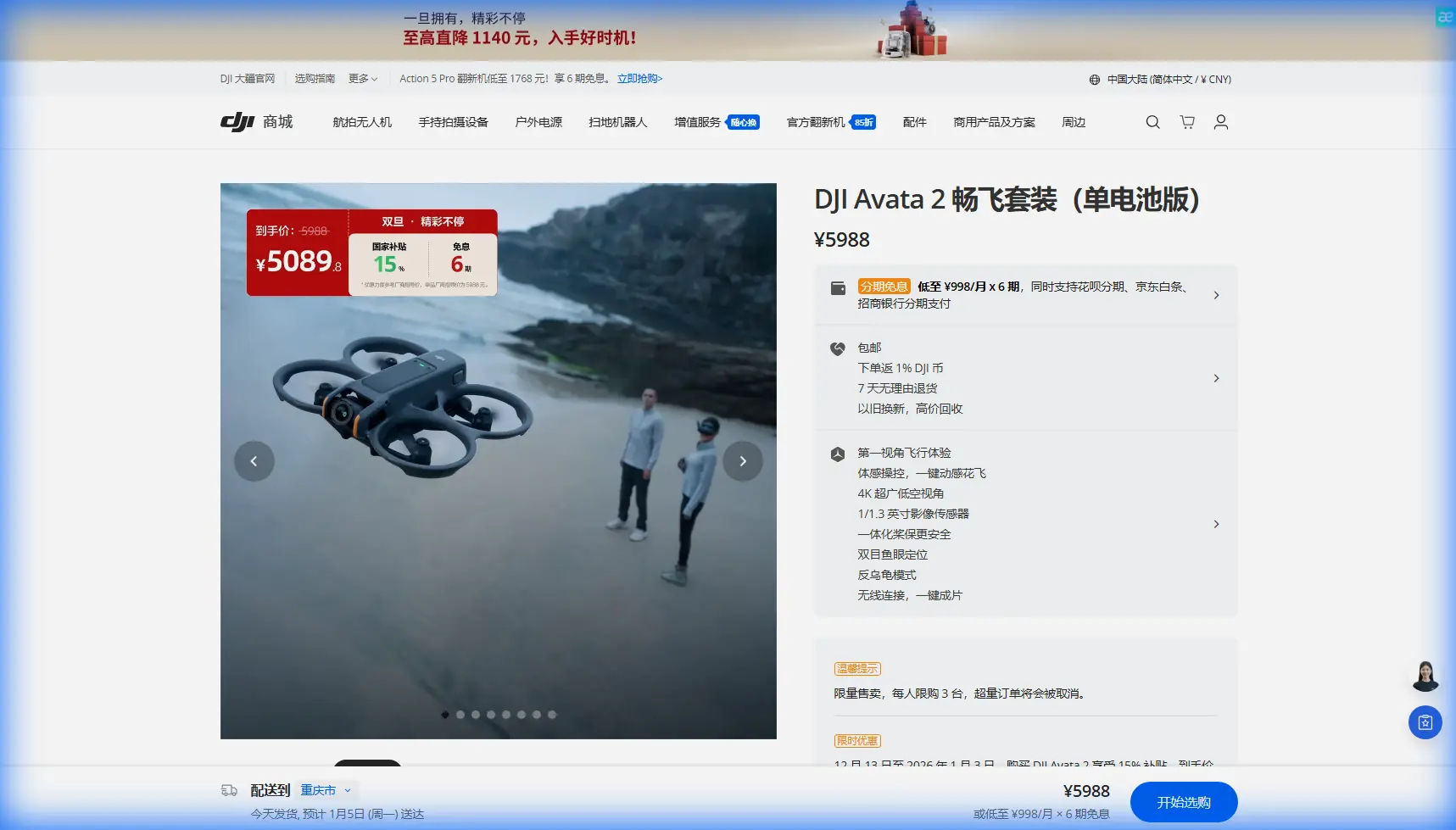
How Avata 2 Fits Coastal Solar Farm Mapping When Wind, Distance, and Terrain Start Working Against You
META: A practical expert guide to using Avata 2 for coastal solar farm mapping, with flight altitude insight, wind strategy, obstacle awareness, and lessons drawn from a DJI high-altitude powerline crossing case.
Coastal solar sites look simple on paper. Rows of panels. Service roads. Repeating geometry. Open sky. Then you arrive and the air tells a different story.
Wind rolls in off the water. Heat shimmer rises off dark module surfaces. Drainage channels, fence lines, inverter stations, cable runs, and maintenance structures break up what seemed like an uncomplicated flight area. If your goal is useful mapping support rather than pretty footage, the hard part is not just getting airborne. It is flying consistently enough to capture clean, repeatable visual data without wasting battery, missing edge detail, or drifting into turbulence that throws off your lines.
That is where Avata 2 becomes interesting.
This is not the aircraft most people first picture for mapping work. Fixed-route survey platforms and larger enterprise aircraft usually dominate that conversation. But for coastal solar farm teams working in tight inspection corridors, documenting construction progress, checking access paths, visualizing row spacing, or building lower-altitude site context around problem areas, Avata 2 can fill a very practical role. The key is using it with the discipline of an operations tool, not the habits of a casual FPV flyer.
A useful way to think about this comes from a very different DJI mission profile: a power transmission project in the Tibetan Plateau region. In that case, operators flew a DJI Matrice 600 Pro from a platform at 3,268 meters altitude, in a work zone where the average elevation along the line was about 3,750 meters. The task was not inspection for its own sake. It was a line-guiding operation across the Nujiang Grand Canyon, with two towers separated by more than 1,200 meters, standing on steep cliffs on opposite sides. The aircraft carried a deployment device and guide rope, then crossed the canyon at roughly 5 to 10 meters per second. At around 500 meters above the river, the airflow was highly unstable, yet the drone still completed the rope placement accurately at the far tower.
That is a heavy-lift infrastructure story, not an Avata 2 solar mapping story. Still, the operational lesson matters: aerial work succeeds when the pilot respects air behavior, route geometry, and mission constraints more than the marketing category of the drone. Coastal solar farms deserve the same mindset.
The real problem with coastal solar mapping is not coverage. It is consistency.
Most mapping mistakes at coastal sites come from chasing too much area in one pass or flying too high to “make it efficient.” On solar farms, high altitude often creates a false sense of productivity. Yes, you see more rows at once. But you also flatten the visual relationships that help teams spot practical issues: standing water between tables, vegetation growth near edges, access bottlenecks, localized soiling patterns, cable management irregularities, and subtle panel damage that only stands out at oblique angles.
At the coast, altitude also puts you into rougher, less predictable air sooner than many pilots expect.
That detail from the Nujiang case is worth holding onto. Even a capable aircraft flying steadily can encounter heavily disturbed airflow in exposed spaces, especially where terrain and wind interact. A canyon is not a solar farm, but the principle transfers. Open water, embankments, perimeter berms, inverter pads, sea walls, and nearby industrial structures can create layered wind behavior that changes quickly with height. If you climb simply to get more in one frame, you may trade stable imagery for wider but less useful coverage.
For Avata 2, the better question is not “how high can I fly?” It is “what is the lowest altitude that still captures the operational detail this pass is meant to document?”
A practical altitude rule for Avata 2 over coastal solar arrays
For row-level visual mapping and progress documentation, I generally like to keep Avata 2 in the low-to-mid band above the panel field rather than pushing upward too early. In many coastal solar scenarios, an effective working range is roughly 8 to 20 meters above the panel plane, depending on row spacing, tracker configuration, and what the team needs to identify.
Why that band?
- Below that range, coverage becomes too narrow for efficient route building unless you are investigating a specific defect zone.
- Above that range, wind exposure increases, reflections become harder to manage, and the visual texture that helps operators interpret conditions starts to compress.
- Within that range, Avata 2 can produce more meaningful oblique context around equipment pads, aisle conditions, fencing interfaces, and module rows.
If the task shifts from row interpretation to wider site context, climbing toward 25 to 35 meters can make sense for selected overview passes. I would still treat that as a deliberate second layer, not the default. Coastal operators often get better results by separating flights into low-detail capture and higher contextual capture instead of trying to make one altitude solve every problem.
That is the same operational discipline implied by the Tibetan transmission example. The mission was defined by route precision, environmental limits, and task success, not by a generic preference for flying high or far. Coastal solar mapping with Avata 2 benefits from exactly that kind of planning.
Why Avata 2 works best as a gap-closing platform
Avata 2 is strongest when used to solve the blind spots that broader survey workflows leave behind.
On a large coastal solar site, you may already have top-down orthomosaic data from another platform. That still leaves plenty unresolved. Oblique views are often better for:
- documenting drainage performance after rain or high tide influence
- checking service-lane accessibility
- reviewing vegetation encroachment along perimeter edges
- identifying panel row alignment issues during installation
- visualizing inverter and combiner station surroundings
- creating stakeholder-ready progress visuals that actually reflect field conditions
This is where obstacle awareness and controllability matter more than raw survey scale. Avata 2 is well suited to moving through constrained access routes, around equipment enclosures, and along panel corridors without the cumbersome footprint of a larger industrial aircraft.
Obstacle avoidance is especially valuable near maintenance structures, fencing, cable trays, and temporary construction materials. At coastal sites, wind can nudge the aircraft laterally when you least want it to. Having a platform designed for close-proximity flying adds a layer of practical confidence, particularly during low-altitude inspection-style passes.
Wind management is the hidden skill
The M600 Pro case over the Nujiang crossing highlights something many crews underestimate: route speed has operational meaning. That flight moved at about 5 to 10 meters per second while carrying a guide line through difficult air. For Avata 2, speed discipline is just as important, even though the payload and mission are different.
In solar mapping, too much speed creates three problems at once:
- It reduces your ability to read changing airflow.
- It increases the chance of motion inconsistency in repeated passes.
- It makes reflective surfaces harder to interpret cleanly.
For coastal sites, I prefer building flight lines around moderate, repeatable movement rather than trying to finish quickly. If the air starts changing between rows, the aircraft will often tell you before your eyes do. Small corrections, increased yaw input, or repeated drift compensation are signs to lower altitude, adjust route direction, or wait for a better window.
One useful habit: fly the first pass as a wind diagnostic, not a production run. Watch how Avata 2 behaves over open aisles, near inverter blocks, and along perimeter edges where crosswind can suddenly bite. That short reconnaissance pass can save the rest of the mission.
Camera settings should support interpretation, not style
Jessica Brown’s photographer’s instinct is useful here: the best operational image is not always the most dramatic one.
D-Log can be valuable when the site has harsh contrast between reflective panels, bright sky, and dark equipment shadows. It gives you more flexibility in post when you need to recover detail for reporting or progress review. But do not default to cinematic thinking. If the end user is an EPC team, asset manager, or maintenance contractor, clarity outranks mood every time.
QuickShots and Hyperlapse also have a place, but only if they serve documentation. A Hyperlapse along a construction edge can show staging progress over time. A controlled reveal can help a remote stakeholder understand drainage grading or row layout near a substation tie-in. Used this way, these features are not novelty functions. They become communication tools.
Subject tracking and ActiveTrack are less central for panel mapping itself, but they can help document moving maintenance vehicles, mowing operations, or installation workflows when progress reporting needs field activity context. The caution is obvious: do not let automation replace site awareness. In a solar environment full of repeating patterns and reflective surfaces, the pilot still needs to own the line.
Building a simple problem-solution workflow
Here is a practical structure that works well with Avata 2 at coastal sites.
Problem 1: Wind distortion at higher altitudes
Solution: Start lower than instinct suggests. Use an initial 8 to 20 meter band above the panel plane for detail passes. Climb only when the mission objective requires broader context.
Problem 2: Repeating rows make orientation harder
Solution: Break the site into short route segments using service roads, inverter stations, or fence corners as visual anchors. This makes repeat flights easier and reduces navigational drift in visually repetitive fields.
Problem 3: Reflections obscure useful panel detail
Solution: Adjust angle and route direction before changing the whole mission plan. Oblique low-altitude passes often reveal more than higher, flatter views.
Problem 4: Large survey datasets leave unanswered field questions
Solution: Use Avata 2 as a targeted visual layer. Focus on exceptions, edges, transitions, and ground-condition context rather than trying to force it into a one-aircraft-does-everything role.
Problem 5: Coastal sites need stakeholder-friendly reporting
Solution: Capture both operational passes and concise visual storytelling assets. A short, stable overview clip can make technical findings easier for non-flying stakeholders to understand.
If you are planning a site workflow and want to discuss route design around wind corridors and row geometry, this is a practical place to start: message the team here.
What the infrastructure case teaches Avata 2 operators
That Tibetan power project was extreme by any measure: average elevation around 3,750 meters, a launch point at 3,268 meters, a span of more than 1,200 meters, and unstable airflow roughly 500 meters above the river. It involved a very different aircraft and a much heavier task than coastal solar imaging.
Yet the operational significance is sharp.
First, environment decides the mission more than the drone category does. Coastal wind deserves respect even on sites that look visually open and easy.
Second, route planning beats improvisation. The successful canyon crossing was about deliberate execution under constraints. Avata 2 mapping becomes more reliable when each pass has a purpose: aisle review, perimeter inspection, progress capture, or equipment-context documentation.
Third, precision matters more than spectacle. The drone in that case succeeded because it placed the guide rope accurately at the target tower position. For a solar team, the equivalent is not a dramatic clip. It is a pass that clearly shows whether drainage is blocked, whether access is compromised, or whether installation alignment is drifting.
That is the mindset that gets value from Avata 2.
Where Avata 2 genuinely belongs in a coastal solar toolkit
Avata 2 is not the universal answer for large-scale orthomosaic production. That is not a weakness. It is clarity.
Its strength is agile, low-altitude, visually rich documentation in places where larger aircraft are slower to position, less comfortable near structures, or simply excessive for the question being asked. On coastal solar farms, those questions come up constantly:
- What is happening between these rows?
- How bad is the washout near this drainage line?
- Can maintenance vehicles still access this lane?
- Is vegetation starting to interfere at the perimeter?
- How does this inverter pad look relative to surrounding panel blocks?
- What changed since last week’s progress walk?
When flown with disciplined altitude control, careful wind reading, and a clear mission objective, Avata 2 can answer those questions fast and well.
That is the real takeaway. Not that an FPV-style platform replaces traditional mapping systems. It does not. But when coastal conditions complicate the simple act of getting usable visual information, Avata 2 becomes valuable precisely because it can work close, stay deliberate, and reveal the operational details that broad overhead capture often misses.
Ready for your own Avata 2? Contact our team for expert consultation.