
Avata 2 for High-Altitude Venue Mapping: A Field Case Study
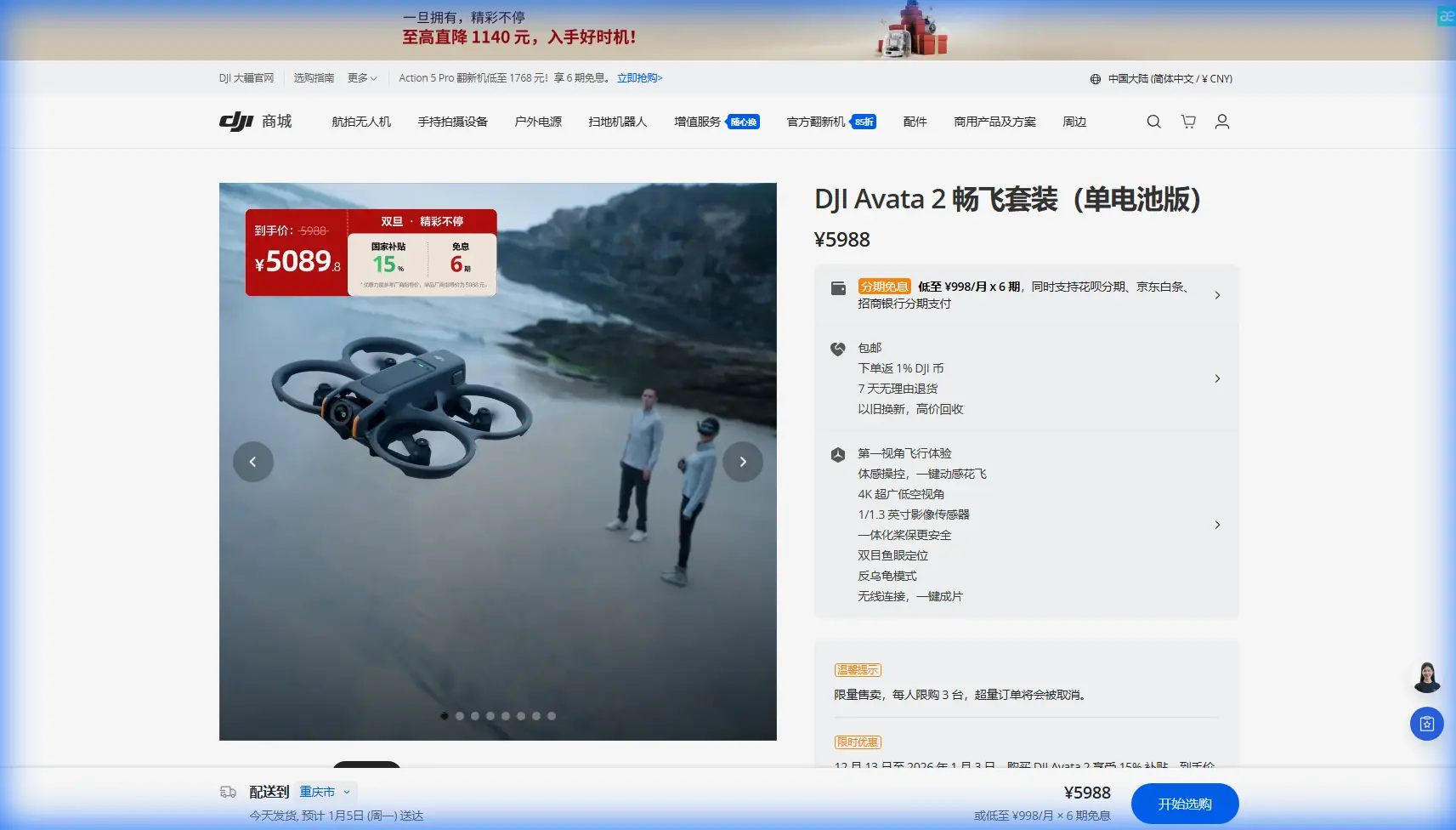
Avata 2 for High-Altitude Venue Mapping: A Field Case Study on What FPV Gets Right—and Where Traditional Power-Grid Drone Logic Still Wins
META: A real-world expert case study on using DJI Avata 2 for high-altitude venue mapping, with battery strategy, obstacle awareness, imaging workflow, and lessons borrowed from utility-grade UAV operations.
High-altitude venue mapping sounds simple until the air gets thin, the terrain turns awkward, and every battery percentage starts to matter more than it did at sea level.
That was the backdrop for a recent venue documentation job I worked through in mountain terrain: a mixed-use outdoor site sitting above the comfort zone for casual drone flying, with tree lines, retaining walls, service buildings, cable runs, and shifting winds rolling through the afternoon. The assignment was not cinematic for its own sake. The client needed usable spatial context: approach routes, spectator flow, utility access, perimeter visibility, and clean visual references for planning. The aircraft in question was the Avata 2.
On paper, Avata 2 is not the obvious first pick for mapping. It is compact, immersive, agile, and designed around FPV flight. When people discuss mapping, they usually jump straight to fixed-wing efficiency, heavy-lift multirotors, photogrammetry payloads, and software pipelines. That instinct is not wrong. In fact, one of the most useful ways to understand Avata 2 in this role is to compare it against the logic used in power-sector UAV operations, where terrain complexity, obstacle density, and inspection efficiency are taken very seriously.
A reference solution from the utility side makes this clear. It describes power projects operating across vast territory, complicated topography, and difficult weather, where conventional inspection and testing methods struggle to keep pace. That context matters because venue work at altitude faces a smaller version of the same problem: ground access is inefficient, sightlines are broken by terrain, and obstacles do not announce themselves early enough for sloppy flying.
The utility document mentions two aircraft types that are worth thinking about here. One is the iFly U3, a fixed-wing platform built for efficient aerial surveying, using an all-aerospace composite structure, downturned wingtips for added flight stability, catapult launch, and pinpoint parachute recovery. The other is the iFly D1, a professional multirotor made from imported carbon-fiber prepreg, using three-blade hollow carbon-fiber props and supporting visible-light, thermal, and oblique imaging payloads. Those are very different machines from Avata 2, but they frame the real question perfectly:
Where does an FPV platform fit when the mission is site intelligence rather than pure visual storytelling?
My answer after field use is this: Avata 2 works best as a precision gap-filler. It is not the replacement for a dedicated fixed-wing survey aircraft, and it is not pretending to be a large professional inspection multirotor carrying a Sony A7R-class mapping payload with a 7360 × 4912 image format. Its value is in the spaces between those systems. It thrives where access is awkward, lines are tight, and the client needs visual understanding of terrain and structures that broad overhead mapping often misses.
The venue problem at altitude
The site itself had all the usual mountain complications. A central open area was easy enough to read from above, but the venue perimeter told a different story. Tree cover created blind edges. Service corridors dipped below grade. A cluster of small roofed structures interrupted line of sight. Wind behavior changed from one side of the property to the other. Add thinner air, and the margin for waste shrinks.
This is where the first lesson from utility operations came into play: do not treat obstacles as isolated objects. Treat them as a system.
The source material on power-line work highlights obstacles like live high-voltage lines, valleys, canyons, woods, and buildings. That list could almost be reused for high-altitude venues, minus the energized grid focus. Why it matters operationally is simple: terrain and built features combine to create hidden airflow, visual occlusion, and route compression. Avata 2’s obstacle awareness is helpful, but good route design matters more than hoping automation will save a poor decision.
On this job, I broke the venue into three layers rather than trying to “map” it in one generic pass:
- Macro perimeter runs to establish overall layout and elevation changes.
- Mid-level structure passes to understand access lanes, rooflines, and spectator movement paths.
- Low, slow contextual sweeps to reveal how paths, barriers, and terrain transitions actually feel at human scale.
That third layer is where Avata 2 justified itself. A conventional nadir-heavy mapping pass may generate excellent top-down geometry, but it often fails to communicate operational reality to stakeholders who need to make decisions. FPV perspective gives them the friction points: a turn that is tighter than expected, a path that narrows behind a wall, a service entrance partially screened by vegetation, a grade change that affects flow.
Why Avata 2 was useful even without pretending it was a survey aircraft
There is a trap in drone workflow planning. People assume that because one aircraft is not the ideal textbook platform, it has no serious role. That misses how field work actually gets done.
The utility document references Pix4Dmapper as a fully automated processing tool for converting large image sets into accurate 2D maps and 3D models, and it also cites DP-Smart for automatic aerial triangulation, dense point cloud generation, TIN construction, and texture mapping from multi-source imagery. The operational significance of those details is bigger than the software names themselves. They point to a workflow truth: data value depends on consistency, coverage, and processing logic.
With Avata 2, I did not try to force a textbook photogrammetry mission profile that ignored the aircraft’s strengths. Instead, I used it to collect structured visual data that supported planning and model interpretation. If a client already has a topographic base, broad orthomosaic, or CAD reference, Avata 2 can add the missing layer: spatial comprehension.
That included:
- controlled orbiting around structures to reveal vertical relationships
- low-altitude edge tracing of terraces and walkways
- oblique passes that clarified retaining walls and access roads
- repeatable approach lines for before-and-after comparison
This is also where D-Log helped. Not because grading is fashionable, but because mountain light is unforgiving. Bright sky, dark tree cover, reflective roofs, and deep shadows can coexist in the same shot. A flatter capture profile preserved detail that would otherwise collapse, especially when I needed frames to remain analytically useful rather than merely dramatic.
QuickShots and Hyperlapse are usually discussed as content features, but on planning jobs they can also serve as communication tools. A compact Hyperlapse sequence across the venue edge can show weather movement, traffic rhythm, or changing light on access points. Used carefully, these modes create summary layers for client review. Not replacements for rigorous documentation, but efficient supplements.
The battery tip that mattered most in the field
Here is the field habit I wish more pilots adopted with Avata 2 at elevation: stop planning return-to-home around battery percentage alone and start planning around battery behavior under load after the turn back.
At high altitude, pilots often get tricked by an outbound leg that feels efficient. The aircraft is light, the line is clean, and the battery readout seems comfortable. Then the return leg climbs slightly, faces a headwind, or requires extra braking and reorientation around obstacles. That is when the battery curve stops looking generous.
My rule on this venue was straightforward. I treated the first battery as a calibration battery, not a production battery. I used it to test real consumption on three things:
- wind exposure on the far side of the site
- energy draw during repeated low-speed directional changes
- reserve needed for a conservative return with extra hover margin
That one decision protected the rest of the operation. By the second and third packs, I was not guessing. I had a route-specific energy model.
In practical terms, I also landed earlier than many recreational pilots would consider necessary. At altitude, a comfortable reserve is not wasted capacity. It is scheduling insurance. You may need a second approach, a missed landing correction, or a slow reposition if people or vehicles move into your recovery area.
If you are building your own workflow and want to compare notes with someone who has already learned these habits in the field, you can message me here.
Obstacle avoidance is helpful; obstacle strategy is better
Avata 2’s obstacle handling contributes most when you are already disciplined. That may sound harsh, but it is true.
At this venue, trees and roof edges were not the biggest hazard. Transitional spaces were. A corridor that opens wide and then narrows. A retaining wall that creates false depth perception. A service lane that looks clear until the terrain drops away behind it. These are exactly the kinds of locations where an FPV pilot can become overconfident because the aircraft feels nimble.
This is why I kept subject tracking and ActiveTrack in reserve rather than making them central to the mission. They are useful for selective movement studies—for example, demonstrating how a vehicle approaches a loading zone or how a person traverses a route segment for planning visibility. But for true venue documentation in mountain terrain, manually designed flight lines remain superior. The aircraft should be following your information priorities, not simply following a subject.
The same mindset exists in utility drone work. The reference material stresses efficiency and safety in environments filled with obstacles and long-distance line tasks. That operational discipline translates well. The goal is not flashy autonomy. The goal is repeatable, interpretable capture.
What Avata 2 cannot replace
This part deserves honesty.
If the mission requires survey-grade deliverables across a large venue footprint, a dedicated mapping workflow still has the edge. The power-sector reference points to fixed-wing efficiency through the iFly U3 and to larger multirotor payload flexibility through the iFly D1, including visible and thermal sensors plus oblique imaging options. Those details matter because they represent mature mission design: choose the aircraft based on data type, area scale, and payload need.
Avata 2 cannot replace a fixed-wing aircraft for rapid large-area coverage. It also cannot match a professional enterprise multirotor configured for thermal inspections, high-resolution still mapping, or heavy multi-sensor capture. If your venue project demands automated orthomosaics, engineering-grade 3D reconstruction, or thermal fault screening of utility infrastructure, use the right class of system.
What Avata 2 can do is narrow the gap between raw map data and human understanding. It can reveal why a route is problematic, not just where it is. It can help stakeholders read the site at eye level, not only from above. It can document terrain behavior in a way that static top-down products often fail to communicate.
The final takeaway from this case
The most useful insight from this high-altitude venue job was not that Avata 2 can suddenly become a traditional mapping drone. It was that strong mapping outcomes often depend on more than maps.
The utility UAV reference material keeps returning to a core idea: conventional methods become inadequate when terrain, obstacles, and efficiency pressures stack up. That applies just as much to venue planning in the mountains as it does to infrastructure work. The answer is not always a bigger aircraft or a more automated workflow. Sometimes the answer is a smaller aircraft used with better intent.
Avata 2 shines when the site has layers that broad capture misses. It is especially effective for edge conditions, access interpretation, structure-to-terrain relationships, and visually explaining complexity to non-pilots. Pair that with disciplined battery management, conservative route design, and footage captured for analysis rather than ego, and it becomes a serious tool.
That is the key distinction. Not a toy. Not a replacement for enterprise survey hardware. A serious tool, when used for the right slice of the job.
Ready for your own Avata 2? Contact our team for expert consultation.