
How I Use the Avata 2 for Wildlife Mapping in the Mountains
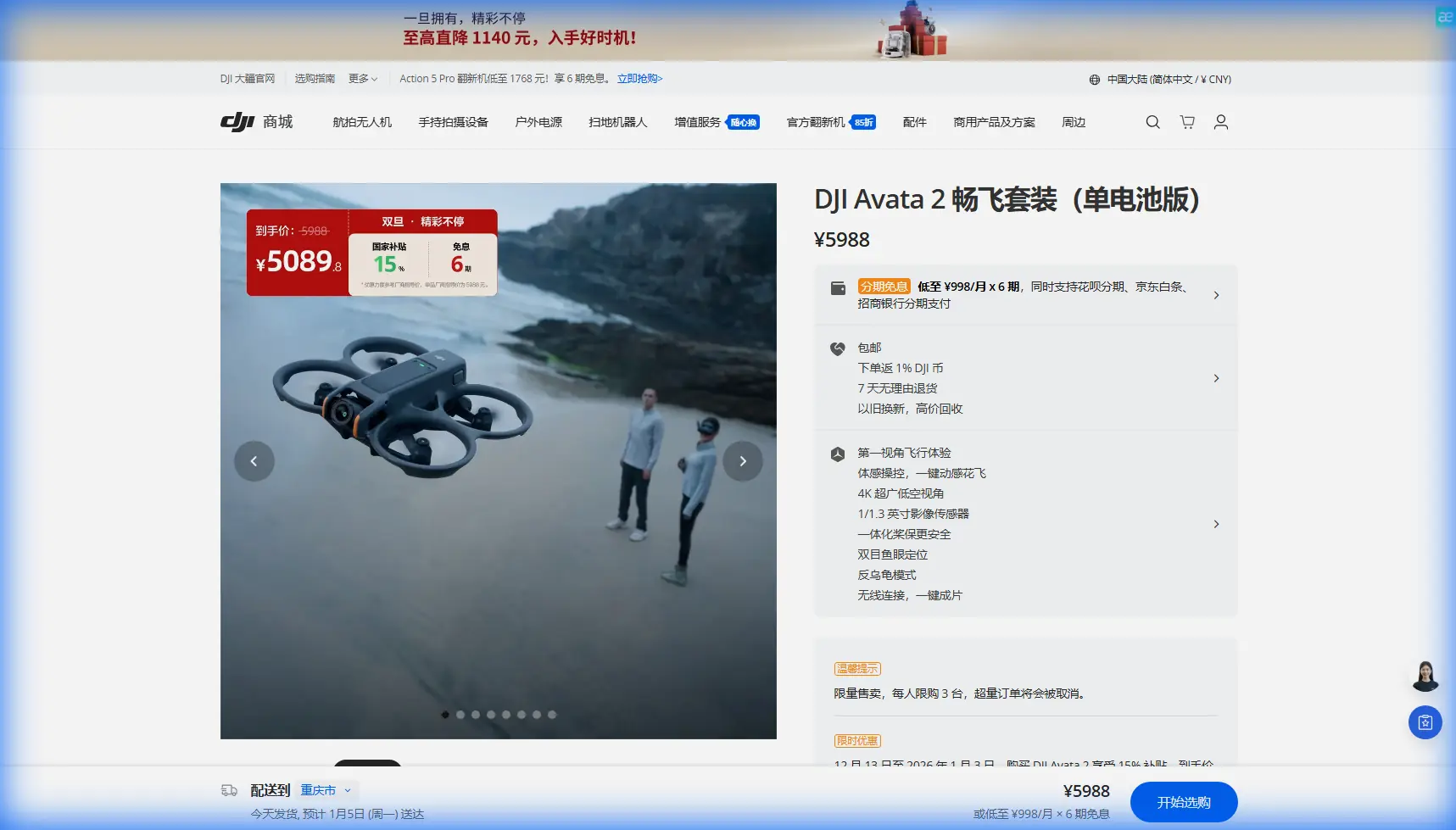
How I Use the Avata 2 for Wildlife Mapping in the Mountains
META: A practical Avata 2 tutorial for mountain wildlife mapping, covering pre-flight cleaning, obstacle avoidance, D-Log capture, ActiveTrack limits, and safe planning for rugged terrain.
Mountain wildlife work punishes vague planning.
The light changes fast. Wind spills over ridgelines without warning. Tree lines, rock faces, and broken terrain can confuse both pilot and camera if you rush the setup. When I take an Avata 2 into this kind of environment for wildlife mapping, I do not treat it like a casual FPV flight. I treat it like a compact field tool that needs disciplined prep, clean sensors, and a realistic mission plan.
I’m Jessica Brown, a photographer first, but in mountain habitat work that title only gets you so far. If you are trying to document movement corridors, nesting areas, grazing patterns, or habitat boundaries, your footage needs to be consistent enough to review later, not just dramatic enough to post. That is where the Avata 2 becomes surprisingly useful. It is not a traditional survey platform, and I would not pretend it replaces a dedicated mapping aircraft for large-area orthomosaic jobs. But for close-range terrain interpretation, edge habitat review, and visual wildlife observation in tight spaces, it can do excellent work if you fly it with intention.
This tutorial is built around that reality.
Why the Avata 2 makes sense in mountain wildlife work
The Avata 2 sits in an unusual place. It is agile enough to move through narrow terrain features and around uneven mountain contours, but it also carries enough imaging control to make footage analytically useful when you plan your passes carefully.
That balance matters in wildlife mapping.
In the mountains, you are often not trying to cover endless flat acreage. You are trying to understand specific areas: a cliff shelf used by birds, a game trail entering dense timber, a meadow bordered by rock outcrops, or a drainage where animals cross at dawn. A larger mapping drone may be too cumbersome or too exposed to turbulent air near terrain. The Avata 2 gives you a way to inspect those spaces more intimately while keeping visual context.
The key point is this: the Avata 2 is best used for targeted habitat documentation, route validation, and visual site intelligence. Think micro-mapping, not broad cadastral survey.
Start with the safety feature most people neglect: clean the sensors
Before I even power up, I do one very unglamorous thing.
I clean the aircraft.
That means the camera lens, yes, but also the outward-facing sensing areas and any surfaces that can affect obstacle awareness. In mountain environments, dust, pine pollen, moisture residue, and fine grit build up quickly, especially if you launch from rocky ground, dirt pull-offs, or alpine meadows.
This matters because obstacle avoidance is only as trustworthy as the quality of the sensor input. If you want the Avata 2 to read branches, rock edges, and terrain transitions correctly, a dirty front surface is a bad place to start. The same applies to image review later. A tiny smear on the lens can flatten contrast and hide detail in shaded timber or dark crevices where animals bed down.
My pre-flight cleaning routine is simple:
- Use a blower first, not a shirt sleeve
- Wipe the lens with a clean microfiber cloth
- Inspect the sensing surfaces in angled light
- Check for condensation if the drone moved from a warm vehicle into cold mountain air
- Confirm there are no grass seeds, mud flecks, or fingerprints near the vision system
Operationally, this step protects two things at once: safer low-altitude maneuvering and cleaner visual data. Those are not cosmetic gains. In mountain work, both are essential.
Build your flight plan around animal behavior, not drone capability
A lot of pilots make the same mistake. They design the mission around what the drone can do rather than what the animals are likely to do.
Wildlife mapping is not a stunt reel. It is a timing problem.
If I am documenting habitat use, I first define the pattern I need to observe. Am I trying to identify entry and exit routes into a meadow? Repeated movement along a ridgeline? Shelter use near tree breaks? Once that is clear, I build short flights that support those observations.
With the Avata 2, I usually split mountain missions into three flight types:
1. Wide context passes
These are slow, elevated flights to establish terrain relationships. I want to see how open ground, forest edge, boulder fields, and water sources connect. This footage helps later when reviewing wildlife movement against topography.
2. Corridor runs
These follow likely travel lines such as narrow saddles, drainage cuts, and edge transitions. The Avata 2’s compact profile helps here because mountain travel routes are often visually cluttered.
3. Hover-and-observe holds
Sometimes the best mapping is not movement at all. It is station keeping at a safe offset while you watch how animals enter and leave an area. This is where you gather behavioral context instead of just scenic footage.
The mission should always reduce disturbance. Keep standoff distance, avoid repeated close approaches, and never force the aircraft into an area just because the route looks cinematic.
Obstacle avoidance in mountains: useful, but not permission to be careless
Obstacle avoidance is one of the most relevant features for this kind of work, but mountain pilots need to understand its limits.
In open air above a valley floor, sensing is straightforward. Near alpine brush, thin branches, irregular rock shelves, shadow-heavy forests, and rapidly changing light, interpretation gets harder. Snow patches and bright sky beyond dark branches can also make depth judgment less intuitive for both pilot and system.
So yes, obstacle avoidance adds real value when tracing uneven terrain or moving near forest edge. It can help prevent a small mistake from becoming a crash. But it does not replace route discipline.
I use it as a buffer, not as my decision-maker.
Operational significance: when you are documenting wildlife in narrow mountain terrain, your attention is divided between aircraft position, live image, animal movement, and wind. Obstacle support helps reduce workload, which can preserve safer margins. But because terrain complexity rises fast in mountains, you still need conservative angles, escape routes, and altitude discipline.
If you launch from a slope, I also recommend checking your immediate climb path twice. A drone can clear the takeoff point and still be on a collision course with terrain that rises faster than expected just beyond your visual reference.
When ActiveTrack and subject tracking help — and when they do not
The Avata 2’s subject tracking tools, including ActiveTrack-style use cases, sound attractive for wildlife work, but this is where restraint matters.
For actual wild animals, I use tracking sparingly and usually not at close range. Unpredictable movement, obstructed lines of sight, and ethical distance requirements can make automated pursuit the wrong choice. The purpose of wildlife mapping is observation, not pressure.
Where these tools do help is in adjacent field tasks.
If a ranger, guide, or field biologist is moving along a trail to mark habitat features, subject tracking can help document the route through terrain without forcing the pilot to manage every frame manually. That can produce a visual record of access corridors, blind spots, and observation points. In other words, tracking is often better for the humans conducting the survey than for the animals being studied.
Operational significance: this reduces pilot workload during route documentation while preserving visual continuity. In mountain environments, that continuity is useful when matching footage to field notes later.
Shoot in D-Log when review quality matters
If I know the footage may be used for habitat analysis, not just quick viewing, I prefer D-Log.
Mountain scenes are brutal on dynamic range. You can have bright sky, reflective stone, shaded forest, and dark animal movement all in the same frame. A flatter capture profile gives you more room when grading and reviewing subtle texture differences later.
This is not only about aesthetics. It is about seeing enough tonal information to distinguish terrain features accurately. On a steep mountainside, the difference between a worn wildlife path and random shadow can be small in standard-looking footage. Better preserved highlight and shadow detail makes post-flight interpretation easier.
I still expose carefully in the field. D-Log is not a rescue button for bad flight habits or lazy settings. But if your workflow includes later analysis on a larger screen, it is one of the most practical tools available on the Avata 2.
QuickShots and Hyperlapse have a place, but not the one most pilots assume
QuickShots and Hyperlapse are often treated like social features. In mountain wildlife mapping, they can still be useful if you use them strategically.
QuickShots can help create repeatable establishing views of a habitat zone. If you revisit the same area over time, consistent automated movement can make visual comparisons easier. You are not using the mode for spectacle. You are using it for repeatability.
Hyperlapse can be valuable when documenting environmental change around a wildlife area: moving cloud cover over a ridge, shifting fog lines, snowmelt exposure, or the way morning light reveals animal tracks and terrain breaks. Those time-compressed sequences can add context to animal activity windows.
The caveat is obvious. These modes are only appropriate when the environment allows safe separation from obstacles and wildlife disturbance remains minimal. Tight mountain spaces are not always suitable.
The mountain workflow I actually use
Here is the field sequence that has worked well for me.
Step 1: Observe without launching
Spend 10 to 15 minutes just watching. Wind direction, bird activity, sun angle, and animal presence can all change your plan.
Step 2: Clean and inspect
Do the lens and sensor cleaning before power-up. Check prop condition. Confirm no debris from your last landing remains on the frame.
Step 3: Mark a conservative first route
My first flight is rarely the closest one. I start with a safer perimeter pass to understand terrain and airflow.
Step 4: Capture context footage
I get wide environmental clips first. If conditions deteriorate later, I still have the backbone of the mission.
Step 5: Move into corridor documentation
Now I trace likely movement lines, keeping enough distance to avoid disturbing wildlife.
Step 6: Use manual judgment over feature temptation
If subject tracking, QuickShots, or Hyperlapse do not fit the terrain or animal behavior, I skip them. Feature discipline is part of field discipline.
Step 7: Review on site
After landing, I check key clips before leaving. In mountains, a missed detail can mean a long return trip.
Common mistakes with the Avata 2 in mountain wildlife jobs
The biggest one is trying to fly too low too soon.
Pilots see the compact form factor and assume they should immediately thread through trees or skim uneven ground. That mindset leads to poor mapping results because your first priority should be site understanding, not dramatic proximity.
Another mistake is overtrusting automation. ActiveTrack, obstacle support, and automated capture modes can all contribute something, but they should support a plan, not become the plan.
The third is neglecting image consistency. If your goal is documentation, random exposure changes and hasty camera decisions reduce the value of the flight. This is another reason I like D-Log for these missions. It gives me a more stable base to work from later.
A note on communication in remote fieldwork
Wildlife mapping in mountain areas often involves coordination with photographers, guides, habitat specialists, or property managers. I keep mission notes short and practical: launch point, wind notes, route plan, no-fly sectors near sensitive wildlife zones, and recovery options. If you need a simple way to coordinate field timing or equipment questions before a trip, I’ve found that this direct WhatsApp contact is easy to share with collaborators.
What the Avata 2 is really good at in this role
After using the Avata 2 in rugged environments, I think its real strength is not replacing survey aircraft. Its strength is making difficult terrain readable.
It helps translate mountain complexity into usable visual information. Obstacle awareness supports safer navigation in cluttered spaces. D-Log improves the value of footage during later review. Tracking tools can assist route documentation when used on human field partners rather than wildlife. QuickShots and Hyperlapse can create repeatable or time-based context when conditions permit. And that simple pre-flight cleaning step has more impact than many pilots realize, because it directly affects both the safety systems and the clarity of the footage you rely on.
That combination is what makes the Avata 2 worth considering for mountain habitat documentation.
Not because it can fly anywhere. Not because every smart mode belongs in every mission. Because when you respect the terrain, the animals, and the limitations of the platform, it becomes a very precise visual field instrument.
Ready for your own Avata 2? Contact our team for expert consultation.