
Monitoring Fields With Avata 2 in Extreme Temperatures
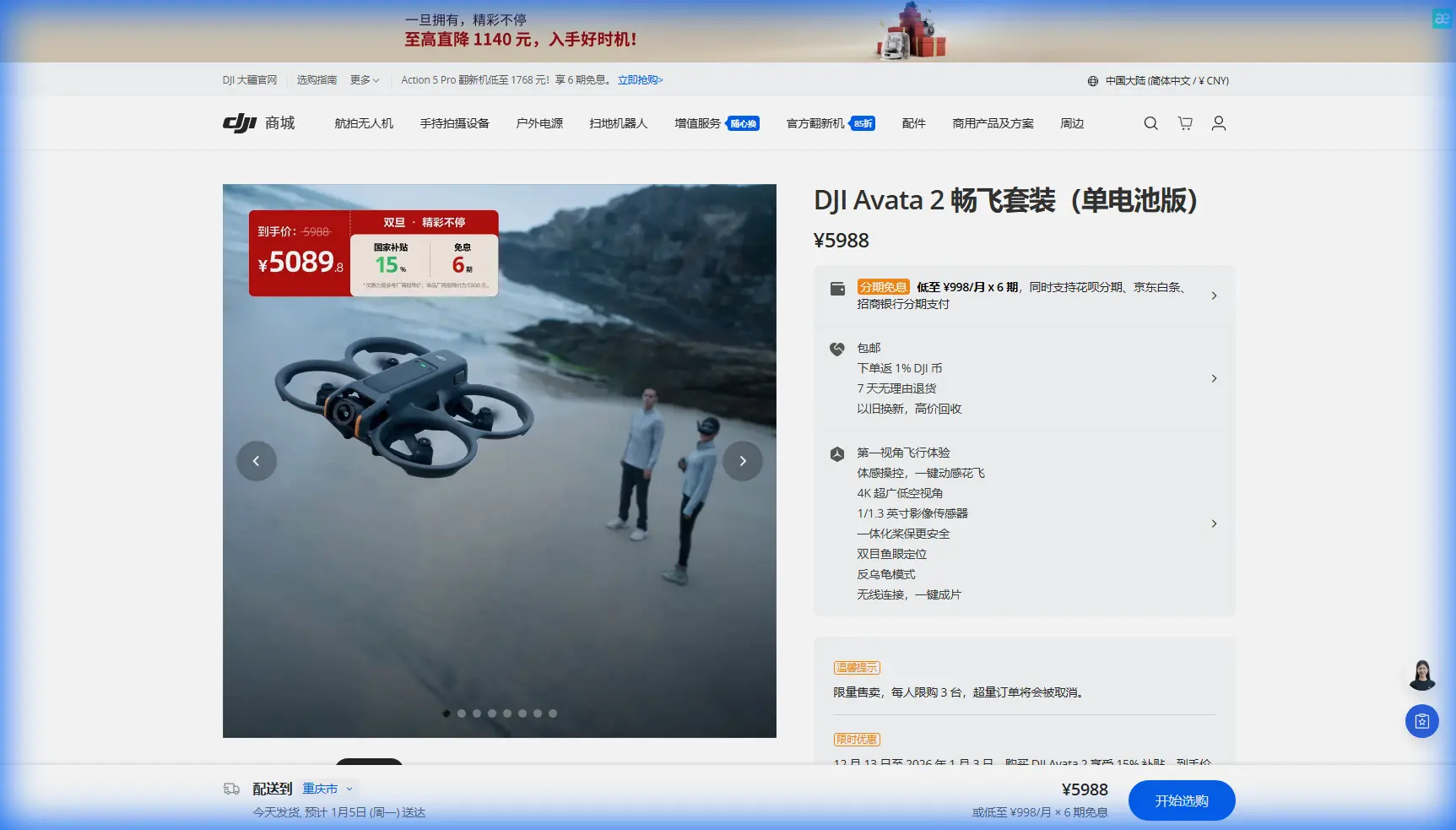
Monitoring Fields With Avata 2 in Extreme Temperatures: A Practical Flight Plan
META: Learn how to use DJI Avata 2 for field monitoring in extreme heat and cold, with practical tips on obstacle avoidance, D-Log capture, ActiveTrack limits, battery handling, and safe low-altitude scouting.
Field monitoring in harsh weather is where a small FPV-style drone either proves its value or exposes its limits fast. The Avata 2 sits in an interesting position for this job. It is compact, protected, and unusually confident in tight spaces for a camera drone, yet it is not a broad-acre mapping aircraft and should not be treated like one. If your goal is to inspect crop edges, irrigation lines, fence breaks, drainage channels, wind damage, livestock movement, or localized stress pockets when temperatures are pushing the edge, the Avata 2 can be genuinely useful.
The trick is knowing what kind of mission fits the aircraft.
I have found that operators often approach the Avata 2 with the wrong mental model. They either fly it like a cinematic toy or expect it to replace a structured survey platform. For field work in extreme heat or cold, the better approach is to use it as a fast, low-altitude visual reconnaissance tool. That means short flights, deliberate routes, careful battery management, and intelligent use of its automation features without becoming dependent on them.
This matters more in temperature extremes because both the aircraft and the environment become less forgiving. Heat can soften your margin for battery performance and increase visual haze above soil. Cold can reduce battery output, shorten useful flight windows, and make launch decisions feel deceptively safe until voltage drops under load. In both cases, the Avata 2’s agility and enclosed propeller design become operationally significant, especially when you are flying close to tree lines, equipment, irrigation structures, or uneven terrain.
Why Avata 2 makes sense for field monitoring
The Avata 2 is not built around the same mission profile as a large enterprise inspection rig, but several of its characteristics translate well to real agricultural observation.
First, its guarded propeller layout changes the risk equation when you need to work near branches, trellis edges, barn openings, machinery sheds, or windbreak rows. In a field environment, that protection is not just about crash survivability. It can allow a pilot to hold lower and tighter inspection lines around obstacles where a more exposed airframe would demand greater standoff distance. That means better visual confirmation of issues such as blocked emitters, damaged poly pipe, broken fence wire, or lodging near perimeter vegetation.
Second, the aircraft’s obstacle sensing behavior is operationally valuable when temperatures are distracting the pilot. Extreme conditions create cognitive load. In high heat, people rush. In bitter cold, fingers stiffen and attention narrows. Any sensor-backed layer that helps you avoid clipping a branch during a low pass matters. It is not a license to fly carelessly, and obstacle avoidance will always have blind spots depending on angle, speed, light, and surface contrast, but it can provide an important buffer during close-range field inspection.
Third, the Avata 2’s imaging options, including D-Log capture, give you more flexibility than many people realize. For a field monitor mission, that is useful when bright midday sun and deep shadows coexist across the same pass. D-Log can preserve more highlight and shadow information for later review, which helps when you are trying to distinguish heat stress from shadow artifacts or compare the condition of crop edges against darker drainage cuts. If the mission is operational rather than cinematic, that extra grading latitude can still be useful because it supports better interpretation after landing.
Start with the right mission design
The biggest error I see is trying to stretch one long flight across too much acreage. That is exactly the wrong move in extreme temperatures.
Instead, divide the property into short decision zones. Fly one irrigation line. One drainage corridor. One fence section. One tree-protected boundary. The Avata 2 is best used to answer focused questions quickly:
- Is there standing water where there should not be?
- Did wind push debris into the canal crossing?
- Are animals gathering around a compromised fence corner?
- Is heat stress concentrated along a single pass or scattered irregularly?
- Did overnight frost hit the low basin harder than the ridge?
This short-zone method does two things. It preserves battery safety margin, and it produces footage that is easier to review without guesswork. In heat and cold alike, shorter sorties usually beat ambitious ones.
A practical pattern is to launch from a shaded or sheltered staging point, fly a low reconnaissance leg, make one deliberate climb for orientation, then return before the pack is deeply depleted. If you need more coverage, land, swap, reassess, and relaunch. This sounds simple because it is. It is also how you avoid preventable losses.
Extreme heat: what changes in the field
Hot weather creates a special kind of false confidence. The sky is clear, visibility seems good, and the drone feels responsive on takeoff. Then the environmental penalties show up.
Surface shimmer above dry soil can make visual interpretation harder than expected, especially at lower angles. Bright reflective patches from water, plastic mulch, or bare ground can push exposure around. Batteries and electronics carry more thermal stress. The result is not always dramatic, but it can quietly reduce the comfort margin in your mission.
With Avata 2, the answer is not to force long sessions. It is to tighten them. Fly earlier if possible. Keep batteries out of direct sun before launch. Do not stage the aircraft on a truck bed baking under midday light. Make your first pass the one that matters most, because image quality and pilot concentration are usually at their best early in the sortie.
Obstacle avoidance deserves special mention here. In hot conditions, leaves, branches, netting, and irrigation structures can create confusing visual layers, especially if glare is present. The system can help, but do not ask it to solve every close-quarters problem. Slow down before entering complex edges. Let the drone’s sensing support your judgment rather than replace it.
One of the better real-world examples I have seen involved a low run along a field margin where a young deer bolted from tall grass and crossed toward a hedgerow. The Avata 2’s sensor-backed stability, combined with immediate pilot correction, prevented a reflexive overcontrol moment into the branches. That kind of wildlife encounter is exactly why field monitoring should be flown with spare space and moderate speed, even when the route looks familiar. Animals do not respect your planned flight path.
Extreme cold: battery discipline becomes the mission
Cold weather changes the hierarchy of risk. In heat, mission quality degrades gradually. In cold, battery behavior can become the main event.
The most important operational habit is battery temperature management before takeoff. A cold-soaked battery can produce a normal-looking start and then sag under load once you accelerate or climb. For a compact aircraft like the Avata 2, that matters immediately. Keep packs warm before flight using safe passive methods, and avoid leaving them exposed in a vehicle overnight if a dawn launch is planned.
Once airborne, resist aggressive throttle inputs until the pack is working and stable. This is where many pilots sabotage themselves. They launch into frigid air, punch out hard, and only then discover the reduced margin they created. A smoother departure profile is smarter.
Cold also affects your hands, your timing, and your willingness to stand still long enough to plan. That may sound like a human-factor footnote, but it is not. Field operations fail as often from rushed setup as from technical faults. Build your route before takeoff. Confirm wind direction. Identify the shortest safe return line. Know where you will not fly if the pack underperforms.
The Avata 2’s compact size helps here because it can be deployed quickly for a very specific look rather than a prolonged mission. Use that advantage. Get in, inspect the problem area, and come home.
When to use ActiveTrack, QuickShots, and Hyperlapse
These features are often marketed for creative work, but they can have selective value in field monitoring if used with discipline.
ActiveTrack can be helpful for following a moving utility vehicle, checking a livestock group from offset position, or documenting the path of an inspection route while you focus on situational awareness. The key word is selectively. In a field environment with poles, wires, uneven topography, and surprise movement, subject tracking is not something to trust blindly. It is most useful where the subject path and obstacle profile are predictable.
QuickShots are less central to agricultural monitoring, but they can create useful orientation clips at the start of a mission. A short automated framing move over a pump area or field entrance can provide a clean visual reference before you transition into manual inspection work. That is not artistry for its own sake. It can make later comparison much easier.
Hyperlapse is valuable when the story is change over time rather than a single defect. If you are watching fog lift from low ground, monitoring water movement after release, or documenting the progression of shadows across a stressed section, a controlled Hyperlapse sequence can reveal patterns your eye misses in real time. Used sparingly, it becomes a field analysis tool rather than just a visual effect.
Getting better footage for actual decisions
A lot of agricultural drone footage looks dramatic and tells you almost nothing. If the mission is field monitoring, footage has to answer practical questions.
That starts with altitude discipline. Fly low enough to resolve surface detail, but not so low that your field of view becomes uselessly narrow or your reaction window disappears. In the Avata 2, this often means resisting the urge to skim every pass just because the aircraft can. The drone’s agility is an asset, not a dare.
Use D-Log when the light range is harsh and you expect to review footage carefully later. If you are shooting under flatter conditions and need immediate, easy-to-read clips, a standard profile may be more practical. The point is not to chase a creator workflow. The point is to preserve the visual information you need.
Think in repeated angles. If you inspect the same drain mouth, pivot corner, or windbreak gap every week, capture it from roughly the same direction and height. Comparable footage beats flashy footage every time.
And if you are building a repeatable field workflow, keep a simple communication channel ready for the people on the ground. A fast way to share clips or coordinate a re-check can save a wasted trip, which is why I like having a direct field contact option such as a simple WhatsApp check-in built into the operation.
Obstacle avoidance is helpful, but route planning still wins
Obstacle avoidance on the Avata 2 deserves respect, but not mythology. It improves survivability in many real field situations, especially around vertical clutter and low-level edge work. That is significant. A drone that can better tolerate constrained routes is genuinely more useful for monitoring along shelterbelts, outbuildings, orchard edges, and ditch-side growth.
But route planning beats sensor trust every time.
Walk the launch site first if visibility is compromised. Identify power lines before they matter. Assume thin branches, wires, and high-contrast lighting can reduce the reliability of any automated safeguard. If you are inspecting under extreme temperatures, that pre-flight walk is even more important because you may not want to linger outside troubleshooting later.
The best Avata 2 operators I know do not talk about flying aggressively. They talk about flying intentionally.
A realistic Avata 2 workflow for difficult weather
If I were setting up a repeatable field-monitoring routine with Avata 2 in extreme temperatures, it would look like this:
Begin with a narrow mission objective. One problem, one area, one flight plan.
Stage batteries correctly for the temperature. In heat, keep them shaded. In cold, keep them warm before launch.
Use a short first sortie to capture the highest-priority zone while concentration is fresh and battery margin is strongest.
Rely on obstacle avoidance as support when moving near vegetation or structures, but slow down before complexity increases.
Use subject tracking only where the subject path is predictable and escape options are clear.
Capture a reference clip from a repeatable angle, then gather close visual passes for diagnosis.
Review footage immediately after landing and decide whether a second flight is justified.
That process sounds conservative because it is. Field monitoring in extreme temperatures rewards conservative systems and punishes improvisation.
The bottom line for Avata 2 users
The Avata 2 is not the right aircraft for every agricultural mission, but it is a surprisingly capable tool for close, fast, visually rich field inspection when weather is uncomfortable and time matters. Its protected design, compact footprint, obstacle-aware behavior, and flexible imaging profile make it especially useful around the messy edges of real properties, where issues often begin and where larger, more formal workflows are too slow.
Use it for targeted reconnaissance, not for pretending a small FPV platform is a survey grid machine. Respect what heat does to judgment and what cold does to batteries. Let automation help, but keep the route under your control.
If you do that, the Avata 2 stops being a novelty aircraft and becomes what many land managers actually need: a quick airborne look at the truth on the ground.
Ready for your own Avata 2? Contact our team for expert consultation.