
Avata 2 Field Report: Monitoring Dusty Vineyards
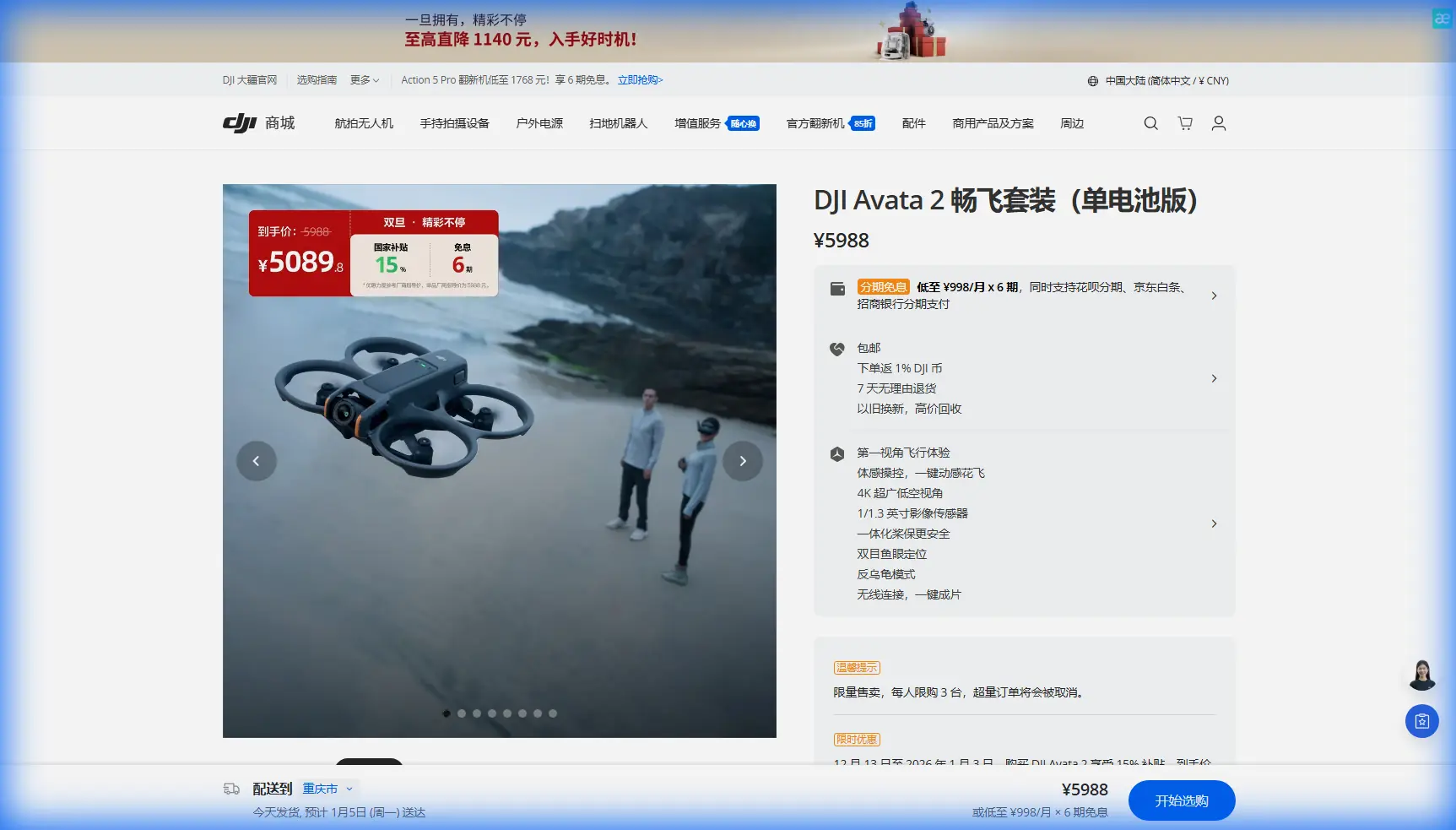
Avata 2 Field Report: Monitoring Dusty Vineyards With Smarter FPV Workflows
META: A field-tested look at using DJI Avata 2 for vineyard monitoring in dusty conditions, with practical notes on obstacle avoidance, D-Log M, subject tracking workflows, battery planning, and useful accessories.
Vineyards punish lazy drone choices.
Rows are tight. Trellis wires hide in plain sight. Wind kicks up grit. Light shifts hard between open lanes and shaded canopy. If your aircraft is too fragile, too dependent on perfect GPS, or too cumbersome to deploy for quick visual checks, it tends to stay in the case. That is the real test for a monitoring platform in vineyard work: not whether it can produce impressive footage on a calm day, but whether it gets used repeatedly by growers and field teams when conditions are less forgiving.
The Avata 2 is an interesting fit here because it is not a conventional mapping drone and it is not pretending to be one. It sits in a different lane: fast visual inspection, immersive row-level observation, terrain-following by pilot feel, and short-notice documentation when dust, canopy density, and narrow corridors make larger aircraft feel clumsy. For vineyard managers monitoring dusty blocks, irrigation lines, vine vigor patterns, row access, and the condition of support structures, that difference matters.
I have been looking at the Avata 2 less as a “cinematic FPV” aircraft and more as a nimble field tool. In that role, a few of its features become far more useful than the spec sheet alone suggests.
Why Avata 2 makes sense in vineyards
The first operational advantage is simple: size and confidence in confined space.
Vineyard monitoring often means flying low and close enough to actually see leaf stress, broken posts, sagging trellis sections, emitter problems, access rutting, or dust accumulation around critical areas. A big drone can do this, but it changes the risk profile. The Avata 2, with its ducted prop design, is naturally better suited to tight passes along rows and around infrastructure than open-prop aircraft that demand a wider safety margin.
That does not make it invincible. Trellis wire is still trellis wire. But in practical field use, the ducted format changes how willing an operator is to inspect under canopy edges, around equipment sheds, beside windbreaks, or near line ends where posts and wires converge. In agriculture, willingness to launch often determines whether issues are spotted early.
The second advantage is visual immediacy. Vineyard teams are not always trying to build survey-grade outputs. Sometimes they need a fast answer. Is dust reducing visibility around vehicle routes? Which rows show the most obvious canopy inconsistency after a dry spell? Did a section of drip infrastructure get disturbed? Are field crews able to move through a block without obstruction? FPV-style flight, when flown conservatively and professionally, gives a far more intuitive sense of row conditions than high, detached top-down observation.
Dust changes the workflow
Dusty conditions are not a side note in vineyard operations. They shape everything from takeoff discipline to lens maintenance.
The Avata 2 is well suited to quick deployment, but dusty ground demands a cleaner launch routine than many operators use casually. Hand launching is not the point here; controlled takeoff from a pad or elevated surface is. The reason is obvious after a few vineyard flights: the turbulence close to the ground can throw fine grit directly toward the aircraft during spool-up and landing. Even if the drone itself handles the flight well, image quality suffers fast when dust settles on the lens or filter.
This is where a third-party accessory actually earns its place instead of becoming bag clutter. A compact foldable landing pad is one of the most useful add-ons for the Avata 2 in vineyard work. It sounds basic because it is basic. But raising the aircraft off loose dirt and giving yourself a clean visual launch zone reduces contamination, speeds up turnaround, and lowers the chance that each battery starts with compromised optics.
I also like pairing the aircraft with a third-party lens filter set designed for FPV platforms, especially when the day is bright and dusty. An ND filter is not just for style. In strong vineyard sun, it helps control shutter behavior and preserves smoother motion when running inspection passes that may later be reviewed by growers, consultants, or crew leads. If you are recording in D-Log M, controlling exposure becomes even more valuable because it gives you more room to pull detail from harsh highlights on pale soil and reflective leaf surfaces.
D-Log M matters more than people think
Most agriculture users do not need to become colorists. They do, however, benefit from footage that survives difficult lighting.
D-Log M is useful in vineyards because row environments produce ugly contrast. You can move from open sun to partial shade in seconds, and the tonal differences between dusty ground, dark foliage, and bright sky can overwhelm simpler recording approaches. When a manager reviews footage later to assess canopy irregularity or support damage, blown highlights and crushed shadows are not creative problems. They are information problems.
That is the operational significance of D-Log M on the Avata 2. It gives you a better chance of retaining usable visual detail across the scene, especially during low-angle flights where sunlit soil and shaded vine interiors share the frame. If the job is documentation first and aesthetics second, that extra flexibility is not a luxury.
The best approach is not to overcomplicate the workflow. Capture in D-Log M when light is harsh or mixed, apply a consistent correction in post, and keep your deliverables simple: short clips organized by block, row section, or observed issue. Vineyard teams rarely need an elaborate edit. They need clean footage tied to a location and a date.
Obstacle avoidance: helpful, not magical
The phrase “obstacle avoidance” gets tossed around like a blanket guarantee. In vineyards, it is not.
On the Avata 2, obstacle sensing can improve safety margins and reduce workload in certain scenarios, especially when moving through wider lanes, transitioning around visible structures, or making conservative inspection passes where situational awareness matters more than aggressive maneuvering. That is genuinely valuable in an environment full of posts, trunks, netting, edges, and changing light.
But vineyards are full of thin hazards. Wires and narrow supports remain the kind of objects every pilot should treat as manually managed risks. The operational takeaway is straightforward: use obstacle avoidance as a layer, not a substitute for planning. Keep your line choice clean. Fly slower than your confidence suggests. Build each pass so you have an exit. In dusty air, where visual clarity can degrade quickly, that restraint pays off.
This is also where Avata 2’s form factor helps. Because it is intended for immersive, controlled close-range flight, it encourages the kind of route discipline that row inspection needs. You are not sending it out to automate a whole property. You are using it to observe specific problem zones with intent.
Subject tracking and ActiveTrack: useful with the right target
The mention of subject tracking and ActiveTrack raises a fair question for vineyard work: what exactly is the subject?
Usually not a person. Not a random moving object either. In this setting, the most practical use is controlled tracking of a utility vehicle or tractor moving along a service path, or a walking team conducting a row inspection. That can help supervisors review route conditions, document dust generation around traffic lanes, or record how equipment is interacting with narrow vineyard access points.
The significance here is not flashy autonomous following. It is consistency. If the Avata 2 can maintain a stable visual relationship to a moving farm vehicle during a short monitoring run, the resulting footage becomes easier to compare over time. You can see whether dust suppression measures are working, whether traffic patterns are worsening rutting, or whether access around a block remains safe and efficient.
I would still keep these tracking functions for relatively open sections and conservative speeds. Dense rows, irregular obstacles, and intermittent visibility are not places to overtrust automation. But in perimeter roads, staging zones, and wider service corridors, these tools can save pilot bandwidth and improve repeatability.
QuickShots and Hyperlapse are not just creative extras
A lot of people write off QuickShots and Hyperlapse as social media features. That misses their value in farm communication.
QuickShots can be useful when you need fast, standardized visual summaries of a block entrance, a damaged area, or infrastructure placement. The point is not drama. The point is speed and consistency. A short automated move can produce a clear overview clip that is easy to archive and easy to compare with future flights.
Hyperlapse is more niche, but there are vineyard scenarios where it earns its keep. Dust movement across access roads, shadow progression over a test area, crew movement around harvest prep, or visible traffic patterns near loading zones can all be documented more efficiently with time-compressed footage than with long real-time recording. When managers need a quick read on how a site behaves over an hour rather than a minute, that format is surprisingly practical.
Again, this is where Avata 2 works best as a visual monitoring tool rather than a survey platform. It captures changes, behaviors, and conditions that are easier to understand when seen dynamically.
Battery planning in the field
One of the easiest mistakes in vineyard drone use is planning flights as if every battery goes entirely to air time.
They do not. Not when you are stopping to clean a lens, discussing observations with a field manager, moving between blocks, checking wind direction, and relaunching from dusty access roads. A realistic workflow for the Avata 2 includes buffer. If you intend to inspect three sections of a property, treat each as a discrete mission rather than stretching one battery into a marginal final pass.
This matters even more with FPV-style flying because low-altitude row inspection demands concentration. Fatigue builds faster than many operators expect. Shorter, cleaner flights produce better footage and safer outcomes. For agriculture teams, consistency beats squeezing out one more minute.
Best-use scenarios for vineyard monitoring
The Avata 2 is strongest when the task involves visual interpretation at human-relevant scale. In practice, that includes:
- Checking row access after vehicle movement in dry conditions
- Inspecting visible canopy irregularities from low altitude
- Reviewing trellis and post condition along targeted sections
- Monitoring dust behavior near service roads or work areas
- Capturing visual evidence for contractor follow-up or internal reporting
- Producing short progress documentation clips over a growing season
It is less suited to broad-acre measurement work or high-precision mapping where orthomosaics and calibrated analytics are the goal. That is not a criticism. It is role clarity, and role clarity is what keeps drone programs useful instead of disappointing.
A practical field setup
For dusty vineyards, my preferred Avata 2 setup is deliberately simple:
A clean landing pad.
A lens cloth in a sealed pouch.
A third-party ND filter option for bright mid-day work.
Conservative route planning around wires and netting.
D-Log M when contrast is harsh.
Short flights with a clear inspection objective.
If you are building a team workflow, create a naming system before the first flight. Block, row, date, issue type. That alone makes the footage far more valuable later.
And if you are still deciding how to configure an Avata 2 kit for agricultural monitoring, it helps to talk with someone who understands real deployment instead of generic hobby use. I’d point operators toward a direct WhatsApp conversation here when they need a quick discussion about setup choices, accessories, or compatibility for field conditions.
The real value of Avata 2 in vineyards
The Avata 2 does not replace every agricultural drone. It fills a gap many operations quietly have.
There is a lot of space between “walk the rows” and “launch a full survey mission.” Vineyard managers often need something in that middle zone: fast, visual, close, and deployable without friction. That is where this aircraft becomes genuinely useful. Its ducted design makes near-structure work more approachable. Obstacle avoidance adds a margin in the right scenarios. D-Log M helps preserve detail when vineyard lighting is messy. ActiveTrack and subject tracking can support repeatable observation of vehicles or teams in controlled areas. QuickShots and Hyperlapse, used sensibly, help turn flight time into usable operational records.
For dusty vineyard monitoring, those details are not random features. They shape whether the footage actually helps someone make a better field decision.
That is the standard worth using.
Ready for your own Avata 2? Contact our team for expert consultation.