
Using Avata 2 for Remote Wildlife Monitoring
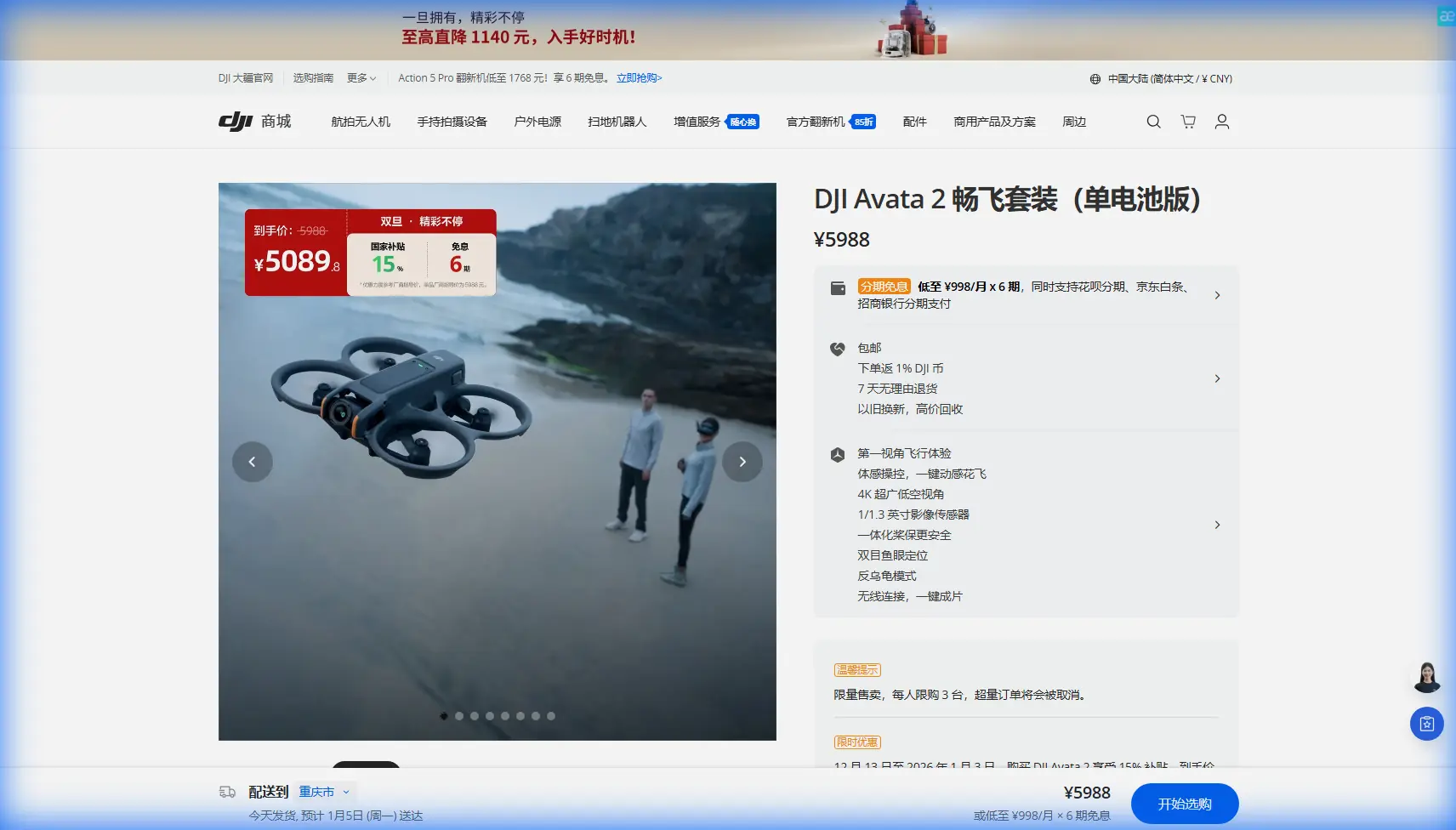
Using Avata 2 for Remote Wildlife Monitoring: What a Rural Mapping Project Teaches About Safer, More Reliable Field Work
META: A field-tested look at using DJI Avata 2 for remote wildlife monitoring, with lessons drawn from a rural aerial surveying quality-control document on safety checks, deadlines, data backup, and operational discipline.
Wildlife monitoring in remote terrain sounds cinematic until you are the one responsible for getting the aircraft home, keeping the footage intact, and repeating the mission day after day without disturbing the habitat you came to study.
That is where the Avata 2 becomes interesting.
Most discussions around this aircraft get stuck on the fun parts: immersive flight, acro appeal, dramatic footage. For remote wildlife work, that framing misses the real story. The Avata 2 is useful when treated less like a toy for expressive flying and more like a disciplined field platform. The better model for thinking about it is not social media content creation. It is aerial survey operations.
A technical design document for a 1:500 rural cadastral UAV mapping project offers a surprisingly sharp lens here. On paper, it has nothing to do with animals. It deals with deadlines, three-dimensional modeling, topographic correction, data handling, field control, and a multi-stage quality inspection regime. Yet the operational logic maps directly onto serious wildlife monitoring in remote areas. If you want better outcomes from an Avata 2, this is the mindset worth borrowing.
The real problem in remote wildlife monitoring is not flying. It is operational failure.
Anyone can launch a drone. The hard part is producing consistent, usable, low-disturbance visual records under field conditions that are full of uncertainty.
Remote wildlife missions usually break down in a few predictable ways:
- the team enters the field without a formal risk review
- batteries, storage, or backup workflow are improvised
- flight logs and observations are not documented cleanly
- the pilot captures beautiful but scientifically weak footage
- data is lost, mislabeled, or impossible to compare over time
- the aircraft is flown in ways that raise stress on wildlife or create avoidable hazards for people and equipment
The mapping project document is blunt about the nature of fieldwork: the surveying industry is difficult, and outdoor operations contain many uncertain safety factors. That point matters because remote wildlife work is exactly the same kind of environment. Terrain changes. Weather shifts. Signal paths are inconsistent. Access is limited. Recovery can be slow. Small mistakes compound fast.
So if you are deploying Avata 2 to monitor nesting zones, wetland edges, forest clearings, or animal movement corridors, the aircraft itself is only one part of the system. The system is what determines whether the mission is useful.
What the rural mapping document gets right
Two details from the source material stand out because they are operationally powerful.
First, every project must undergo safety risk assessment before work begins, with a response plan created for each identified risk. That is not abstract paperwork. In wildlife monitoring, this directly affects launch-site choice, route planning, observer positioning, return margin, and even when not to fly. A marsh at sunrise may be ideal for observing behavior, but if the team has not accounted for wind shear above reeds, difficult footing, water exposure, and low-contrast recovery conditions, the mission is poorly designed no matter how capable the drone is.
Second, the project used a layered quality-control structure: process inspection by the project team, final inspection by the company quality department, then formal acceptance by a higher authority. In the source, this follows standards including GB/T 24356-2009 and GB/T 18316-2008, with a “two-level inspection, one-level acceptance” model. For wildlife work, the exact standards may differ, but the principle is gold. Field capture should be checked in stages, not assumed to be valid because the drone flew successfully.
That means:
- the pilot reviews image integrity immediately after flight
- the field lead confirms behavioral relevance and location accuracy
- the project owner or biologist reviews whether the mission actually answered the monitoring objective
This is how you stop collecting hours of attractive but unusable video.
Why Avata 2 fits remote observation better than many people expect
The Avata 2 is not a conventional mapping aircraft, and it should not be forced into that role. It is, however, highly effective for close-to-terrain visual assessment when the mission benefits from controlled movement, strong situational awareness, and the ability to inspect habitat edges without large-airframe intrusion.
For wildlife monitoring, that matters in several ways.
1. Tight-space confidence reduces unnecessary disturbance
Remote habitats are rarely open and simple. You are often working around trees, brush lines, rock shelves, ravines, or irregular shoreline structure. Obstacle awareness and controlled low-speed maneuvering are not luxury features in that environment. They help the pilot avoid abrupt corrections, wide detours, and repeated passes that can stress wildlife more than a single clean observation run.
Avata 2’s obstacle-oriented flight support and immersive control style can make short, deliberate approaches more manageable, especially when working around vegetation breaks or terrain transitions. That does not mean you should push close to animals. It means you can maintain cleaner lines from a respectful standoff distance.
Operational significance: smoother flight paths usually mean lower noise concentration over a single point, less repositioning, and fewer botched attempts.
2. D-Log gives analysts more usable visual information
Wildlife monitoring is often less about cinematic punch and more about extracting detail from difficult lighting. Early morning backlight, shaded canopy, reflective water, and mixed sun-shadow conditions can flatten critical visual cues. Recording in D-Log helps preserve tonal information that can be useful when reviewing plumage contrast, animal outline, movement against background, or subtle habitat damage.
This is one of those features content creators praise for color grading, but in field use it has another benefit: it can protect borderline visual evidence from becoming useless after exposure shifts. If your monitoring workflow includes office review, side-by-side comparisons, or annotated reporting, that extra image flexibility matters.
3. Subject tracking tools can be useful, but only in a narrow, ethical way
ActiveTrack and related tracking functions sound like a natural fit for wildlife, but they need restraint. The right use is not to chase animals. It is to maintain framing when observing movement that is already taking place at a comfortable distance and in a way that does not alter behavior.
Used carefully, tracking support can reduce pilot workload and help preserve smoother observational footage. Used poorly, it turns a monitoring mission into harassment. The aircraft does not know the biological threshold for disturbance. The operator must.
That distinction is central to responsible civilian drone use in ecology.
The field discipline that makes Avata 2 actually dependable
The source document includes a hard deadline structure: 3D modeling and map-repair work were to be completed by February 29, pilot-area deliverables submitted by March 7, pilot acceptance completed by March 15, and the remaining aerial work, modeling, control collection, map repair, and office compilation finished by April 15. The specific calendar is old, but the project design is timeless.
It breaks a big mission into milestones, validates the pilot zone first, then scales.
This is exactly how Avata 2 should be introduced into wildlife monitoring programs.
Start with a pilot zone, not the whole reserve
Do not begin with your hardest terrain and biggest target area. Choose a contained section of habitat and define a repeatable mission template:
- fixed takeoff point
- standard altitude bands
- observation windows matched to animal activity
- backup landing area
- post-flight review checklist
Run that small zone until the team can produce stable, repeatable results. Only then expand coverage.
The mapping project’s pilot-area acceptance before full rollout is more than admin logic. It is risk containment. In remote wildlife operations, that can save weeks of wasted effort.
Build a real backup habit
The source text repeatedly stresses timely backup to prevent data loss, including backup responsibility for original imagery and final project results. That detail is easy to skim past, but it is one of the most valuable lessons in the entire document.
Wildlife monitoring often happens far from the office, with long travel times and low tolerance for rework. If you lose a morning’s footage from a rare seasonal event, you may not get another chance that season.
For Avata 2 teams, that means:
- back up footage immediately after each mission block
- separate original media from working copies
- keep clear naming tied to date, location, and session number
- verify files before leaving the field site
- maintain a chain of custody if footage will feed formal reporting
A rugged third-party SSD backup device or weather-resistant card organizer can improve this workflow more than most flight accessories. One of the least glamorous upgrades I have seen make a real difference is a third-party high-visibility landing pad paired with a compact waterproof data case. In muddy grassland, dusty tracks, or uneven scrub, that simple combination speeds launches, protects the aircraft on recovery, and keeps cards and drives from becoming a field-management mess.
Safety is not separate from conservation quality
The source material puts the project leader in charge of safety production, calls for safety briefings before project launch, and requires records for risk identification and control measures. It also highlights water safety, electrical safety, fire awareness, theft prevention, vehicle caution, and the need to avoid night driving where possible.
This is not bureaucratic overreach. It is what competent fieldcraft looks like.
For remote wildlife monitoring with Avata 2, those same ideas translate cleanly:
- if the site involves wetlands, plan for water exposure and retrieval limitations
- if charging happens from field power systems, manage electrical load and cable safety carefully
- if access roads are poor, vehicle timing and daylight planning are part of mission safety
- if the area is isolated, data security and gear accountability matter as much as battery count
Operational significance: a safe team is a more consistent team. Consistent teams produce datasets you can trust.
Where Avata 2 shines in wildlife work
The best use cases are specific.
Habitat edge inspection
Avata 2 works well for checking transitions between forest and field, reed line changes, erosion near nesting areas, or path encroachment around sensitive zones. The aircraft’s maneuverability helps when you need visual context rather than broad-area orthomosaic output.
Repeated behavioral observation from controlled vantage paths
If the objective is to document recurring movement patterns along a known corridor, a pre-planned route flown at consistent times can produce useful comparative footage. Hyperlapse and QuickShots are not usually primary scientific tools, but they can support communication and reporting when used to illustrate habitat change over time for stakeholders, reserve managers, or landowners.
Training field teams in visual interpretation
Because Avata 2 can provide immersive situational views, it has value in training assistants, ecologists, or land managers to understand sightlines, terrain barriers, and habitat structure before entering on foot. That can reduce disturbance from repeated ground approaches.
Where it should not be overstretched
Avata 2 is not the answer to every monitoring question. If your project requires wide-area orthophotos, survey-grade positional consistency, or large-scale corridor mapping, a platform designed for mapping is the right tool. The lesson from the rural cadastral project is not “use one drone for everything.” The lesson is to match the aircraft to the task and surround it with process discipline.
That is why the source document’s insistence on records, inspection reports, archived checks, and clear acceptance stages is so valuable. It reminds us that professional UAV results come from management structure, not pilot confidence alone.
A practical workflow for Avata 2 in remote wildlife monitoring
If I were setting up a small professional workflow around Avata 2 for this type of work, it would look like this:
Pre-mission risk review
Identify terrain hazards, likely wildlife sensitivity triggers, weather limits, access constraints, and emergency return options.Safety briefing and documentation
Mirror the document’s emphasis on pre-project briefing and recordkeeping. Everyone knows flight objectives, observer roles, and no-fly conditions.Pilot-zone validation
Test one habitat segment before scaling, just as the reference project required pilot deliverables before broader completion.Structured capture
Use consistent route logic, controlled speed, and D-Log when lighting is variable. Use tracking functions only when behavior will not be affected.Immediate quality check
Do a first-level inspection on site. Are the files intact? Did the flight answer the monitoring question? Was any animal response observed?Backup before departure
Follow the source document’s strict backup mindset. Never assume the card alone is enough.Second-level review
A project lead or analyst checks whether the footage is operationally useful, not merely visually impressive.
If you are refining a setup like this and want to compare field-ready accessories, backup methods, or workflow choices with someone who understands practical drone deployment, you can message a UAV specialist directly here.
The bigger lesson
The most valuable insight from that rural mapping design document is not about maps. It is about seriousness.
It treats UAV work as a chain of responsibilities: assess risk before launch, inspect quality during the job, archive records properly, back up data immediately, and validate a pilot area before scaling operations. Those habits matter just as much when the mission is not cadastral mapping but wildlife observation in remote country.
Avata 2 can be a capable tool in that setting. Not because it makes remote work easy. It does not. It works because, in the hands of a disciplined team, it can capture controlled, flexible, terrain-aware visual data without the footprint of larger systems. Add thoughtful obstacle-aware flying, careful use of ActiveTrack, D-Log for difficult light, and a few genuinely useful accessories, and it becomes more than an FPV novelty.
That is when the aircraft starts earning a place in professional field kits.
Ready for your own Avata 2? Contact our team for expert consultation.