
Avata 2 for Urban Highway Scouting: What Actually Matters
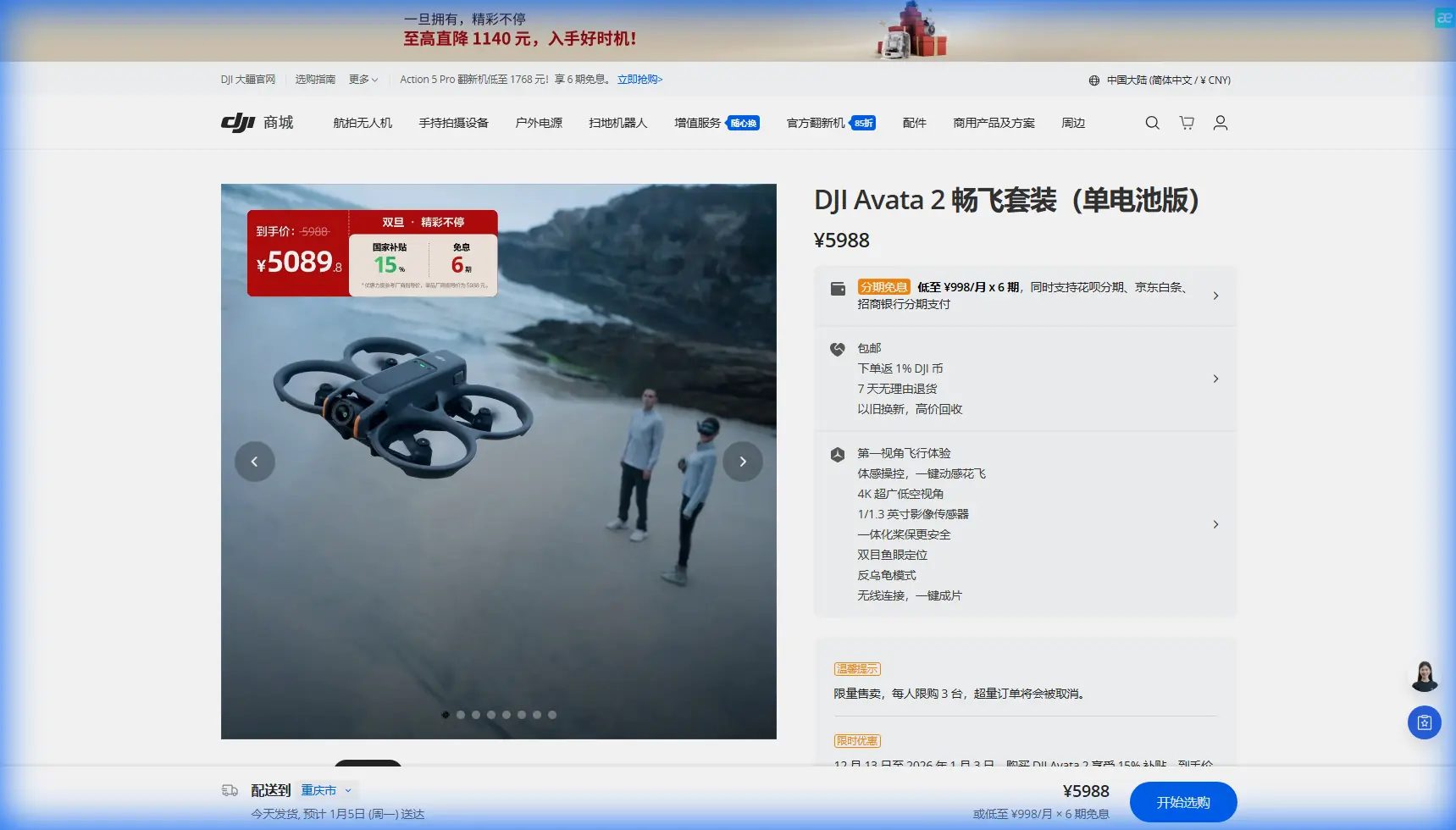
Avata 2 for Urban Highway Scouting: What Actually Matters in the Air
META: A technical, field-focused review of using DJI Avata 2 for urban highway scouting, with practical guidance on range, antenna positioning, obstacle awareness, tracking limits, D-Log workflow, and safe flight planning.
Urban highway scouting sounds simple until you try to do it well. You are dealing with moving traffic, layered infrastructure, concrete signal reflections, overpasses, light poles, exit ramps, sound barriers, and a lot of visual clutter packed into a narrow corridor. That is exactly where the Avata 2 becomes interesting.
Not because it turns an urban reconnaissance flight into an easy job. It does not. The reason it stands out is that it lets a skilled pilot gather close, stable, highly readable footage in spaces where a larger camera drone often feels too exposed, too conspicuous, or too awkward to position. The Avata 2 sits in a useful middle ground: compact enough to work around tight structures, yet advanced enough to produce footage that can support route assessment, construction observation, and visual condition checks along highway-adjacent corridors.
If your goal is scouting highways in urban areas, the real question is not whether the Avata 2 can fly there. Of course it can. The question is whether its flight behavior, sensing, imaging profile, and control link characteristics make it a reliable tool for repeated operational work. The answer is yes, with some very specific caveats.
Why the Avata 2 Fits This Mission Profile
Urban highway scouting is less about cinematic spectacle and more about controlled information gathering. You need to move through constrained airspace visually, maintain situational awareness near structures, and return with footage that remains useful after the adrenaline of the flight wears off.
That is where the Avata 2’s ducted design matters. In practical terms, prop guards change how aggressively you can work near roadside structures, bridge elements, retaining walls, and utility features. They do not make the aircraft crash-proof, and they do not remove the need for conservative standoff distance, but they do give the platform a more forgiving physical profile than open-prop alternatives. For low-altitude passes beside highway boundaries, that matters operationally.
It also matters that the aircraft is designed around immersive flight rather than tripod-like hover capture. On an urban scouting run, that means you can follow the shape of an interchange, trace a frontage road, or inspect the geometry around on-ramps with a more natural sense of direction and speed. You are not fighting the airframe’s personality. You are working with it.
That said, this is not the ideal platform for every highway task. If the assignment demands long-duration mapping, high-altitude corridor surveying, or heavy zoom-based inspection from a distant hold, there are better tools. The Avata 2 earns its place when the objective is close-range visual intelligence in complicated spaces.
Obstacle Avoidance Is Helpful, Not a Substitute for Flight Discipline
The biggest misunderstanding around compact FPV platforms is that obstacle avoidance somehow neutralizes urban risk. It does not.
When people search for Avata 2 obstacle avoidance, what they usually want to know is whether the aircraft can save them from bad judgment. In a highway environment, that is the wrong framing. The better framing is whether onboard sensing can reduce the margin for error when flying through layered infrastructure.
For urban scouting, the answer is yes, but within strict boundaries. Highway corridors contain some of the worst visual conditions for automated sensing: repetitive textures, thin structures, hard shadows, reflective surfaces, and fast-changing contrast as you move under and around overpasses. Add traffic motion and airborne dust, and the environment becomes even less predictable.
Operationally, that means obstacle support should be treated as a backup layer. It helps when pacing near embankments, under signage, or beside noise barriers, but it does not replace route planning. Before launch, you should already know your entry path, your bailout direction, your turnaround points, and your radio line-of-sight priorities.
The Avata 2 works best when you fly it as if no automated protection exists, then allow the sensing system to add insurance rather than confidence. That mindset is what keeps highway scouting repeatable.
Subject Tracking and ActiveTrack: Useful in Theory, Limited in This Use Case
There is always interest around subject tracking and ActiveTrack-style functionality because highways are full of obvious moving subjects. Vehicles, service convoys, maintenance crews, and flow patterns all look like natural tracking targets. In practice, that capability has limited value for professional urban scouting with the Avata 2.
Why? Because a highway environment creates too many competing variables at once. Traffic density changes by the second. Vehicles merge, separate, disappear under structures, and pass through shadow bands that can confuse visual continuity. Even if a tracked target remains visible, following it in an urban corridor can pull the aircraft toward poor geometry, weak signal angles, or cluttered airspace.
That does not mean tracking tools are useless. They can help in controlled edge cases such as following a slow-moving support vehicle in an isolated access lane or maintaining visual emphasis during a simple reveal shot. But if your mission is operational scouting, manual flight usually produces better decisions than automated target fixation.
This is one of those areas where marketing language often outruns field reality. For urban highways, human judgment still beats automation.
QuickShots and Hyperlapse Are Secondary, but Not Irrelevant
If you are scouting, not shooting a travel reel, QuickShots probably sit low on your priority list. Fair enough. But dismissing them entirely misses a practical point.
QuickShots can be useful as repeatable framing templates when documenting the same location over time. If you need a consistent opening view of an interchange, frontage road, or work zone perimeter, a preset movement can create a visually stable baseline. The value is not novelty. The value is repeatability.
Hyperlapse has a more direct operational use. Urban highways are dynamic systems, and some site questions are really time-based questions. Where does congestion begin? How does queueing build near a merge lane? When does a shadowed access road become active with service vehicles? A compressed-time view can reveal patterns that ordinary real-time passes do not show clearly.
Still, these are support tools. The backbone of useful Avata 2 highway work remains manually planned flight lines and disciplined camera control.
D-Log Is One of the Most Underrated Features for Highway Work
A lot of pilots treat D-Log as a creator feature. It is more than that. In urban highway scouting, D-Log has operational value because of the way these environments punish ordinary image profiles.
Think about a typical flight path: bright open sky, dark underpass, reflective vehicle roofs, shaded retaining wall, concrete lane markings, then a sudden burst of sun as you clear a structure. That is a brutal dynamic range sequence for any small airborne camera.
Shooting in D-Log gives you more flexibility when balancing those tonal extremes in post. That matters if the footage is meant to support observation, stakeholder review, or progress comparison rather than just social posting. You can recover highlight detail from bright pavement or reflective barriers while still preserving shadow information around bridge supports and roadside infrastructure.
The benefit is practical. A scouting clip that holds detail in both exposed concrete and dark structural zones is far more useful than one that looks punchy but loses information. For urban highway work, D-Log is not just about aesthetics. It is about preserving visual evidence.
Antenna Positioning Advice for Maximum Range
This is the part many pilots learn the hard way.
If you want the best control and video link performance from the Avata 2 while scouting highways, antenna positioning is not a minor detail. In a city corridor, it is often the difference between a smooth outbound line and a shaky, confidence-eroding signal drop.
The first rule is simple: point your body and controller setup to preserve the cleanest possible relationship between you and the aircraft’s route. Do not stand where a concrete barrier, bridge column, parked truck, or elevated roadway blocks the direct path between your antennas and the drone. Urban range is usually lost through obstruction before it is lost through distance.
The second rule is to avoid flying deep behind structures, even when the drone still looks physically close. Pilots often overestimate range because the aircraft might only be a short distance away in absolute terms, but if it has moved behind reinforced concrete or under layered steel infrastructure, the signal path can degrade fast. On a highway job, “close” does not always mean “clear.”
The third rule is about orientation. Keep the antenna faces aligned for broad exposure toward the aircraft’s expected travel sector rather than aiming carelessly while you turn your torso, monitor traffic, or talk to a spotter. Small changes in orientation can matter more in reflective city environments because multipath interference already makes the link work harder.
The fourth rule is launch-site discipline. Pick a position with height advantage where possible, even if that means walking farther before takeoff. A slight elevation improvement can create a cleaner line over roadside clutter. Standing on the wrong side of a sound wall or low embankment can cripple an otherwise easy flight.
And the fifth rule is the one too few people follow: plan the route around signal geometry, not just visual interest. If a shot takes the Avata 2 under multiple overpass layers, around a blind curve, or behind roadside mass, that shot should be treated as high-risk even if it looks beautiful in the goggles.
If you want to compare route setups or talk through a tricky urban signal layout, I put together a quick contact point here: message me directly.
What the Avata 2 Does Better Than Larger Drones Here
On urban highways, size changes behavior. Larger drones often force a more detached style of flying. You stay farther back, hold higher, and accept more compromised sight lines because the aircraft feels less appropriate near tight roadside structures.
The Avata 2 invites a different approach. You can work lower and closer with more intentional framing, especially when tracing linear features like barriers, drainage edges, signage approaches, or lane transitions. It is not simply more agile in a generic sense. It is better suited to the spatial language of highway infrastructure.
This becomes especially noticeable when scouting around complex merge areas and underpass edges. The aircraft can transition between open and constrained spaces with less visual awkwardness. The footage feels more connected to the terrain, which in turn makes the scouting output easier to interpret.
That said, tighter flying increases workload. There is no free gain here. You get better spatial access, but only if your control inputs are calm and your route discipline is strong.
The Limits You Need to Respect
The Avata 2 is not a magic urban probe. It still has hard limitations that matter for highway assignments.
Battery planning is tighter than many new pilots expect when flying in a stop-start urban pattern with multiple setup passes. Wind behavior around overpasses and building edges can change quickly. GPS conditions and visual clutter can produce moments where spatial orientation becomes harder than expected. And because highway work often tempts pilots to follow linear routes farther than they should, range management becomes a real operational concern.
There is also the issue of public exposure. Highways are sensitive environments. Even where flight is legal, your margin for error must be near zero. The Avata 2’s compact form helps, but it does not excuse poor planning, risky proximity, or distraction from traffic conditions.
If the mission calls for direct over-traffic operation, high-stakes inspection near active lanes, or any scenario where a loss of control could create serious public risk, you need to assess whether this is the right aircraft and whether the operation should happen at all.
Is the Avata 2 a Smart Choice for Urban Highway Scouting?
Yes, if the mission is close-range, visual, and tactically planned.
The strongest case for the Avata 2 is not that it can do everything. It cannot. The strongest case is that it handles a narrow but important job very well: moving through dense roadside space to collect readable footage where conventional drones often feel too blunt or too exposed.
Its obstacle-awareness systems add a layer of support, but the real safety comes from route discipline. Its tracking tools sound attractive, but manual control remains the smarter choice in dense traffic scenes. Its QuickShots and Hyperlapse modes are not central, yet they can support repeatable documentation. And its D-Log recording is far more valuable than many operators realize when the scene swings from bright concrete to dark underpass in a matter of seconds.
Most of all, success with the Avata 2 in urban highway environments comes down to link management. If you understand antenna positioning, maintain line-of-sight geometry, and avoid route choices that bury the aircraft behind concrete and steel, the platform becomes far more dependable.
That is the real story. Not hype. Not checklist marketing. Just a drone that, in the right hands, can make difficult urban scouting work cleaner, closer, and more useful.
Ready for your own Avata 2? Contact our team for expert consultation.