
Avata 2 scouting tips for solar farms when heat, glare
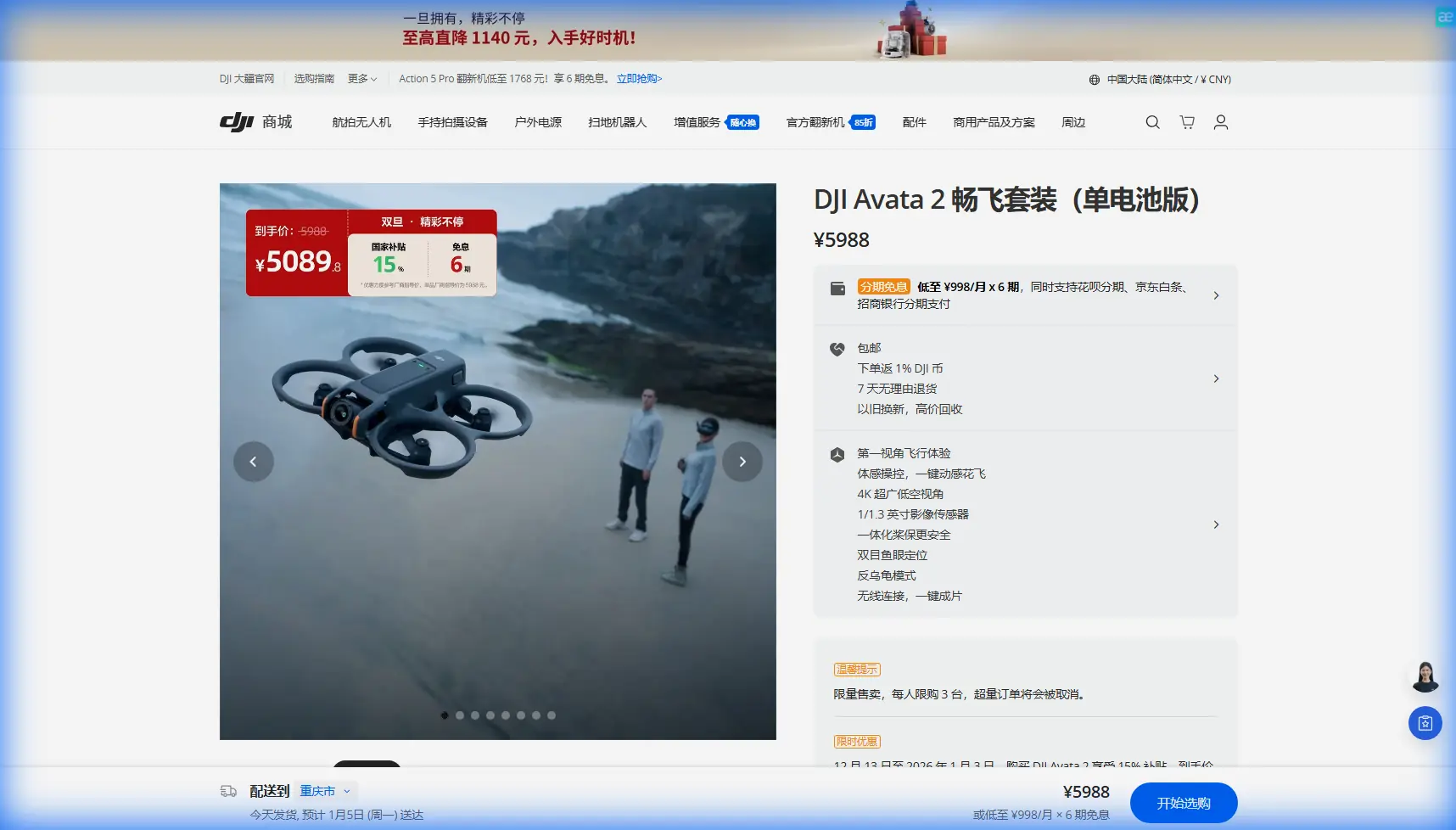
Avata 2 scouting tips for solar farms when heat, glare, and wind all show up at once
META: Practical Avata 2 field tips for scouting solar farms in extreme temperatures, with mapping-grade lessons on control points, glare, overlap, and flight adjustments when weather shifts mid-mission.
I took the Avata 2 out to scout a solar site on a day that looked manageable from the parking area and became something else once we were over the panels. That is normal in utility-scale energy work. Flat terrain fools people. Solar farms create their own visual problems: repeating geometry, hard reflections, heat shimmer, and long runs of infrastructure that make every navigation and imaging decision matter more than it first appears.
This is where a lot of Avata 2 content drifts into vague praise about flying feel or cinematic potential. That misses the point for real field use. If you are using this aircraft to assess access roads, perimeter fencing, drainage lines, string layouts, inverter pads, or thermal trouble spots around a site in punishing weather, your success often comes down to the same discipline that shows up in professional aerial surveying: point selection, image legibility, overlap awareness, and knowing when an apparently acceptable flight plan is setting you up for weak data.
The most useful lesson comes from a cadastral drone mapping specification, not from a lifestyle flight video. It stresses that control points should not be placed on rooftops, roof edges, or wall tops, and should be put on the ground whenever possible to avoid projection distortion. That sounds like a pure mapping note, but it has direct operational value for Avata 2 solar scouting. At a solar farm, elevated features and edge lines can look convenient as visual references, especially when the panel rows are repetitive and the ground is harsh with glare. But references sitting above the true working surface can mislead your interpretation of spacing, slope, clearance, and line continuity. If your job is to inspect site conditions and create footage that a project manager can trust, “easy to see” is not enough. Your visual anchors must also represent the plane that actually matters on site.
That same source gets even more specific about what makes a usable target: a point should be clear, easy to identify, relatively stable over time, and ideally tied to small linear intersections or obvious corner features. It even gives a number: a point-like feature in the original image should be no larger than 3×3 pixels, and a suitable line intersection should form an angle between 30° and 150°. For a pilot using Avata 2 around solar arrays, this is a sharp reminder that not every visible feature is a good reference. Repeating panel corners, bright rail highlights, and shadow edges may look distinct through the goggles or on review, but under changing sunlight they can shift from crisp to ambiguous fast. If you need a repeatable visual check during multiple passes, use fixed ground-level features with clean geometry, not transient reflections.
On the day I’m thinking of, the weather change arrived halfway through the mission. The site had started with dry heat and a stable light wind. Then clouds rolled in from the far side of the substation, the temperature dropped just enough to change the look of the panel surfaces, and the breeze turned inconsistent. Short gusts started sliding across the rows rather than along them. The Avata 2 handled the shift well, but “handled it” did not mean “ignore it.” It meant the aircraft remained controllable while I changed the way I gathered the material.
The first adjustment was route logic. In ideal light, I like low exploratory passes to understand row spacing, washout areas near culverts, and whether vegetation control is slipping around fence lines. Once the wind became crosswise and the sky turned patchy, I stopped chasing visual drama and started protecting data quality. That meant shorter runs, more frequent reorientation, and deliberate pauses at known references. It also meant using obstacle awareness as a confidence tool rather than a dare. On a solar farm, the obvious obstacles are not just poles and equipment cabinets. They are also perception traps: mirrored panel faces, low contrast under cloud shadow, and the visual compression that happens when row after row repeats to the horizon.
This is one reason Avata 2 can be more useful than people assume for site scouting. Its compact FPV form makes it good at low-altitude observation, especially where a larger platform would feel excessive for a fast-look mission. But that only works if the pilot resists FPV habits that prioritize flow over documentation. For civilian industrial work, the aircraft is strongest when you treat it as a close-in reconnaissance tool for condition awareness, not as a substitute for a fully planned orthomosaic operation.
The reference material also warns against placing points near high-voltage lines, communication lines, transmission towers, large water surfaces, or large metallic billboards. Again, that sounds like pure surveying doctrine until you stand at a solar farm in midday sun. Then it becomes obvious. Solar sites often combine several of those interference-rich or visually deceptive elements in one place: power infrastructure, metallic surfaces, standing water near drainage basins, and broad reflective fields. Operationally, this matters because your reference judgment can be compromised before your piloting is. If a landmark is next to a transmission structure or mirrored by water, you may think you are using a fixed positional cue when in reality you are leaning on distortion, glare, or perspective shift.
That is why I tell teams to pre-select a small set of reliable visual anchors on the ground before launch. Gravel road junctions, culvert headwalls, pad corners, fixed gate structures, and sharply defined service-path intersections tend to work far better than features attached to the array itself. If you need a second set of eyes on how to build a practical site checklist, I usually share field notes through direct WhatsApp coordination rather than trying to explain it from memory on a windy berm.
Another overlooked detail from the mapping spec is overlap tolerance. It says that if lateral overlap becomes weak, with only a narrow image connection remaining, crews should add 1–2 extra control points in some cases, or 2–3 if the overlap is tighter and there is still no absolute gap. That rule exists because image continuity is fragile when common reference content shrinks. The solar-farm version of this problem shows up when your scouting passes are too widely spaced or when a weather shift changes the character of the surface between one pass and the next. A row pattern that was easy to connect in direct sun can become low-contrast under cloud cover. If you then review footage to compare one block against the next, the continuity breaks down.
So for Avata 2 work, think in terms of overlap even if you are not producing a formal map. If you are documenting panel cleanliness, storm damage, tracker alignment, perimeter erosion, or access constraints, each pass should intentionally share enough unmistakable content with the previous one that someone else can reconstruct the sequence later. This is especially valuable when the site manager asks, “Was that damaged row east or west of the inverter pad?” and your answer depends on whether your footage has coherent spatial linkage.
The source document also treats water-edge and island conditions as special cases where standard control placement may need to be relaxed, while still preserving triangulation and mapping requirements. That principle transfers neatly to solar projects built around retention ponds, drainage channels, or fragmented parcels. Many utility sites are not one clean rectangle. They bend around terrain, roads, and water management features. In those irregular zones, the cleanest-looking flight line is not always the smartest one. You may need to change altitude, angle, and pass direction to maintain context around a concave corner, a split fence line, or a narrow service corridor. The professional habit is to preserve interpretability first and visual elegance second.
This is where some of Avata 2’s creative features can still earn a place if you use them carefully. QuickShots and Hyperlapse are not the backbone of a technical scouting mission, but they can be useful for a brief establishing sequence that explains site scale, row orientation, and weather movement to non-pilots back at the office. The trick is not to confuse those assets with inspection footage. Keep the beauty pass separate from the evidence pass. If you are shooting in D-Log, that separation becomes even more useful because you can grade the establishing shots for clarity and consistency while preserving more neutral reference material for condition review. In utility work, the audience is mixed. Engineers, site supervisors, and asset managers do not all read footage the same way.
Subject tracking and ActiveTrack deserve similar caution. On a solar site, they can help when you want to follow a maintenance vehicle along an access route to document road conditions or travel constraints after a weather event. But panel fields are a terrible place to surrender too much interpretive control to automation. The visual repetition is severe, and environmental conditions can shift quickly. I prefer manual control for anything tied to exact row identification, fence defects, drainage scars, or hardware context. Automation is there to reduce workload, not to replace judgment.
There is another technical clue in the survey spec that experienced field crews will appreciate: when a network shape becomes irregular because of terrain, control should be added at inward or outward corner turns. Operationally, this matters at solar farms because project areas are often broken by substations, stormwater features, lease boundaries, or topographic cuts. The corners are where your narrative falls apart if you are lazy. A straight central pass can make a site look complete while quietly skipping the exact areas where grading failure, access limitations, or vegetation encroachment are most likely to hide. With Avata 2, corner zones are often where the platform shines because it can dip in close, reposition quickly, and reveal relationships between objects that a broad overhead view may flatten.
What changed most after the weather turned mid-flight was my tolerance for ambiguity. Early in the mission, I was content to rely on obvious visual landmarks. Once the clouds shifted and the wind roughened, I began flying like a surveyor with an FPV aircraft: check the legibility of ground references, preserve overlap, revisit turning points, and avoid reflective or elevated features that can distort interpretation. The result was not just safer footage. It was footage that held together when reviewed later.
That is the real standard for Avata 2 scouting at a solar farm. Not whether the drone flew smoothly. Not whether the edit looked polished. The standard is whether the material remains trustworthy after glare changes, after clouds move in, after a manager asks for the exact location of a washout or a fence gap, and after the memory of the flight is gone.
If you want one practical takeaway, use this: when conditions get difficult, simplify your references and tighten your sequence. Ground-level, stable, clearly defined points beat flashy angles. Shared visual continuity beats isolated hero shots. And if the site includes reflective surfaces, power infrastructure, water edges, or irregular boundaries, treat those as planning problems before they become interpretation problems.
Avata 2 is fully capable of useful solar-farm scouting in extreme temperatures. The aircraft can absorb a mid-flight weather shift better than many people expect. But the footage only becomes operationally valuable when the pilot borrows discipline from the mapping world: avoid distorted reference points, respect overlap, compensate for irregular geometry, and choose image features that stay recognizable even when light and wind stop cooperating.
Ready for your own Avata 2? Contact our team for expert consultation.