
Avata 2 for Windy Venue Scouts: What Actually Matters
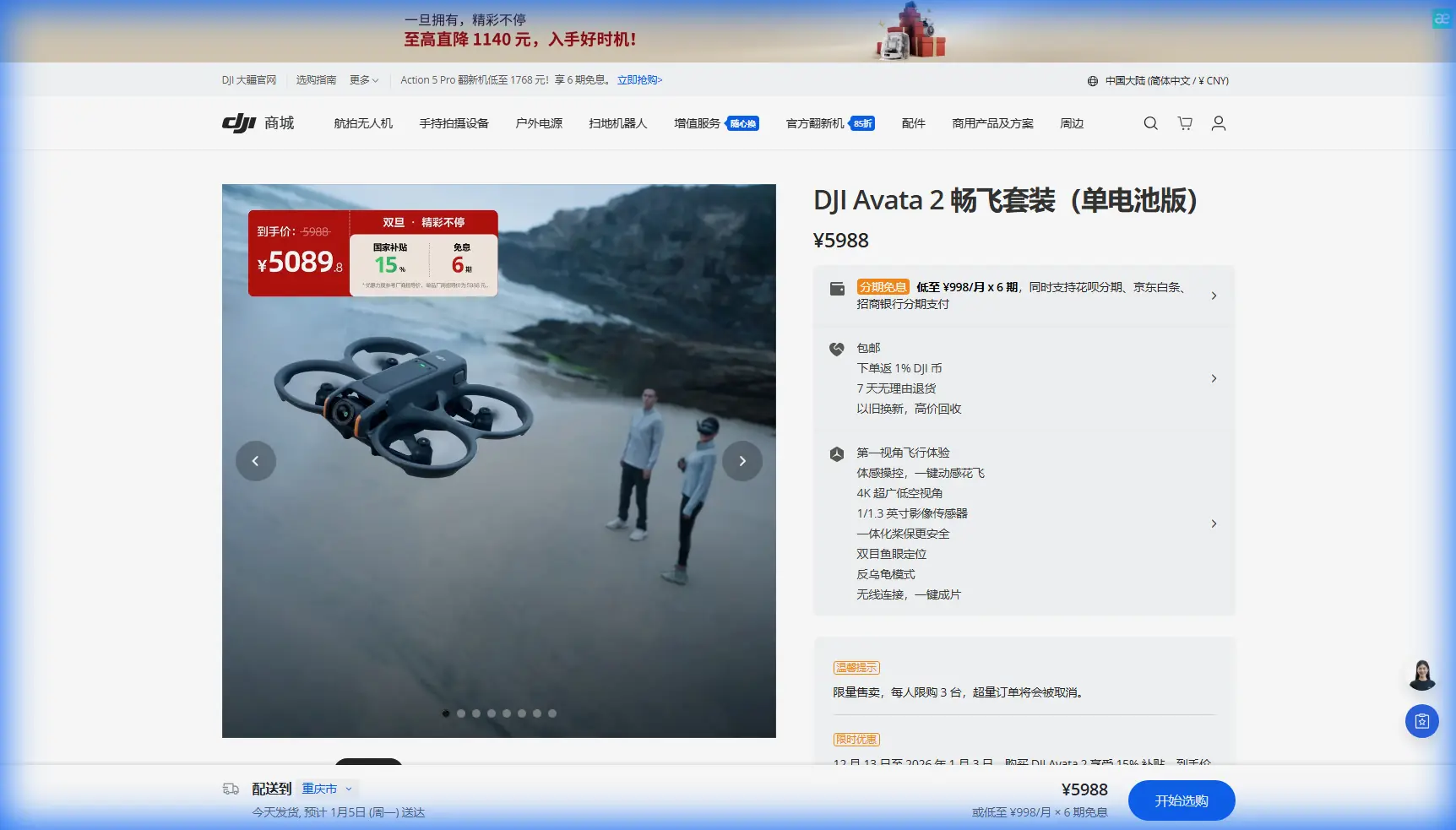
Avata 2 for Windy Venue Scouts: What Actually Matters in the Field
META: A practical expert guide to using DJI Avata 2 for scouting venues in windy conditions, with real-world insight on obstacle sensing, tracking tools, D-Log workflow, and safe FPV decision-making.
Wind changes everything when you scout a venue from the air.
A location that looks simple on a calm morning can become awkward, noisy, and risky once the airflow starts wrapping around rooflines, tree rows, open stands, steel truss, or cliff-facing event spaces. That matters even more with a compact FPV platform like the Avata 2, because venue scouting is rarely about one heroic shot. It is about gathering usable visual information fast, safely, and repeatedly.
This is where the Avata 2 becomes more interesting than its small footprint suggests.
For a creator, survey lead, or venue planner trying to understand access paths, audience sightlines, temporary structure placement, landscaping constraints, and camera positions, the drone’s value is not just speed or immersion. The value is how it behaves when the site is messy. Windy venues are messy by definition.
The real problem with windy venue scouting
Most people think wind is only about whether a drone can stay airborne. That is the shallow version of the problem.
The harder issue is that wind distorts the quality of your scouting pass. It pushes the aircraft off the line you intended. It changes the timing of turns. It creates microbursts around corners. It introduces hesitation exactly when you are trying to judge a narrow walkway, a covered entrance, or the gap between decorative structures. At a venue, those details are the job.
A wide, slow orbit over an empty field is one thing. Flying along a stadium concourse, around pavilions, through landscaped pathways, or beside tent infrastructure is another. In those environments, you need three things from the aircraft:
- Stable enough handling to hold a visual plan.
- Obstacle awareness that helps when airflow or attention gets split.
- A camera pipeline that gives you footage useful for planning, not just footage that looks exciting in the goggles.
The Avata 2 addresses those needs in a way that makes sense for close-range, immersive scouting.
Why obstacle sensing matters more than speed
The Avata 2’s obstacle awareness is not a marketing footnote. In venue work, it changes how confidently you can inspect the edges of a location.
This aircraft uses binocular fisheye visual positioning for downward and backward sensing, paired with a ToF sensor below the drone. On paper, that can sound technical and abstract. In practice, it means the drone has support for maintaining awareness near surfaces and while managing proximity during low-altitude or reverse-direction adjustments. That is operationally significant when you are tracing routes over pathways, seating aisles, courtyards, loading zones, or under partial canopy cover where a pure “send it and hope” approach is irresponsible.
The backward sensing is especially relevant in scouting. Venue work often involves slow reveals, reverse pullouts, and cautious repositioning after inspecting a feature up close. In gusty conditions, that extra layer of awareness can be the difference between a clean retreat and an expensive brush with signage, branches, or structural elements.
I was reminded of this on a wildlife-heavy rural venue edge where we were documenting approach lanes and tree coverage before an outdoor event setup. A pair of birds flushed unexpectedly from scrub near a fence line while the drone was backing away from a low visual pass. The point is not that sensors “solved” wildlife. Pilots still have to yield space and use judgment. But the Avata 2’s sensing support gave us a cleaner margin while disengaging from the area and resetting the line. In sites where animals, landscaping, and structures share the same airspace, that margin is worth more than headline specs.
Windy venues punish overconfident flying
The Avata 2 is fun. That can work against the operator.
FPV drones encourage commitment. They tempt you to fly the line first and think later. Venue scouting requires the opposite mindset. You need repeatability. You need to build a map in your head. You need to test exposure transitions, identify blind zones, and understand how the site behaves from multiple approach angles.
Wind complicates every one of those tasks.
At an amphitheater, for example, wind may accelerate over the upper seating edge and then drop into a calmer bowl. Near a hotel event terrace, air can tumble around parapet walls and decorative screens. At vineyard or coastal venues, crosswinds can stay consistent in the open and then become turbulent near trees or service buildings. The Avata 2 works best here when used as a deliberate scout platform, not as a freestyle toy.
That means shorter passes. Clean entry and exit paths. Conservative reversals. Respect for gust loading near obstacles.
It also means using the aircraft’s creative automation selectively, not automatically.
QuickShots and Hyperlapse are useful only when they answer venue questions
A lot of people dismiss tools like QuickShots or Hyperlapse as casual-content features. That is shortsighted.
For venue scouting, these modes can answer specific operational questions if used intentionally. A controlled reveal can show how an entrance sequence reads to arriving guests. A rising pullback can establish whether a stage, ceremony zone, or reception terrace is visually isolated enough from nearby roads or service areas. A Hyperlapse pass can help planners understand movement patterns in cloud shadow, traffic flow, or changing ambient light across a site.
But windy conditions are where discipline matters. Automation should support clarity, not create false confidence. If the airflow around structures is unstable, manual control may produce more accurate reconnaissance than a polished canned move. The point is not to collect flashy clips. The point is to gather decision-grade visual context.
That distinction separates recreational footage from professional scouting.
Subject tracking and ActiveTrack: useful, but not the center of the mission
The Avata 2 conversation often drifts toward subject tracking and ActiveTrack-style workflows. Those tools have value, especially if you are evaluating pedestrian routes, golf-cart access, runner flow, or how a venue corridor feels when occupied by people. Following a moving subject can reveal bottlenecks that static shots hide.
Still, in a windy venue scenario, tracking should remain secondary to environmental reading.
Why? Because the venue itself is the subject. Windy scouting is about understanding spatial relationships under changing air conditions. If a tracked walker leads you too close to fabric signage, tree branches, poles, or cable runs, the convenience of automated follow behavior quickly becomes irrelevant. Use tracking to illustrate how spaces function, not to hand over judgment.
That is the right mental model for the Avata 2: assisted observation, not delegated thinking.
The camera side: D-Log matters more than people admit
Wind often comes with hard lighting.
Open venues tend to have reflective roofs, pale paving, water nearby, white tenting, dark tree lines, and sudden exposure changes as you move from open sky to covered structures. If you are scouting a site for planners, media teams, or production stakeholders, crushed shadows and clipped highlights make your footage less useful.
This is where D-Log matters.
A flat capture profile gives you more room to preserve contrast detail across difficult scenes, especially when a scouting route moves from bright open sections into shaded corridors or under event structures. The operational value is simple: better footage leads to better location decisions. You can evaluate surface texture, signage visibility, entry geometry, landscaping boundaries, and surrounding visual clutter with more confidence when the image retains usable information.
That does not mean every operator needs a heavy color workflow. It means the Avata 2 gives serious users a way to capture scouting footage that can be normalized and reviewed properly later, instead of being locked into a punchy baked look that hides practical details.
For creators working with clients or internal planning teams, this is one of the drone’s quiet strengths.
Small size is not the whole story
People often praise the Avata 2 because it is compact. True, but that is only half-right.
Its compact form matters because venues are full of transitional airspace: covered drop-off lanes, decorative archways, pergolas, small courtyards, hospitality zones, and narrow access routes between structures. A larger aircraft may be excellent for mapping broad acreage, but the Avata 2 shines when the scouting task demands intimacy with the site.
That intimacy is not about flying recklessly close to everything. It is about being able to inspect the actual guest experience from a practical aerial perspective.
Can guests visually orient themselves from parking to check-in? Is the ceremony lawn shielded from nearby service traffic? Does the tree line hide or reveal neighboring properties? Will a branded entrance piece read clearly from the approach path? Do roof overhangs or lighting rigs create awkward visual compression for camera teams?
These are venue questions, not generic drone questions. The Avata 2 is compelling because it can examine them from the air without forcing the mission into a high-altitude, detached overview.
A smart windy-day workflow for Avata 2 scouts
When I use the Avata 2 for venue reconnaissance in wind, the workflow is simple and repeatable.
First, I walk the site and identify likely turbulence points: corners, gaps between buildings, roof edges, tree corridors, banners, tent clusters, and elevation changes. Then I decide which shots are informational and which are merely attractive. In professional scouting, those are not always the same thing.
Next comes a conservative first pass. I stay high enough to observe how the aircraft responds near problem areas, then tighten the route only after I understand the air. If there is wildlife, foot traffic, or setup activity, I widen the buffer. The best pilots are often the ones who abort early.
After that, I capture a set of clips with a purpose:
- approach sequences for guest or vehicle flow
- side-angle passes for spatial separation
- top-edge reveals for surrounding context
- low environmental runs where the immersion helps explain the space
If the light is tricky, I capture in D-Log. If a route needs illustration over time, I consider Hyperlapse. If a moving person helps communicate scale or bottlenecks, tracking tools can help. But each feature has to earn its place in the mission.
That is the difference between using the Avata 2 as a serious scouting instrument and using it as a novelty.
Where Avata 2 fits best for venue professionals
The Avata 2 is not the only drone a venue consultant, creator, or site planner may need. It is also not pretending to be a full-survey mapping aircraft. Its lane is narrower and more practical than that.
It excels when you need to understand a place from within its geometry.
That includes:
- event venues with layered guest circulation
- resorts with courtyards and covered connectors
- outdoor ceremony sites with tree and wind interaction
- sports or entertainment spaces with seating transitions
- hospitality properties where visual arrival matters
- mixed indoor-outdoor layouts where immersion tells the story better than a static overhead
If your scouting problem is “what does this location feel like when someone actually moves through it?” the Avata 2 is unusually effective.
If your problem is “how many hectares can I map by noon?” that is a different tool conversation.
The bottom line
For windy venue scouting, the Avata 2 succeeds or fails based on how mature the operator’s expectations are.
If you want brute-force certainty in rough conditions, no small FPV platform gets a free pass from physics. Wind still demands restraint. But if you want a compact aircraft that can read space intimately, use obstacle awareness intelligently, capture flexible footage in D-Log, and support purposeful visual storytelling through tools like QuickShots, Hyperlapse, and tracking features, the Avata 2 is a strong fit.
Its real advantage is not spectacle. It is clarity at close range.
And for venue professionals, that is the metric that matters. A scouting flight should reduce ambiguity. It should help you see circulation, exposure, obstacles, and atmosphere before people, equipment, and schedules arrive on site. The Avata 2 can do that very well, especially when the air is less than friendly and the environment refuses to simplify itself.
If you are planning a windy venue assessment and want a practical recommendation for setup and workflow, you can message Chris directly here.
Ready for your own Avata 2? Contact our team for expert consultation.