
Avata 2 for Coastal Forest Spraying: What Actually Works
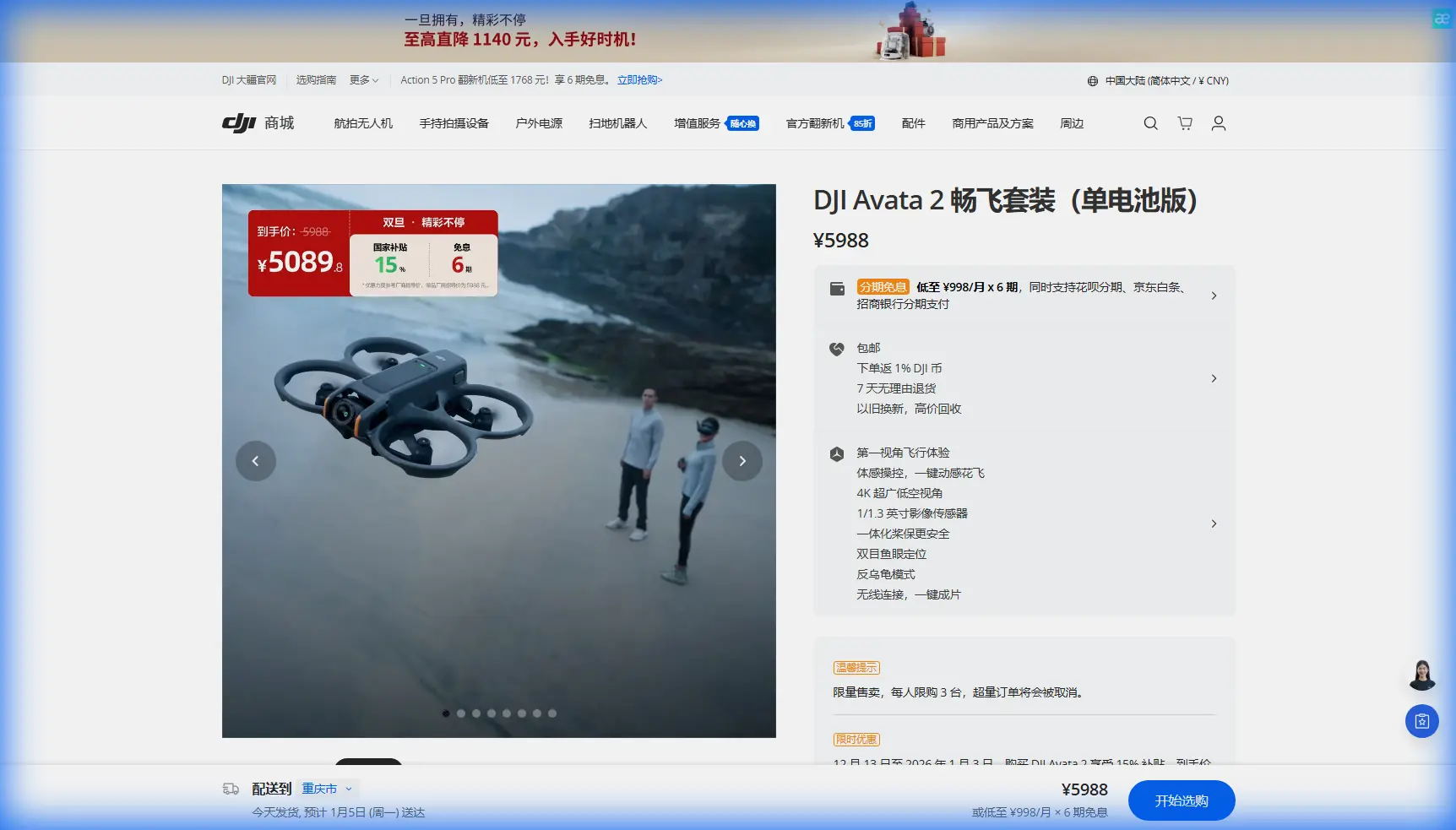
Avata 2 for Coastal Forest Spraying: What Actually Works in Tight, Windy Canopies
META: A field-focused Avata 2 article for coastal forest spraying scenarios, covering flight altitude, obstacle avoidance, wind handling, camera settings, and practical mission planning.
Coastal forest work exposes every weak assumption a pilot can make. Salt in the air, uneven tree height, sudden crosswinds, dense branches, shifting light, and narrow gaps all punish sloppy flying. If the mission is spraying-related reconnaissance, route assessment, canopy inspection, or precision observation before and after application, the DJI Avata 2 can be useful in ways that are easy to underestimate. It is not a substitute for a dedicated agricultural spray platform, and treating it like one is the fastest route to a poor outcome. Its real value sits elsewhere: close-in visibility, low-altitude maneuvering, and fast interpretation of what is happening inside a difficult coastal stand.
That distinction matters. A lot of operators approach the Avata 2 as if “small and agile” automatically means “good for everything around trees.” It doesn’t. In coastal forest environments, the challenge is not simply getting through gaps. The challenge is maintaining a stable enough flight profile to gather useful information without fighting the aircraft, the wind, and the canopy at the same time. Once you frame the Avata 2 as a decision-support tool for spraying operations rather than the spray machine itself, its strengths become much clearer.
The first operational question is altitude. For coastal forest spraying scenarios, the most effective flight band is usually lower than inexperienced pilots expect and higher than reckless pilots prefer. In practice, the sweet spot is often around 3 to 6 meters above the active canopy edge or understory target zone, depending on tree density and wind behavior. Below that, the Avata 2 becomes vulnerable to branch strikes, turbulent rotor wash interactions with nearby foliage, and reduced reaction time when a gust pushes it off line. Higher than that, and you start losing the visual granularity that actually helps a spray team make decisions about coverage paths, drift risk, blocked corridors, and untreated pockets.
That 3-to-6-meter band is not a universal rule. It is a working altitude for observation in coastal forests because it gives the aircraft enough room to recover from small wind-induced deviations while still keeping branch structure, canopy openings, and moisture patterns readable in the frame. If the trees are irregular and the canopy rises sharply in pockets, the better move is often to “stair-step” the flight path instead of holding one rigid height. That means adjusting altitude section by section so the aircraft remains consistently offset from the vegetation rather than from sea level or launch point. In coastal terrain, fixed-altitude thinking creates preventable collisions.
Obstacle avoidance is one of the Avata 2 features people talk about most, but in a forest edge environment, it should be treated as a support system rather than a guarantee. Branches, thin twigs, partial leaf cover, and contrast-poor scenes can all challenge any sensing system. Operationally, this means obstacle avoidance buys you margin during short corrections and low-speed transitions, especially when you move from open shoreline exposure into the shadowed edge of a stand. It does not mean you should thread the aircraft through tight vegetation because “the sensors will catch it.” In a coastal forest, salt haze, backlit gaps, and uneven branch texture can create visual conditions that reduce your comfort window. The pilot still carries the mission.
This is where the Avata 2’s form factor becomes genuinely useful. Because it is designed for immersive, close-proximity flying, it allows a pilot to inspect corridors that would be awkward with larger camera drones. For a spraying team working in coastal woodland, that can translate into better pre-mission intelligence: where the tree line opens, where wind tunnels form, where under-canopy access narrows, and where spray drift is likely to be amplified by shoreline gusts. Those are not cinematic details. They determine whether the larger spray operation wastes time, leaves skips, or drifts product into the wrong zone.
ActiveTrack and subject tracking features can also help, though not in the way consumer marketing usually implies. In this type of work, the subject is rarely a cyclist or runner. The practical use is tracking a moving ground crew member, support vehicle, or edge reference along a service path while maintaining situational awareness of surrounding vegetation. That can help with line familiarization before the actual application workflow begins. But there is a warning attached: in dense coastal forest edges, letting automated tracking dominate your attention is risky. Trees do not care that the aircraft is locked onto a subject. The pilot should use ActiveTrack as a framing aid, not as permission to stop flying proactively.
The same applies to QuickShots and Hyperlapse. In a normal lifestyle review, those modes are treated like creative bonuses. In a coastal spraying context, they can become operational documentation tools. A short automated reveal of the tree line can show the relationship between open shoreline, wind exposure, and canopy height. A carefully planned Hyperlapse from a stable perimeter route can document light shifts, fog intrusion, or tidal moisture influence over time. That kind of visual record helps teams compare early-morning versus late-day conditions and decide when a spray window is actually usable. Used properly, these features are less about spectacle and more about repeatable observation.
Camera settings matter more than many operators realize. Coastal forests often produce harsh contrast: bright sky openings, reflective water nearby, dark understory, and patchy sun. Shooting in D-Log gives you more flexibility to recover highlight and shadow detail during review, which is operationally significant when you are trying to identify blocked penetration zones, leaf density changes, or uneven wetness patterns after a pass. If you capture everything in a more baked-in look, subtle differences inside the canopy can disappear. For a photographer, D-Log is about grading latitude. For a field operator, it can be the difference between noticing a drift-prone gap and missing it.
There is also the simple matter of speed discipline. The Avata 2 can move quickly, and that can create a false sense of efficiency. In coastal forest reconnaissance, fast is often the enemy of useful. If you are inspecting approach lanes, target boundaries, or post-application results, slower flight produces cleaner interpretation. The aircraft needs enough time to stabilize after gusts, and the operator needs enough time to read the scene. A short, controlled pass at moderate speed will usually deliver better information than a dramatic, aggressive run. The forest is not impressed by your stick skills. It only rewards precision.
One habit I recommend for this scenario is the two-layer route. First, perform a perimeter pass slightly outside the stand to read wind behavior, identify exposed gaps, and note where sea-facing edges produce turbulence. Then fly a second pass closer to the work zone at the 3-to-6-meter offset range, adjusting altitude in steps as canopy height changes. This sequence reduces surprises. It also gives obstacle avoidance systems and manual piloting room to work before you commit to tighter segments. If the perimeter flight already shows unstable gusting or inconsistent visibility, that is your warning that closer inspection may create more risk than value.
Battery planning becomes more critical than people expect in coastal air. The issue is not just flight time on paper. Wind correction, repeated repositioning, and aborted approaches all add load. In a forest edge scenario, conservative reserve management is the smarter choice. You do not want to discover your real battery margin after the aircraft has already crossed into the awkward zone where shoreline gusts meet branch clutter. The Avata 2 should be brought home with recovery margin intact, especially if the launch site is cramped or if return paths require climbing back over uneven trees.
Another overlooked point is line of sight versus view quality. The FPV-oriented design of the Avata 2 can tempt pilots into prioritizing the immersive view over broader positional awareness. In coastal forests, that trade can go badly very fast. The best operators use the immersive strengths of the platform while still mentally mapping escape routes, open pockets, and turn options at all times. If a gull crosses your path, a branch flexes in wind, or glare suddenly wipes part of the scene, you need an immediate plan that does not depend on improvisation.
For teams supporting spraying in these conditions, the Avata 2 works best as a specialist. It excels at answering narrow, high-value questions: Is this corridor actually passable? Where does canopy density change enough to affect penetration? Which edge is funneling wind inland? Did the previous pass leave visible gaps near the transition between mangrove-like density and taller coastal timber? Those are expensive questions if answered late. The drone helps answer them early.
If you are building a repeatable workflow, standardize it. Set a baseline altitude band. Define wind thresholds for perimeter-only flights versus close-in inspection. Use D-Log for comparison footage. Reserve QuickShots and Hyperlapse for documentation tasks with a clear purpose. Limit subject tracking to low-risk support uses. Keep obstacle avoidance in the loop, but never let it replace judgment. The result is not just better footage. It is better field intelligence.
That is the difference between using the Avata 2 as a gadget and using it as a professional tool around coastal forest spraying operations. One approach produces dramatic clips and avoidable risk. The other produces actionable information. And in this environment, information is what protects time, equipment, and mission quality.
If you want to compare route planning ideas or discuss a coastal canopy setup, you can reach me through this field support chat. Keep the question specific. Tree height, wind direction, and shoreline exposure tell me far more than a general request for “best settings.”
The Avata 2 is not at its best when it is treated like a tiny stunt machine flying on confidence alone. It performs when the pilot respects the environment and uses the aircraft’s tools for what they are actually built to do. In coastal forests, that means measured altitude, cautious use of obstacle avoidance, disciplined speed, selective use of ActiveTrack, and footage captured in D-Log when visual detail matters. Small decisions stack up quickly in this kind of terrain. Make the right ones, and the drone becomes a sharp instrument instead of a liability.
Ready for your own Avata 2? Contact our team for expert consultation.