
How to Spray Forest Edges in Urban Areas With Avata 2
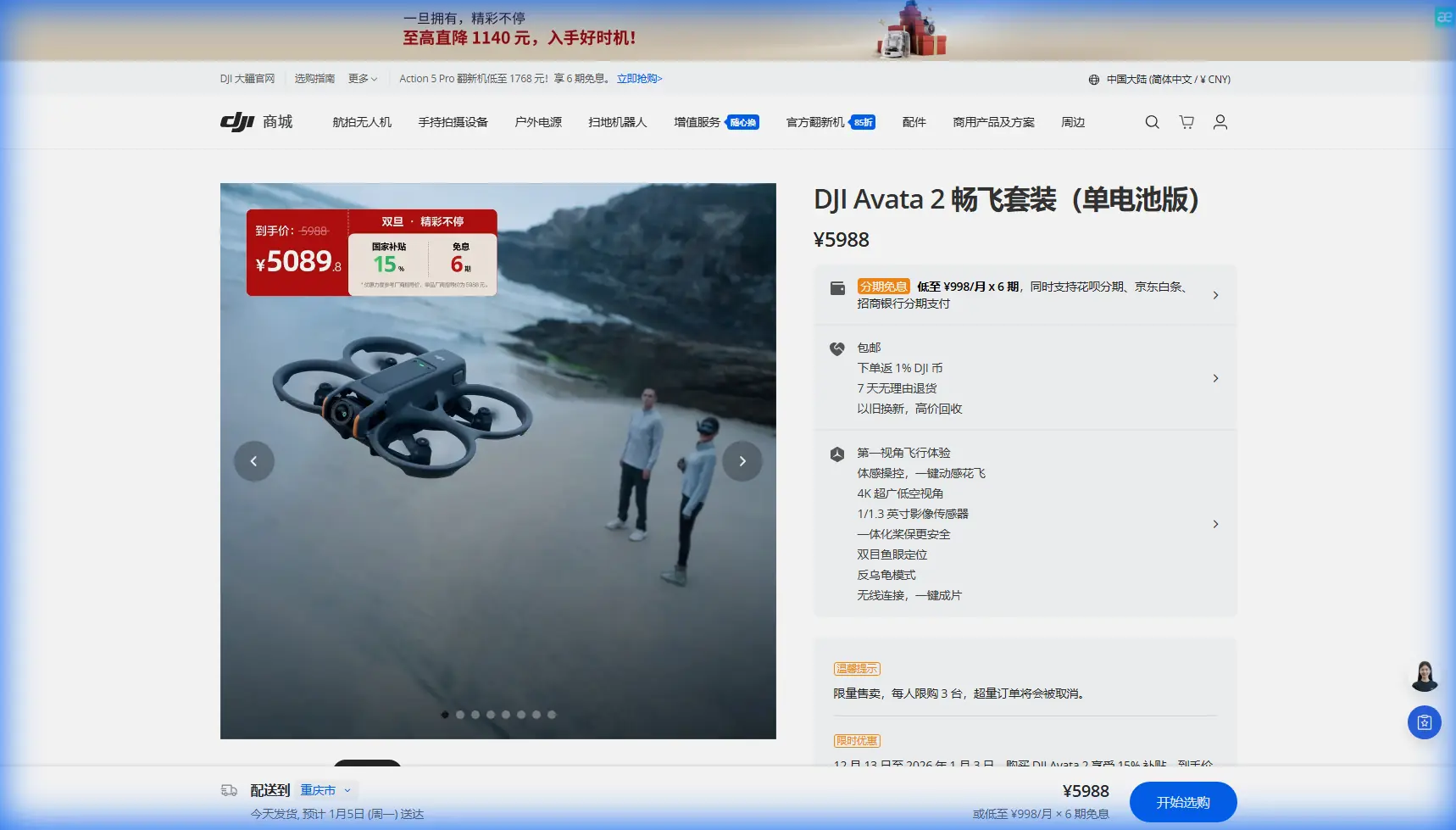
How to Spray Forest Edges in Urban Areas With Avata 2: What Works, What Doesn’t, and Where the Limits Are
META: A practical expert guide to using DJI Avata 2 around urban forest edges, with antenna positioning, obstacle avoidance, D-Log, tracking limits, and safe low-altitude flight planning.
Urban tree work creates a strange kind of flying problem. You are not really in open air, and you are not fully in a forest either. You are operating in a mixed environment where trunks, branches, fences, parked vehicles, utility lines, narrow access roads, rooftops, and random RF interference all compete for attention. If your goal is “spraying forests in urban” with an Avata 2, the first thing to get straight is this: the aircraft is not an agricultural spray platform. It is a compact FPV drone built for agile flight and close-proximity imaging. That distinction matters operationally.
So the smart question is not whether Avata 2 can replace a dedicated spray UAV. It cannot. The useful question is whether Avata 2 can support urban forest spraying operations in a meaningful way. The answer is yes, if you use it for the parts of the job it is actually good at: pre-mission inspection, canopy-edge scouting, access route assessment, hazard mapping, close-in visual documentation, and post-treatment verification.
That is where the aircraft starts to make sense.
The real problem in urban forest spraying
In a true agricultural block, spray planning is usually about coverage, flow rate, swath width, weather, and repeatable passes. In an urban forest edge, the job shifts. You are trying to understand where the foliage is densest, where people or vehicles might enter the work zone, how close tree crowns sit to buildings, where cable runs might cross an approach, and whether there is enough clean space to operate larger equipment safely.
A traditional camera drone can help, but a compact FPV platform changes the view. Avata 2 is small enough to inspect tighter corridors and lower canopy transitions without the visual intimidation of a larger aircraft. It also gives the pilot a more immersive read on spacing and sightlines, which is useful when you need to understand whether a ground crew can physically reach a section of vegetation or whether a larger spray UAV will lose margin near branches and facades.
That difference becomes more useful in urban work than many people expect.
Where Avata 2 fits in the workflow
If you frame the aircraft correctly, Avata 2 becomes a reconnaissance and documentation tool for spray-related operations rather than the sprayer itself.
A practical workflow looks like this:
- Fly the perimeter before any chemical handling begins.
- Identify canopy pinch points and dead zones near walls, fences, poles, and cables.
- Record approach and exit paths for crews or larger UAVs.
- Document leaf density and understory structure for treatment planning.
- Re-fly the same edge after work to confirm access, drift risk areas, and coverage visibility.
This matters because urban forestry jobs often fail at the margins. Not the middle. The edge of a car park. The side yard behind a building. The drainage ditch hidden under branches. The path where people walk dogs. Those are exactly the places where a small, agile aircraft can provide useful operational intelligence.
Obstacle avoidance helps, but do not misunderstand what it means
A lot of pilots hear “obstacle avoidance” and relax too early. That is a mistake in urban trees.
Avata 2’s obstacle sensing is valuable because urban forest edges are cluttered and depth perception gets ugly when you move from open sky into shadow, then back into bright reflection off windows or parked cars. Having sensing support can reduce the chance of a simple low-speed collision during inspection work. It is particularly useful when you are creeping along a tree line, checking branch overhang near structures, or threading through a corridor to inspect access behind a building.
But obstacle avoidance is not permission to fly carelessly through a canopy. Thin branches, irregular twigs, wires, and visual occlusion remain a serious problem. Forest-edge work tends to be full of partial obstructions rather than large obvious objects. The aircraft may identify some hazards well and still leave you exposed to the one thing that matters most.
Operationally, the right mindset is this: treat sensing as a backup, not a shield. Keep extra lateral margin near branch tips, especially where leaves obscure the true branch structure. Urban trees often hide rigid material under soft-looking foliage.
Subject tracking and ActiveTrack are not your main tools here
The product conversation around Avata 2 often includes subject tracking and ActiveTrack-style use cases because they sound efficient. In urban forestry support, they are usually secondary.
Why? Because the primary subject in this kind of mission is not a cyclist, runner, or moving vehicle. It is a static or semi-static environment full of irregular geometry. If you try to force tracking features into a cluttered tree-and-building corridor, you risk turning a deliberate inspection into an over-automated pass where the aircraft prioritizes following motion rather than maintaining the exact line you need for hazard assessment.
There is still value here. If you need to document a crew path, vehicle approach, or operator movement through a treatment zone, a tracking-capable flight mode can help capture repeatable footage and reveal where people naturally pass too close to the intended work area. That makes it a site-management tool, not a core spray-planning tool.
That distinction keeps expectations realistic.
QuickShots and Hyperlapse are useful, but only after the serious work
QuickShots and Hyperlapse are easy to dismiss as purely creative features. That would be too shallow.
For operational teams, these modes can help communicate conditions to clients, supervisors, municipal contacts, or crew members who are not on site. A short orbit, pull-away, or time-compressed sequence can show canopy density, public access patterns, or the way sunlight and pedestrian traffic change over a narrow urban green corridor.
The catch is timing. Do not start there. Use manual, deliberate inspection flight first. Once you have collected the practical data, then use a simplified automated shot to communicate the bigger picture. QuickShots are not replacements for close inspection. They are wrappers for communication.
Hyperlapse can also help when you need to show how a site behaves over time, such as pedestrian movement near a treatment boundary or changing wind behavior suggested by moving foliage. That said, urban forest environments are usually too constrained to let automation substitute for pilot judgment.
D-Log is more than a color option in this scenario
One detail that actually matters on this kind of mission is D-Log. Pilots often think about it only in terms of color grading. In urban forest edge work, its operational significance is broader.
You are frequently flying scenes with brutal contrast: deep shade beneath tree cover, bright sky overhead, reflective surfaces nearby, and dark trunks against bright walls. A flatter recording profile helps preserve more highlight and shadow information for later review. That means better visibility when you need to inspect footage for small but important details such as branch intrusion over access lanes, wire silhouettes, treatment boundary markers, or gaps in canopy structure.
In other words, D-Log is not just for making footage look cinematic. It can support better post-flight analysis.
If your mission is evidence and decision support, preserving dynamic range matters. It gives you more usable information from the same pass.
Antenna positioning advice for maximum range actually matters in cities
This is the part many operators overlook until signal quality drops exactly where they need the cleanest control link.
For maximum range and stability with Avata 2, antenna positioning is not about pointing the controller directly like a laser at the aircraft. The strongest result usually comes from keeping the antenna faces oriented toward the drone rather than aiming the antenna tips at it. Think broadside, not spear-tip. The geometry matters because radio energy does not radiate most efficiently straight off the very end in the way many beginners assume.
In urban forest environments, that matters even more because you are already fighting signal degradation from walls, parked vehicles, metal fencing, utility infrastructure, and vegetation moisture. Add partial line-of-sight loss behind trunks or branches and your margin shrinks quickly.
A few practical rules help:
- Keep your body from blocking the controller-to-aircraft path.
- Reposition yourself early rather than waiting for signal quality to collapse.
- Maintain the cleanest possible line of sight above parked cars and low structures.
- Avoid standing tight against walls, vans, or metal barriers that can worsen reflections.
- When the aircraft moves laterally along a tree line, rotate your body and controller so the antenna faces continue to present properly toward the aircraft.
That last point is especially useful. Many pilots lock their stance and only move the sticks. In urban edge work, your own position is part of the link budget.
If you want help thinking through controller posture and site setup for a specific mission layout, you can message me here.
Why range claims matter less than link quality
In open terrain, people talk too much about maximum distance. In urban tree work, usable control quality is the real metric.
A short mission with clean video, stable control response, and predictable penetration around a canopy edge is more valuable than a long mission flown at the edge of packet loss. Urban forestry support flights are usually close enough that raw distance is not the challenge. The challenge is maintaining trust in the aircraft when the environment is trying to break line of sight every few seconds.
That is why antenna handling, pilot location, and route design matter more than chasing headline range numbers. The best operators think in terms of control integrity, not bragging rights.
A safer mission design for urban forest support
When using Avata 2 around a spray operation, build the mission around low-risk information capture.
Start with a high, slow perimeter pass to understand obstacles and public exposure. Then drop lower only where needed. Work one corridor at a time rather than trying to improvise a full-site exploration in a single battery. Mark likely signal shadow areas before you enter them. If the site includes buildings on one side and trees on the other, expect multipath interference and brief visual confusion from changing light.
Use repeatable segments. For example:
- Entry corridor inspection
- Canopy edge survey
- Structure proximity pass
- Access route verification
- Post-operation documentation
This segmented approach reduces surprises and gives you clearer footage to review later. It also prevents the common FPV temptation to overfly “just one more gap” because the aircraft feels capable in the moment.
Capability is not the same as mission discipline.
What Avata 2 can reveal before a larger spray platform flies
This is where the aircraft earns its place.
A larger spray UAV may struggle near overhanging branches, narrow side access, courtyard trees, or mixed-height vegetation beside structures. Avata 2 can be sent in first to identify whether the site should be broken into manual ground treatment zones, aerial treatment segments, or exclusion zones. It can also reveal where drift-sensitive surfaces are close enough to change the treatment plan entirely.
That kind of preflight intelligence can save time, reduce wasted setup, and keep crews from discovering physical constraints too late.
For municipal contractors, landscape managers, and arboriculture teams, that is practical value. Not hype. Just better information before the expensive part of the work begins.
The honest bottom line
If your goal is literal aerial spraying, Avata 2 is the wrong machine. If your goal is to make urban forest spraying safer, more informed, and better documented, it becomes far more interesting.
Its obstacle sensing can help in cluttered inspection work. D-Log can preserve critical visual detail in high-contrast urban canopy environments. ActiveTrack and related tracking features are occasionally helpful for documenting crew movement, though they should not drive the mission. QuickShots and Hyperlapse can improve communication after the core inspection is complete. And antenna positioning is not a minor detail; in mixed urban-vegetation spaces, it can be the difference between a confident pass and a compromised one.
That is the practical way to think about Avata 2 here. Not as a sprayer. As the aircraft that helps you understand the job before, during, and after treatment.
Ready for your own Avata 2? Contact our team for expert consultation.