
Avata 2 in Mountain Spray Work: A Field Report on Tight
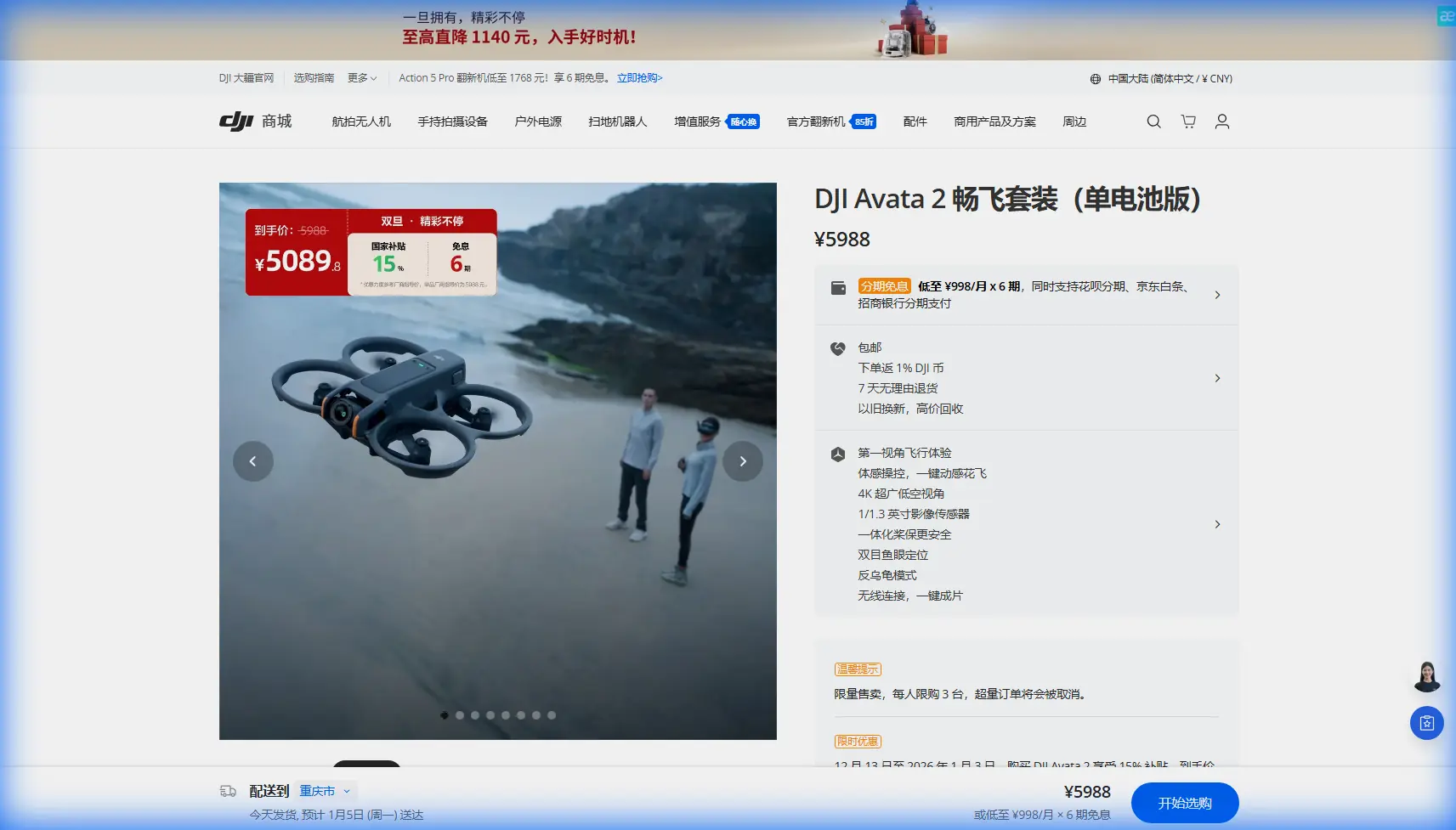
Avata 2 in Mountain Spray Work: A Field Report on Tight Terrain, Battery Discipline, and Camera Utility
META: A field-tested look at using DJI Avata 2 around mountain spraying venues, with practical insight on obstacle awareness, battery management, D-Log footage, and what the platform does well in steep, cluttered terrain.
Mountain venues expose every weakness in a drone operation. Wind wraps around ridgelines. Moisture hangs in the air longer than expected. Tree lines and utility structures compress available flight paths. And when the site involves spraying work, even if the Avata 2 is not the spray platform itself, the support aircraft still has to be precise, predictable, and quick to reposition.
That is where the Avata 2 becomes interesting.
I am not talking about it as a replacement for a dedicated agricultural spraying aircraft. That would miss the point. In mountain spraying environments, the Avata 2 makes sense as a scouting, route-preview, training, and visual documentation tool. Used properly, it helps crews understand terrain before heavier work begins. It can also capture the kind of close-in footage that is useful for planning approach lines, identifying canopy gaps, checking access routes, and documenting job progress in places where a conventional camera team would struggle to move.
What follows is a field-style assessment of how the Avata 2 fits into that role, where its strengths show up in real operations, and one battery habit that matters far more in the mountains than many pilots realize.
Why the Avata 2 fits mountain venue support work
Mountain spray sites are rarely tidy. They are uneven, often narrow, and full of visual traps. A route that looks open from the ground can feel completely different once you are below the tree line or moving beside a slope. That is where the Avata 2’s compact FPV-style design matters.
A smaller aircraft is not just easier to transport up a rough service road. It changes what kind of pre-job reconnaissance is realistic. If you need to inspect a corridor between trees, review a launch area near terraced land, or fly a close visual pass along a hillside access route, the Avata 2 can do it with less setup friction than a larger camera drone. For crews working under changing weather windows, that matters.
The practical value is simple: shorter deployment time often means more useful reconnaissance before conditions shift.
This is also one of the few settings where “fun to fly” has an operational meaning. A drone that encourages frequent short flights often gets used more often for quick checks. In mountain work, those quick checks can prevent avoidable surprises later in the day.
Obstacle awareness is not the same as obstacle immunity
A lot of pilots hear “obstacle avoidance” and become less disciplined. That is the wrong takeaway, especially around spraying venues on mountain slopes.
The Avata 2 is useful in constrained spaces because it gives the pilot better confidence when maneuvering near terrain and structures, but that does not turn a complex hillside into a safe automated corridor. Branches, wires, irregular vegetation, mist, and changing light can all reduce the margin for error. The operational significance of obstacle sensing in this context is not that it lets you fly recklessly. It lets you work more deliberately at lower speed when you need visual information from places that would otherwise be high-stress.
For example, when checking whether a spray crew’s approach path to a target section is blocked by overhanging growth, the Avata 2 can creep through the area and give a far better sense of actual clearance than a map or ground observation can provide. That is not glamorous. It is useful.
The key discipline is to treat obstacle systems as a support layer, not as the primary safety strategy. On mountain sites, line selection, conservative speed, and terrain reading still come first.
ActiveTrack, subject tracking, and why they matter in site documentation
Features like ActiveTrack and subject tracking are usually discussed in lifestyle footage. In a work setting, they become documentation tools.
If you are following a utility vehicle moving along a mountain access road, tracking a team member walking a proposed route, or filming a support machine entering a narrow operating zone, these modes can reduce pilot workload during routine coverage. The significance is not cinematic convenience. It is consistency. You get repeatable visual records of movement through the site, which can help with briefings, safety reviews, and after-action planning.
That said, mountain spray venues are exactly where tracking modes need supervision. Terrain changes fast. A subject passing behind foliage, cresting a ridge, or moving under mixed lighting can upset the shot or force a quick manual correction. The Avata 2’s tracking tools are best treated as assists for planned sequences, not as “set and forget” functions.
I have found them most useful before the spray window, when documenting route access and staging movement rather than trying to use them during the busiest phase of field activity.
QuickShots and Hyperlapse are not just social tools
QuickShots and Hyperlapse sound like features built for casual creators, but on a mountain venue they can serve a practical role when used with intent.
A short automated sequence from the staging area can create a clean visual overview of slope shape, tree density, and nearby structures. That helps when building a client-facing project summary or an internal operations brief. Hyperlapse can also document weather movement over a ridge or the changing light across a valley during a workday, which becomes relevant if your team is trying to explain why a certain operating window closed earlier than planned.
The mistake is using these features as decorative extras. Their value comes from repeatability and speed. If you capture the same hill section at similar intervals, you build a visual record that is much easier to compare than a folder full of random clips.
On a site where access is physically demanding, reducing time in the air while still getting structured visuals is a legitimate operational advantage.
D-Log is worth using when the mountain light gets ugly
Mountain lighting is rarely balanced. You can be looking into a bright opening above a ridge while the work area itself sits in deep shade. Add reflective moisture on leaves or pale rock surfaces, and standard footage can clip highlights or bury details in shadow very quickly.
That is where D-Log earns its place.
The operational significance of D-Log is not just “better color grading.” It gives you a better chance of preserving detail across a wide contrast range. For inspection-style review of vegetation edges, terrain transitions, or access obstacles, that extra flexibility can mean the difference between footage that merely looks dramatic and footage that actually helps with decision-making later.
If the output is going to be used for client reports, training debriefs, or planning notes, D-Log gives you more room to produce a clean, readable image from difficult scenes. In mountain environments, that is not a luxury feature. It is often what makes footage usable.
I usually tell crews this: if the site has alternating bright sky and shadow-heavy terrain in the same frame, capture the important passes with maximum post-processing flexibility. You only get one first look at a changing field condition.
A battery lesson from the field: do not launch a warm pack too quickly on the mountain
Here is the battery management habit that has saved me more frustration than any setting tweak.
When rotating packs during repeated short flights at a mountain venue, do not rush a recently used battery back into service just because the next task looks quick. Let it normalize first.
On paper, a short recon hop to check a terrace edge or a tree gap feels minor. In practice, mountain operations often involve sharp throttle changes, wind correction, and altitude transitions that put more uneven demand on the pack than a casual flat-ground cruise. A battery that is still warm from the previous sortie may not give you the stable, confidence-building performance you want for a technical flight around obstacles.
My rule in the field is simple: if a battery comes out noticeably warm, it goes to the side and rests. I would rather reshuffle the sequence of tasks than send the Avata 2 into a narrow hillside gap on a pack that has not settled. This matters even more when your launch point is not easy to return to quickly, or when a mid-flight decision to cut the mission short means climbing back up rough terrain with gear.
The mountain environment punishes laziness in small ways first. Battery discipline is one of those details that separates a smooth day from an irritating one.
A second tip: land with more reserve than you think you need when flying below ridge height. Wind near slopes is not always obvious from your launch point. The return leg can be more expensive than the outbound segment, especially if you have spent time hovering for visual inspection.
Avata 2 as a training tool for mountain crews
One of the more overlooked uses for the Avata 2 is training support.
Mountain spraying work involves coordination, terrain awareness, and route judgment. Even when another aircraft handles the actual application task, crews still benefit from seeing the site from an immersed aerial perspective. The Avata 2 can help new team members understand how a slope presents from the air, where visual choke points appear, and how quickly a seemingly open route can tighten near vegetation or rock walls.
Used this way, it becomes a bridge between ground assumptions and aerial reality.
That matters because training is often weakest in terrain interpretation. Maps flatten complexity. A close-in FPV view restores it. Teams can review footage to discuss approach safety, staging location choice, and line-of-sight limitations before the higher-consequence work begins.
For operators building internal procedures, this is one of the strongest arguments for keeping an Avata 2 in the support kit.
A note on workflow: scout first, capture second
The best Avata 2 flights at mountain venues usually start with a non-cinematic objective.
First pass: understand wind behavior, identify obstructions, check entry and exit routes, note visual hazards.
Second pass: capture the footage you actually want for records or communication.
Pilots who reverse this order often burn battery chasing pretty angles before they fully understand the micro-terrain. That is not efficient, and it increases risk around cluttered sites.
I also recommend a simple shot list before takeoff. Not a creative storyboard. A work list:
- launch zone overview
- access road pass
- target slope edge check
- tree-line clearance review
- staging-area return shot
That small amount of structure helps keep battery use disciplined and prevents the all-too-common “one more sweep” habit.
Communication matters more than mode selection
A mountain spray venue is rarely a solo environment. There are vehicles moving, crews repositioning, and changing weather often forcing on-the-fly decisions. In that setting, the Avata 2 performs best when the pilot is tightly linked to the rest of the team.
If the drone is being used to inspect a route or document a target area, the people on the ground need to know what question the flight is trying to answer. “Just getting footage” is not enough. “Checking whether the upper terrace has enough clearance on the east side” is a useful mission.
That level of clarity also determines whether features like ActiveTrack, QuickShots, or manual low-speed inspection are the right fit. The mode is secondary. The information need comes first.
If your team is refining a mountain workflow and wants to compare notes with people who do this kind of planning regularly, I’d suggest reaching out on WhatsApp for field coordination ideas.
Where the Avata 2 genuinely helps, and where it does not
The Avata 2 helps when the mission calls for:
- close-range reconnaissance in complex terrain
- visual route planning before operations begin
- training footage for slope and obstacle awareness
- repeatable documentation using tools like QuickShots or Hyperlapse
- flexible post-production through D-Log in mixed mountain lighting
It is less useful if you expect it to behave like a broad-area survey platform or a replacement for specialized aircraft. That is not its lane.
What makes it valuable is its ability to reduce uncertainty at the edge of the operation. On mountain sites, uncertainty is expensive. Sometimes it costs time. Sometimes it costs battery. Sometimes it costs confidence in a route that looked fine from below.
The Avata 2 cannot remove the complexity of a mountain spraying venue. It can, however, make that complexity visible early enough to act on it. For support crews, trainers, and operators who need a fast aerial perspective in tight terrain, that is a serious advantage.
Ready for your own Avata 2? Contact our team for expert consultation.