
Expert Surveying With Avata 2 in Extreme Temperatures
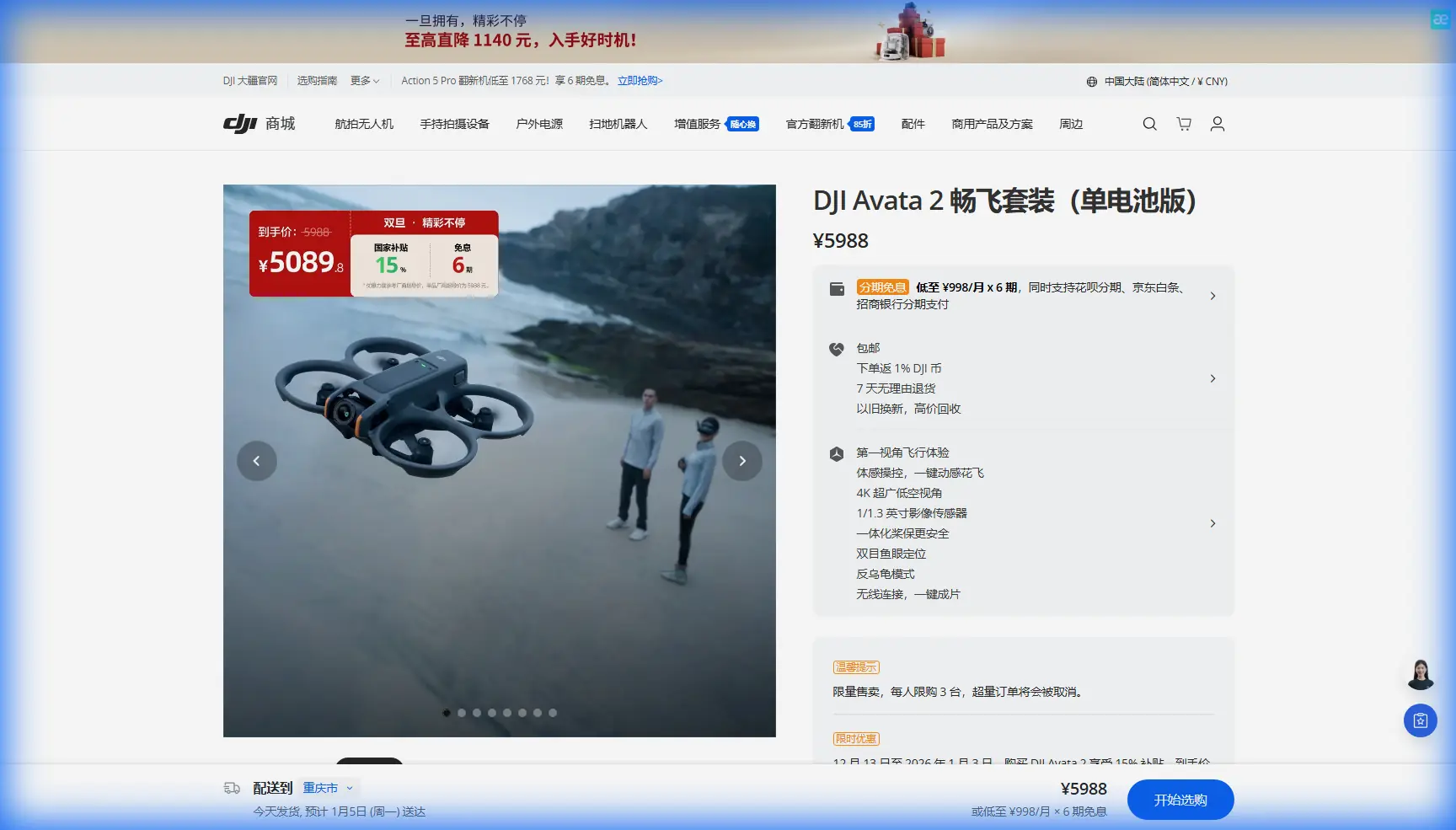
Expert Surveying With Avata 2 in Extreme Temperatures: A Practical Field Workflow
META: Learn how to use Avata 2 for construction site surveying in extreme temperatures, with a field-ready workflow focused on stability, obstacle sensing care, controlled flight inputs, and safer data capture.
Construction sites are rarely kind to aircraft. Dust gets into every seam. Winter steals battery performance. Summer heat pushes electronics harder than most pilots admit. If you want reliable survey support from an Avata 2 in these conditions, the useful question is not “Can it fly?” It usually can. The real question is whether it can fly predictably enough to capture repeatable, usable site visuals without forcing the pilot to fight the machine.
That is where basic flight mechanics matter more than marketing language.
Even though Avata 2 is not a heavy industrial hexacopter, the logic behind multirotor control still explains a lot about how to operate it well on a construction site. A classic six-rotor design changes altitude by increasing or decreasing the speed of all six rotors together. It moves forward by creating a pitch moment: some rotors speed up, others slow down, the aircraft tips, and total thrust gains a forward component. That sounds academic until you are flying along a steel frame in crosswind over a hot concrete deck. Then it becomes operationally critical. Smooth survey footage, safe proximity work, and reliable positioning all depend on understanding that the aircraft is not “driving forward” like a truck. It is constantly borrowing thrust from one axis to create movement in another.
For Avata 2 pilots surveying construction sites, especially in extreme temperatures, that changes how you should plan the mission.
Start with the part most pilots skip: cleaning the sensing surfaces
Before propellers, before batteries, before route planning, clean the surfaces that your safety systems depend on.
On a construction site, fine dust, cement residue, moisture haze, and temperature-driven condensation can all affect obstacle-related performance. If you want obstacle avoidance behavior and stable close-range handling to remain trustworthy, give the aircraft a deliberate pre-flight wipe-down. Not a casual brush with your sleeve. Use a clean microfiber cloth and inspect the forward-facing surfaces, lower sensors, camera lens cover, and any vents that may be collecting grime. In freezing conditions, check for fogging after moving the aircraft from a warm vehicle to cold air. In high heat, look for powdery dust baked onto sensor windows.
This matters because “obstacle avoidance” is only as good as what the aircraft can actually see. On survey jobs near scaffolding, rebar, temporary fencing, and partially enclosed structures, degraded sensing is not a minor inconvenience. It changes your risk profile.
I treat this cleaning step as part of mission integrity, not cosmetics. If the drone’s visual systems are working through a film of dirt, subject tracking and automated assists become less dependable, and that can quietly distort your route consistency. On a repeat documentation job, even small deviations matter. If you need a quick field checklist tailored to your site conditions, this direct WhatsApp line is a practical place to start: ask for a field-prep checklist.
Why extreme temperatures change the way Avata 2 should be flown
Temperature does not just affect battery duration. It changes the whole feel of the mission.
In cold weather, batteries sag sooner under load, plastics stiffen, and fogging becomes a real issue during setup. In very hot conditions, battery packs may still launch normally but can reach thermal stress faster, especially if you spend too long idling, hovering, or repeating slow close-proximity runs over reflective surfaces like roofing membrane, gravel, or fresh concrete.
For construction surveying, this leads to a simple rule: shorten indecisive flight time.
Do not launch and then figure it out in the air. Build the route on the ground. Identify key passes. Know where you need elevation changes, façade reveals, roofline tracking, and corridor runs. Extreme temperatures punish hesitation.
The old hexacopter control model is useful here. In the source design, forward flight comes from changing the speed relationship between different rotor groups, creating a positive pitch angle θ and a forward thrust component. That one detail has a big implication for Avata 2 site work: every time you ask the aircraft to accelerate or hold a forward line in wind, you are asking it to redistribute lift and attitude, not merely translate. In hot or cold conditions where power reserve and handling margin can narrow, abrupt input habits become more expensive.
So for survey work, stay disciplined with pitch transitions. Let the aircraft settle between maneuvers. Avoid stabbing forward and then correcting late. If you want a clean record of slab progress, crane clearance, façade alignment, or mechanical rooftop routing, controlled attitude changes will do more for data usability than sheer speed.
Build your route around thrust logic, not just camera framing
A lot of poor construction survey footage comes from pilots thinking only in terms of the image. Frame first, aircraft second. That works until the drone drifts near unfinished steel, catches turbulence around a wall edge, or needs a sharper correction than the environment safely allows.
A better workflow is to think in three layers:
- Flight path
- Aircraft attitude
- Image composition
That order sounds strict because it should be.
The reference material on six-rotor motion explains that vertical movement comes from changing total rotor thrust together, while horizontal movement comes from tilting the body and redirecting a portion of thrust. Operationally, that means climbs, descents, and forward passes should be separated cleanly whenever possible.
For example, if you are documenting progress on a multi-story structure in high winds or extreme heat, avoid combining a hard climb, yaw adjustment, and forward push all at once near obstacles. Instead:
- Rise to the inspection height first
- Stabilize
- Confirm path clearance
- Begin the forward survey pass
- Add only small corrections during the run
This reduces workload on the aircraft and on the pilot. It also tends to improve repeatability, which matters if you are comparing weekly or monthly progress footage.
Use Avata 2’s assists carefully, not blindly
Avata 2’s automated features can save time, but on construction sites they should support the mission, not define it.
Features like subject tracking, ActiveTrack, QuickShots, and Hyperlapse can be useful in the right context, though their value changes depending on the surveying goal.
Subject tracking and ActiveTrack
These are more useful for following moving site assets in a controlled way than for formal geometric documentation. If you need to monitor haul routes, mobile equipment movement, or the logistics flow around a work zone, tracking can create consistent visual records with less stick workload. But do not rely on it in cluttered structural environments without first confirming the sensing surfaces are clean and visibility is good.
QuickShots
These can help capture polished progress overviews for stakeholders, especially when the site team wants fast, readable updates. But automated paths are not substitutes for a proper survey route. Use them after you secure the essential documentation passes.
Hyperlapse
This is genuinely useful for showing operational tempo across a site: staging changes, material movement, traffic circulation, or day-phase transitions. In extreme temperatures, though, plan Hyperlapse sessions carefully because they can encourage longer exposure to thermal or battery stress than pilots expect.
D-Log
For construction documentation, D-Log can be more valuable than flashy automation. Harsh midday light, reflective materials, and deep shadow transitions around structural steel can make standard footage brittle in post. D-Log gives you more room to preserve detail for progress reviews and client reporting, especially when the visual record needs to support interpretation rather than just look dramatic.
Forward and backward movement: why input discipline matters near structures
One of the most useful details from the source material is how a multirotor flies forward and backward. In that six-rotor example, reducing the speed of rotors 3, 4, 5, and 6 while increasing 1 and 2 creates a positive moment around the y-axis, making the aircraft pitch forward. Reverse the relationship and the aircraft pitches back.
You do not need to manually manage rotor groups on Avata 2, of course. The flight controller does that. What you do need is respect for the consequence: movement is attitude-driven.
On a construction site, attitude-driven motion affects three things:
- Clearance prediction
- Image consistency
- Safety margin
When the aircraft pitches forward, its path and camera relationship to structures change. If you are threading a path along edge protection, under temporary canopies, or beside vertical steel, small pitch changes can translate into bigger-than-expected closure rates. In gusty cold weather, this can feel abrupt. In hot air above concrete or rooftops, it can feel mushy and delayed. Both conditions can trick pilots into overcorrecting.
The fix is simple but not easy: fly slower than your confidence tells you to. Survey work rewards restraint.
A practical pre-flight and mission routine for extreme-temperature site work
Here is the field sequence I recommend for Avata 2 construction survey jobs.
1. Acclimate the aircraft
Do not rush from climate-controlled storage straight into flight. Give the drone a few minutes to equalize with the outside environment, especially in winter. This reduces lens fogging and sensor haze.
2. Clean critical surfaces
Wipe camera glass, sensor windows, and exposed body areas that collect dust. Inspect for grit near propeller mounts and air passages.
3. Check batteries with the weather in mind
Cold packs may show acceptable charge and still underperform under load. Hot packs may need more conservative mission duration. Plan shorter flights and more deliberate sortie structure.
4. Define the minimum viable capture list
Identify the non-negotiable shots first: roof progress, perimeter circulation, structural elevation passes, materials staging, access roads, safety barrier context. Everything else comes second.
5. Fly the cleanest route, not the fanciest one
Use straightforward lines and stable altitude blocks. Save reveal shots and creative motion for the end if conditions allow.
6. Review after each sortie
On extreme-temperature days, do not assume the second flight will behave exactly like the first. Check image clarity, exposure, and route completeness while you still have time to correct.
Where obstacle avoidance helps, and where pilot judgment still leads
Obstacle avoidance is most helpful when it acts as a buffer against small errors, not as a license to press deeper into a cluttered site. Construction environments change daily. Netting appears. Pipes move. Temporary lifts and cables get repositioned. An avoidance system can help reduce the cost of a momentary lapse, but it cannot fully understand site intent.
That is why the pre-flight cleaning step has strategic value. If your obstacle-related sensing is compromised by dust or condensation, the difference may not show up until the aircraft is already in a narrow or visually messy area. By then, you are depending more on reaction than planning.
For site survey pilots, the best use of these systems is to increase confidence during controlled passes, not replace route discipline.
What Avata 2 does well for this kind of work
Avata 2 is especially effective when the survey brief demands access, speed, and readable cinematic context rather than strict topographic deliverables. It shines in places where a ground team wants to see:
- façade progression
- rooftop mechanical layout
- staging areas
- access bottlenecks
- structural sequencing
- interior shell movement through large unfinished spaces
Its value grows when the pilot understands the aircraft as a thrust-managed platform rather than a floating camera. The old multirotor fundamentals still apply. Increase total thrust and you climb. Redirect thrust through pitch and you move forward. Keep torque balanced and the aircraft stays composed instead of fighting itself. The source document’s mention of opposing rotor directions canceling reactive torque in a coaxial six-rotor design is a reminder of the broader principle: stable aircraft behavior depends on balanced forces. On a real site, that translates into smoother lines, cleaner footage, and fewer ugly corrections near obstacles.
That is the mindset that gets better results from Avata 2 in harsh conditions.
Not more aggression. More understanding.
Ready for your own Avata 2? Contact our team for expert consultation.