
Avata 2 for Venue Surveys in Extreme Temperatures
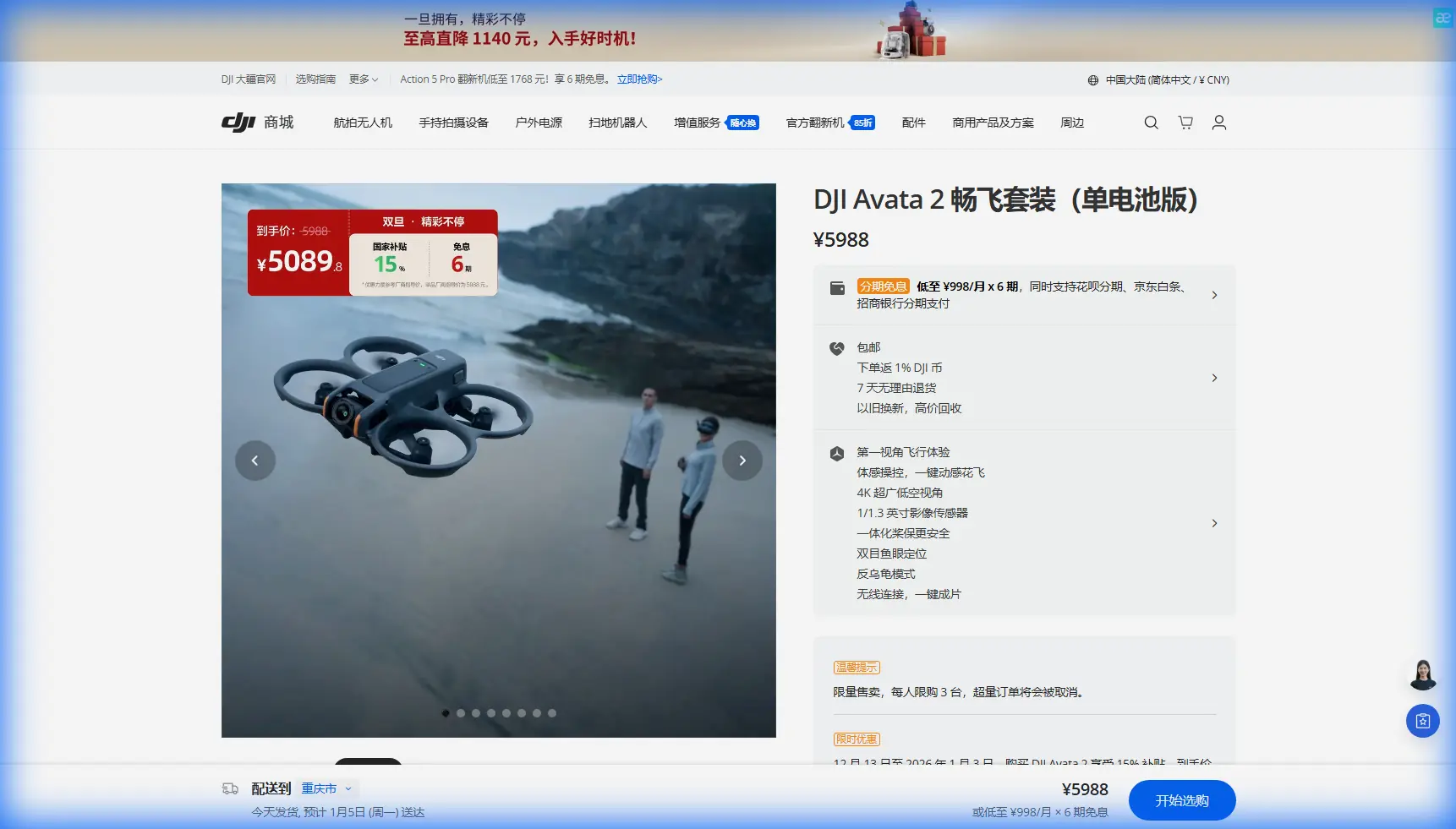
Avata 2 for Venue Surveys in Extreme Temperatures: A Technical Review Grounded in Low-Altitude Mapping Discipline
META: Expert review of DJI Avata 2 for venue surveying in extreme temperatures, with practical guidance tied to low-altitude aerial photography standards, flight planning, camera discipline, and antenna positioning for reliable range.
Avata 2 is not the first aircraft most survey professionals think of when venue documentation is on the table. That instinct is reasonable. Cinewhoops are usually associated with immersive walkthroughs, interior fly-throughs, and dynamic promotional footage rather than disciplined spatial capture. But that misses where Avata 2 can be genuinely useful: constrained venue surveys, pre-event visual inspections, roofline and facade reviews, and fast low-altitude documentation when environmental conditions are harsh and the flying envelope is tight.
For teams working in extreme heat or cold, the real question is not whether Avata 2 can produce attractive footage. It can. The useful question is whether it can be operated with enough repeatability to support inspection-grade venue awareness without falling into improvised flying habits. That is where an older but still relevant reference becomes surprisingly valuable: China’s low-altitude digital aerial photography specification, CH/Z 3005-2010, issued on 2010-08-24 and implemented on 2010-10-01. On the surface, a formal aerial photography standard and a compact FPV platform seem far apart. In practice, the standard’s structure points to the exact operating discipline Avata 2 users need in demanding environments.
The document is not just a title page and bureaucratic numbering. Even from the extracted pages, several sections stand out: requirements for the digital camera, flight planning and flight design, an appendix for aerial photography flight records, an appendix for roll-angle calculation, and an appendix showing route layout. Those details matter because venue surveying in difficult temperatures is won or lost long before the motors spin up.
Why a mapping standard matters to an Avata 2 operator
Avata 2 is often flown like a creative tool. Venue survey work requires a different mindset. The CH/Z 3005-2010 framework effectively says: define the mission, define the camera behavior, define the route, record the flight, and understand aircraft attitude. That sequence is operationally significant for Avata 2 because this aircraft thrives in close-range, low-altitude tasks where small mistakes have outsized effects on image consistency.
Take route design. The standard explicitly includes a route diagram appendix and a planning/design section. For venue surveys, that means you should not “explore” the site on the first battery if the job has technical value. Build a repeatable pattern instead. For a stadium exterior, for example, that may mean one orbit at facade height, one pass across roof-edge infrastructure, one lower pass for access routes, and one controlled interior-adjacent route if permitted. In hot or freezing conditions, this structure reduces unnecessary hover time and cuts down on battery waste while preserving coverage.
The flight record appendix is just as important. Avata 2 users who come from a content background often rely on memory: which side of the venue was affected by glare, where signal dipped, where airflow near a wall became turbulent. That approach breaks down fast on a commercial site visit. A flight log tied to battery number, route segment, temperature conditions, and signal performance gives you something to compare across missions. If a venue is surveyed before an event in winter and revisited in summer, those records become more valuable than any cinematic preset.
Extreme temperatures change the survey logic
When temperatures get aggressive, the job is no longer simply “capture the venue.” It becomes “capture it without introducing environmental bias into the footage or the flight path.” Extreme cold can reduce battery efficiency and responsiveness. Extreme heat can accelerate thermal strain and make the pilot rush. Either condition can produce inconsistent speeds, uneven turns, or abrupt power management decisions that complicate image review later.
This is where the standard’s emphasis on camera requirements becomes more than administrative language. If you are using Avata 2 to inspect venue roofing details, signage mounts, HVAC housings, or facade transitions, camera discipline matters as much as aircraft control. Exposure swings, inconsistent white balance, and uncontrolled motion can turn a useful pass into something that is visually dramatic but operationally weak.
D-Log deserves attention here. In harsh sunlight, especially around reflective venue surfaces like metal cladding, bleachers, glass entryways, or painted rooftops, D-Log can preserve more highlight and shadow detail for later review. That is not an artistic luxury. It can help inspection teams see transitions between materials or spot subtle contrast differences that are easier to miss in a baked-in profile. But D-Log only helps if the route and speed are controlled. If your flight path is erratic because you are reacting to heat, wind, or signal anxiety, the footage becomes harder to compare from one segment to the next.
Roll angle, corridor discipline, and why FPV pilots should care
One of the most revealing details in the reference material is the appendix for roll-angle calculation. That may sound abstract, but for Avata 2 it goes straight to image usability. In venue survey work, especially around architectural edges, excessive roll during turns distorts visual interpretation. A steep bank can make roof parapets, lighting trusses, catwalk edges, and drainage lines look offset or warped. For creative footage, that can feel energetic. For facility review, it introduces ambiguity.
The standard’s inclusion of roll-angle guidance is a reminder that aircraft attitude is part of data quality. With Avata 2, this translates into smoother entries and exits from turns, wider arcs around structures, and fewer aggressive corrections near vertical surfaces. If the reader scenario is surveying venues in extreme temps, this becomes even more important: cold-stiffened control habits or heat-induced rushed stick inputs can increase roll variance. The solution is not simply “fly slower.” It is to predefine turning points, maintain lateral spacing, and avoid improvising around the venue perimeter.
Obstacle avoidance also fits into this discipline, but it should be treated carefully. On a venue site, especially around facades, overhangs, rigging, or partial enclosures, obstacle sensing is helpful as a support layer rather than a substitute for route design. In other words, obstacle avoidance can reduce surprises, but it does not replace a clean flight corridor.
Avata 2’s feature set: useful, but only when used with intent
A lot of buyers search for terms like ActiveTrack, QuickShots, Hyperlapse, and subject tracking when evaluating Avata 2. For venue surveying, those features are secondary. They can help in specific documentation scenarios, but they are not the backbone of a professional site workflow.
ActiveTrack or subject tracking may help if you are documenting moving support vehicles during pre-event logistics checks or following a maintenance cart through access routes to capture circulation constraints. But for fixed-asset survey work, manual route repeatability is usually better. You want the same path, the same height band, the same angle of view.
QuickShots have limited value in technical venue work. They can be useful for quickly generating broad contextual clips that show how the venue sits within adjacent roads, parking areas, or staging zones. Hyperlapse can support time-based environmental observation, such as crowd-flow setup areas or changing light conditions across the site. Yet if the mission is inspection or surveying, these functions should supplement, not define, the job.
That distinction matters because many Avata 2 reviews lump all intelligent features together as reasons to buy. In actual commercial use, the question is narrower: which features reduce workload without eroding consistency? Usually, the answer is stable low-altitude handling, reliable video link behavior, and efficient camera settings more than automated cinematic modes.
Antenna positioning advice for maximum range at a venue
Signal reliability is often the hidden limiting factor during venue surveys. Not because the aircraft cannot fly far in open conditions, but because venues are full of things that punish poor antenna alignment: steel, reinforced concrete, lighting structures, scoreboard assemblies, temporary staging, rooftop mechanicals, and spectator seating geometry.
For maximum practical range and stability, keep the controller antennas oriented so their broadside faces the aircraft rather than pointing the tips directly at it. Many pilots make the mistake of “aiming” antenna ends at the drone as if they were laser pointers. That is not how you get the strongest link. With Avata 2 around a venue, you want your body position and antenna angle set before the route begins, especially on long facade runs or roofline arcs. If the aircraft will pass laterally across the building face, align yourself so that the strongest antenna surface stays presented across that whole movement.
A second point: do not stand flush against the structure you are inspecting if you can avoid it. Step into a clearer line-of-sight position away from steel canopies, wall corners, parked service trucks, and dense rooftop clutter. On multi-pass venue jobs, it is often better to relocate the pilot between route segments than try to hold one “central” position that is compromised by obstructions. If you want a route plan tailored to a specific venue layout, this WhatsApp flight-planning contact is a practical way to discuss setup details before deployment.
In extreme temperatures, antenna discipline becomes even more valuable because you want to minimize avoidable hovering, relinking, or route resets. Every extra minute spent solving preventable signal issues is a minute your battery is spending in the least efficient part of the mission.
A practical low-altitude workflow for Avata 2 at venues
The old standard’s structure suggests a straightforward field method, and it maps well onto Avata 2.
1. Plan the survey as a sequence, not a flight
Use the site map or satellite view to define route bands: perimeter, facade, roof-edge, access path, and special-interest zones. This reflects the planning and route-design emphasis embedded in CH/Z 3005-2010. Extreme weather is easier to manage when each battery has one purpose.
2. Standardize camera behavior
Pick settings that you can repeat. If the light is severe, D-Log can help maintain reviewable detail. Keep shutter, white balance, and movement style consistent enough that one pass can be compared to another. The standard’s attention to digital camera requirements reinforces this point.
3. Treat attitude control as image control
The roll-angle appendix in the reference is a reminder that aircraft bank is not just a handling characteristic. It changes what the footage means. Fly wider turns than your FPV instincts might suggest when the goal is inspection clarity.
4. Keep a real flight record
Record battery number, route segment, ambient temperature, wind character, signal notes, and any sensor anomalies. This echoes the standard’s flight-record appendix and is one of the most underused habits among small-UAV operators.
5. Use intelligent functions selectively
Obstacle avoidance can reduce risk in constrained areas. ActiveTrack and similar tools are optional and situational. They should not interfere with route consistency.
Where Avata 2 fits, and where it does not
Avata 2 is a strong choice when the venue has tight approach paths, overhead features, narrow service corridors, semi-enclosed sections, or a need for low-altitude visual context that would feel awkward with a larger mapping platform. It is particularly useful when the survey objective is mixed: part inspection, part stakeholder communication, part operational familiarization.
It is less ideal when the assignment requires rigorous geospatial output, highly standardized overlap for formal photogrammetric deliverables, or long-duration broad-area coverage. The reference document itself points toward a larger survey discipline, and that is worth respecting. A low-altitude digital aerial photography standard is fundamentally about systematic acquisition. Avata 2 can adopt parts of that discipline, but it does not magically become a full traditional mapping system just because it is flown carefully.
That said, for venue work in difficult temperatures, the aircraft’s compactness and controlled low-altitude capability can make it more practical than larger alternatives for fast-turn inspections and route-based visual documentation.
The takeaway from CH/Z 3005-2010 for Avata 2 users
The most useful lesson from this 2010 low-altitude aerial photography specification is not a single parameter. It is the operating mindset. A standard identified as CH/Z 3005-2010, classified under ICS 07.040, exists because low-altitude capture becomes unreliable when it is left to improvisation. Its table of contents alone tells the story: camera requirements, mission planning, route design, flight records, roll-angle understanding. Those are not legacy formalities. They are exactly the controls that make Avata 2 useful for venue survey work under stress.
If you are flying in extreme temperatures, that discipline matters even more. Build the route before the battery goes in. Normalize the camera. Respect roll behavior. Log every pass. Position your antennas intelligently. Then Avata 2 stops being just an FPV aircraft that can inspect a venue and becomes something more valuable: a compact survey tool that produces repeatable, reviewable low-altitude results.
Ready for your own Avata 2? Contact our team for expert consultation.