
Avata 2 in Coastal Venue Survey Work: A Practical Case
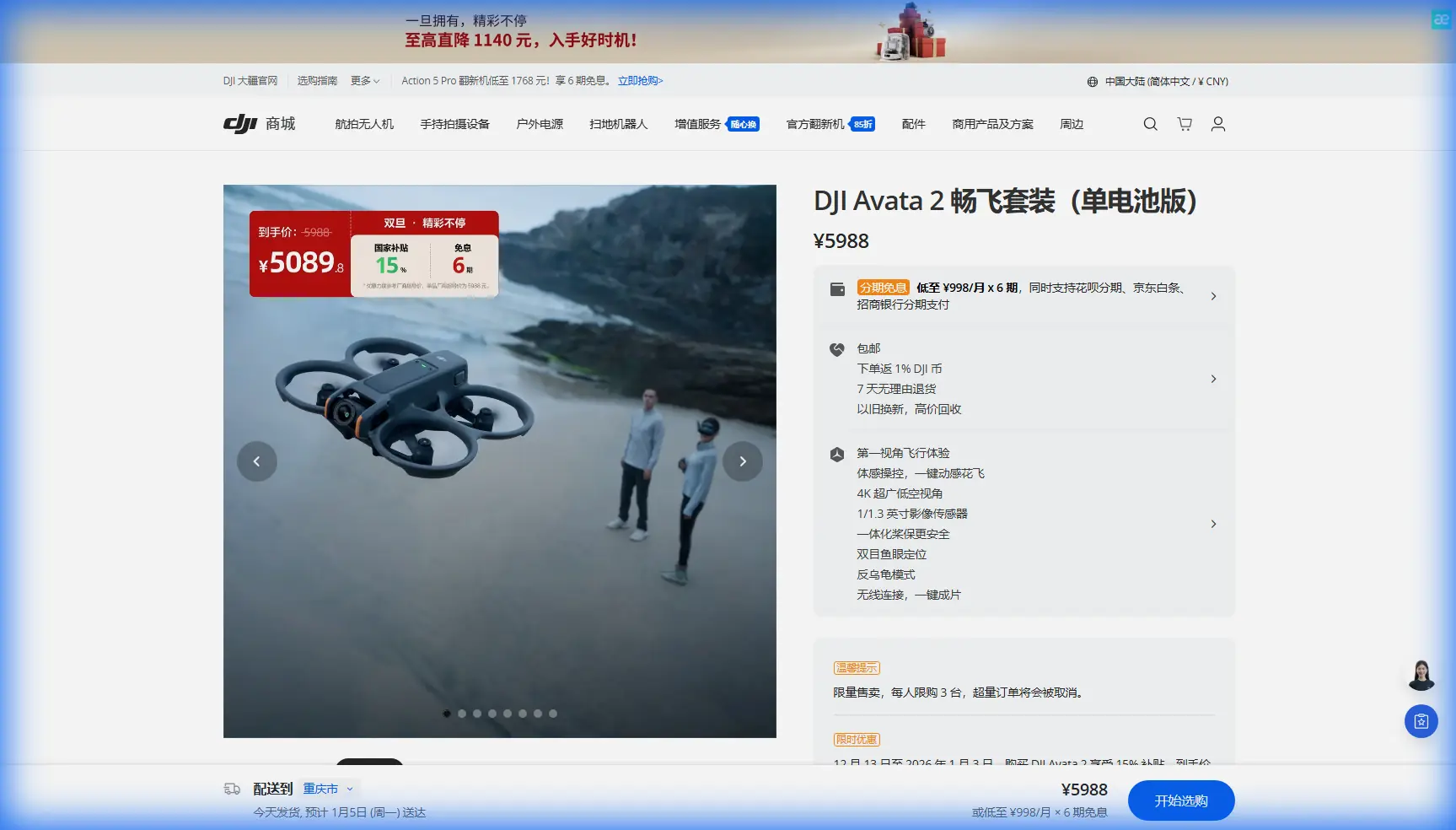
Avata 2 in Coastal Venue Survey Work: A Practical Case Study on Photogrammetry Discipline, EMI Handling, and Capture Strategy
META: A field-tested Avata 2 case study for coastal venue surveying, covering photogrammetry constraints, flight-height control, sun angle planning, electromagnetic interference mitigation, and capture settings that improve usable mapping results.
When people talk about DJI Avata 2, the conversation usually drifts toward immersive flying. That misses a useful reality. In the right hands, and with the right expectations, Avata 2 can become a highly effective field tool for coastal venue survey support, site familiarization, low-altitude visual documentation, and pre-mapping reconnaissance.
This matters because coastal venues are rarely forgiving. You get reflective water, wind gradients, harsh contrast, salt-heavy air, structures with repeating geometry, and a surprising amount of electromagnetic clutter from lighting systems, communications gear, steel roofs, event infrastructure, and nearby utilities. If the mission is to understand a waterfront event space, marina-adjacent property, resort edge, or mixed-use coastal site before a formal mapping run, Avata 2 can help. But only if the operator flies with survey logic rather than cinematic impulse.
I’ve been looking at this through the lens of a real-world planning problem: how to use Avata 2 around coastal venues while respecting photogrammetric discipline drawn from traditional aerial survey standards. The source material here is not a generic drone brochure. It is a photogrammetry reference set built around image scale, ground sample distance, control spacing, sun-angle limits, and altitude consistency thresholds. That framework is what makes this discussion useful.
The key lesson: Avata 2 is not a shortcut around survey fundamentals
A lot of pilots assume that newer stabilization, obstacle sensing, subject tracking, or polished automated modes like QuickShots and Hyperlapse somehow compensate for weak survey planning. They do not. Those features can support documentation and visual storytelling around a venue survey, but geometry still rules the quality of the output.
The photogrammetry reference gives a clean example using a Sony α5100 with a 23.4 × 15.6 mm sensor, 0.0039 mm pixel size, and a 20 mm focal length. In that framework, a 5 cm GSD corresponds to a flight height of 256 m and supports about 0.11 m elevation accuracy with a 1:500 mapping scale. Step up to 8 cm GSD, and the height moves to 410 m, with 0.17 m elevation accuracy and 1:1000 scale. At 15 cm GSD, the altitude reaches 770 m, with 0.32 m elevation accuracy and 1:2000 scale.
Those numbers are not there to suggest Avata 2 should mirror a fixed-wing or large-format mapping aircraft. The operational significance is different. They tell us that every imaging decision has a measurable downstream effect on scale, height, and achievable accuracy. For an Avata 2 operator surveying a coastal venue, this means one thing above all: decide whether the mission is reconnaissance, asset documentation, or structured image collection before launch. If you blur those together, you usually get weak results in all three.
A coastal venue scenario where Avata 2 actually fits
Imagine a beachfront events complex with a seawall, open plaza, roof terraces, temporary staging zones, pedestrian circulation paths, and a marina edge. The client wants three outputs:
- A low-altitude visual record of the site condition before setup
- A route-level understanding of access constraints and obstacle zones
- Supplemental imagery to inform a later, more formal survey workflow
This is the sweet spot for Avata 2. Its compact form and protected design make it practical around structures, covered walkways, facade edges, and tighter approach lines where larger mapping platforms are less comfortable. Obstacle avoidance helps when threading through poles, canopies, and rooftop transitions, though you should never treat sensing as permission to fly carelessly near people or infrastructure.
The mistake would be trying to force Avata 2 into a role better suited to a purpose-built mapping aircraft. The smarter move is using it to gather highly contextual spatial intelligence: facade relationships, seawall condition, venue circulation visibility, staging clearances, line-of-sight problems, rooftop mechanical placement, and shadow behavior at specific times of day.
Why sun-angle planning matters more at the coast than many pilots realize
The reference data includes terrain-based sun-angle guidance that deserves more attention in drone practice. For flat land with ground slope under 3 degrees, the solar elevation should be above 20 degrees, with shadow multiples limited to 3. In hilly terrain from 3 to under 10 degrees, the recommended sun height rises above 30 degrees, with shadow multiples under 2. In mountain terrain from 10 to under 25 degrees, it moves above 45 degrees, with shadow multiples limited to 1. For steep alpine areas or dense high-rise urban settings with slopes at or above 25 degrees, capture is restricted to roughly one hour before and after local noon.
That guidance has direct coastal relevance. Waterfront venues often look flat on paper, but operationally they behave like mixed-relief environments because of retaining walls, grandstands, roof decks, palm clusters, masts, light poles, and high-rise shadows. The issue is not just aesthetics. Long shadows break surface interpretation, hide pavement defects, distort edge detection, and create inconsistent texture across image sets.
So if you’re using Avata 2 to support later measurement or reconstruction, don’t simply choose “golden hour” because it looks dramatic. Near a coastal venue, dramatic often means unusable for analytical purposes. Midday windows are frequently better, especially when tall buildings, temporary structures, or steep seawall geometry are involved.
The overlooked discipline: altitude consistency
One of the strongest details in the reference is the control on flight-height variation. According to the cited standards, the altitude difference between adjacent images on the same flight line should be no more than 30 m under one standard and 20 m under another. The difference between the maximum and minimum altitude on the same line should be no more than 50 m or 30 m, depending on the standard, while deviation from design altitude inside a photography zone should remain within 50 m. If flight height exceeds 1000 m, the altitude variation must stay within 5% of H.
For Avata 2 work at coastal venues, this is operationally significant even if your mission is much lower and much smaller in scale. Why? Because low-altitude FPV-style platforms can encourage expressive, flowing flight paths with constant vertical changes. That is excellent for storytelling. It is bad for consistent image geometry.
If your goal includes stitching, surface comparison, construction sequencing, or spatial review, the smoother and more disciplined your height control, the better your imagery behaves downstream. At the coast, this becomes especially important over boardwalks, seawalls, amphitheater steps, and sloped access roads where pilots tend to unconsciously chase the terrain. Maintain a planned capture band whenever possible. Do not let the flight become a roller coaster.
Handling electromagnetic interference near coastal venues
This is where Avata 2 operators can gain or lose a mission quickly.
Coastal venues often combine several EMI sources in a small footprint: rooftop communications equipment, broadcast gear for events, marina electronics, reinforced concrete, steel truss installations, temporary power distribution, and high-density Wi-Fi networks. Add moisture and reflective surfaces, and signal behavior can become erratic enough to unsettle less experienced pilots.
The practical response is not panic. It is method.
On one venue inspection run, the most stable results came after making a simple antenna adjustment and changing pilot orientation relative to the site. Instead of standing beside a steel utility structure and aiming toward a bank of rooftop antennas, the takeoff point was moved to a cleaner line of sight with fewer intervening metal elements. The controller antenna orientation was then adjusted to better align with the aircraft’s working sector rather than the scenic center of the venue. That reduced intermittent link quality drops and made the aircraft’s behavior more predictable near the communications-heavy side of the property.
This is the kind of fieldcraft people skip because it sounds mundane. It is not mundane. It is often the difference between a clean documentation pass and a compromised one. Around coastal venues, EMI mitigation should include:
- choosing launch points with clearer signal paths
- avoiding standing directly beside heavy steel infrastructure
- adjusting antenna orientation intentionally as the aircraft shifts sectors
- running a short confidence pass before the actual capture line
- watching for interference concentration near rooftop MEP zones and event-tech clusters
Avata 2’s handling can feel forgiving, but electromagnetic interference is one variable that does not care how comfortable the pilot feels.
Where Avata 2 features help, and where they don’t
Readers often want a simple yes-or-no answer on features like obstacle avoidance, ActiveTrack, QuickShots, Hyperlapse, subject tracking, and D-Log. The honest answer is that they can be useful in a venue survey workflow, but only if each one is assigned a specific job.
Obstacle avoidance is valuable during close-range perimeter review, especially around canopies, handrails, facade offsets, and landscaped paths. It reduces avoidable contact risk, but it does not solve poor route design.
Subject tracking and ActiveTrack can help document moving setup vehicles or personnel circulation in controlled civilian site-management contexts, particularly when the goal is to understand traffic flow or access patterns. They are less useful for disciplined image acquisition where consistent framing and overlap matter more than automation.
QuickShots are not survey tools, but they can quickly produce executive-level overviews that help non-technical stakeholders understand the site’s form and constraints.
Hyperlapse becomes useful when capturing temporal change at a venue: tide movement along a seawall, delivery flow before an event, or crowd-free staging transitions over a defined period.
D-Log matters more than people think. Coastal venues often swing between bright reflective surfaces and shaded structural recesses. Shooting in D-Log can preserve tonal information that helps with later interpretation of facade conditions, drainage traces, pavement transitions, and edge definition. That doesn’t turn the footage into survey-grade data by itself, but it gives the analyst more usable visual information.
Ground control logic still matters, even in support missions
The source material also includes control point spacing by map scale. For 1:500, control points are spaced across 4 to 5 adjacent flight lines laterally and 4 to 5 baselines longitudinally. For 1:1000, that becomes 4 to 6 flight lines and 6 to 7 baselines. For 1:2000, 2 to 4 in each direction.
Even if you are not executing a full orthodox aerial triangulation mission with Avata 2, this teaches an important habit: spatial support should be distributed, not clustered. In coastal venue work, operators often over-document the dramatic edge of the site—the waterfront, the stage front, the promenade—and under-document the bland but crucial support areas like loading zones, service roads, utility courts, and back-of-house circulation.
That imbalance makes later interpretation harder. Think like a control planner. Spread your coverage intelligently across the whole venue, not just the photogenic side.
Rotation, tilt, and why smooth flying is not enough
The reference also gives limits on image rotation bias by photo scale: 10° for scales greater than 1:4000, 8° for 1:4000 to 1:8000, and 6° for scales below 1:8000, with allowances in lower-altitude cases. Another caution stands out: image tilt and rotational deviation should not both reach their maximum at the same time.
This is a subtle but useful rule for Avata 2 operators. A flight can feel smooth in the goggles and still produce imagery with compounded geometric problems if the aircraft is banked heavily while also carrying noticeable yaw drift. In practical terms, if you’re gathering venue imagery that may later support measurements or layout interpretation, avoid aggressive coordinated turns during capture segments. Break the mission into clean legs. Fly the dramatic FPV line later, separately, for storytelling.
That separation alone improves data quality more than most setting tweaks.
A realistic workflow for coastal venue surveys with Avata 2
For this type of mission, the most effective sequence is usually:
- Midday reconnaissance pass for shadow-controlled overall context
- Structured low-altitude perimeter capture with disciplined height and slower turns
- Close-range obstacle and access review using obstacle sensing where appropriate
- Contextual cinematic assets using D-Log, QuickShots, or Hyperlapse for reporting clarity
- EMI re-check near known interference sectors before any repeated pass
If a site has persistent interference or complex geometry, it helps to split documentation by zone rather than force one continuous flight. That also makes quality review easier afterward.
If you need a second opinion on workflow planning for a waterfront site, you can message the field team directly here.
The bottom line for serious operators
Avata 2 can be genuinely useful for coastal venue survey support, but only when the operator respects the same fundamentals that govern larger photogrammetry missions: sun angle, height consistency, geometric discipline, distributed coverage, and environmental interference management.
The source data behind this discussion may look old-school compared with modern FPV hardware, yet that is exactly the point. Aircraft evolve fast. Measurement logic does not. A reference showing that 5 cm GSD aligns with 256 m flight height and about 0.11 m elevation accuracy, or that adjacent image height variation should stay within 20 to 30 m, is not trivia. It is a reminder that reliable outputs begin with controllable variables.
At coastal venues, Avata 2 is at its best not as a replacement for every survey platform, but as a sharp, adaptable instrument for site intelligence. Fly it with discipline, and it becomes far more than a compact immersive drone. It becomes a practical bridge between visual inspection and structured spatial work.
Ready for your own Avata 2? Contact our team for expert consultation.