
Avata 2 Guide for Surveying Venues in Low Light
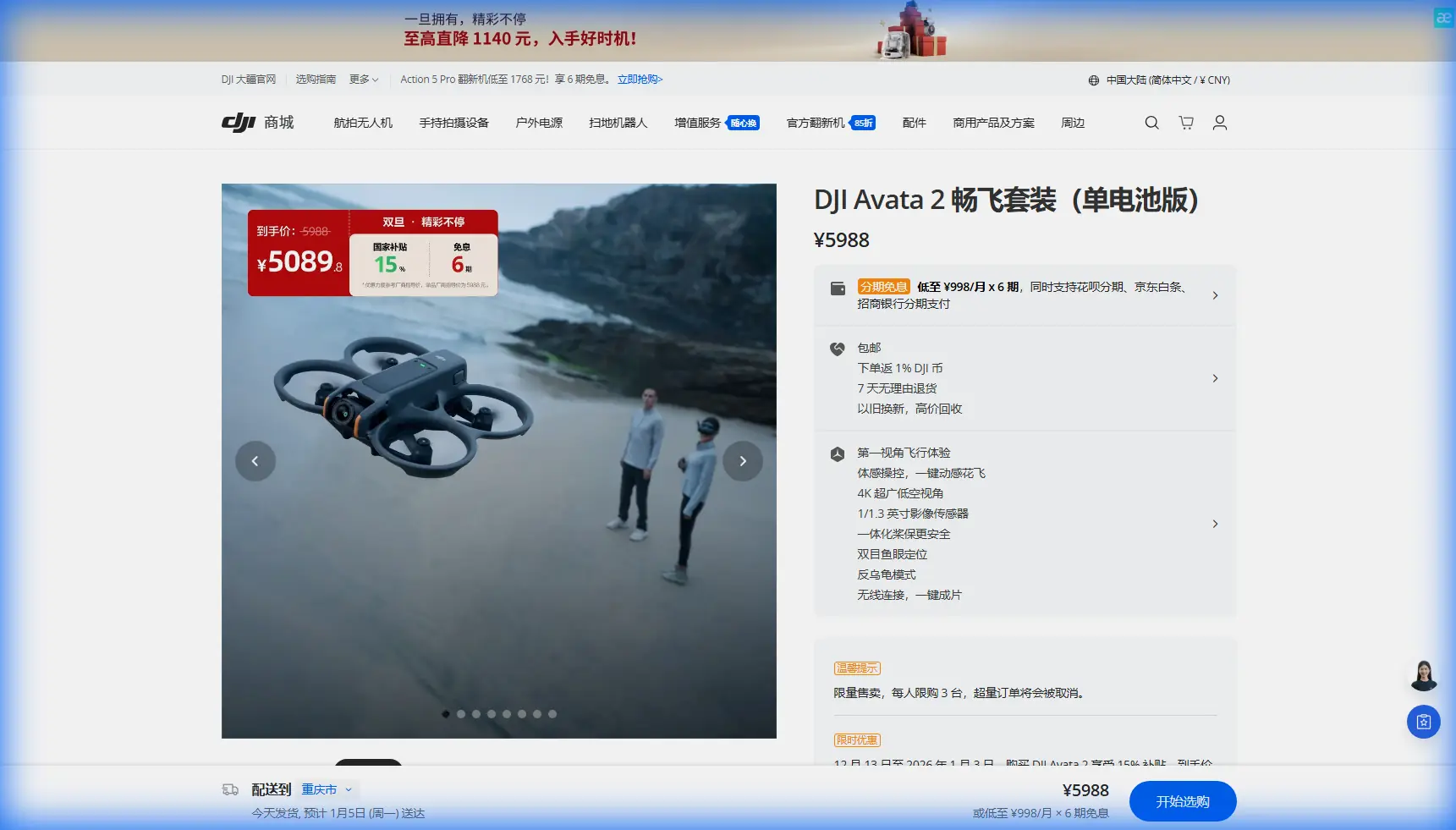
Avata 2 Guide for Surveying Venues in Low Light: A Safer Workflow Built on Inspection Discipline
META: Learn how to use Avata 2 for low-light venue surveys with a practical workflow covering startup order, post-flight image checks, antenna management, obstacle awareness, and data integrity.
Low-light venue surveys are where small mistakes become expensive. A dim concert hall, an indoor arena before opening, a partially lit exhibition center, a warehouse with reflective steel, a stadium tunnel with poor GPS reception—these are all places where a compact FPV platform like the DJI Avata 2 can be useful, but only if the operator brings real process discipline to the job.
That discipline does not start with cinematic moves. It starts before takeoff, and it continues after landing.
A technical guideline for unmanned helicopter line inspection lays out something many Avata 2 users overlook: sequence matters. The document specifies a clear power-on order—first verify controller switch positions, then power the transmitter, then the flight controller, then the servos. It also defines a shutdown order in reverse logic—turn off the servo power first, then the flight-control power, then the transmitter. Even though Avata 2 is not a fuel-powered inspection helicopter with exposed servo power systems, the operational lesson transfers directly: stable startup and shutdown sequencing reduces preventable control anomalies, protects data capture continuity, and gives the pilot a repeatable routine under pressure.
For venue surveying in low light, that kind of repeatability matters more than most spec-sheet features.
Why Avata 2 fits venue survey work
Avata 2 is not a mapping drone in the classic corridor-survey sense, and it is not the first aircraft most teams think of for measured photogrammetry. But that is not the whole story. In venues where space is tight, obstacles are dense, and the visual goal is often pre-event inspection or spatial documentation rather than wide-area topographic mapping, its compact guarded design changes the risk equation.
You can move through concourses, backstage access routes, seating transitions, truss-adjacent spaces, catwalk approaches, loading bays, and interior circulation paths with a lower chance of incidental contact than with larger open-prop aircraft. Obstacle avoidance is not a license to get sloppy, but in low light it becomes an important layer of protection when you are documenting a site with pillars, suspended signage, cables, railings, or decorative overhangs.
The low-light scenario also shifts the value of image discipline. If your mission is to survey a venue, you are not just collecting “nice footage.” You are gathering visual records that may inform setup planning, maintenance review, sponsor placement checks, safety walkthroughs, or pre-production creative decisions. That makes data review and positional consistency just as important as flight feel.
Start with a strict pre-flight sequence
The reference document includes a deceptively simple controller check: four side switches down, the second switch on the right up for manual control, and throttle at minimum before power-up. The exact switch layout does not map one-to-one onto Avata 2 controls, but the operational principle absolutely does.
Before a low-light venue flight, I recommend a fixed Avata 2 pre-flight sequence:
Confirm control mode and input state Make sure your controller mode is the one you intend to use for the mission. Do not discover mid-flight that you are in a different response profile than expected. If using the Motion Controller or RC setup, verify neutral input behavior before arming.
Power the controller first This mirrors the source guideline’s “transmitter first” logic. The aircraft should never come alive before the control link is ready.
Power the aircraft and allow full system initialization Give the aircraft time to settle. In low-light venues, pilots often rush because the site window is short. That is exactly when skipped checks happen.
Verify video link quality and interference behavior Before takeoff, look for any abnormal transmission behavior caused by venue electronics, structural steel, LED walls, distributed Wi-Fi, or temporary production infrastructure.
Check obstacle sensing status and lighting conditions Obstacle avoidance can help in tight environments, but only if the aircraft’s sensors are operating in conditions they can interpret reliably.
The hidden value of this routine is not tradition. It is cognitive load reduction. In dark or signal-noisy spaces, you want fewer unknowns.
Handling electromagnetic interference inside venues
The reference material specifically requires post-flight inspection of onboard antennas and connectors for damage or looseness. That is highly relevant to Avata 2 venue work because indoor and semi-indoor environments are often messy from a radio perspective. Distributed network systems, event comms gear, lighting control hardware, steel framing, and reflective surfaces can all disturb the control or video experience.
The first sign is often not a full link drop. It is subtler: image breakup in one section of the building, inconsistent latency near a catwalk, degraded penetration behind stage structures, or a momentary hesitation when turning through a service corridor.
This is where antenna awareness becomes practical rather than theoretical.
If you enter a known interference pocket, do not automatically blame the aircraft. Pause your workflow and examine the transmission geometry. Slightly adjusting your own position, your body orientation, or the controller antenna angle can materially improve link stability. In indoor venue surveying, I often treat the pilot’s stance as part of the radio system. Move a few meters. Face the flight path more directly. Avoid standing behind large steel barriers or production cases. Keep the line between controller and aircraft as open as the site allows.
That sounds basic, but it is exactly the sort of detail that separates a clean survey from a compromised one.
If your team wants a practical checklist for RF troubleshooting in complex venues, you can message our field team here and compare your setup assumptions against common indoor interference patterns.
Fly the venue in layers, not as one continuous roam
Low-light surveys go wrong when pilots try to “see the whole place” in a single improvised pass. The better method is to divide the venue into functional zones and assign each one a flight purpose.
1. Access and circulation pass
Start with entrances, corridors, loading access, stair transitions, concourses, and emergency egress paths. This establishes spatial orientation and identifies hazards before you move deeper into the venue.
2. Operational infrastructure pass
Survey lighting rigs, suspended banners, truss adjacency, scoreboard zones, stage approaches, retractable seating edges, and back-of-house logistics areas. These are the areas where obstacle awareness matters most.
3. Visual documentation pass
Now capture the material intended for stakeholders: architectural details, sponsor locations, sightlines, VIP pathways, roofline interiors, or stage-to-seat perspectives. This is where D-Log can be useful if you need grading flexibility later, especially in mixed lighting where dark corners and bright LED signage can coexist in the same frame.
4. Repeatable comparison pass
If the venue is being checked over multiple dates—for setup progress, maintenance verification, or event staging comparisons—repeat a standardized route at consistent altitude and speed. That makes later analysis much more valuable than a free-form flight.
Avata 2’s smooth movement profile is useful here, but discipline matters more than agility. A survey is not a freestyle session.
Use automation carefully
LSI terms like ActiveTrack, QuickShots, Hyperlapse, and subject tracking often appear in Avata 2 discussions, but their value in venue surveys depends on the task.
For civilian venue work, ActiveTrack or subject tracking can help if you are documenting a staff walkthrough, following a stage manager route, or recording how personnel move through access points. That can be useful for operations planning. But in low light, around obstacles, and inside RF-complex spaces, automated tracking should be treated as a controlled tool rather than the default mode.
QuickShots have limited value in inspection-style survey work unless you need fast establishing visuals for a client presentation.
Hyperlapse can be useful if you are showing venue transition over time—seat deployment, floor buildout, booth installation, or crowd-flow simulations before opening. But that is a secondary output, not the primary survey record.
The main mission remains documentation with traceable, reviewable imagery.
The post-flight habit most Avata 2 users skip
The strongest lesson in the reference material is not about power order. It is about what happens after landing.
The document requires operators to export image data along with position and attitude data, then verify two things: first, that image quality and image quantity match the technical design; second, that the positional and posture data correspond one-to-one with the images. That is a serious operational standard, and it translates surprisingly well to Avata 2 work.
For venue surveying, your post-flight review should answer four questions:
Did you capture what the mission required?
Not “did I get enough footage,” but “did I cover every planned zone?” If the technical plan required 20 inspection viewpoints and you came back with 17, the mission is incomplete even if the footage looks excellent.
Is image quality actually usable?
Low light creates false confidence. Footage can look acceptable on goggles or a small monitor and later prove too noisy, too blurred, or too dark for operational review. Check key clips immediately on a larger display if available.
Do your files align with the survey path?
The source document’s insistence on image-to-position correspondence matters because undocumented clips lose value fast. For Avata 2, keep route notes, voice memos, waypoint references, or segment naming conventions so that the footage can be tied back to venue locations without guesswork.
Did the aircraft experience any contact, instability, or unusual landing attitude?
The guideline says that if the aircraft landed abnormally and sustained possible damage, the damaged area should be inspected first. That is exactly right. A minor bump against pipework or a hard floor contact in low light may not look dramatic, but it can affect prop condition, duct integrity, camera alignment, or sensor confidence on the next sortie.
Build a real post-flight inspection routine
The reference document also lists specific inspection items after flight: check for damage to structural components, confirm connections are not loose, inspect actuating mechanisms, examine the fuel system for leaks, assess residual energy use, inspect onboard antennas, and review vibration isolation and mounted equipment positioning.
Again, Avata 2 is a different platform, but the transferable logic is excellent. After a venue survey, check:
- Prop guards and propellers for edge damage
- Camera mount and gimbal behavior
- Airframe seams and duct stability
- Battery seating and remaining charge trends
- Antenna condition and any signs of looseness
- Debris accumulation from dusty rafters, floors, or stage fabric
- Any shift in mounted accessories or ND filters
- Flight behavior notes: drift, unusual vibration, or transmission weak spots
The source also emphasizes recording the inspection. That point deserves more respect in small-drone operations. Memory is unreliable after a long day on site. Logging recurring signal problems in a particular arena corner or repeated battery draw patterns in cold loading bays gives your next mission a head start.
Energy awareness still matters, even without fuel
One reference detail that should not be ignored is the requirement to assess fuel and battery consumption under the actual weather and terrain conditions of the flight and calculate hourly consumption. For Avata 2 indoor venue work, replace terrain and fuel with lighting conditions, obstacle density, hover time, and repeated stop-start maneuvering.
Low-light surveys often drain batteries differently than open-air scenic flights. Why? Because the aircraft may spend more time hovering, making careful yaw corrections, holding position near structures, or repeating short segments for documentation. That changes mission planning. Logging actual consumption per zone is more useful than relying on generic flight-time claims.
The source document even includes a maintenance-minded detail about draining leftover fuel to prevent blockage in the line. The Avata 2 equivalent is not fuel management, of course, but the mentality is the same: do not leave consumables, debris, or storage conditions to chance. Clean the aircraft. Manage your batteries correctly. Clear dust from confined-space work. Organize media before it becomes a file-handling problem.
A practical low-light workflow for Avata 2 venue surveys
Here is the condensed field method I recommend:
- Start with controller-first power-up discipline.
- Verify control state before aircraft activation.
- Check video link behavior before committing to the route.
- Divide the venue into survey zones.
- Treat antenna position and pilot stance as part of interference management.
- Use obstacle avoidance as support, not permission to crowd objects.
- Capture in a repeatable route when comparison over time matters.
- Review footage immediately after landing for quality and completeness.
- Match clips to locations while the flight is still fresh.
- Inspect the aircraft physically after every sortie, especially after any rough landing or contact.
That workflow sounds conservative. It is supposed to. Low-light venue surveying is where mature operating habits pay off.
Avata 2 can do impressive work in these environments, especially when space is limited and the mission calls for close-in visual documentation. But the aircraft is only half the equation. The other half is whether the pilot runs it with the kind of methodical discipline found in formal inspection guidance—power sequence, post-flight verification, antenna checks, energy tracking, and data integrity review.
That is what turns a quick indoor flight into a survey you can trust.
Ready for your own Avata 2? Contact our team for expert consultation.