
How I’d Use Avata 2 to Survey High-Altitude Venues More
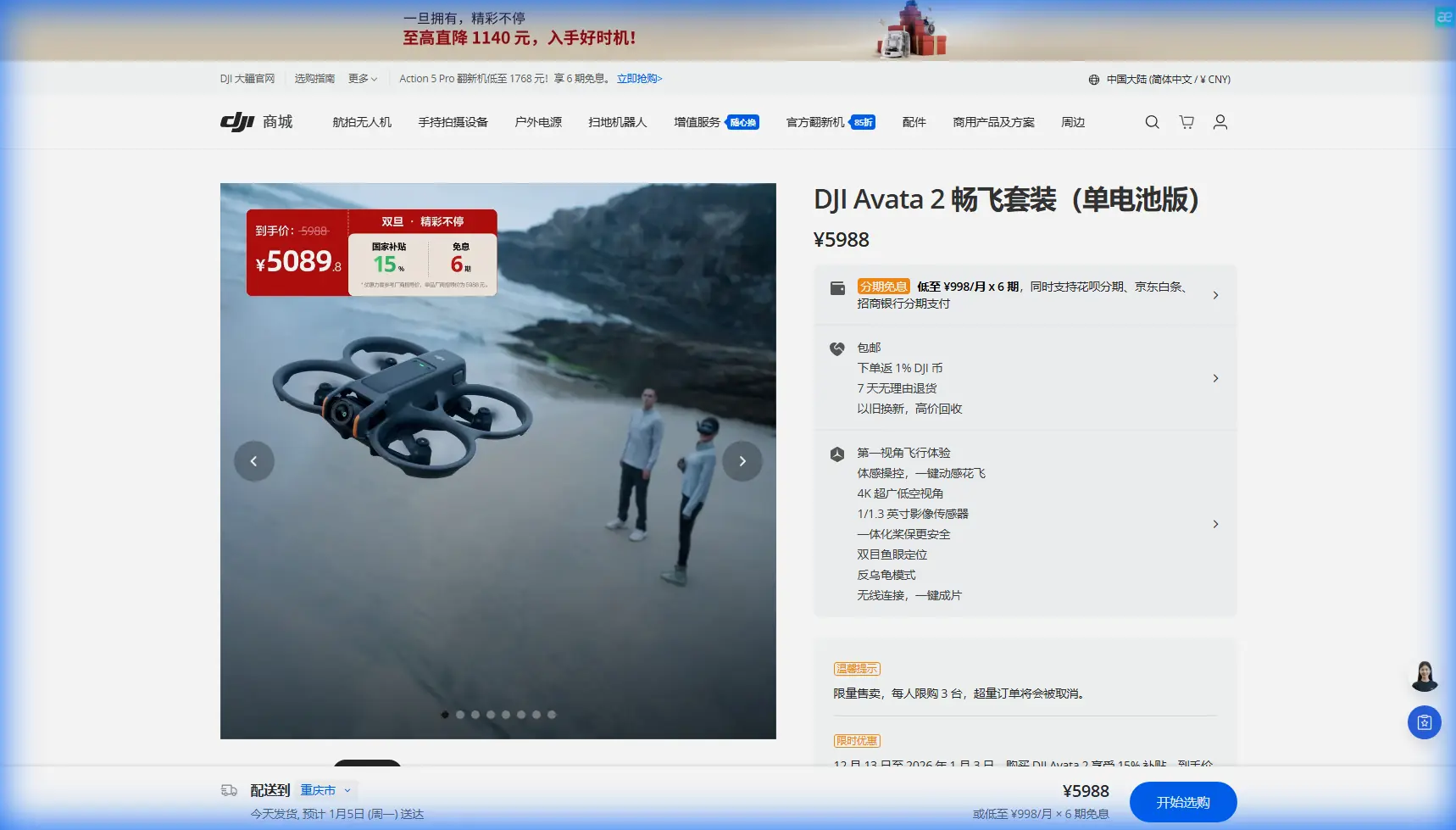
How I’d Use Avata 2 to Survey High-Altitude Venues More Reliably
META: A practical Avata 2 tutorial for high-altitude venue surveying, covering flight setup, antenna positioning, terrain capture logic, and how aerial outputs support DEM, DOM, and planning workflows.
High-altitude venue surveying exposes every weakness in a drone workflow. Thin margins on battery. Unforgiving terrain. Signal behavior that seems stable until a ridgeline or structure starts blocking the path. And if the venue sits in geologically messy ground, with uneven surfaces and fragmented access routes, image quality alone won’t save the mission. The value comes from how well the flight data can be turned into usable mapping outputs.
That is where Avata 2 becomes interesting.
Not because it is a traditional mapping platform in the strict fixed-grid-photogrammetry sense. It isn’t. But for venue reconnaissance, confined access checks, slope inspection, route visualization, and pre-survey intelligence at altitude, it can play a sharp supporting role when used with discipline. Especially when the goal is to understand terrain conditions before heavier survey work, or to document reclamation-style earthworks, drainage paths, edge conditions, and access corridors in places where walking every section is inefficient.
I’ve been thinking about this through the lens of a mine-land reclamation case study. In that reference, low-altitude UAV remote sensing was used before and after land restoration, not just to create imagery, but to support planning and later evaluation. The significance wasn’t the aircraft alone. It was the full chain: aerial triangulation, removal of bad tie points, balancing the model until accuracy requirements were met, then exporting XML results to build DLG, DEM, and DOM products. That workflow matters for anyone using Avata 2 around high-altitude venues because it reminds us of something basic: survey value comes from data discipline, not cinematic flying.
Start with the right mission definition
If you’re surveying a venue at altitude, define the job before you power on.
Are you trying to:
- inspect access roads and drainage lines
- understand slope transitions around the venue perimeter
- document terrain after grading or restoration work
- produce visual references to support later photogrammetry
- check obstacles and flight-safe corridors for future operations
Avata 2 is strong when the venue has physical complexity. Terraced ground. Cut-and-fill areas. Narrow service roads. Retaining edges. Temporary structures. Rock faces. Staging compounds. It gives you the ability to read space dynamically, not just top-down.
The mine reclamation reference is useful here because the site conditions were not clean or uniform. The ore body was described as scattered, shallow, and geologically complex, with open-pit development driven by fast progress cycles. That sort of fragmented terrain is exactly where a compact FPV-style platform helps. You can fly low, close, and intentionally to inspect how the landscape actually behaves, especially after earthmoving.
Where Avata 2 fits in a survey stack
I wouldn’t position Avata 2 as the sole platform for every mapping deliverable. I’d position it as the field intelligence layer.
Used well, it can support:
Pre-mapping reconnaissance
Identify blind spots, elevation breaks, risky launch zones, and signal-blocking objects before a formal capture mission.Supplemental terrain documentation
Capture embankments, drainage cuts, service roads, and edge conditions that are hard to interpret from only nadir imagery.Post-work evaluation
Record grading results, reclaimed surfaces, and continuity of access or runoff management after construction or restoration work.
That third use case directly echoes the reference material. After reclamation, the land was again surveyed with low-altitude UAV remote sensing to evaluate the restored area. Operationally, that matters because one flight is never the whole story. A venue changes. Surfaces settle. Drainage shifts. Slope finishing may look complete from the ground but reveal inconsistency from the air.
The big lesson from the source: bad tie points ruin confidence
One of the most practical details in the reference is the treatment of aerial triangulation. The workflow explicitly calls for previewing the block, removing incorrect connection points, and then running aerial triangulation again. If errors remain large, the operator adjusts weight values, removes high-error points, and iterates until the adjustment meets the required accuracy.
That’s not academic. It’s operational.
If you use Avata 2 to collect visual material that feeds into a terrain interpretation or photogrammetry-adjacent workflow, do not assume every overlap is useful. High-altitude venues often create repeated textures: gravel, dirt, rock fragments, scrub vegetation, scaffolding, bleachers, roof patterns. These can generate ambiguous matches. Add wind and aggressive turns, and you’ve got frames that look acceptable to the eye but weaken geometric consistency.
So my rule is simple: fly as if every frame may later need to explain itself.
That means:
- steady speed through sections with repetitive texture
- avoid abrupt yaw inputs during capture passes
- repeat critical paths from a second angle
- maintain visual continuity over drainage channels, roads, and slope breaks
- don’t treat “got the shot” as equivalent to “got the dataset”
Even if your final deliverable is not a full DEM or DOM, capturing with triangulation in mind improves downstream reliability.
Antenna positioning advice for maximum range
This is the part many pilots ignore until the venue punishes them.
At high-altitude locations, range is rarely just about distance. It’s about geometry. The moment the aircraft drops behind a ridge, a retaining wall, stadium structure, tree line, or service building, your clean link can degrade fast. The best antenna setup is not magical. It is simply aligned with the expected aircraft path.
Here’s how I approach it with Avata 2:
1. Stand higher than your immediate surroundings when possible
A small elevation gain at the pilot position often matters more than taking ten extra steps toward the survey area. If you can stand on a safe, open point with a clear line toward the venue, do it.
2. Face the main survey corridor
Keep your body and controller oriented toward the sector where the drone will spend most of its time. Don’t casually rotate away while monitoring the screen. At altitude, minor shielding can become major link loss.
3. Avoid launching from behind vehicles, concrete walls, metal fencing, or temporary structures
These are common at venues and work sites. They’re also signal spoilers. If you’re flying near staging zones, move out from clutter before launch.
4. Plan turns so the drone does not disappear behind terrain
This is the biggest range saver of all. Good antenna positioning helps, but smart route design helps more. If a ridgeline or grandstand blocks line of sight, split the mission into shorter segments.
5. Use return paths with cleaner geometry than outbound paths
A route that works on the way out can become unstable on the way back if the aircraft is lower, crosswind correction changes orientation, or you descend behind the venue edge. Build a recovery corridor, not just a capture corridor.
If you want a field checklist for antenna orientation and route planning around your site, I usually share it directly through this Avata 2 survey setup chat.
A practical capture method for venue surveying
For a high-altitude venue, I’d break the mission into five passes.
Pass 1: Perimeter read
Fly a broad outer loop to understand exposure, obstacles, and terrain transitions. This is where Avata 2’s obstacle awareness is useful, but don’t confuse obstacle sensing with survey judgment. It helps reduce surprise; it does not replace route planning.
Pass 2: Access and drainage
The reclamation reference specifically highlights integrated treatment of roads, slopes, and drainage ditches after the soil layer is placed. That is a strong clue for survey priorities. In venue work, these same elements are often the difference between a usable site and a problematic one.
Roads show access quality.
Slopes reveal stability and grading quality.
Drainage lines tell you how water will move after weather events.
Capture these with deliberate forward motion and enough lateral separation to preserve terrain context. Don’t hug every ditch too tightly. You want readable relationships, not just dramatic footage.
Pass 3: Surface condition
The reference notes that after base treatment, more than 30 cm of stripped soil was laid as the cultivation layer. The exact number is tied to reclamation, but the broader lesson is that surface layers matter. In venue surveying, top-layer uniformity can indicate whether grading, capping, resurfacing, or restoration was completed consistently.
Use low oblique angles to reveal:
- ruts
- compaction patterns
- washout channels
- edge feathering
- material transitions
This is where D-Log can help if lighting is harsh. Not because flat color is somehow “more professional,” but because preserving highlight and shadow detail can make subtle surface variation easier to review later.
Pass 4: Elevated structure and obstacle sweep
For event or industrial venues, map the practical airspace: light poles, cables, roof edges, scaffolds, towers, temporary installations. Subject tracking and ActiveTrack are not my first choices for strict survey capture, but they can be useful when documenting moving support vehicles or maintenance access routes for operational review. Use them selectively.
QuickShots and Hyperlapse? Helpful only if the brief includes stakeholder communication or time-based visual reporting. They are not substitutes for structured survey passes, but they can make site evolution easier to explain to non-technical teams.
Pass 5: Repeatable comparison line
Create one clean, repeatable route you can fly again next week or next month. This is how venue surveying becomes monitoring rather than one-off observation.
That mirrors the source material’s before-and-after logic. UAV work was used in planning, then again in post-reclamation evaluation. Same site, different phase, new decision value.
Why DEM, DOM, and DLG still matter even if Avata 2 is your field tool
The source explicitly ties aerial triangulation output to XML export, which then supports creation of DLG, DEM, and DOM products. That chain is worth unpacking for Avata 2 users.
- DLG helps describe mapped features and vectorized ground elements.
- DEM gives you terrain elevation structure.
- DOM provides georeferenced orthorectified imagery.
Operationally, this means your field capture should support more than visual memory. If your venue survey may feed into planning, grading assessment, reclamation review, or layout validation, your imagery should be organized for interoperability. Even if Avata 2 is not generating the final survey product directly, it can supply contextual intelligence that improves where and how the formal mapping mission is flown.
That is especially valuable in high-altitude sites where batteries, access windows, and weather stability are limited. A smart reconnaissance flight can prevent an expensive reshoot.
How I’d configure Avata 2 for this kind of work
Not flashy. Stable.
- Use conservative speed for any pass that might need frame-to-frame consistency.
- Lock in exposure behavior instead of letting the image swing wildly across bright rock, cloud shadow, and reflective surfaces.
- Record enough overlap in key terrain sections to preserve continuity.
- Keep turns wide when surveying slope faces or drainage paths.
- Avoid dropping into bowls or cut sections unless you have a clear signal exit path.
Obstacle avoidance is a support feature, not a permission slip. At high altitude, wind shear and terrain proximity can stack quickly. The best survey flights look almost boring in real time. That’s a compliment.
The hidden value: helping teams make faster land decisions
The mine reference also points to a short land-use cycle in open-pit operations, around 2 to 3 years from land acquisition through stripping and mining. That pace explains why UAV data became useful in both design and evaluation. Sites change quickly, and teams cannot afford slow feedback loops.
The same logic applies to high-altitude venues under development, restoration, or seasonal preparation. If access roads are reworked, slope protection is modified, drainage is added, or surfaces are regraded, Avata 2 can help create a timely visual record that supports planning before issues harden into delays.
That’s the real appeal here. Not just that the drone flies well. That it helps compress the time between field conditions and management decisions.
Final take
If you’re surveying high-altitude venues with Avata 2, think less like a content creator and more like a terrain interpreter.
The strongest lesson from the source material is not the software stack by itself. It is the discipline behind it: remove weak connection points, iterate until the geometry works, export structured outputs, and use UAV flights both before and after ground intervention. Add the practical reality of roads, slopes, drainage, and surface layers, and you get a survey mindset that is far more useful than just collecting dramatic footage.
Avata 2 fits that mindset well when used as a precise reconnaissance and documentation tool. Fly with line of sight in mind. Position your antennas for the corridor, not the launch photo. Revisit the same route over time. And capture imagery as if someone later needs to defend a land-management decision with it.
Ready for your own Avata 2? Contact our team for expert consultation.