
Avata 2 for Low-Light Construction Tracking
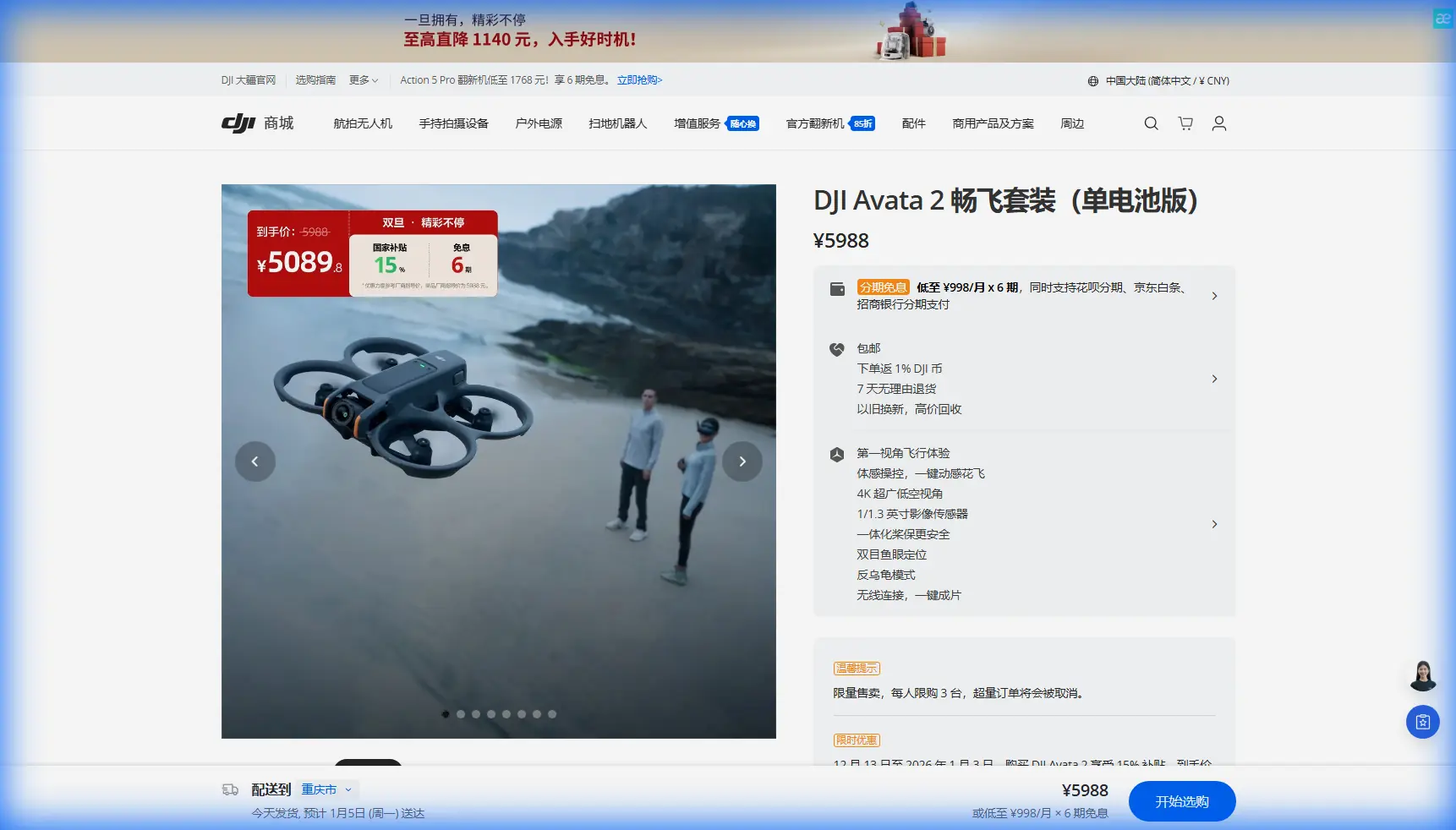
Avata 2 for Low-Light Construction Tracking: A Technical Review from the Field
META: A technical review of DJI Avata 2 for tracking construction sites in low light, with practical insights on obstacle avoidance, D-Log, ActiveTrack, and FPV workflow.
Construction sites change by the hour. A slab appears where there was rebar in the morning. Temporary fencing moves. Steel arrives, gets staged, then vanishes into the structure. If you are documenting progress in low light—pre-sunrise setup, late-evening pours, winter afternoons, interior shell work—you need more than a drone that simply flies. You need one that can read space quickly, stay controllable around clutter, and produce footage flexible enough for reporting and client review.
That is where Avata 2 becomes interesting.
This is not the usual “cinematic FPV” conversation. For construction tracking, the real question is whether Avata 2 can operate as a practical site documentation tool when visibility drops, shadows deepen, and obstacles multiply. The short answer: yes, within the right workflow. Its value comes from how several systems work together—obstacle sensing, stabilized FPV handling, subject-aware capture modes, and a color workflow that holds up when the light is uneven.
Why Avata 2 makes sense on a construction site
Most site stakeholders do not need aggressive acrobatics. They need repeatable visual records. They need to inspect staging areas, document façade progress, fly through partially enclosed structures, and capture context around cranes, access roads, stockpiles, and perimeter changes. In low light, these tasks become harder because contrast increases. Dark corners swallow detail. Bright work lights clip highlights. Exposed steel and unfinished concrete create confusing textures for pilots and cameras alike.
Avata 2 addresses this with a compact FPV platform built for controlled proximity flying rather than pure speed. That distinction matters. A traditional camera drone can give you clean overheads and standard obliques, but it often feels less comfortable when you want to trace along scaffolding, move through a framed corridor, or follow a path beneath overhangs. Avata 2 is at its best when the job requires immersion and spatial precision.
For site tracking, that means one flight can do more than a set of static aerials. You can open with a wide pass over the perimeter, descend toward active work zones, and continue into tighter routes that reveal sequencing and access conditions in a way still images usually miss.
Low light changes everything
Anyone who has flown construction projects near dawn or dusk knows low light is not just a camera problem. It is a piloting problem. You are working in a scene where hazard recognition becomes less intuitive. Rebar bundles, temporary cables, netting, and partially installed railings can blend into the background. That is why obstacle awareness is not a nice extra here. It is part of the operational case for the aircraft.
Avata 2’s obstacle avoidance capability is especially relevant in these conditions because the construction environment is unstable by nature. Yesterday’s clear route may be blocked today by a mobile lift or stacked formwork. Sensor-assisted awareness helps reduce the workload when you are flying close to structures and need to maintain a clean line while still watching composition.
The practical significance is simple: if your goal is to track progress consistently over multiple visits, you need a drone that helps preserve route reliability as the site evolves. Obstacle avoidance contributes to that consistency. It does not remove pilot responsibility, and it does not turn a dark site into a carefree environment, but it adds resilience where low-light site work usually becomes brittle.
The wildlife test was not planned
One evening pass underscored this better than any spec sheet. While tracing the edge of a partially graded retention area beside a commercial build, a deer broke from brush near the tree line and crossed toward the drainage corridor. The flight path was already committed along a narrow visual lane between silt fencing, stacked pipe, and the unfinished curb line. That kind of moment exposes whether a drone is merely capable in theory or genuinely usable in mixed real-world environments.
The aircraft’s sensing and avoidance behavior helped keep the route stable while I adjusted positioning and let the animal clear. On a construction site, wildlife encounters are more common than many people expect—birds nesting in steel, foxes near undeveloped lots, deer around suburban expansions. The operational takeaway is not novelty. It is that environmental unpredictability is part of site documentation, especially at dawn and dusk. A drone that helps the pilot absorb sudden variables without losing control of the shot has real value.
ActiveTrack and subject tracking: useful, but not in the way people think
Construction readers often see “subject tracking” or “ActiveTrack” and assume those features are mainly for athletes, vehicles, or creators filming themselves. On a job site, the smarter use is process tracking. You are not necessarily following one person. You may be following a concrete truck’s entry path, a loader moving aggregate, or a superintendent walking a key route through a newly framed area.
This matters in low light because repeated manual adjustments can quickly introduce inconsistency. A tracking tool can help preserve framing while the pilot focuses on route safety and altitude discipline. Used carefully, it allows cleaner documentation of movement patterns—how material enters the site, how crews circulate, how temporary access shifts between visits.
That said, this is not a feature to use casually around dense obstacles or active workers. The right use case is controlled, pre-planned tracking of non-sensitive site activity with clear margins and proper coordination. When treated as a documentation aid rather than a novelty mode, it becomes much more valuable.
D-Log is one of the biggest advantages for mixed lighting
Construction sites in low light rarely have balanced illumination. You can be looking at a bright tower crane against the sky, shadowed interior framing, reflective puddles, and harsh LED work lights in the same pass. Standard color profiles often force a compromise. Protect the highlights, and the shadows collapse. Lift the shadows, and the bright areas become brittle.
This is where D-Log earns its place.
For progress reporting, D-Log gives you more room to handle those uneven scenes in post. That operational significance is easy to underestimate. On a site timeline, footage is often reviewed not just for aesthetics but for clarity: Has the membrane been installed on that elevation? Are the MEP runs visible above the corridor? Can the project team compare this week’s status to last week’s under different lighting conditions? A flatter capture profile provides more latitude to normalize the image and preserve useful visual information.
That makes Avata 2 more than a “fun FPV drone.” It becomes a documentation platform that can fit into professional reporting pipelines where image consistency matters.
QuickShots and Hyperlapse are not gimmicks for construction teams
QuickShots and Hyperlapse sound like features aimed at social edits, but on a construction site they can serve a legitimate communication role. The key is not to overuse them.
A Hyperlapse sequence from a consistent vantage can compress changing traffic flow, staging activity, or end-of-day transitions into something project managers and clients can understand immediately. You see not just where materials are, but how the site behaves over time. On logistics-heavy builds, that is useful.
QuickShots, used selectively, can create standardized establishing clips at the start of weekly reports. A clean orbit or pull-away can contextualize the current phase without requiring a complex manual setup every time. The benefit is repeatability. When stakeholders receive updates in a familiar visual structure, they spend less time orienting themselves and more time reading the actual progress.
For teams building a repeatable media workflow around Avata 2, that consistency is often more valuable than novelty. If you want to compare route ideas or discuss how these modes fit your site documentation process, a direct WhatsApp conversation is often easiest: message the flight planning team here.
Obstacle avoidance is only half the safety equation
The presence of obstacle avoidance can tempt newer pilots into tighter gaps than they should attempt. That is the wrong lesson. On construction sites, low-light flying is still a planning exercise first. Avata 2 works best when the route has already been thought through in daylight or from prior missions. You identify reflective surfaces, cable hazards, temporary netting, and GPS-challenging sections before you launch into dim conditions.
The aircraft’s sensing then acts as a second layer, not the first.
For construction tracking, a smart operating pattern is to divide flights into three segments:
- A high-context perimeter pass for orientation
- A mid-level structural pass for current phase documentation
- A close-range detail run only where visibility and clearance support it
Avata 2 is particularly effective in the second and third segments, where immersive control and compact size help reveal the state of work from a more human-relevant perspective.
Where Avata 2 fits better than a conventional site drone
If your entire reporting requirement is nadir mapping, volume measurement, or orthomosaic production, Avata 2 is not the primary tool. That is not its lane. But if the goal is narrative documentation—showing how a site is being built, how crews and materials move, how the interior shell is taking shape, how low-light conditions affect operations—then Avata 2 offers something standard top-down capture cannot.
It is especially strong for:
- Following access routes through evolving site layouts
- Revealing relationships between exterior progress and interior buildout
- Capturing late-shift or early-morning visual records when ambient light is limited
- Producing footage that both field teams and clients can understand quickly
Those are not small advantages. Construction communication often breaks down not because data is missing, but because it is hard to visualize. Avata 2 closes part of that gap.
The limits matter too
A useful technical review should say where discipline is required. Avata 2 can help in low light, but low light still reduces margin. Obstacle-rich environments still demand route judgment. Subject tracking still requires careful use. And D-Log only pays off if someone in the workflow can grade footage competently enough to recover the value it holds.
There is also the human factor. FPV-style flying can look effortless from the outside, but stable, repeatable site documentation requires practice. Construction teams that want professional results should treat Avata 2 as a tool with a learning curve, not a shortcut.
That said, when the operator understands the platform, the return is substantial. You get a drone capable of moving through complex visual spaces with a level of immediacy that suits construction storytelling unusually well.
Final assessment
Avata 2 is easy to misunderstand if you file it under “creative FPV” and stop there. In the context of low-light construction tracking, it becomes a specialized documentation aircraft with real operational strengths. Obstacle avoidance helps maintain control as site geometry changes. ActiveTrack and subject tracking can support process-based coverage when used with restraint. D-Log gives post-production enough latitude to handle the ugly contrast that defines many dawn, dusk, and interior construction scenes. QuickShots and Hyperlapse, used professionally, improve consistency and stakeholder communication rather than just adding flair.
And perhaps most revealing, the platform’s sensing is not only useful around steel, concrete, and temporary works. In the real world, a site is never just a site. There are animals at the perimeter, delivery vehicles entering unexpectedly, and environmental variables that do not care about your shot list. The evening deer encounter made that clear. Avata 2 handled the moment the same way a good construction tool should: by giving the pilot more room to make a smart decision without losing the mission.
For teams documenting projects in challenging light, that is the difference between footage that looks impressive and footage that is actually useful.
Ready for your own Avata 2? Contact our team for expert consultation.