
How to Use DJI Avata 2 for Solar Farm Tracking in Extreme Te
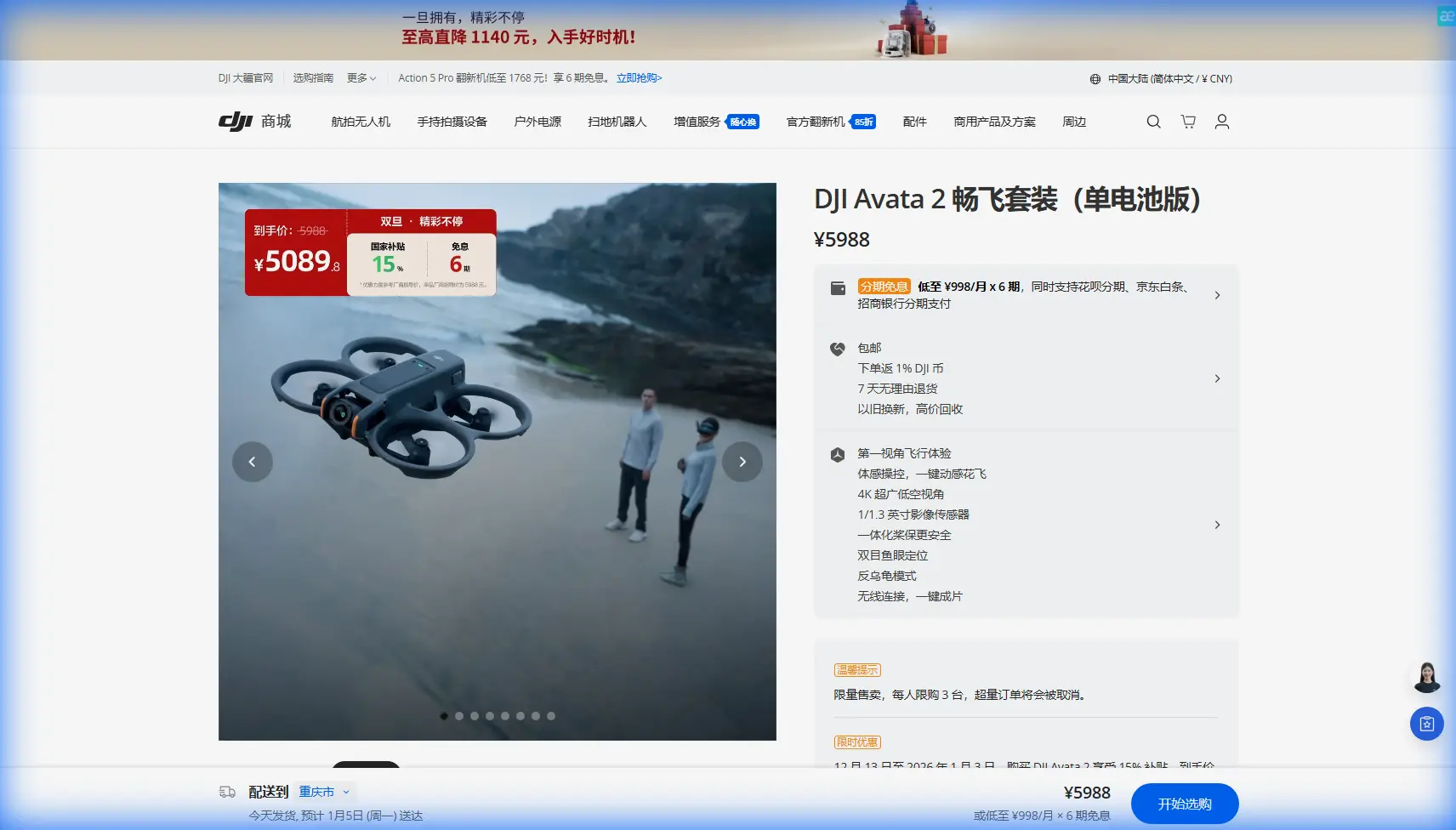
How to Use DJI Avata 2 for Solar Farm Tracking in Extreme Temperatures
META: A practical expert guide to using DJI Avata 2 for solar farm tracking in extreme heat and cold, with setup tips for obstacle avoidance, D-Log, subject tracking alternatives, and stable low-altitude inspection flights.
Solar farms look simple from a distance. Long rows. Repeating geometry. Open land. But anyone who has actually worked around utility-scale arrays knows the site conditions can get punishing fast. Midday heat radiates off panel surfaces and ballast roads. Wind tunnels form between rows. Early mornings can bring sharp cold, haze, and condensation. In that environment, “just fly the drone” is not a strategy.
The Avata 2 is not the first aircraft most people mention for energy-sector inspection. Mapping teams usually think in terms of larger multirotors with thermal payloads or corridor-focused platforms. That misses where this model can be unusually effective. For close-range visual tracking, low-altitude route verification, structure-following flight, and training operators to work safely around dense panel layouts, the Avata 2 has real advantages over many conventional camera drones.
This matters especially when the job is not full photogrammetric mapping, but repeatable visual monitoring in harsh temperatures: checking row conditions after thermal stress events, documenting tracker movement, validating access paths, or capturing stabilized footage of problem zones that ground crews need to review later.
Why Avata 2 Fits a Solar Farm Better Than People Expect
The strongest case for the Avata 2 starts with what solar farms actually demand at low altitude. You need an aircraft that can move through narrow visual corridors, stay stable close to repetitive structures, and remain manageable when heat shimmer or cold gusts make manual corrections more demanding.
That is where Avata 2 separates itself from many camera-first drones.
Its ducted design gives it a practical edge for operations around panel rows, inverter pads, and other tight site features where an exposed-prop aircraft demands a bigger safety buffer. For training teams or operating in constrained maintenance zones, that propeller protection is not cosmetic. It changes how confidently you can work near structures while still respecting safe clearance and site rules.
Then there is obstacle sensing. On a solar site, the challenge is rarely one giant obstacle. It is a constant stream of poles, fencing, row ends, cable transitions, and service vehicles. Obstacle avoidance is operationally significant because it reduces pilot workload during long visual tracking passes. In extreme temperatures, that reduction in workload matters more than usual. Heat and cold both degrade human performance long before they stop a drone mission. If the aircraft can help manage route integrity while you focus on panel anomalies and site movement, the result is cleaner data and fewer rushed corrections.
Compared with many FPV-style aircraft, the Avata 2 also makes this category more accessible to teams that are not elite manual pilots. That opens up a specific use case in commercial energy operations: repeatable training. You can get operators comfortable with low-level navigation and close-structure flight without throwing them into a fully manual platform that punishes every small input mistake.
The Real Use Case: Tracking, Not Just Flying
The reader scenario here is solar farm tracking in extreme temperatures, so let’s be precise about the mission profile.
Tracking can mean a few different things on a site:
- Following a ground vehicle during inspection rounds
- Capturing repeat passes along panel rows for condition comparison
- Monitoring moving single-axis tracker systems through a temperature swing
- Documenting maintenance team access routes and work zones
- Creating visual records of specific faults or environmental stress points
The Avata 2 is well suited to these tasks when the goal is high-quality visual context at close range. That is different from broad-acre orthomosaic work. If you need centimeter-level map products over hundreds of acres, another platform may be the primary aircraft. But if you need to move low, see clearly, and document what technicians actually encounter on the ground, the Avata 2 becomes far more relevant.
This is also where a feature like D-Log starts to matter. On a solar site, lighting can turn brutal. Highly reflective panel glass, bright sky, dark substructure, and dusty service roads all in one frame create difficult contrast. D-Log gives you more room to preserve detail across those extremes, which helps when footage is being reviewed for actual operational value rather than just presentation. If a maintenance manager needs to inspect shadow detail under a row while still seeing glare behavior on module surfaces, extra grading latitude is not a luxury. It is the difference between usable footage and clipped highlights.
Extreme Heat: What Changes in Practice
High temperatures are hard on both equipment and decision-making. They affect battery behavior, pilot stamina, and image quality. At solar farms, the heat issue is amplified because arrays radiate energy back into the local flight environment. The air above the site can become visibly unstable, especially around midday.
With Avata 2, the smart move is to redesign the mission around the temperature, not fight it.
1. Fly lower-stress windows
Early morning and late afternoon are usually the best periods for tracking runs. You avoid the harshest thermal distortion, reduce battery stress, and get more consistent light. If the purpose is repeatable monitoring, consistency beats convenience.
2. Keep passes shorter and deliberate
In heat, do not build one long continuous route if two or three segmented flights will produce cleaner results. Shorter sorties reduce the chance that rising aircraft temperature, pilot fatigue, or worsening turbulence undermines the footage near the end of the mission.
3. Use obstacle avoidance to reduce workload
On hot sites, operator focus narrows. That is a human factor issue. Obstacle avoidance is useful not because it replaces planning, but because it adds a safety margin when visual monotony sets in. Solar rows can make spatial judgment trickier than people expect because the geometry repeats endlessly.
4. Protect dynamic range
This is where D-Log earns its place again. Heat-hardened sunlight and reflective surfaces can create scenes that standard profiles render too aggressively. If the footage is for technical review, recording with more post-processing latitude gives the team a better chance of identifying connector issues, panel contamination patterns, or site damage along row edges.
Extreme Cold: A Different Set of Risks
Cold weather sounds easier because the drone is less likely to get heat-soaked. That is only half the story. Cold affects batteries first, and solar farms often pair cold with open-land wind exposure.
The Avata 2 can still perform well here, but the workflow needs discipline.
Warm batteries before launch
Do not leave packs sitting on a cold tailgate or exposed bench while you finish paperwork. Cold batteries drop performance and confidence at the same time. Keep them managed and ready before the mission starts.
Expect more wind effect between rows
Cold fronts often bring denser air and sharper gusts. Even if the aircraft feels stable in open space, the microclimate between panel rows can push it around unexpectedly. The Avata 2’s compact build helps, but the site geometry can still create abrupt airflow changes.
Watch for condensation during transitions
Moving from a heated vehicle to a cold field, or the reverse, can create moisture problems. Let the aircraft acclimate rather than rushing from storage to launch.
Simplify the route
In cold conditions, this is not the day to test the most intricate line on the site. Build a route with clean visual references, clear turnaround points, and enough margin to land with battery reserve.
A Practical How-To Workflow for Solar Tracking Missions
Here is a field-tested structure for using the Avata 2 in civilian solar operations.
Step 1: Define the inspection objective before takeoff
Do not just say “track the farm.” Decide what the footage must prove.
Examples:
- Compare tracker position across a morning temperature rise
- Document access-road condition after extreme weather
- Capture visual status of a maintenance convoy moving across sectors
- Record row-end hardware zones for post-event review
A vague objective leads to wasted battery and too much footage nobody reviews.
Step 2: Build a route around site geometry
The Avata 2 is strongest when you use the environment instead of fighting it. On a solar farm, that means:
- Following row lanes rather than crossing randomly
- Using service roads as visual recovery corridors
- Avoiding unnecessary climbs if low-angle inspection is the goal
- Planning entry and exit points near safe clear areas
This is one area where Avata 2 often excels over larger alternatives. Bigger aircraft may capture broader context, but they are not always as comfortable or efficient threading low and close through repetitive infrastructure. For visual tracking tasks, that agility saves time and often produces more relevant footage.
Step 3: Choose camera settings for analysis, not drama
Solar operations do not need over-stylized footage. They need clarity.
Use D-Log when the light range is difficult and the footage may need grading later. Keep movement smooth. Resist the temptation to fly like a showcase reel. The best inspection clip is often the boring one: steady, level, readable.
QuickShots and Hyperlapse can still be useful, but selectively. A Hyperlapse can show changing shadows, tracker movement, or cloud-driven irradiance patterns across a section of the site. QuickShots can help create repeatable visual references for progress documentation. Their value is not cinematic flair. Their value is standardization.
Step 4: Treat subject tracking carefully on industrial sites
A lot of operators hear terms like ActiveTrack or subject tracking and assume the drone should automatically follow anything moving. On a solar farm, that approach needs restraint. Industrial environments are cluttered, reflective, and repetitive.
If you are tracking a maintenance vehicle or a technician group, maintain visual separation and use tracking features as assistance rather than delegation. The operational significance here is straightforward: automation can reduce pilot burden, but only when the scene is predictable enough to support it. On a site full of repeating rows and changing glare, operator judgment remains the primary safety tool.
Step 5: Review footage in the field
Do not wait until you are back in the office to discover that heat shimmer, glare, or route speed ruined the usefulness of the flight. Review a few critical clips on site. Check whether:
- Panel surfaces are readable
- Row alignment is clear
- Shadows are masking important hardware
- Movement is smooth enough for technical review
One quick field review can save a second trip across a huge site.
Where Avata 2 Beats Competitors for This Specific Job
A lot of competing drones can cover more area, carry different sensors, or produce stronger map outputs. That is true. But for low-altitude visual tracking in constrained solar layouts, the Avata 2 has three strengths that are hard to ignore.
First, its protected propeller design makes it more forgiving around infrastructure. That matters in training and in close visual work where panel rows create narrow operating corridors.
Second, obstacle avoidance reduces workload in a visually repetitive environment. Many aircraft force the pilot to carry all the burden of close-range route management. On a long hot day, that becomes a real limitation.
Third, the combination of immersive flight character and flexible image capture makes it unusually good at showing what a technician or site manager would actually want to inspect. Not just a top-down record, but a meaningful low-level perspective.
That makes the Avata 2 less of a substitute for a mapping drone and more of a specialist tool beside one.
A Smart Team Setup for Energy Operators
If your organization is building a drone program around solar assets, the Avata 2 works best when assigned to three roles:
- Close-range visual tracking
- Operator training for structured low-altitude flight
- Supplemental documentation alongside broader survey platforms
This is especially effective when sites experience regular thermal stress and the team needs visual follow-up after extreme weather swings. If you are planning a field workflow around that kind of deployment, you can message our drone team here to discuss practical setup questions.
Final Field Advice
Do not try to turn the Avata 2 into something it is not. It is not the all-purpose answer to every solar farm mission. But for tracking work in extreme temperatures, especially where low-altitude visual context matters, it solves a set of problems that larger and more conventional drones often handle less elegantly.
Use obstacle avoidance as support, not a crutch. Use D-Log when high-contrast light would otherwise throw away detail. Be cautious with subject tracking and ActiveTrack-style workflows in reflective industrial environments. Let QuickShots and Hyperlapse serve documentation goals instead of turning the mission into a showpiece. Most of all, plan around temperature stress as a core operational variable, because on solar sites the environment changes the mission before the drone ever leaves the ground.
Handled well, the Avata 2 becomes a precise visual tool for one of the most demanding civilian field environments: long rows, hard light, punishing temperatures, and no room for sloppy flying.
Ready for your own Avata 2? Contact our team for expert consultation.