
Avata 2 for Dusty Solar Farm Tracking: What Mapping Drone
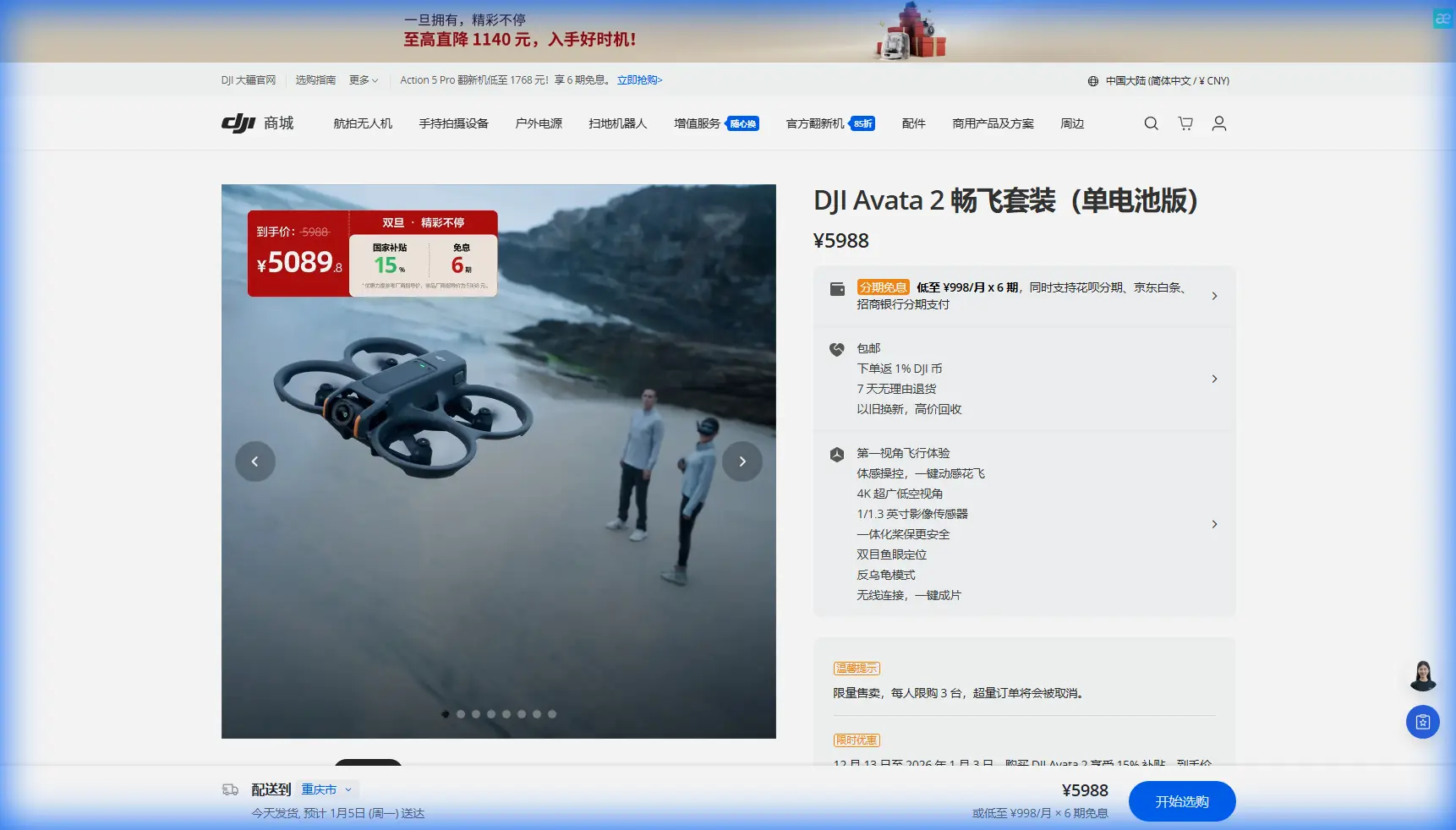
Avata 2 for Dusty Solar Farm Tracking: What Mapping Drone Logic Teaches Us About Better Low-Altitude Flight
META: A practical expert guide to using Avata 2 around dusty solar farms, with flight altitude insights drawn from professional UAV mapping principles, weather resilience lessons, and image-quality strategy.
Dust changes everything.
It softens contrast, hides edges, dulls reflections, and turns a simple solar farm flight into a test of judgment. If you are flying an Avata 2 to track conditions across rows of panels, document maintenance progress, or capture repeatable visual records for inspection teams, the real challenge is not just piloting. It is choosing a flight method that stays useful when the site is dry, bright, and messy.
That is where an interesting lesson from professional mapping aircraft becomes relevant.
Large-format survey drones and a compact FPV platform like the Avata 2 are built for different jobs. No question. But the operational thinking behind mapping systems—especially how they handle launch flexibility, weather variability, image resolution, and field logistics—offers a smart framework for anyone using Avata 2 in commercial solar environments.
I have spent enough time around cameras and aircraft to know this: the best results usually come from borrowing discipline from more demanding workflows. On dusty solar farms, Avata 2 benefits from exactly that kind of discipline.
The Solar Farm Problem Is Not Speed. It Is Consistency.
When people imagine a drone flying over a solar site, they often focus on movement. Fast passes. Dynamic reveals. Sweeping cinematic lines between panel rows.
That is the wrong priority if your goal is tracking.
Tracking means building visual continuity over time. You may be comparing cleaning performance, documenting vegetation growth, monitoring access roads, checking fencing lines, following service vehicles, or creating recurring media for project stakeholders. In dusty conditions, the weak point is not whether the aircraft can move through the site. It is whether the footage remains readable and repeatable enough to support decisions.
Dusty locations create three recurring problems:
- Fine airborne particles reduce clarity.
- Flat midday light can make panel rows blend into each other.
- Large sites tempt pilots to fly too high, which makes small issues disappear.
That third mistake matters most.
Why Mapping Principles Matter to Avata 2 Operators
A professional mapping solution described in the reference material highlights several operational advantages: easy transport, minimal site requirements, flexible deployment, and reduced sensitivity to weather compared with traditional aerial work. Those points were written for dedicated survey aircraft, but the core logic translates beautifully to Avata 2 use on solar farms.
Take the field setup issue. The source notes that older mapping UAV workflows often needed a 30 to 50 meter relatively level runway for takeoff, while newer systems removed that constraint through more flexible launch and recovery methods. For solar operators, that matters because solar farms are rarely friendly to conventional aircraft movement. Access tracks may be uneven. Service areas may be tight. Surroundings may be dusty, rocky, or congested with equipment.
Avata 2’s value in this environment is not that it imitates a fixed-wing mapper. It is that it inherits the same operational advantage in a smaller form: you do not need a runway mindset. You can work from constrained maintenance zones, perimeter roads, or compact staging points without building your day around launch infrastructure.
That flexibility is not just convenience. It directly affects how often teams actually fly. And the frequency of flights often determines whether a drone becomes a working tool or a gadget that stays in a case.
The Most Useful Altitude Insight for Dusty Solar Sites
The reference document states that mapping drones usually operate somewhere between 100 meters and 1000 meters, with altitude selected according to the image resolution required. That is a surveying rule, but the deeper lesson is universal: altitude is not a preference setting. It is a resolution decision.
For Avata 2 on dusty solar farms, that principle becomes even more important because the aircraft is typically used much lower than a dedicated survey platform. You are not trying to cover hundreds of hectares in one pass with survey overlap. You are trying to preserve detail through dust haze and reflective geometry.
Here is the practical takeaway:
If dust is reducing contrast, lower altitude usually improves usable detail faster than any post-production fix.
Why? Because every extra meter between lens and subject adds more atmosphere, more glare, and more visual clutter between the camera and the panel surface. A higher pass may look efficient, but it often compresses the scene until dirt accumulation, edge defects, cable disorder, or wash patterns vanish into a gray-blue shimmer.
For most dusty solar tracking work with Avata 2, I would treat altitude as a three-layer decision:
1. Low passes for panel-level readability
Use low, controlled runs when your goal is to show surface condition, dust build-up patterns, or cleaning differences between adjacent rows. This is where the “resolution-first” mapping mindset helps most. You are flying for interpretation, not spectacle.
2. Mid-level passes for row continuity
A slightly higher line is often better when you need to show alignment across multiple tables, maintenance activity, or movement through corridors. This height keeps spatial context without sacrificing too much detail.
3. Higher overview passes only when context is the deliverable
If the purpose is stakeholder reporting, route orientation, or broad progress visuals, a higher altitude makes sense. But in dust, do not expect these views to carry diagnostic value.
The mistake is using one altitude for everything. Survey professionals do not do that. Avata 2 users should not either.
Dusty Conditions Reward Shorter, Smarter Missions
The source material makes another point that deserves attention: mapping drones are valued because they are portable, repeatedly usable, and practical to transport into the field. That field-readiness mentality fits solar farm work perfectly.
Dusty sites are hard on gear, and long flights are not always efficient flights. On Avata 2, breaking work into short, intentional segments is often better than trying to cover the entire property in one cinematic session.
A smart mission profile looks like this:
- one low-angle pass along representative panel rows
- one corridor pass following maintenance access lanes
- one perimeter sweep for fencing, vegetation, or drainage
- one elevated orientation clip for reporting context
This modular style does three things. It keeps the aircraft closer to the visual task. It reduces the chance of wasting battery time on unusable haze-heavy footage. And it makes repeat missions easier to standardize, which is essential if you are tracking change over weeks or months.
Weather Tolerance Is Not Just About Rain and Wind
The reference describes a mapping platform with triple-redundant sensors, vertical takeoff and landing capability, wind resistance up to force 6 during VTOL and force 7 in cruise, plus tolerance for moderate rain. Avata 2 is a completely different aircraft class, so those exact specs do not transfer. Still, the operational significance is worth understanding.
Professional UAV systems are designed around reliability in imperfect conditions because field work rarely happens on postcard days. The lesson for Avata 2 operators is not to push a small aircraft into rough weather. It is to adopt the professional habit of deciding whether the mission goal matches the day’s conditions.
On dusty solar farms, “bad weather” may not mean rain at all. It can mean:
- loose particulate blowing laterally between rows
- thermal shimmer above heated panels
- gusts at corridor openings
- contrast collapse under harsh sun
This is where obstacle avoidance and controlled subject tracking tools need to be used with realism. ActiveTrack and related automated functions can be useful when following a maintenance cart or worker route through open lanes, but dust and glare can confuse visual interpretation. If the site is producing low-contrast imagery, manual control and shorter tracking segments often outperform longer automated runs.
The best pilots are not the ones who trust automation blindly. They are the ones who know when the environment has become visually unreliable.
Why Low Cloud Logic Also Applies to Solar Farms
One of the more interesting details in the source is the explanation that lower-altitude mapping flights are less affected by cloud conditions than traditional higher-altitude aerial photography. That same logic has a close cousin on solar sites.
When you fly low with Avata 2, you reduce the amount of atmosphere between camera and subject. On a dusty day, that is a major benefit. The footage tends to hold more edge definition, more row separation, and more visible texture. In practical terms, this means a low, deliberate pass between panel lines may reveal site condition better than a beautiful but distant overview.
That is not glamorous advice. It is effective advice.
A solar operator does not need footage that merely proves the drone was airborne. They need footage that survives review on a monitor later, when someone is trying to answer a specific question.
Camera Profile Choices Matter More in Dust
Dusty environments often trick people into crushing contrast in-camera because the scene initially looks washed out. That is usually a mistake if your footage may be used across multiple reporting needs.
If you are shooting with D-Log, you preserve more flexibility to recover subtle tonal differences between panel surfaces, road dust, vegetation edges, and maintenance equipment. On bright solar farms, those separations can become surprisingly delicate. A flatter capture profile gives you room to shape the image later without throwing away the fine gradations that help a site team interpret what they are seeing.
Hyperlapse and QuickShots have their place, especially for progress storytelling or stakeholder updates, but they should sit behind the operational record, not replace it. If the assignment is tracking conditions, your first job is to create usable visual evidence. Style comes second.
The Physical Site Favors Smaller Aircraft With Discipline
The source mentions that fixed-wing mapping aircraft often have wingspans under 3 meters and can be transported in ordinary small trucks, with assembly and setup completed in about half an hour. The operational significance is simple: field productivity improves when aircraft fit the job site instead of reshaping it.
Avata 2 pushes that idea much further. Its small form factor is a real advantage around solar arrays because it reduces the friction of deployment. You can arrive, assess wind and dust movement, capture targeted passes, and leave without treating the flight like a major expedition.
But compact aircraft only deliver that advantage if the operator is disciplined. Small does not mean casual. In reflective industrial environments, a smaller platform demands more careful route planning, better awareness of obstacle lines, and tighter altitude control.
If you are documenting a recurring solar site, build a repeatable shot map:
- same launch area when possible
- same key corridors
- same altitude bands
- same sun-angle preference when the schedule allows
That repeatability turns Avata 2 from a content device into a field instrument.
A Practical Flight Blueprint for Avata 2 in Dusty Solar Farms
Here is the workflow I recommend:
Pre-flight
Walk the first two rows on foot. Look for dust direction, reflective hotspots, and wire obstacles. Do not rely on aerial assumptions alone.
First sortie
Fly low and slow along a representative row pair. This sets your visual baseline and helps confirm how much detail the dust is stealing.
Second sortie
Climb to a moderate height for corridor tracking and site flow. If following vehicles or workers, keep ActiveTrack assignments short and observable.
Third sortie
Capture one broad orientation line for management context. Treat it as a map-like establishing visual, not your primary inspection record.
Image strategy
Use D-Log if the footage may need grading or comparative review later. Avoid overcommitting to aggressive in-camera contrast.
Automation
Use obstacle avoidance as support, not permission to relax. Dust and glare can reduce environmental readability for both pilot and system.
If your team needs help designing a repeatable solar-farm flight routine, this is a practical place to start: message a drone workflow specialist.
The Real Value of Avata 2 Here
Avata 2 is not a survey airplane, and it does not need to be. What it can do exceptionally well on dusty solar farms is something more immediate: get close, stay flexible, and produce repeatable low-altitude visual records in places where bulkier aircraft workflows become inefficient.
The mapping reference makes a broader point that still holds: field UAV success often comes down to portability, minimal site dependence, and the ability to gather the right image at the right altitude. Not the most dramatic image. The right one.
On solar farms, especially dusty ones, that usually means resisting the urge to fly too high and too generally. Drop lower. Segment the mission. Prioritize readable detail over visual bravado.
That is how Avata 2 becomes genuinely useful.
Ready for your own Avata 2? Contact our team for expert consultation.