
Tracking High-Altitude Vineyards with Avata 2
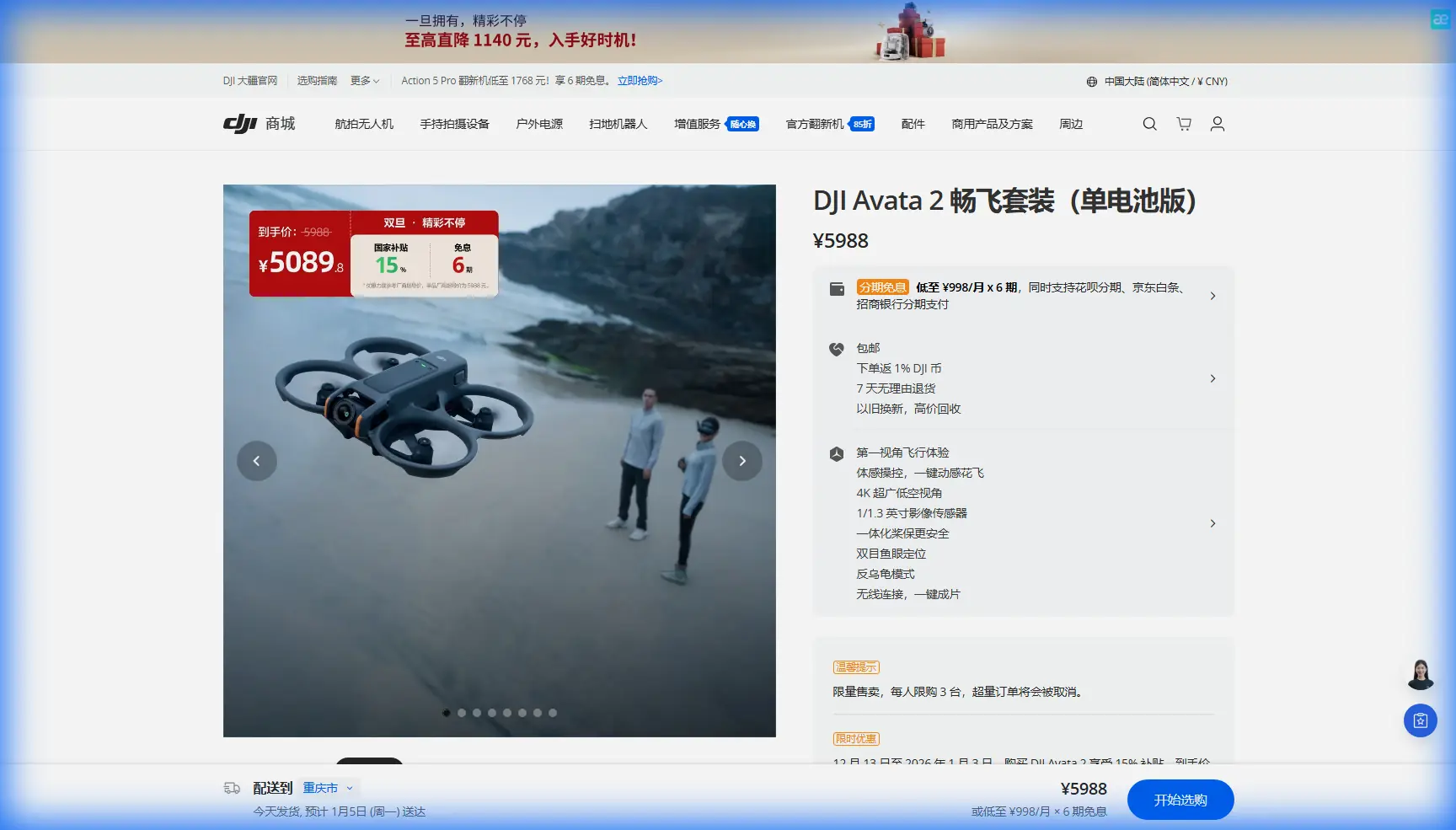
Tracking High-Altitude Vineyards with Avata 2: A Technical Field Review
META: A field-tested technical review of using Avata 2 for tracking high-altitude vineyards, with insights on obstacle avoidance, ActiveTrack, D-Log, wind shifts, and why modern flight control theory matters in real operations.
High-altitude vineyards ask unusual things from a drone.
They are rarely flat. Rows bend around slopes, access roads cut sharp diagonals through terraces, and wind does not move evenly across the site. One moment the air feels settled; the next, a cross-current rolls over the ridge and pushes the aircraft sideways just as you are trying to hold a clean line above the vines. For a photographer, that matters aesthetically. For an operator, it matters even more because tracking accuracy, safety margin, and footage consistency all begin to break down at the same time.
That is exactly why the Avata 2 is interesting in this setting.
Most conversations around this aircraft stay at the surface level: immersive flying, dynamic footage, easy cinematic motion. Useful points, yes, but not enough if your assignment is to document vineyard blocks at elevation where terrain, changing weather, and narrow visual corridors can expose every weakness in stabilization and tracking behavior. The deeper story is about control. Not just what the pilot sees on screen, but how the drone interprets instability and corrects for it in real time.
And this is where the reference material behind multirotor design becomes unexpectedly relevant.
A university design paper on a hexacopter included a reference list that points straight into the foundations of multirotor control research: the 2004 comparison of PID vs LQ control techniques applied to an indoor micro quadrotor, the 2005 work on backstepping and sliding-mode techniques, and the 2002 paper on visual feedback control for quadrotor helicopters. At first glance, those are academic citations from another era and another platform class. In practice, they explain a lot about why a modern aircraft like Avata 2 can remain usable when a vineyard flight stops being easy.
Why vineyard tracking is harder than it looks
Tracking vineyards in high altitude is not the same as flying above a generic field.
Rows create repetitive patterns that can confuse framing decisions, especially when the subject is not a single moving object but a route, a contour line, or a vehicle moving between blocks. Elevation changes distort depth perception. Narrow terraces reduce safe lateral options. Add weather and the drone must keep doing three jobs at once: maintain position, preserve intended motion, and keep the camera behavior predictable enough for edit-ready footage.
That is where obstacle avoidance and ActiveTrack-style automation stop being convenience features and become operational tools.
In a vineyard, obstacles are not always tall buildings or obvious trees. They can be isolated poles, cable runs, trellis edges, utility hardware, and sudden terrain rise hidden by perspective. A drone that can sense and react to these changes helps the pilot stay focused on line selection rather than constant micro-corrections. When tracking along rows, this matters because one small drift in gusting air can pull the aircraft off the intended corridor. If the system assists with spatial awareness, the result is not just safer flying. It is smoother continuity across the shot.
The control theory connection nobody should ignore
The reference data mentions the classic PID vs LQ comparison from IROS 2004. That detail matters because it captures a core problem in multirotor behavior: how the aircraft turns instability into controlled motion. PID control has long been valued because it is practical, responsive, and understandable. LQ approaches seek optimized control performance under a modeled system framework. You do not need to solve the equations in the field to appreciate the consequence. In a demanding environment like a mountain vineyard, the drone’s usefulness depends on how well its control stack handles disturbances without turning every correction into visible oscillation.
Operational significance: if the aircraft over-corrects in shifting wind, your footage shows twitch, horizon wobble, and uneven speed. If it under-corrects, your line drifts and the subject framing falls apart. Modern flight performance is built on lessons from these early control comparisons, even if the user only experiences it as “this drone held the shot.”
The second reference detail worth highlighting is the 2002 research on visual feedback control. That one is even closer to real vineyard work. Visual feedback means the aircraft is not relying on inertial inputs alone; it uses visual information to support stability and control decisions. In practical terms, this idea sits behind how modern drones improve tracking, positioning confidence, and scene-relative motion. For vineyard documentation, where repeating textures and sloped terrain can challenge the pilot’s eye, visual feedback logic contributes to steadier path following and more reliable subject awareness.
There is another clue in the reference list too: real-time parameter identification of the inertia tensor using adaptive control. That sounds highly academic, but the field implication is simple. Aircraft behavior changes with motion state, aerodynamic loading, and disturbance conditions. Adaptive identification helps the control system respond to those shifts. On a high ridge where wind changes mid-flight, that is exactly the kind of intelligence you want in the background.
What happened when the weather turned
On my last high-altitude vineyard session, the morning began clean. Light haze, stable light, and just enough air movement to keep the valley from feeling still. The plan was straightforward: low pass along an upper terrace, climbing transition over a bend in the rows, then a lateral tracking move following a utility cart descending toward the sorting area.
The first two passes were uneventful. Active subject tracking held well, and the drone’s movement through the rows felt composed rather than nervous. That distinction is worth making. Some aircraft can technically follow a route while still producing footage that feels busy, especially when minor stabilization corrections become visible in the image. Here, the motion stayed deliberate.
Then the weather shifted.
Cloud shadow moved in from the western slope, and with it came a sharper crosswind spilling over the ridge. You could see the vines react before the aircraft did. Leaves on one row stayed almost still, while the adjacent terrace flickered from a gust line moving diagonally downslope. That kind of layered airflow is common in elevated vineyards. It is also where many flights stop looking polished.
The Avata 2 did not ignore the disturbance. You could feel it working. But the key point is how it handled the change: not with exaggerated snap corrections, not with that loose drifting sensation that forces the pilot to abandon the shot, but with controlled compensation that kept the path usable. The drone adjusted enough to preserve line integrity while still allowing smooth camera motion.
This is exactly where all those older control research references stop being abstract. The distinction between simple stabilization and well-tuned dynamic response becomes visible in the footage. A drone in this situation needs strong underlying control logic, effective sensing, and enough confidence in its visual and positional model to keep tracking coherent.
ActiveTrack in vineyards: useful, but only if you respect the terrain
The term ActiveTrack gets thrown around as if it guarantees perfect autonomy. It does not. In vineyards, it is best treated as a precision assistant rather than a substitute for judgment.
When following a cart, worker, or route line between vine blocks, ActiveTrack is most effective when the path is already legible and the operator understands where occlusion is likely. Trellis structure, row convergence, and elevation changes can alter how the tracked subject appears in frame. A human pilot still needs to anticipate those transitions. The value of Avata 2 is that it reduces workload during these moments by helping maintain subject continuity while the operator focuses on terrain and compositional choices.
Operationally, that means fewer abrupt stick inputs and better consistency across repeat takes.
This is also where obstacle avoidance becomes more than a safety checkbox. In vineyard work, you often want to fly close enough to reveal row structure without sacrificing forward momentum. The sensing system helps protect that intention. It gives the operator more confidence to commit to a narrow visual corridor while retaining margin if wind or terrain perspective changes suddenly.
D-Log matters more here than in flatter landscapes
High-altitude vineyards are visually deceptive. Bright sky, reflective leaves, dark soil, and fast-moving cloud shadow can all appear in the same frame. Standard color profiles can make quick work of easy light, but mixed contrast over ridgelines benefits from D-Log capture.
The practical reason is latitude in post. When weather changes during flight, the image can shift from open sun to shadowed rows in seconds. D-Log gives more flexibility to recover highlight structure in the sky while preserving usable detail in foliage and ground texture. For vineyard stakeholders, that matters because the footage is often used for more than beauty shots. It may support seasonal documentation, property marketing, route planning, or visual comparison between blocks. Better tonal retention makes the material more useful later.
As a photographer, I found the advantage especially clear during the cloud pass. In standard-looking scenes, the vines remained readable, but D-Log preserved more separation between the leaf canopy and the slope beneath it. That extra room in grading turned a potentially flat sequence into something far more descriptive.
QuickShots and Hyperlapse are not just creative extras
There is a tendency to dismiss QuickShots and Hyperlapse as lightweight features. In vineyard operations, they can be surprisingly practical.
QuickShots help when you need repeatable establishing views without rebuilding a move from scratch each time. If you are documenting the same estate over a season, repeatability matters. Consistent motion patterns make before-and-after comparisons easier and give editors a predictable framework.
Hyperlapse has value for showing environmental change across the site: fog lift, cloud movement over terraces, worker flow between blocks, or light progression across different elevations. In a high-altitude vineyard, time compression can reveal conditions the naked eye misses when you are focused on a single flight segment.
Neither feature replaces manual skill. But both can produce structured, readable outputs with less setup time, which is a genuine operational benefit on location.
Where Avata 2 fits best in this kind of assignment
Avata 2 is not the only aircraft you could bring to a vineyard. But it has a distinct place when the brief calls for immersive route-following, close terrain interaction, and dynamic visual storytelling under uneven conditions.
Its strength is not just agility. It is the combination of tracking assistance, obstacle awareness, stable motion response, and camera options that remain useful when the site becomes visually and aerodynamically complicated. The underlying value of that package becomes clearer when you view it through the lens of multirotor control history. The old research on PID, LQ, visual feedback, and adaptive control was solving the problem that every vineyard operator still faces: how to keep a small rotorcraft controllable, predictable, and visually stable when the environment refuses to cooperate.
That is why a technical review of Avata 2 should not stop at feature labels.
If you are flying high-altitude vineyards, the real question is whether the aircraft helps you maintain intent when the wind shifts, the slope tightens, and the light changes mid-pass. In my experience, this one does. Not perfectly, not magically, and not without pilot discipline. But it keeps the work moving.
For operators planning similar flights and wanting to compare setup notes or workflow ideas, you can message here for vineyard flight coordination.
The result is a drone that feels especially well suited to terrain-driven storytelling. It can track the geometry of the vines, negotiate changing air, and deliver footage with enough tonal depth to survive difficult mountain light. That combination is what makes it relevant for real vineyard work rather than just impressive demo reels.
Ready for your own Avata 2? Contact our team for expert consultation.